Babylon is Fallen: Is it Destruction… or Transformation?

We often focus on punishment and destruction when we think of evil. But the Bible reveals a more profound truth: God’s primary strategy is infiltration and transformation. From Manasseh to Babylon itself, God sends His people into broken systems and lives not to escape or destroy, but to redeem. Our calling isn’t to await the fall of our modern “Babylons,” but to actively participate in their restoration through faithful, everyday work—to plant crops in the cursed ground and pray for the peace of the city, believing that enemies can be turned into friends.

When I was younger, I was an aficionado of Resurrection Band. I even saw them in concert once at the Centennial Auditorium in Saskatoon and wore a signed T-shirt of theirs for many years. One of my favourite songs of theirs was entitled Babylon, which includes the bridge:

“I saw Babylon slowly start to burn
I heard the voices crying
Refusing ever to learn, Babylon”

The final line — that sticks in my mind until today — is “Babylon. Babylon is fallen!” This imagery hearkens back to the Revelation of John, where the great harlot, Babylon, the city that is opposed to God and works at spilling the blood of the Saints, is finally punished and destroyed. In the Bible, Babylon = evil.

I was mistaken for years in thinking that the only legitimate end for things that are evil like Babylon is punishment, as the song says. And part of me probably anticipated seeing this punishment enacted in my lifetime.

It’s part of our nature to want evil to be punished; especially evil committed against us by others. We’re not entirely excited when our own evils are called out and punished are we? But we like it when the bad guys lose and the good guys win — even if that means turning bad guys into Robin Hoods so that even worse guys can be punished.

But more recently I have come to realise that there are actually two destinations for things that are evil like Babylon. On the one hand, Babylon awaits destruction. Because after all, what does one do with their enemies? One fights against their enemies and seeks to defeat them. But is that what God does with his enemies? It seems that God instead enacts a plan so that his enemies strongholds are infiltrated by his people so that it becomes transformed and turned into something that is good.

The Tower of Babel and the Confusion of Languages

Babylon’s origin story is the tower of Babel, where God confused human languages so that people would spread around the world.

A commentary I recently read said the tower was an attempt by people on the Earth to fulfill God‘s promise of “all the nations being blessed.” Rather than relying upon God for that blessing, they decided to enact that blessing themselves. Perhaps that’s at the core of Babylon‘s label of being opposed to God.

Manasseh

Manasseh was one of the kings of Judah. He was a bad guy. 2 Chronicles 33 outlines the extent of the evils he intentionally implemented to the point that he “misled Judah and the inhabitants of Jerusalem so that they did more evil things than the nations that the Lord had destroyed when the Israelites arrived in the land” (2 Chronicles‬ ‭33‬:‭9‬‭).‬‬

As a result of this, God calls the army of Assyria to come and carry Manasseh off to his kingdom, where he experienced difficulty.

Then we read this amazing story in 2 Chronicles 33:

“When he experienced this distress, he begged the Lord his God to be kind and humbled himself in front of the God of his ancestors. He prayed to the Lord, and the Lord accepted his prayer and listened to his request. The Lord brought him back to his kingdom in Jerusalem. Then Manasseh knew that the Lord is God.”‬‬

Wow!

Jeremiah 29

In the book of Jeremiah, the inhabitants of Jerusalem are confronted with a horrible reality. It seems that King Nebuchadnezzar, the Emperor of Babylon, will be successful in conquering their city and carrying them off into captivity. The book outlines Jeremiah’s prophetic words from God to help the people of Jerusalem face this horrible possibility.

Apart from the fact that being a prisoner of war is a horrible thing in and of itself, for the people of Israel this reality was especially difficult to accept because as far as they were concerned they were the people of God who had been blessed by being the owners of Jerusalem and the land of Israel around them. Their understanding was that this was a promise that God gave to them in perpetuity. And so for them to be carried away was almost an impossibility — their theology didn’t support that. In fact, Jeremiah was the sole prophet who prophesied that they would actually be carried off into captivity (verse?). All the other prophets of his time had convinced the people that they would not be carried off into captivity but that they would only be gone for a few weeks or months (verse?). One of Jeremiah’s tasks was to prepare the people for a lengthy captivity in Babylon. In fact, many of them would die in Babylon because the captivity would last for 70 years.

So, what were they supposed to be doing while they were in Babylon? They were supposed to infiltrate Babylon become a part of the fabric of Babylonian community; make their lives in Babylon the lives that God had called them to; they were to build houses, and they were to plant crops, and they were to get married and have children, and have their children get married. All of these things are things that new immigrants do when they come to a new place. Furthermore, they were also to pray for the blessing of the City.

What does Jeremiah 29 teach us about how God deals with evil places like Babylon? God sends people to infiltrate it so that Babylon too can be transformed from a place of evil to a place of goodness.

The Emperor who became a cow

Nebuchadnezzar the Great was the Emperor of Babylon but at a certain point in his life, God turned him into a cow! The point I want to emphasise here is that God chose to interact in an immersive way with the most powerful human king the world has ever seen. As the emperor of Babylon, he personified opposition to God — they called him the King of the Universe. Which is perhaps why God chose to allow his context to change from the most powerful human on th earth to a mere domesticated animal. Nebuchadnezzar’s worldview was deconstructed in a dramatic way but was then reconstructed into something better — he moved from being the so-called “King of the Universe” to submitting himself to the Universe’s True King!

Jesus

Jesus was all about freeing people from sin and the effects of sin in their lives. Jesus’ death on the cross and his subsequent resurrection from the dead ensured that we too would be saved from our sins and have eternal life. But Jesus is about more than merely saving us from death. He wants our lives on Earth to also be reflective of his life on Earth. He wants us to be his disciples. He wants us to be like him. He wants us to be holy. If he was merely interested in saving us after we died, what’s the point in talking about holiness?

One of the clues to Jesus’ purpose on earth can be found in Luke 4. In Luke 4, Jesus returns to his hometown of Nazareth and is invited to speak in the synagogue. He stands up and asks them to read from Isaiah 61. According to the account, this is what was read:

“The Spirit of the Lord is with me. He has anointed me to tell the Good News to the poor. He has sent me  to announce forgiveness to the prisoners of sin and the restoring of sight to the blind, to forgive those who have been shattered by sin, to announce the year of the Lord’s favor.”

Jesus concludes his sermon with the words “today this scripture is fulfilled in your presence.”

Surprisingly, the congregation is enraged and wants to kill him. Why do they want to kill him? What’s so significant about these words that he’s saying? When Jesus said these words and when he referred to Isaiah 61 as being fulfilled in him, he was equating himself with God. The inhabitants of Nazareth who regularly attended synagogue knew the work of God was encapsulated in this passage from Isaiah 61.

This is something that we have often neglected is the evangelical church today. We’ve focused on the sweet by and by without thinking too much about the here and now. I realise that’s a generalisation and I generally try to avoid generalisation but if I look at my own journey I can see how at one time in my life I was very fascinated and fixated upon having the right theology and not so much about living a life that’s filled with good works. In fact, good works were identified as a bad thing in my early theology — something to be avoided — because they didn’t serve any purpose. At that stage in my theological development, any good thing that I tried to do was only self righteousness and was not of any benefit in salvation. What I avoided was understanding that we are created to do good works. We’re supposed to be good people. We’re supposed to do good things. We’re supposed to imitate the life Christ lived. This has nothing to do with our salvation, but is a result of our salvation. So my generalisation is based upon my own personal experience. I realise that your experience may be different than that, and if so then that’s wonderful.

What of the Flood or Sodom and Gomorrah?

There, sometimes a perception of the God of the Old Testament and the God of the New Testament of two different people. This perception typically identifies the God of the Old Testament as God of wrath and destruction, while the God of the New Testament is a God of love and peace and restoration. Of course we know this isn’t true. But then people point a certain events that happened in the Old Testament and say how can these be the actions of a loving God? Let’s look at a couple of things, including the story of the flood with Noah and the story of the destruction of Sodom and Gomorrah.

God went to extraordinary extremes to save Noah — the man who found grace in his eyes. Noah testified for 100 years. He lived his righteous life faithfully obeying God’s command to build a ship to save the people of earth from the flood he was going to send. Noah is an agent of salvation for the people of the earth. The flood is not necessarily an event that will destroy them — all they have to do is get on the ship. If they don’t then that’s on them. Isn’t it? This was Noah’s message to the world every day for 100 years.

Abram’s nephew Lot was given a choice of where he wanted to live. He chose to live in the lowlands because the land was richer. Note that this choice didn’t make Lot a bad man but it does lead us to ask the question of how successful Lot would become in the lowlands. We already know he was a successful farmer and business man — would this success follow him? We end up discovering that Lot was not as successful as he might have been because he wasn’t able to have a positive influence on the place he chose to live. We don’t know why this is but it’s clear that his presence in that city wasn’t enough to even influence 10 people to join the path of righteousness. Is that because Lot neglected his role? Is that because the people of the area were unwilling to listen to his message? We are explicitly told the answer but the fact that in the end God saves Lot and his family while fire rains down from the sky implies that those consumed had also made their own choices.

The Psalms provide us with a rationale for why there is war between God and humans in the Old Testament. Psalm 2:1 asks the question, “Why do the nations plot?” And it seems to me that the fact that there is a plot implies an explicit and intended opposition to God. This is a planned event. “We will be in rebellion against who God is.” We’ve talked about the tower of Babel. We’ve talked about Manasseh. We’ve talked about Babylon. We’ve talked about Nebuchadnezzar.

The best argument against claims that the God of the Old Testament is an evil God is that the very passage that describes how God’s people should engage society comes from this same Old Testament. And it’s interesting that in the midst of the distress that Israel is about to experience, there is a glimpse of the hope that God is bringing to the entire world. At this time it’s appropriate to bring out the verse that we most commonly associate with Jeremiah 29, namely verse 11, that says God has plans for us. What’s important for us to realize is that the good plans that God has for us are contingent upon our agreeing to those plans, aren’t they? Don’t the people Jeremiah is talking to within Jerusalem need to say, “OK God, I’m willing to accept the fact that we need to be exiled for 70 years, but that you have good plans for us”? Don’t the people of Babylon and also have to be willing to listen to the testimony of those who are in captivity so they too, can experience the good things that God has a store for them?

God’s love and call to repentance always come first, yet when that love is rejected, judgment surely follows. The fall of Babylon shows us both: an offer of transformation through grace, and, if spurned, the certainty of destruction. To keep both together — love before wrath, repentance before ruin — helps us see the fullness of God’s justice and mercy.

You and Me

Even though we’re talking about structural evil at the level of nations opposing God, we can’t ignore the fact that personal evil is also a major part of what goes on. We notice the engagement strategy that Jeremiah presents to the people of Israel is that they are supposed to live out their lives in a personal way, which includes homes for them to live in, families for their children, crops, etc. So, in order to be a good person in a society like Babylon I need to live out my life in a way as if I have a future there and there is a future for that city.

But this is not merely limited to making sure I live a good life in the midst of an evil city. Rather, it’s an understanding that through my living a good life in the city, setting down roots, and contributing to the economy of the city, I am also interested in the future of that city and praying for the city. Praying means calling upon God to help with the transformation of the city. Praying means calling upon God to make the city a place of justice, a place of goodness, a place of kindness, a place with love, with joy, with peace, with patience, with kindness, with goodness, with faithfulness, with self-control. And being a part of the fabric of the city means that we position ourselves for future leadership and guidance within that city as well.

Jeremiah 29 invites us to “Plant crops.” Even though the process of planting crops seems like a bit of a gamble. One of my friends referred to farmers as the people with the most faith in the world because they do everything they possibly can to invest in a product that is not guaranteed to emerge at the end of the process. Planting is hard but planting actually starts in the middle of the process. Before that we have to prepare the ground. I have to chop down trees and pull out stumps. We have to pick rocks. We have to break the ground. And then the broken ground needs to be broken up again. And only then can the crops be planted.

Growing crops is hard. Harvesting crops is hard. It’s a long and tedious process that takes a lifetime to perfect. And once you harvest him then you gotta try to sell it. Selling those crops at the end is hard, and some of the hardness of that process is directly because of the sin of Adam and Eve in the garden of Eden. The ground is cursed and it’s by the sweat of our brows that we can get something to emerge from the ground. In our farming processes, we need to go beyond adding to the curse of the land and try to find ways that help remove that curse. And of course, beyond planting there are other aspects to it.

An example with a Brazilian connection

I recently attended a seminar in Brazil, where we talked in part about the integration of faith and agriculture. A couple of the things emerged that help inform our discussion today.

I was introduced to a paper that spoke of Palissy’s idea that even an unlearned potter can question accepted wisdom and put forth his own ideas. He derives this from Jesus’ parable of the talents implying that each of us is given a task and responsibility and we need to use that appropriately. These talents for Palissy include the land and the forests that have been neglected and are in need of what he calls a true formula in order to be restored to their original intent. 

Palissy’s very direct statements about not wanting to engage in clear-cut logging with no restoration can be directly tied to the concept of eliminating the sin that’s in the world. If the world’s natural state itself is destroyed then what of the task that’s been given to humans to overcome the sin that’s in the world? 

These aren’t just better farming techniques; they are acts of spiritual warfare against the curse, a practical way to “pray for the peace of the city” by healing the very ground it stands on.

If these are the examples that the Bible gives us about how to confront evil, that means that you and I have to be intentional as well about confronting evil. Not with the goal that evil will be punished but with the goal that evil people escape punishment because they are transformed into good people. The Bible calls this transformation repentance or changing the way we think and act.

How can I start working on this today? I need to start with my own life and find areas in my life that I need to repent of — I need to start being good. I need to then look at society I’m a part of — whether that’s my community, my church, my city, my province, or my nation — and find areas that we as a group need to repent of. And then we need to start doing better. And then I need to look at the physical world around me and begin the hard, faithful work of planting crops.

Because there is hope, even though the presence of evil in the world makes it next to impossible for us to believe. The hope that the Bible gives us is that Jesus is the key to this hope. Only Jesus can offer a better leadership than the leaders that we have continued electing time and time again — and we can testify to the effectiveness of serving Him over others, proclaiming the gospel of grace that makes it possible. Only Jesus can give us the values we’ve been trying to establish — these can only be found in His kingdom and we can be witnesses to it. Only Jesus can give the hope that I can actually love my neighbour just as much as I love myself — and our love serves as testimony to this truth. Only Jesus can supply hope, through his interaction with us daily, that God is faithful — and we can also testify to that truth.

Getting back to Babylon

The final lines of Babylon show us the way forward:

“Time to build again
Babylon, Babylon is fallen”

Is Babylon fallen because it has experienced God’s punishment or is it fallen because it has been rebuilt into God’s kingdom? Revelation 11:15 gives the answer:

“When the seventh angel blew his trumpet, there were loud voices in heaven, saying, ‘The kingdom of the world has become the kingdom of our Lord and of his Messiah, and he will rule as king forever and ever.’”

The fall of Babylon is prefaced by the rebuilding started in Jeremiah 29 where God sent his agents into the enemy camp in order for the enemy to become a friend.

God wants the same things to happen today as well. He wants enemies transformed into friends. And that transformation begins with us.

Image by Boban Simonovski on Unsplash.

I’m Only Human, After All: A Journey Back to our Authentic Selves

“I’m only human.” We’ve all said it or heard it. It’s the universal excuse for our limitations and our failures. But what if we’ve gotten it all wrong? What if that phrase isn’t an apology, but a declaration of our greatest purpose? What if being ‘only human’ is actually the whole point of God’s plan?

There is a narrative popular today that views humans as a blight on the earth. This narrative focuses on the bad things that humans do, including environmental degradation, wars, religious conflict, etc. It’s almost as if we’re to believe that humans shouldn’t even exist on the face of the Earth.

A popular example of this, at least from my generation, is the very first episode of Star Trek: The Next Generation where Q puts humanity on trial for all of the bad things that they’ve done. In some ways, the rest of the series is an attempt to address the issues that Q raises.

I was watching Building the Band last night, and in one of the songs they sang was “Human.” The chorus of it goes, “I’m only human after all.” The singers found it powerful because it framed ‘being human’ as an excuse for their limitations and failures — a sentiment I think we all understand. 

But the song got me thinking about being “only human after all” and I realized that scripture has a different understanding of what that means. Scripture doesn’t put it in a negative light. To be human is not to be a curse upon the world, but to be a blessing.

What makes me say this? At the very, very beginning of scripture, God creates humans in his image (Ge 1:27). So that means that humans are a significant part of creation. Nothing else is described as being created in his image. Only humans. Humans are also placed into the garden to oversee it, to care for it (Ge 2:15). Adam names all the animals in the world. And humans have a very significant role to play in the care of the earth.

Even after sin enters and messes everything up — and enslaves humans, structures, and the physical world — humans continue trying to free themselves from sin (more on that here). Ultimately, Jesus provides that freedom through his death, sacrifice, and resurrection so that we too might be dead to sin and raised to new life in Christ (Ro 6:1-11; 1Pe 2:24). But to be human is not a bad thing. Jesus did come from heaven to earth, lived here for 30 years, taught, made disciples, and trained a group of humans — both male and female — to carry on His mission. Then, after three years of ministry, He left. He went back to heaven and said, “I’m leaving you all here with a task to make disciples of all nations” (Mt 28:19-20).

To be human is to be somebody significant, to be someone whom God has created specifically to carry out and fulfill his mission here on Earth, and that is the mission of reconciliation with him (2Co 5:18-20), to glorify him, to praise him. In their original, created design, humans are not bad; humans are good. 

An Alternative Perspective

At this point, I should point out that there is an alternative perspective to the common science fiction trope that humans are a blight on the universe. There’s a series of Reddit posts that are expanded upon in several TikTok videos that take the form of fanfiction and describe a future where aliens have invaded the world but can’t defeat the humans because of human resourcefulness, because of their idiosyncrasies, and because of their ability to embrace multiple forms of truth at one time. In fact, these fanfic renditions are closer to the truth than we might think.

But there is a Problem

So how do we live up to this potential? How do we overcome this sin problem that is so pervasive it often becomes the defining feature of humanity? (Ro 3:23). How can we do what God wants us to do here on earth? 

The frustrating reality is that sin clearly messes things up. It’s the issue that each of us has had to grapple with for our entire existence. It’s so pervasive and its impact is felt so much in our entire world that sometimes sin becomes the defining feature of what it means to be a human. And yet, God still maintains humans as an essential part of his plan for the salvation of the world. Please note that I’m not saying that humans save themselves (Ep 2:8-9) but that God incorporates humans into his plan as key agents. We’ve already touched on the Great Commission. Humans have even had a significant role in deciding how this Great Commission is carried out as we see in Acts 11, where there was a jump made from Jewish followers of Jesus towards Gentiles who had no natural connection to Jesus. Beyond that we are identified as agents of reconciliation (2Co 5:18-20). Even beyond that we are part of the long list of witnesses in Hebrews that have a contribution to make to the story of the good news. And ultimately, we will share together in the celebration of God’s victory in heaven in the end of time (Re 19:1-10).

To step into this role, we must discuss a little bit about the choices we can to make as humans. James talks about this in chapter 4. 

Pagbabalik-loob, or Returning to our Authentic Selves

But before we get to that, we have to understand a Filipino concept that has a significant role to play in our discussion. Ka Jose de Mesa has pointed out that the English word translated “conversion” has a variety of meanings in different languages. For example, in Greek, it’s “Metanoia,” which talks about a changing of the mind. Conversion itself talks about a complete refurbishment. In the Philippines, we have pagbabalik-loob which indicates a return to our authentic self. This authentic self is what we see in Genesis 1, where God is happy with the world he has created. Humans have been created in his image, both male and female, and there are no problems. This is the authentic self that we need to return to. There has not been any impact of sin in the lives of humans at this point, and when we harken back to the way things could be when we dream about a better world, we dream about returning to this time before the entry of sin and death into the world. In a nutshell, it means that when we become Jesus’ followers, we start our journey back towards that original innocent condition. 

James’ Steps on Returning To Our Authentic Selves

James (4:7-9) describes a series of steps that help us return.

The first step is to “Submit to God.” This is the ultimate act of humility because it’s where we recognize His authority. As I have said elsewhere, the Gospel is a political statement. It’s a choice we make to either follow other humans as our leader, or to truly follow Jesus as our leader.

Next is to “Resist the Devil and he will flee.” For me, this is one of the most amazing statements made in scripture because typically when we think of the devil, we think of somebody that we’re supposed to be afraid of. Somebody with horns and a fork tail and a trident. Somebody who is the epitome of evil, but yet the only thing we need to do is to resist him and then he’ll just take off? That’s a pretty powerful statement. Ultimately it’s to actively reject the world’s value system. Just before you read about the fruits of the spirit in Galatians 5 we see a list of things that are not so good things that are to be avoided. Resisting the devil is avoiding these things. While the devil is a real, personal being, his primary attack isn’t as a monster we wrestle face-to-face. Rather, he most often works by laying down a set of values that are opposed to the values of God. So the way to resist that is to oppose those worldly values. The key to resisting is to look at the list and find the things that jump out as being difficult to do. Those are the things need to focus on. We don’t need to focus on the other stuff because we’ve already got that covered.

It’s not simply enough to resist the devil and he will flee. We also need to “Draw near to God and he will draw near to us.” How then can we return to God? There are two ways of doing this. First of all we can work on the fruits of the spirit in our lives. Making sure that these things come out making sure that our lives are known as bearing these different fruit. In the same way with the negative values when we come to the fruits of the spirit, we look at those things that jump out at us as perhaps being difficult to do in those of the things we focus on.

There’s a second aspect to drawing near to God and that is to keep connection with Christ’s body here on earth. We is this body? It’s the church. We need to stay connected to the church.

James asks us to “Cleanse our hands.” Purify yourself from being double-minded—trying to serve two masters. The fact that even though I may now be far from God, all it takes for me to return is to wash my hands. This is a hopeful statement because I am not eternally separated but I have an opportunity to return.

Finally, James calls on us to “Be sorrowful, mourn, and weep.” Just as the woman who washed Jesus feet with her tears and dried them with her hair , we too must get to the point where we feel the weight of our broken relationship with God so we can appreciate His blessings. There is a weight to the evil in our world. Without a true understanding of this evil, without feeling the weight of that evil, without being brought tears because of our failure to truly do what God wants us to do, we haven’t truly repented.

So, Now That We’ve Returned, What’s the Next Step?

The narrative is set. The world says we are a blight. God says we are a blessing. The fanfics get it half-right—humans are resourceful and resilient. But the full truth is even better: We are redeemed and repurposed.

Our next step is to live like we believe God’s story. Your humanity is not a liability; it is your qualification for the mission. You are perfectly placed in your family, your job, and your city to be an agent of reconciliation.

Therefore, our call to action is this: Embrace our operational mandate. This is our opportunity:

· It is our opportunity to not only declare that Jesus is our leader, but to practice it, submitting every decision — big and small — to His authority.

· It is our opportunity to not only declare the values of His kingdom, but to practice them, actively rejecting the world’s values of greed, pride, and conflict in favor of love, joy, and peace.

· It is our opportunity to not only declare the command to love God and love our neighbor, but to practice it, making it the practical, daily outpouring of our faith.

· It is our opportunity to not only declare God’s goodness, but to practically live it out, allowing our personal experiences of His grace to become a testament that blesses others.

This is how we step into our potential. This is how we trade the excuse of “I’m only human” for the declaration of “I am made human, for God’s glory.”

Go now, and live into that truth.

Image by Shoeib Abolhassani on Unsplash

Positionality: How knowing about the interconnections I have with others makes life more understandable

Dolly Parton and Kenny Rogers sang, “Islands in the stream that is what we are …,” a song of two people who assume their one-night relationship has no impact on anyone or anything beyond the two of them. A better philosophy might be John Donne’s “No one is an island,” that recognises the complexity of human relationships. How does knowing about our interconnections with other humans help us understand life in a deeper way?

It used to be common knowledge that if you wanted to study something or someone else you needed to maintain distance between you and the subject. This distance was designed to reduce any bias that you have that may influence your observations, analysis, or conclusions. Extreme versions of this practice led to studies the included hidden cameras, uninformed subjects, and other unethical research practices. All based on the assumption that we can extract people from their contexts and put them into a petri dish for study.

Nowadays, thankfully, that common knowledge is changing to recognise that biases exist, really can’t be eliminated, nor should they be. There is a newer recognition that any study includes the interaction between the researcher and their research counterparts, who have just as much a role to play in the shaping of knowledge as the researcher. I can’t say much for the so-called hard sciences since my expertise lies in social science, but bias is still an integral part of the hard sciences, too. For example, who makes the choice as to what is being studied? Who decides where to point the hidden cameras? Who decides what questions to ask? Who decides what factors are important? Who decides to develop nuclear weapons rather than nuclear power? All of these decisions are made because of some kind of researcher bias or another.

This is much more complicated when we enter the realm of social science that seeks to understand how humans interact with one another. For example, in my study of how Filipino men in my community conceptualise and create their understandings their own masculinity and their being maka-Diyos it was necessary for me to identify my own positionality to the men and the subjects.

I should point out that maka-Diyos is a Filipino term that doesn’t exist in English. It encompasses godliness and religiosity but goes much deeper than that. It is related to loving our family, our neighbour, and our God.

What does positionality entail?

At face value, I am an outsider to my community. I was born 11,700 km away in a different context and culture. I don’t look the same as those around me, my mother tongue is not Tagalog, I prefer running shoes to flip-flops, and I don’t handle the heat all that well. When kids see my blue eyes, they stare. I am taller than most people that I meet. Almost everything that people notice about me sets me apart as different.

But on another level maybe I am not as far out there as one might think. My obvious identity as an outsider aside, Filipinos are very accommodating, and a couple of things cause me to question my outsider status. I am a pastor, a role that is still seen in a positive way by much of Philippine society, my wife and I have also been welcomed into close relationships with people in our community, we try to communicate in Tagalog as much as possible. All this is possible because Filipinos have a complex understanding of interpersonal relationships. Rather than simply identifying someone as either insider or outsider, Filipinos have a range of relational milestones that show how someone transitions from being an outsider to being an insider. But that is a discussion for another post.

At this time we need to recognise that positionality recognises and includes the role of the researcher into the life of the community of the researched. Both parties contribute to shaping knowledge is a way that benefits others.

Positionality for non-Researchers.

You may ask, “How does this relate to me since I am not a researcher?”

Life is collaborative. I once heard that even the most introverted people influence 10,000 people over their lifetimes. Family relationships give us a glimpse as to how this works. A married couple represents at least two relationships but once they start having children the number of relationships increases exponentially. Not to mention that the two individuals who form the initial two relationships bring with them their own set of complex relationships. That means that each of us is constantly creating a life in collaboration with an increasing number of people. That also means that it’s impossible to extract and individual from this complex dance and expect the dance to remain the same. In order to make sense of this world and find some way of becoming successful in it, we need to recognise our own positionality in it.

What this all means is that our current divided society can be rectified through understanding positionality. Once we see how each of us is connected, and how we really have no choice but to interact with one another, we come to understanding, we see things from other’s points of view, we realise they, too, have legitimate perspectives. We are no longer individuals — nor individual families — but are rather a part of a larger community that is all journeying together towards a better future.

How are you positioned? How does who you are position you to have a better connection with your community? Why not let us know by commenting below?

Did you like what you read here and want to read more? Why not consider liking and following my blog?

Remember sharing is what friends do.

Image is by Ahmad Odeh on Unsplash.

Tiktok: Bakit ako sumali sa isang social media phenomena na puno ng mga tao mula sa ibang henerasyon?

Read this post in English.

Oh. Nasa Tiktok na ako. Baka isipin mo na nagsimula na akong sumayaw o gusto kong bumagsak ang aking karera sa musika, huwag mag-alala. May paliwanag ako. Ang Tiktok ay nasa likod ng aking isipan mula pa noong isang klase na itinuro namin sa SEATS noong 2021 na nagrekomenda ng paggamit ng plataporma para sa ministeryo sa simbahan ngunit dahil wala akong ganap na karanasan sa Tiktok ay hindi ko naisip kung paano eksaktong gamitin ito. So anong nangyari para makumbinsi ako?

Ilang taon na ang nakararaan pinangasiwaan ko ang pagtatayo ng isang paanakan malapit sa aming bahay. Hindi ko makuha ang kredito para sa paanakan — naroroon ako para sa mga kapanganakan nina Emily at Daniel ngunit wala akong pagnanais na dumalo para sa mga kapanganakan ng sinumang bata — ngunit nakapagbigay ng ilang input pagdating sa pagsasama-sama ng pasilidad kung saan ipinanganak ang mga sanggol.

Ang isang pangunahing aspeto sa anumang uri ng konstruksiyon ay ang mga manggagawa na gumagawa ng aktwal na trabaho. Mayroon silang iba’t ibang mga kasanayan. Ang ilan ay kasangkot sa proseso ng disenyo. Ang iba ay likas na matalino sa pangangasiwa sa gawain. Ang mga skilled ay may mga espesyal na kasanayan tulad ng pagkakarpintero o pagmamason. Ang mga labor ay gumagawa ng mabigat na pag-aangat ng pangkalahatang paggawa. Masaya at marami akong nakilalang lalaki. Bilang bahagi ng aking kontribusyon sa pagsisikap, nagsagawa ako ng lingguhang pag-aaral sa Bibliya tuwing Sabado bago matapos ang araw (kung kailan sila matatanggap ng kanilang suweldo para sa linggo).

Isang araw sinabi ko sa isang kaibigang pastor ang tungkol sa aming proyekto, alam kong kamakailan lang ay nasangkot siya sa isang katulad na proyekto nang itayo nila ang kanilang bahay sambahan. Ipinagmamalaki kong sinabi sa kanya na nagsasagawa ako ng pag-aaral ng Bibliya sa aming mga manggagawa bawat linggo. Bumalik siya na may pahayag na nagsagawa siya ng pag-aaral ng bibliya araw-araw bago magsimula ang trabaho! Nagulat ako pero napaisip ako. Ang resulta ay nagkaroon ako ng maikling debosyonal bago kami magsimulang magtrabaho tuwing umaga. Ang mga lalaki sa pangkalahatan ay hindi nahihiyang makipag-usap tungkol sa Bibliya sa normal na buhay at pinahahalagahan nila ang mga panalangin para sa kanilang kaligtasan araw-araw, kaya naging maayos ang lahat.

Noong isang araw, habang naglalakad ako sa clinic at iniisip ang huling yugto ng proyekto (na inaasahan nating magsisimula sa bagong taon), naalala ko na kapag nagsimula muli ang konstruksiyon ay kailangan kong pag-isipang muli ang mga pang-araw-araw na debosyonal. Noon natamaan ako. Maaari na akong magsimulang gumawa ng maikling araw-araw na debosyonal ngayon sa Tiktok! Nagpo-post ako ng pang-araw-araw na talata sa bibliya sa nakalipas na ilang taon sa mga social media account ng aming mga ministeryo kaya hindi ganoon kahirap gawin iyon para maging pang-araw-araw na debosyonal. Kaya gumawa agad ako ng Tiktok account at nagsimulang mag-record ng mga video.

Sa puntong ito wala akong ideya kung hanggang kailan ito magpapatuloy o kung anong mga partikular na benepisyo ang maaari nitong ibigay sa mga tao. Gayunpaman, ang mga tao sa loob ng aking ministry circle ay nagpahayag na mahalaga sa kanila ang araw-araw na mga talata sa bibliya na aking ipinadala. Mayroon ding mga tao sa aming komunidad na hindi makalabas ng kanilang mga bahay dahil sa malalaking isyu sa kalusugan at maganda ang video patungkol sa Bibliya para sa kanila .

Anong mga kakaibang bagong bagay ang ipinapagawa sa yo ng ng Diyos? Ano sa tingin mo ang kakailanganin para makumbinsi ka na gawin ito? Paki iwan ang iyong sagot sa comment box sa ibaba?

Tandaan na ang pagbabahagi ay ginagawa ng mga kaibigan.

Kung nasiyahan ka sa pagbabasa na ito, mangyaring huwag kalimutang i-like at i-follow ang aking blog.

Para sa mga kawili-wiling malaman ang higit pa tungkol sa aming proyekto sa paanakan narito ang isang maikling video na naglalarawan sa aming ginagawa.

Larawan ng SCREEN POST sa Unsplash.

Tiktok: Why I joined a social media phenomena full of people from a different generation

Basahin mo sa wikang Tagalog.

So I’m on Tiktok. Lest you think that I have taken up dancing or want my music career to take off, don’t worry. I have an explanation. Tiktok has been in the back of my mind ever since a class we taught at SEATS in 2021 recommended using the platform for church ministry but since I have absolutely no experience with Tiktok I wasn’t able to conceptualise exactly how to use it. So what happened to convince me?

A couple of years ago I supervised construction of a birthing clinic near our house. I can’t take credit for the clinic — I was present for the births of Emily & Daniel but have no desire to be present for anyone else’s kid’s births — but was able to provide some input when it came to putting together a facility within which babies are delivered.

A key aspect to any kind of construction is the workers who do the actual work. They have various skills. Some are involved in the design process. Others are gifted at overseeing the work. Some have special skills like carpentry or masonry. Others do the heavy lifting of general labour. It was fun and I got to know a lot of men. As a part of my contribution to the effort, I conducted a weekly bible study every Saturday just prior to the day’s end (when they would receive their pay for the week).

One day I was telling a pastor-friend about our project, knowing that he had recently been involved in a similar project when they built their church building. I proudly told him that I was having a bible study with our workers every week. He came back with the statement that he had done a bible study every day before work! I was taken aback but it got me thinking. The result was that I had a short devotional before we began work each morning. The men in general don’t shy away from talking about the Bible in normal life and they appreciate prayers for safety during the day, so it all worked out well.

The other day, while walking past the clinic and thinking of the final phase of the project (that we hope to begin in the new year), I was reminded that when construction starts again I would need to think about daily devotionals again. That’s when it hit me. I could start now doing a short daily devotional on Tiktok! I have been posting a daily bible verse for the past couple of years on our ministries’ social media accounts so to turn that into a daily devotional wasn’t all that hard to do. So I bit the bullet and created a Tiktok account and started recording videos.

At this point I have no idea how long this will go on for or what specific benefits it might offer people. However, people within my ministry circle have expressed their appreciation for the daily bible verses that I have sent. There are also people in our community who are unable to leave their houses due to major health issues and for whom an option to watch a video about the Bible is a blessing.

What strange new things is God calling you to do? What do you think it will take to convince you to do it? Why not leave your answer in the comment box below?

Remember sharing is what friends do.

If you enjoyed this read, please don’t forget to like and follow my blog.

For those interesting in finding out more about our birthing clinic project here is a short video describing what we are doing.

Image by SCREEN POST on Unsplash.

Kapag pinagtatawanan tayo ng Diyos: Isang pagtingin sa ating mga sistemang pulitikal mula sa liwanag ng Awit 2

Read this post in English.

Ito na siguro ang pinakakinatatakutan ko. Marami akong ginagawa sa publiko — nangangaral, nagdadasal, namumuno, nagtuturo — ngunit bago ako tumayo sa harap ng isang grupo ay mayroon akong takot na pagtatawanan lang nila ako o na kutyain nila ako. Kaya isipin ang aking pagtataka kapag nalaman kong pinagtatawanan ako ng Diyos? Ano ang tungkol sa mga bagay na aking ginagawa na nakakatawa sa Diyos? Kasama ba dito kung saan ko inilalagay ang aking tiwala? Ang konteksto ng pagtawa ng Diyos sa Bibliya ay medyo tiyak, gayunpaman. Hindi ako tinatawanan ng Diyos kapag nagkamali ako. Ang kanyang pagtawa ay nakatutok. Alamin natin ang higit pa sa pamamagitan ng pagtingin sa Awit 2.

“Bakit nagsipagtipon ang mga bansa sa pagpaplano ng masama? Bakit sila nagpaplano ng wala namang patutunguhan? Ang mga hari at mga pinuno sa mundo ay nagsama-sama,at nagsipaghanda sa pakikipaglaban sa Panginoon, at sa hari na kanyang hinirang. Sinabi nila, ‘Huwag tayong pasakop o sumunod man sa kanilang pamamahala!’”

Gustung-gusto ng mga bansa na lutasin ang mga problema. Bumuo ng mga asosasyon, bumuo ng mga kaalyado, makiisa sa iba. Ang makabuo ng mga plano, may mga layunin, may mga pangarap. Lumilikha sila ng mga platform na nagbabalangkas kung paano nila makakamit ang tagumpay. Minsan pa nga sila ay nagbabalak at nagpaplano. Kung minsan ay gumagamit sila ng mga ideolohiya na kinakailangang itulak ang ilang mga tao sa mga palawit. Minsan minamanipula nila ang mga istrukturang panlipunan para sa kanilang sariling layunin.

Ang lahat ng pagbabalak, pagpaplano, at paninindigan na ito ay tila sa isang dulo — pagsalungat sa pamamahala ng Diyos. Marami tayong nakikita sa banal na kasulatan, kabilang ang sa Tore ng Babel at ang mga pangyayaring nangyari noong si Saul ay napiling hari ng Israel. Parang tayo bilang mga tao ay gustong gumawa ng mga bagay sa sarili nating paraan — kaya hindi natin maisip kung ano ang magiging hitsura ng ating iba’t ibang bansa na lubusang magpasakop sa pamumuno ng Diyos! Marahil ito ang humahantong sa susunod na talata:

“Ngunit siyang nakaupo sa kanyang trono sa langit ay natatawa lang, at kumukutya sa kanila.”

Ano ang partikular na tinatawanan ng Diyos dito? Pinagtatawanan niya ang mga “walang kwentang pakana,” “tumayo,” at “magkasamang mga plano laban sa Panginoon/Mesiyas.” Bakit siya tumatawa? Dahil hindi talaga namin alam ang ginagawa namin! Minsan tumatawa din tayo di ba? Noong pinamumunuan ko ang isang grupo na nagtanim ng mga punongkahoy sa gubatsa Northwestern Ontario, naghanap kami ng isang kasamahan namin (George) ng bukal sa gubat. May narinig ang isa sa aming mga treeplanters tungkol dito at nagpasyang tumulong. Kaya’t gumugol siya ng ilang oras sa pag-shoveling sa bukal, nililinis ang lahat, atbp. Ngunit nang makita namin ni George ang kanyang ginawa ay natawa kami dahil sa halip na ayusin ang mga bagay, mas lalo pa niyang pinalala ang mga bagay.

Tawa lang ba ang tugon ng Diyos? Hindi. Lumilitaw na ito rin ay nagpapagalit sa kanya (naiintindihan naman natin).

“Sa galit ng Dios, silaʼy binigyang babala, at sa tindi ng kanyang poot silaʼy natatakot. Sinabi niya, ‘Iniluklok ko na ang hinirang kong hari sa kanyang trono sa Zion,2:6 Zion: o, Jerusalem. sa banal kong bundok.’”

At sa palagay ko hindi tayo dapat magtaka na ang Diyos ay magagalit, na nakikita na ang mga tao ay nagbabalak laban sa kanya. Ngunit ito ay humahantong sa akin na magtanong kung paano ang mga bansa ngayon ay nagbabalak laban sa Diyos? Tiyak na umiiral pa rin ang ilang mga pamahalaan na naghihigpit sa mga kalayaan sa relihiyon para sa kanilang mga tao — ngunit ang mga bansang ito ay tila mas kaunti ngayon.

Gaya ng isinulat ko dito at dito ang marka ng halimaw/hayop ay paglalagay ng tiwala sa gobyerno kaysa sa Diyos. Sinasabi nito na sa lahat ng problemang umiiral sa mundo — kahirapan, katiwalian, kawalan ng kapayapaan at kaayusan, digmaan, mga paglabag sa karapatang pantao, atbp. — malulutas lamang sa pagkakaroon ng tamang pamahalaan. Walang anumang puwang para sa Diyos na kumilos.

Ito ay isang napapanahong talakayan sa buong mundo. Habang inaanunsyo ang halalan at umuusad ang mga panahon ng kampanya, mabilis na bumabaling ang salaysay sa kung Sino ang pinakamahusay na kandidato? Sino ang maaaring gumawa ng pinakamahusay na trabaho sa pangangalaga ng bansa? At medyo madalas ang mga pag-uusap na ito ay nauuwi sa mga linya ng relihiyon, na may mga parirala na nagtatanong kung alin sa mga partido/kandidato ang pinili ng Diyos? At kapag natapos na ang eleksyon, minsan nagagalit ang mga sumusuporta sa natatalo. Nakita natin iyan kamakailan sa Canada, USA, at sa ibang lugar.

Ibinigay ng Diyos ang kanyang sagot dito — sinabi niyang iniluklok niya ang kanyang sariling hari, hindi sa alinmang makalupang trono kundi, sa “trono sa Zion, sa banal kong bundok,” ang pinakaluklukan ng sansinukob. Pagkatapos ay ipinahayag ng Diyos ang isang utos na naglalarawan sa Haring ito nang kaunti pa (vv 7-9):

“Sinabi ng hari na hinirang ng Dios, “Sasabihin ko ang sinabi sa akin ng Panginoon: ‘Ikaw ang Anak ko, at ngayon, ipapahayag ko na ako ang iyong Ama. Hilingin mo sa akin ang mga bansa sa buong mundo, at ibibigay ko ito sa iyo bilang mana mo. Pamumunuan mo sila, at walang sasalungat sa iyong pamamahala. Silaʼy magiging parang palayok na iyong dudurugin.’ ”

Masakit diba? Pagkatapos ng lahat, mahal natin ang ating mga bansa (o kinamumuhian ito sa palagay ko — parang wala naman sa pagitan, diba?) kaya kapag naririnig natin ang mga ito ay sinira at nawasak tayo ay nag-aalala. Ang totoong nangyayari dito ay ang pagsalungat sa pamumuno ni Hesus ang nadudurog. Alam natin ito dahil ang pagdurog ay hindi ang huling salita sa Awit na ito.

Isang magandang bagay sa salita ng Diyos ay laging may pag-asa. Palaging may ilang paraan para magsisi tayo sa ating mga kasalanan at pumasok sa isang ipinanumbalik na relasyon kasama ang Diyos. Ang Awit 2 ay nagpapatuloy:

“Kaya kayong mga hari at pinuno sa buong mundo, unawain ninyo ang mga salitang ito at pakinggan ang mga babala laban sa inyo. Paglingkuran ninyo ang Panginoon nang may takot, at magalak kayo sa kanya. Magpasakop kayo sa hari na kanyang hinirang, kung hindi ay baka magalit siya at kayoʼy ipahamak niya. Mapalad ang mga nanganganlong sa Panginoon.”

Ito ang pag-asa na ipinakita sa atin. Tinawag tayo upang kumilos nang matalino. Kami ay binigyan ng babala. Hinahamon tayong maglingkod sa Panginoon, magpasakop sa kanya — humalik sa anak, kumbaga — upang sa huli ay pagpalain tayo. Sa tingin ko, mahalaga na ang mga salitang “nanganganlong” at “mapalad” ay ginamit nang magkasama dito dahil ito ay isang bagay na ipinangako ng mga bansa, hindi ba? Nangangako sila ng pagpapala. Ang mahusay na musikal na Hamilton, sa pagkukuwento nito sa unang bahagi ng kasaysayan ng USA, ay binanggit ang Micah 4:4 nang sabihin nito, “Ang bawat tao ay uupo sa ilalim ng kanilang tanim na ubas at puno ng igos.” Ito ay isang malinaw na pag-uugnay ng estado ng bansa sa mga pagpapala ng Diyos. Ngunit ang isang bagay na marahil ay hindi natin napagtanto hanggang sa huli na ang lahat ay ang mga pagpapalang nauugnay sa pagkakakilanlan sa isang bansang estado ay hindi magtatagal. Ang mga isyung panlipunan gaya ng BLM, CRT, #metoo, MMIWG, Truth & Reconciliation, Orange Shirt Day, mga pamamaril na may kinalaman sa lahi, at iba pa ay nagpapakita sa atin na ang mga pagpapala, kapag umiiral ang mga ito, ay tila umiiral lamang para sa ilang piling tao. Sinasabi sa atin ng Diyos sa Awit 2 na kung talagang gusto natin ng pagpapala, dapat tayong magkubli sa kanya.

Sinasabi ba ng Diyos na huwag bumoto sa halalan? Hindi. Hinihiling ba niya sa atin na iwasang harapin ang mga problema ng mundo sa ating paligid? Hindi rin. Hinihiling ba niya sa amin na umatras mula sa pakikilahok sa mga sistema at istruktura ng lipunan? Hindi rin. Ang ginagawa niya ay hinihiling sa atin na ilagay ang ating tiwala at pag-asa sa tamang lugar — matatag kay Jesus. Ang ibig sabihin nito ay kahit sino ang manalo, bilang mga tagasunod ni Jesus kailangan pa rin nating magtrabaho at manalangin para sa ikabubuti ng lungsod (gaya ng akmang sinasabi ng Jeremias 29:7). Anuman tayo, kailangan nating magkaroon ng kamalayan na ang mga istruktura at sistema ay nangangailangan pa rin ng pagsasaayos upang ang lahat ay makaranas ng kanlungan kay Hesus. Maaari tayong makilahok sa paggawa ng mundo na isang mas magandang lugar ngunit ang pakikilahok na iyon ay kailangang nasa ilalim ng pangangasiwa ng Banal na Espiritu.

Hindi maganda ang pakiramdam ko kapag pinagtatawanan ako ng mga tao. Ngunit kapag ang Diyos ay tumawa, binibigyan din niya tayo ng pagkakataong gawin ang mga bagay nang tama.

Ano sa tingin mo ito? Nakikita mo ba ang iyong sarili na nagtitiwala sa iba kung saan dapat kang nagtitiwala sa Diyos? Ipaalam sa amin sa seksyon ng komento sa ibaba.

Mangyaring i-like at mag-subscribe sa aking blog upang matiyak na makukuha mo ang mga post sa tamang oras.

Tandaan na ang pagbabahagi ay ginagawa ng mga kaibigan.

Larawan ni Reafon Gates sa Pexels.com

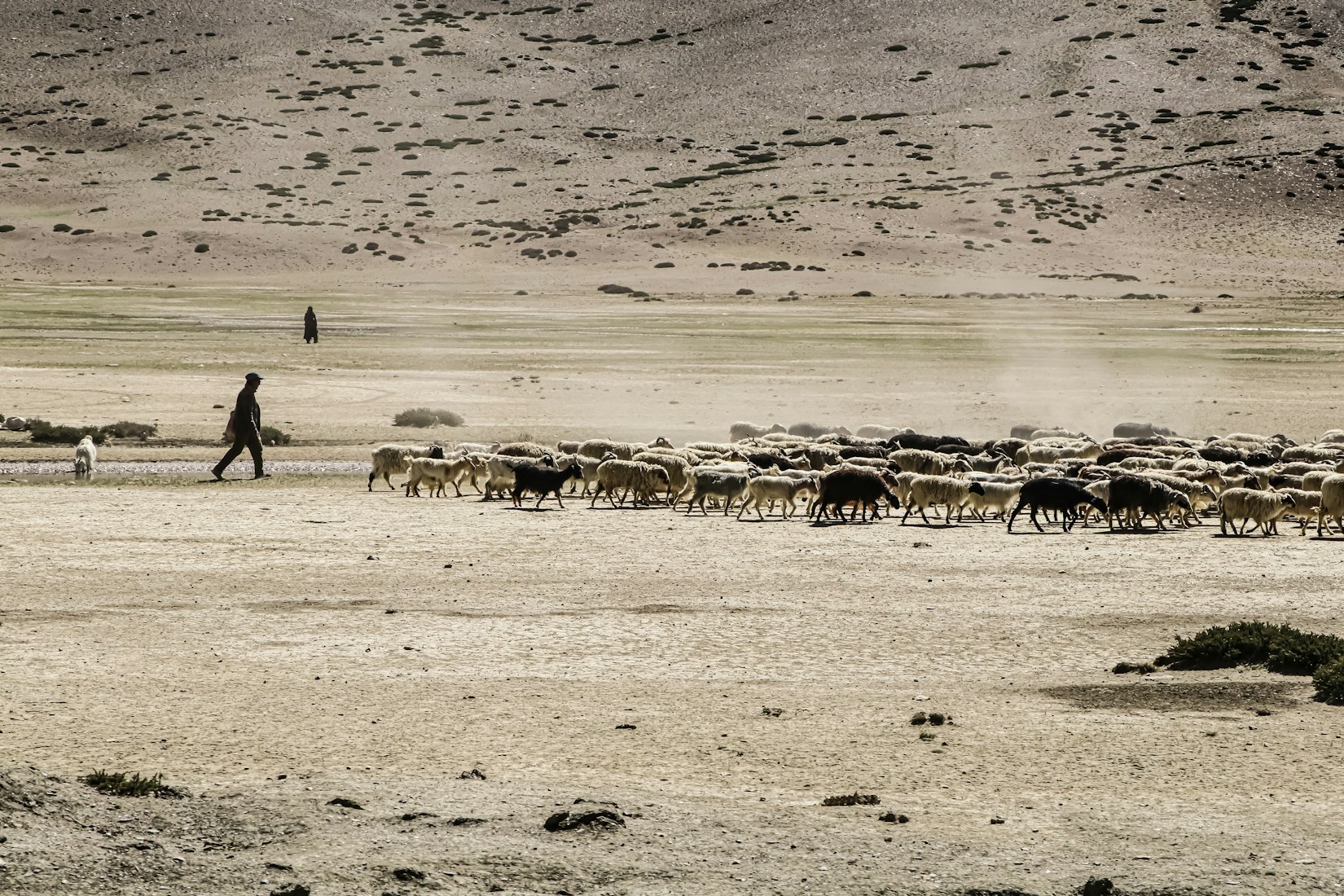
Shepherds, work, and the interruption of burning bushes.

I have it on good authority that farmers work hard and I’m sure shepherds are no different, which is what makes Moses’ story all the more interesting. Some say bushes that spontaneously burn aren’t all that rare in the Sinai area, although that appears to be debunked here. Regardless, the fact that another bush was burning was perhaps more of a distraction than an attraction for Moses.

I have limited experience with sheep. The farm where Eva and I are currently living has three sheep and last week, while the family was away on vacation, we had to take care of said sheep. It isn’t all that hard — we had to take them out to the pasture in the morning, move them around during the day, and return them to their pen at night. It sounds simple but it was a little more involved than that. We had to make sure the sheep made it to their mobile pen in the pasture, a process that involves dragging them past much more appealing foliage to the foliage that we had chosen for them. It also sometimes involves chasing and catching said sheep to make sure they go where we wanted them to go. We also had to carry a 5 gallon bucket of water out to them and make sure that they stayed watered. When the grass in their moveable pen was consumed we needed to move them to a new location, sometimes ensuring that they had some shade. Daniel usually brought them in at night and his technique was running as fast as possible beside them so that they remained focussed on the destination rather than all the sweet grasses along the way.

I also recently watched Clarkson’s Farm on Amazon Prime. In the show, Jeremy Clarkson takes over his farm when his previous manager retired. The show follows him along as he learns the ropes on what it takes to run a farm in Britain. One aspect to Clarkson’s farm is sheep and there are several episodes devoted to what it means to farm sheep, including being up at all hours to birth them, making sure that the mothers and lambs are all caring for each other while in the pasture, and moving them to a new pasture without them getting into the neighbour’s fields.

It is a lot of work for those of us caring for just a few sheep. How much more a traditional shepherd with a full-size herd that she needs to keep track of? [Just as an aside, did you know that Rachel is one of the few named shepherds in the Bible? Check out her story in Genesis 29]

Which leads us to the question, “Why would a busy guy like Moses take the time to go see the burning bush?” What made him realise that it wasn’t merely a distraction and was something work making him take time out of his busy schedule? The Bible doesn’t say a lot about Moses’ thought process other than to say, “I must go over there and see this strange sight.” There was something strange that attracted his attention.

Moses’ situation reminds me to ask myself if I pay attention to “strange sights” in my day-to-day life that may be God’s attempts to get my attention. [Note that God will always eventually get my attention, as I have written about here.] In what ways does my busyness keep me from opportunities to encounter God? How do I distinguish distraction from a God-encounter? Are distractions in fact invitations from God?

I guess one type of distraction is internet use. But while some of the things that we encounter on the internet may be strange, this type of distraction can’t be labelled a “strange sight” in the way Moses labelled the burning bush. The burning bush got Moses’ attention while he was doing other things that he normally did. It pulled him away from the usual into the unusual. So sorry, we can’t use Moses as an excuse for always being on the internet.

Another type of distraction is escapist fiction. Who doesn’t love a great story that takes you away from your present life and allows you to live in a virtual world of adventure, excitement, and love? I am currently enjoying Burrough’s John Carter series. But yet again, this is a type of distraction that we bring upon ourselves and is not the type of distraction that God introduces into our loves for his purposes.

I suspect the kinds of distractions that God tries are things that distract us from our distractions. Some distractions are actually a call back to the real world. They interrupt our escapes and bring us back to reality. That’s what the burning bush did for Moses after all.

Once, many years ago, while I was talking to a friend, my daughter came up to me because she wanted to show me her new dress. Did I look at her new dress? No. I saw what she was doing as a distraction from what I was doing. If I had it to do over again I would say, Excuse me, to my friend and take a look at Emily’s new dress. Perhaps God was saying, “Pay attention to your family.”

What I my response when someone talks to me while I am watching a TV show? Do I see it as an interruption or a call to engage with someone in real life? What is my response when I and deeply thinking about the solution to a problem and my wife approaches me with a solution? Am I reminded that we are a team and can work things out together, or do I feel interrupted? What about when someone offers me constructive criticism? Do I see it as a change to improve or as a challenge to my abilities? I must confess that I often get these kinds of things wrong.

So what types of distractions have turned into God encounters for you?

Feedback is always welcome.

Sharing is what friends do.

Image Sandeep Kr Yadev on Unsplash.

Of monuments and unmarked graves: Is it right to commemorate those responsible for the residential school system while ignoring its victims?

There have been many calls over the past years to either remove statues/honours or preserve them. Most recently in Canada these include people connected to the Indian Residential School System, including statues of Sir John A. MacDonald, the university named after Egerton Ryerson, and the honorary degree given to Bishop John O’Grady by the University of British Columbia. Those on social media who oppose removing memorials see them as a part of history that shouldn’t be changed.

How can we navigate issues like this? One good place to start is by understanding the difference between the Past and History — and no, they aren’t the same thing.

The events of the Past are unchangeable. The past rolls on continuously and inexorably. But there is no DVR or VHS for the past. The only thing that can be changed is the future. As Jose Rizal said, “Ang hindi marunong lumingon sa pinangalingan ay hindi makakarating sa paroroonan.” [“Whoever doesn’t know how to look to where they came from will not arrive where they are going.”]

History, on the other hand, is different from the Past. History is the interpretation of the events of the past. Because it is interpretation it is subject to change and reassessment.

Now let’s apply these ideas to statues. Is a statue the past or is it history? It’s history because it is the commemoration of a person deemed significant in the past. As Charlottetown, PEI, Coun. Greg Rivard says, “I don’t think removing a statue erases any history. A statue is symbolic of something, and I don’t think right now that the statue is symbolic of the right things.”

What about a grave? Is a grave the past or is it history? Graves are the past. This is because in most cases, actual people are buried in a grave. There are of course many types of grave. There are marked graves, complete with gravestone and epitaph. There are commemorative graves — for example the Tomb of the Unknown Soldier — where the person buried within is unknown but is representative all those who died for their countries but remain unidentified. Then there are mass graves or unmarked graves. Mass graves generally hold the bodies of those who have died in a tragedy.

Now what about when the victims of those memorialised and commemorated with statues are buried in unmarked graves? In May 2021, the unmarked graves of 215 First Nations children, whose deaths were undocumented, were discovered on the grounds of a former Residential School in Kamloops, BC. It doesn’t seem right to continue to commemorate or memorialise those responsible for the residential school system when these children have been abandoned and forgotten does it?

But it is one thing for this to be socially reprehensible. We also need to ask what the Bible says about stuff like this. I can think of two ideas in the Bible that apply here.

The Bible has a high regard for children:

Psalm 127:3 says, “Children are an inheritance from the Lord. They are a reward from him.”

Jesus had a high regard for children, even when society seemingly didn’t. We see this a couple of times, including Mark 10:13-16 that says, “Some people brought little children to Jesus to have him hold them. But the disciples told the people not to do that. When Jesus saw this, he became irritated. He told them, “Don’t stop the children from coming to me. Children like these are part of God’s kingdom. I can guarantee this truth: Whoever doesn’t receive God’s kingdom as a little child receives it will never enter it.” Jesus put his arms around the children and blessed them by placing his hands on them.”

Matthew 18:2-5 says, “I can guarantee this truth: Unless you change and become like little children, you will never enter the kingdom of heaven. Whoever becomes like this little child is the greatest in the kingdom of heaven. And whoever welcomes a child like this in my name welcomes me.”

Caring for widows, orphans, and foreigners is important to God:

James 1:27 says, “Pure, unstained religion, according to God our Father, is to take care of orphans and widows when they suffer and to remain uncorrupted by this world.”

The Bible even has harsh words for those who don’t treat children appropriately:

“These little ones believe in me. It would be best for the person who causes one of them to lose faith to be drowned in the sea with a large stone hung around his neck” (Matthew 18:6).

A millstone around the neck certainly isn’t commemoration is it?

Feedback is always welcome!

Image by NeONBRAND on Unsplash.

Nightmares vs Daydreams: Which do you think are more dangerous?

People often said when I was younger that I lived in a dream world — and that was true. I did spend a lot of time dreaming of an imaginary world. It is strange, however, that daydreams are often thought of as being a trivial waste of time. “It’s better,” they say, “to live in the real world.” What is also interesting is that we often think of nightmares as dangerous We worry about nightmares. We try to stop nightmares. We even make movies about them that frighten us into even more nightmares!

In reality, we should really spend more time concentrating on daydreams. Nightmares, after all, only last for a few brief moments. It’s the dreams that we have while awake that are truly dangerous because we can dream them for a lifetime, and in the end make them come true. 

As TE Lawrence says, 

“All men dream, but not equally. Those who dream by night in the dusty recesses of their minds, wake in the day to find that it was vanity: but the dreamers of the day are dangerous men, for they may act on their dreams with open eyes, to make them possible.”

Here are my daydreams:

  • I dream of a world where the rule and leadership of Jesus makes the world a better place. A place where the poor hear good news, where prisoners are made free, where the blind can see, where the oppressed are set free, and where the Lord looks with favour on all people. 
  • I dream of a world where the values of the world are the values of God’s kingdom. 
  • I dream of a world where we love each other like we love ourselves. This is best expressed by the Tagalog word kapwa, or “shared being.” 
  • I dream of a world where the truths we shape is the Truth that is revealed to everyone by God, applied to our own cultural and local contexts. 

It is easy to dream such dreams. It is harder to make these dreams come true. But as the old saying goes, “Begin with the end in sight.” 

Keep on daydreaming!

Photo by Jonathan Mabey on Unsplash.

Anthony Bradley’s Functional church made practical –> On “loving the city” long-term

Functional church anyone? This guy (Anthony Bradley) has got the idea right. But not just the idea, the practice that goes with it! He doesn’t care about forms and appearances but is solely concerned with church engaging society. I like it a lot (even if it is scary).

A functional church really has to get down to this level — the behind-the-scenes-not-pretty-but-really-where-the-problem-is kind of stuff.

It’s one thing to set up a place to get together and talk but it is quite another to take a stand and try to root out some really issues.

Here is the link to the article:

On “loving the city” long-term (in contrast to well-intentioned hipster, neo-paternalistic versions) – The Institute.

What things would you add to the list?