Thoughts on drought in a very dry year. Is this drought a call for justice?

Saskatchewan is in the middle of a drought. A drought in its simplest form is when there isn’t enough rain to make the crops grow. The lack of snow and rain over the past year, coupled with record-high temperatures, have succeeded in drying out the soil to the point where crops are not growing. It isn’t the first drought to hit Saskatchewan and probably won’t be the last. Some say that drought is a direct result of climate change, which some say is caused by human activity.

The plight of the Saskatchewan farmer has more meaning for me this year since my wife and I have been spending a lot of time on the farm. It makes me want to find ways to help.

The Bible says that drought can at times be a sign of God’s judgment against structural evil. It got me thinking. Is it possible that the current drought is connected with recent revelations about Canada’s founding principles? For those unaware, headlines in Canada have been dominated by stories of the Indian Residential School System, an official policy by the Government of Canada and church groups to “remove the Indian” from First Nations children — basically the government of Canada had a policy of cultural genocide against First Nations peoples in an effort to both make them better citizens and to convert them to Christianity. North American society has also been rocked over the past several years with calls for justice for the systemic mistreatment of women, for systemic racism, for legacies of slavery, and for other historical injustices. I have written about some of these things here, here, and here.

At this point I need to offer some clarification lest I be misunderstood: As I have written elsewhere, structural and natural evils are different from personal evil. Structural evil is a system or pattern of beliefs or activities in an organization or culture that hinders or opposes the advance of God’s kingdom in this world. Natural evil includes things like famine, drought, disease, wild animals, floods, storms, and disease. So any judgment on structural or natural evil is not on individual farmers for their sins but on society as a whole for its sins.

But even though the reasons may be systemic, the impact is indeed personal. There are mental stresses associated with farming and drought. Farmers are extremely resilient. I recall a conversation I had with someone in the Ag industry in Saskatchewan a few years ago. He said he respects how farmers are able to do everything that they can to grow good crops but the fact remains that a major part of farming is out of their control — namely the weather — and that they continue to do it year in and year out regardless of how the previous year went.

In times like this, Christians like to quote 2 Chronicles 7:14 which reads, “However, if my people, who are called by my name, will humble themselves, pray, search for me, and turn from their evil ways, then I will hear ⌞their prayer⌟ from heaven, forgive their sins, and heal their country” (God’s Word).

Of course Canada has never claimed to be Christian nation so I am genuinely not sure how this verse can be applied today, but the Bible gives many examples of God’s interest in the nations including both blessings and curses.

The very first mention of natural evil in the Bible is in the context of farming. Adam was told by God in Genesis 3:17-19:

”The ground is cursed because of you. Through hard work you will eat ⌞food that comes⌟ from it every day of your life. The ground will grow thorns and thistles for you, and you will eat wild plants. By the sweat of your brow, you will produce food to eat until you return to the ground, because you were taken from it. You are dust, and you will return to dust” (God’s Word).

So it’s not completely crazy to assume that the land responds to structural sin, meaning that even if the 2 Chronicles 7:14 quote isn’t entirely apropos for today’s world, it might be apropos for drought situations since the immediate context of the verse is drought brought upon by society’s sins.

In any case, what would “humble themselves and seek my face” mean in light of the new call for social justice?

One aspect would have to include repentance. Repentance is hard to do because it involves not only humility but admitting that we are wrong. I don’t know about you but I don’t like doing that. So just at that level repentance is problematic. How much more public repentance?

Another aspect would have to be renovation. Repentance also includes making sure the future is better. It means changing the way I think and act. It means rectifying the past — rectification means rebuilding or renovating those past actions that I want to repent from. Renovation is hard because it starts with tearing things down. Some use the word “deconstruction” for this — a rather complex term that we don’t have time to go into today. I will say this, though. While deconstruction may include the use of a sledgehammer, it also has a level of control. It’s not mere demolition but needs to have some order to it, it needs to be systematic, and it needs to be useful.

The Bible does speak of a generational aspect to sin, which connects us to the sins of the past even if we weren’t present during those times. The lives we live today may have been directly impacted by decisions made by our progenitors and that means that we may still benefit from their sins.

Reconciliation also has to be a part of it. To be reconciled is to have a restored relationship. It is what happens when people humble themselves, repent, and renovate.

So then, how can we help farmers? We need to make some decisions. What does our nation need to repent from? What do we need to tear down? What do we need to renovate? How can I participate in building a new nation?

Maybe we can start here:

  • Revisit “truth.” Is what I think to be true actually the Truth?
  • Repent & Ask Forgiveness.
  • Practice Reconciliation.

Feedback is always welcome.

Sharing is what friends do.

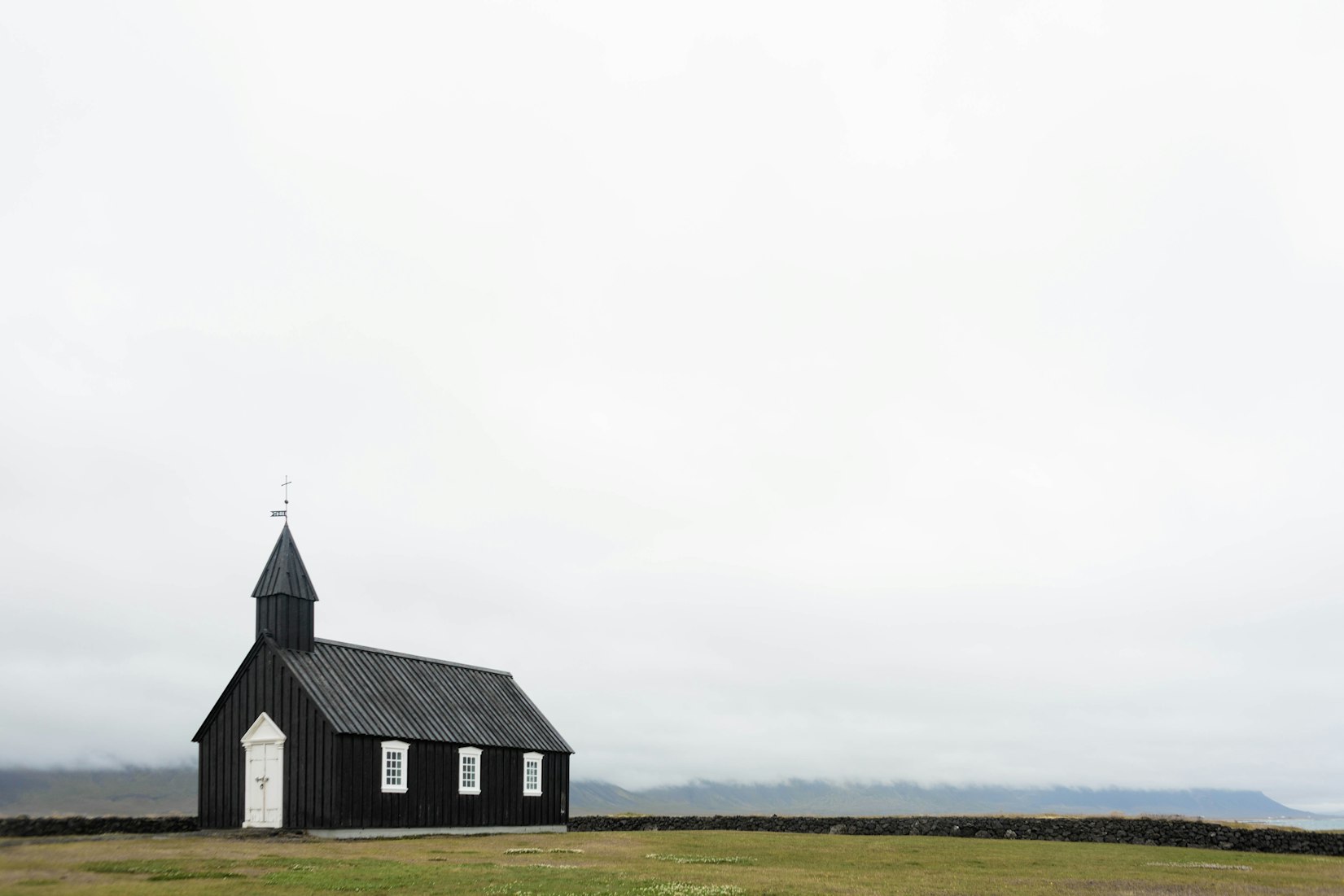
Image by Maud Correa on Unsplash.

How can the church partner with the world while maintaining its identity? By imitating Jesus’ Changing Water into Wine. Lessons from Thomas Aquinas.

“All truth is God’s truth.”

I can’t tell you how many times I heard this while I was in seminary. And that was a good thing because I needed to hear it. I had spent the years leading up to seminary developing my understanding of truth that was pretty much limited to what the Bible (or at least my interpretation of the Bible) had to say. Any claims to truth outside of the Bible were suspect for me.

I even remember a time in a class I took at USask on Religious Perspectives on Death and Dying when I had to comment (in a test) on the validity of the fictional Death of Ivan Illich to my understanding of death and dying. My reply was that since it was fiction it wasn’t true! Wise Professor Robert Kennedy pointed out that truth can be found in a variety of areas of life including fictional accounts.

And it appears this debate isn’t all that new. The other day I took a look at Mitchell Atencio’s interview Why Nathan Cartagena Teaches Critical Race Theory to Evangelicals with Nathan Cartagena on Sojourners and saw a great idea from Thomas Aquinas.

In 1261, a few years before I went to seminary, Thomas Aquinas wrote a commentary on Boethius’ On The Trinity. Apparently some agreed with my early ideas — that blending God’s Truth with rational truths somehow muddies the mixture. Article 3 of Super Boethium De Trinitate by Thomas Aquinas answers this question in a very interesting way:

“5. It may be said: No conclusive argument can be drawn from figurative speech, as the Master (Peter Lombard) says. Dionysius also says in his letter to Titus that symbolic theology has no weight of proof, especially when such interprets no authority. Nevertheless it can be said that When one of two things passes into the nature of another, the product is not considered a mixture except when the nature of both is altered. Wherefore those who use philosophical doctrines in sacred Scripture in such a way as to subject them to the service of faith, do not mix water with wine, but change water into wine.”

Part of the problem that I faced in the early years of my theological formation was that I somehow believed that the world was divided into two parts: Sacred and Secular. As as young Christian I was warned about the dangers of the world — the danger that I would become worldly. This came out in many areas, including concepts like Christian music, Christian schools and colleges, and Christian bookstores. There was also the idea that people needed to leave the world and join the church. Interestingly there was never an idea that through my influence the world would become holy.

How can we apply Aquinas’ concepts of changing water to wine to the whole sacred-secular debate? The sacred-secular debate keeps the two worlds apart because of fear of contamination — but a contamination that always goes from good to bad. Aquinas says that in order for two ideas to mix that they both need to change. When it comes to God’s truth however, the end result is not a mixture of good and bad but a transformation of the bad into good, much in the same way that Jesus changed water into wine.

So, that brings us to current issues where this can be applied. I can think of three examples. When I was younger the bad guy was psychotherapy. Psychotherapy was bad for reasons that I can’t remember. Fortunately today I have personally benefitted from people who have been successful in blending the truths of God that can be found in psychotherapy with the truths of God found in scripture and have applied those truths into my life.

Christians have also had a love-hate relationship with science throughout the years. Some have suggested that vaccine hesitancy among some Christians is a direct result of the religion-science debate. The argument seems to go along the lines of, “Science promotes evolution that directly goes against the creation accounts of the Bible. If then scientists tell us that vaccines are ok that must mean that they aren’t ok.” What we as Christians often forget, though, is that the early scientists were in fact men and women of faith who desired to know more about God’s creation and started an in-depth study of it.

There has been a lot of talk of late in the church about Critical Race Theory. And that is in fact with the Nathan Cartagena interview is about. The main objection appears to be something like, “CRT is bad because it is Marxism.” Once again the fear of the world influencing the church rather than the church influencing the world rears its ugly head. What we often forget is that justice is one of the key aspects of the Kingdom of God but since it has been neglected so much by the church we need the expertise of those who have thought about justice issues in depth.

Of course I am not advocating an uncritical approach to these issues. As Aquinas himself tells us to “subject [rational philosophies] to the service of faith.” But what I am advocating is that Christians tap every resource available as we seek to turn the water of the world into the wine of proclaiming the Good News of Jesus Christ, establishing the values of the kingdom of God, serving God and neighbour, and testifying to God’s truth.

After all, Jesus promises that “the gates of hell will not prevail” against the church. Why should we act as if it already has?

Feedback is always welcome.

Sharing is what friends do.

Image by Klara Kulikova on Unsplash.

Of Governments and Hope: Where should I look for hope?

The Bible doesn’t really have all that great a view of governments. Certainly we are to obey governments but that’s not what i mean. The bible’s best option for human governance is always presented as being God.

We see this throughout the story of Israel in the Old Testament. Israel is freed from Egypt because Egypt’s government had enslaved them. God then led them through the wilderness to the Promised Land.

We see this in the story of Israel’s first king — Saul — a move that God saw as being a rejection of his rule, and even the most cursory of reads of Samuel, Kings, and Chronicles shows us the failure of this system.

We also see this in the choice of Matthew, Mark, Luke, and John to use the term “gospel” when identifying their story type; gospel or good news being the term Roman Emperors used to describe their own ascension to the throne. The four are in essence saying, “Jesus is a better emperor than Rome’s!”

That’s why government in the Bible is often referred to as an animal (most translations maintain the archaic expression “beast,” but as I’ve said here and here that that leads to strange interpretations). What this means is that we shouldn’t be surprised when the government tears us to pieces. The example in Canada at the moment is the whole Indian Residential School system (which I have written about here, here, and here) but I am sure we can come up with countless other ways governments around the world mess things up. Some organisations —such as Transparency International, Amnesty International, and Wikileaks — exist merely to evaluate the level of mess that governments make. Of course in the Biblical examples we also see some animals that have fatal wounds but don’t die, perhaps indicating domesticated governments who aren’t as powerfully bestial.

This is of course the danger of identifying any human political theory or system with God’s way. One recent Facebook conversation I had highlighted this. My friend pointed out the abuses that more leftist firms of government were guilty of, including the top echelons becoming rich while the rest remained poor. Of course the same could be said for rightist governments and their billionaires. Apart from this there are the similarities between parties on a vast range of issues — their differences are often highlighted but their end policies often end up being the same.

Regardless of the level of wildness in government, it is clear that something else is needed. So what’s the solution? I see at least two:

Lamb of God. The Bible describes Jesus as being more like a lamb than an animal. Certainly He is also the Lion of the Tribe of Judah, but in the context of the animal or beast language used in some parts of the Bible, Jesus as lamb is contrasted. No one in the created world — animals included — is found worthy to get God’s plan rolling: “” Eventually it is the lamb who was slain who is able to open the seals.

The kingdom of the world has become the kingdom of our Lord and of his Messiah, and he will rule as king forever and ever.” It’s the phrase “has become” that I would like to focus on. How does this process happen? There are some that view eschatology as something God does at the end of time. Our only tole as humans is to be the cause of the end because of our unbridled wickedness.

But I wonder if that is indeed the way things are meant to happen? If our wickedness brings about the end, is it possible for us to work together with God in the transformation of the kingdom?

Certainly God has included humans in his plans. Jesus did after all commission his human disciples (including us) to make disciples of all nations. Whose disciples are these to be? Jesus’ disciples of course. What will these disciples do?

Disciples are filled with the spirit, whether that means being empowered to do the work of God, to a way to cope with the troubles of the world without using addictions.

Disciples reconcile people to God and to each other. Paul talks about the ministry of reconciliation that we have on earth. This reconcilition imitates what God through Jesus began. He then says that “has given us this ministry of restoring relationships” as well.

Disciples bear fruit. We often interpret this to mean make disciples but fruit in the Bible more often than not refers to a personal transformation. This is best exemplified in lists of comparisons, most famously enumerated in Galatians 5, but also found elsewhere.

Disciples continue Jesus’ Isaiah 61/Luke 4 tasks of proclaiming Good News, forgiving others, giving sight to the blind, and freeing the captives.

Unfortunately the church hasn’t always been successful at fulfilling these tasks. What’s also unfortunate is that I have not always been successful at fulfilling these tasks. We have a lot to work on, both corporately and as individuals, in the process of working together with God for the transformation of our societies.

I wonder what we should work on first?

Feedback is always appreciated.

Follow my blog or subscribe via email (on the left) to stay up to date!

Image by Bill Fairs on Unsplash.

Church, modified.

Church.

It doesn’t matter what you add to the word or how you modify it, it still means the same basic thing.

  • Underground church is a church that remains as hidden as possible due to persecution.
  • Local Church is a church in one community.
  • House church is a church that meets in someone’s house (or office, or third place).
  • Universal church is the church that has existed, exists today, and will exist in the future.
  • Indigenous church is a church that is contextualized to a certain society.
  • Persecuted church is a church that is being persecuted by another religion or by the government.
  • Mega Church is a really big church.
  • Cell Church is a really small church.
  • Online church is the online portion of a local church, whether live or prerecorded.
  • Virtual church is where every aspect of the church exists in the virtual world.
  • Live-streamed church is when a church broadcasts it’s Sunday morning services live online.
  • In-person church is when people gather for face-to-face meetings.
  • Church at home is when families worship at home.

But guess what? It’s all still church.

So what does that mean?

We should continue to be the church regardless of which modifier we pick.

  • We should continue to proclaim the good news the Jesus is our king.
  • We should live out the values of the Kingdom of God.
  • We should love God and love our neighbour.
  • We should bear witness to the truth.

How will you be the church today?

Feedback is always welcome!

Image by Skull Kat on Unsplash.

Of monuments and unmarked graves: Is it right to commemorate those responsible for the residential school system while ignoring its victims?

There have been many calls over the past years to either remove statues/honours or preserve them. Most recently in Canada these include people connected to the Indian Residential School System, including statues of Sir John A. MacDonald, the university named after Egerton Ryerson, and the honorary degree given to Bishop John O’Grady by the University of British Columbia. Those on social media who oppose removing memorials see them as a part of history that shouldn’t be changed.

How can we navigate issues like this? One good place to start is by understanding the difference between the Past and History — and no, they aren’t the same thing.

The events of the Past are unchangeable. The past rolls on continuously and inexorably. But there is no DVR or VHS for the past. The only thing that can be changed is the future. As Jose Rizal said, “Ang hindi marunong lumingon sa pinangalingan ay hindi makakarating sa paroroonan.” [“Whoever doesn’t know how to look to where they came from will not arrive where they are going.”]

History, on the other hand, is different from the Past. History is the interpretation of the events of the past. Because it is interpretation it is subject to change and reassessment.

Now let’s apply these ideas to statues. Is a statue the past or is it history? It’s history because it is the commemoration of a person deemed significant in the past. As Charlottetown, PEI, Coun. Greg Rivard says, “I don’t think removing a statue erases any history. A statue is symbolic of something, and I don’t think right now that the statue is symbolic of the right things.”

What about a grave? Is a grave the past or is it history? Graves are the past. This is because in most cases, actual people are buried in a grave. There are of course many types of grave. There are marked graves, complete with gravestone and epitaph. There are commemorative graves — for example the Tomb of the Unknown Soldier — where the person buried within is unknown but is representative all those who died for their countries but remain unidentified. Then there are mass graves or unmarked graves. Mass graves generally hold the bodies of those who have died in a tragedy.

Now what about when the victims of those memorialised and commemorated with statues are buried in unmarked graves? In May 2021, the unmarked graves of 215 First Nations children, whose deaths were undocumented, were discovered on the grounds of a former Residential School in Kamloops, BC. It doesn’t seem right to continue to commemorate or memorialise those responsible for the residential school system when these children have been abandoned and forgotten does it?

But it is one thing for this to be socially reprehensible. We also need to ask what the Bible says about stuff like this. I can think of two ideas in the Bible that apply here.

The Bible has a high regard for children:

Psalm 127:3 says, “Children are an inheritance from the Lord. They are a reward from him.”

Jesus had a high regard for children, even when society seemingly didn’t. We see this a couple of times, including Mark 10:13-16 that says, “Some people brought little children to Jesus to have him hold them. But the disciples told the people not to do that. When Jesus saw this, he became irritated. He told them, “Don’t stop the children from coming to me. Children like these are part of God’s kingdom. I can guarantee this truth: Whoever doesn’t receive God’s kingdom as a little child receives it will never enter it.” Jesus put his arms around the children and blessed them by placing his hands on them.”

Matthew 18:2-5 says, “I can guarantee this truth: Unless you change and become like little children, you will never enter the kingdom of heaven. Whoever becomes like this little child is the greatest in the kingdom of heaven. And whoever welcomes a child like this in my name welcomes me.”

Caring for widows, orphans, and foreigners is important to God:

James 1:27 says, “Pure, unstained religion, according to God our Father, is to take care of orphans and widows when they suffer and to remain uncorrupted by this world.”

The Bible even has harsh words for those who don’t treat children appropriately:

“These little ones believe in me. It would be best for the person who causes one of them to lose faith to be drowned in the sea with a large stone hung around his neck” (Matthew 18:6).

A millstone around the neck certainly isn’t commemoration is it?

Feedback is always welcome!

Image by NeONBRAND on Unsplash.

Is it possible to sin in the Name of Jesus?

Shocking news out of Kamloops. A graveyard containing the bodies of 215 first nations youngsters was discovered on the site of a residential school. What makes things worse is that the school in question was run by people who bear the name of Jesus.

I should clarify that while the news is shocking for the general Canadian population, First Nations peoples are intimately acquainted with stories like this.

For those unaware, residential schools were a part of Canada’s Aboriginal policy. The Truth and Reconciliation Commission’s report on Canada’s Residential Schools says it this way:

“For over a century, the central goals of Canada’s Aboriginal policy were to eliminate Aboriginal governments; ignore Aboriginal rights; terminate the Treaties; and, through a process of assimilation, cause Aboriginal peoples to cease to exist as distinct legal, social, cultural, religious, and racial entities in Canada. The establishment and operation of residential schools were a central element of this policy, which can best be described as ‘cultural genocide.’

“Cultural genocide is the destruction of those structures and practices that allow the group to continue as a group. States that engage in cultural genocide set out to destroy the political and social institutions of the targeted group. Land is seized, and populations are forcibly transferred and their movement is restricted. Languages are banned. Spiritual leaders are persecuted, spiritual practices are forbidden, and objects of spiritual value are confiscated and destroyed. And, most significantly to the issue at hand, families are disrupted to prevent the transmission of cultural values and identity from one generation to the next.

“In its dealing with Aboriginal people, Canada did all these things.”

What makes the Residential school narrative especially troubling is the deep participation of the church — those who bear Jesus’ name — in the whole mess. It causes a guy like me, who identifies as a Jesus follower and who is into theology and mission, to ask what went wrong?

Bishop Vital-Justin Grandin, of one of the key advocates of residential schools, wrote in 1880 about the purpose of residential schools:

“To become civilized they should be taken with the consent of their parents & made to lead a life different from their parents and cause them to forget the customs, habits & language of their ancestors.”

Unfortunately the history of missions is full of stories like this.

What is odd is that the Bible is very clear when it comes to culture and faith. Revelation 5:9 and 7:9 both speak of people from every nation, tribe, people, and language being a part of God’s kingdom. What does that mean in practical terms? When we bear the name of Jesus we attempt to have people meet him on their own terms, using their own language, in their own cultural context, in their own place. And when people from every nation, tribe, people, and language get to heaven their uniqueness is celebrated!

The rest of the New Testament is a study in contextualization as people from various cultures and places found ways — through the guidance of the Holy Spirit — to embed Jesus into their own contexts.[1]

I will make a bold statement: If your theology states that someone needs to abandon their own cultural identity — and to subsequently adopt a new cultural identity — in order for them to follow Christ, then your theology has no connection to Jesus.

Having said all of that, even if we weren’t physically present during these atrocities, we are still complicit in them because people bearing Jesus’ name did these things. Don’t we also bear Jesus name?

“I pray Lord that I would see where I am wrong in the things I do today. Forgive me for those things I have done in your name that misrepresent who you are. Lord heal our land.”

Image by Leesa Epp.

1. See Dean Flemming’s Contextualization in the New Testament: Patterns for Theology and Mission for more on this.

Nightmares vs Daydreams: Which do you think are more dangerous?

People often said when I was younger that I lived in a dream world — and that was true. I did spend a lot of time dreaming of an imaginary world. It is strange, however, that daydreams are often thought of as being a trivial waste of time. “It’s better,” they say, “to live in the real world.” What is also interesting is that we often think of nightmares as dangerous We worry about nightmares. We try to stop nightmares. We even make movies about them that frighten us into even more nightmares!

In reality, we should really spend more time concentrating on daydreams. Nightmares, after all, only last for a few brief moments. It’s the dreams that we have while awake that are truly dangerous because we can dream them for a lifetime, and in the end make them come true. 

As TE Lawrence says, 

“All men dream, but not equally. Those who dream by night in the dusty recesses of their minds, wake in the day to find that it was vanity: but the dreamers of the day are dangerous men, for they may act on their dreams with open eyes, to make them possible.”

Here are my daydreams:

  • I dream of a world where the rule and leadership of Jesus makes the world a better place. A place where the poor hear good news, where prisoners are made free, where the blind can see, where the oppressed are set free, and where the Lord looks with favour on all people. 
  • I dream of a world where the values of the world are the values of God’s kingdom. 
  • I dream of a world where we love each other like we love ourselves. This is best expressed by the Tagalog word kapwa, or “shared being.” 
  • I dream of a world where the truths we shape is the Truth that is revealed to everyone by God, applied to our own cultural and local contexts. 

It is easy to dream such dreams. It is harder to make these dreams come true. But as the old saying goes, “Begin with the end in sight.” 

Keep on daydreaming!

Photo by Jonathan Mabey on Unsplash.

What issues confront me as I seek to pastor my online community (that sometimes may be a mob) even when I am also a part of the mob?

Engaging society is sometimes like pouring coffee into a series of cups stacked on top of each other. Even though the coffee will sometimes spill over onto the floor, some of it will make it to its intended place. How can I, as a pastor, help make sure that the “coffee” ends up in the right place? How can I keep the from spilling the coffee?

I have written about how my friend Dwayne Harms helped shape my belief that I am the pastor of more than my church; I am also the pastor of my community. That has shaped my engagement on the internet as well. My internet experience pre-dates social media! In the days before Web 2.0 I enjoyed engaging others on email lists. But the downside of all of that fun has been that for years I have struggled to find balance on how to engage on the internet.

Now at this point I do need to give a shout out to my mother who exemplifies what it means to be a justice warrior. She has never shied away from personally intervening in situations that are unjust. She is a good model! I get my sense of justice and injustice from her.

Carey Nieuwhof’s latest post on “How to Pastor a Mob” gives some good advice. I should point out that the “mob” Nieuwhof is referring to is primarily the vast, unknown world of the internet — the world that focusses on hot topics and the latest crazes and proceeds largely like a bull in a china shop. Of course sometimes the world of the mob collides with the worlds that I live in. This is what makes things more difficult.

One thing I have done is to unfollow (or unfriend) when reading posts that consistently cause stress. That has made my online experience more enjoyable. I guess my fear is that I may become someone who others want to unfollow/unfriend! How do I avoid that?

Here are a couple of points Carey makes that I found helpful:

“So what do you? How do you respond? The line I’ve tried to follow, sometimes successfully and sometimes not, is to be what I hope to see. In other words, if you hope to see people behaving reasonably, be reasonable.”

This, of course, is easier said than done! Sometimes I don’t want to be reasonable. Sometimes I don’t want to be calm, cool, and collected. But I will tell you one thing, my day goes better when I do respond in a reasonable way.

So how to do it? I sometimes write down my desired reply and read it over before carefully deleting it. I then try to write a more reasonable response. Often it takes prayer and even a day’s thought before the proper response comes to mind.

Of course, those of you who know me and who may follow me on social media know that my response is unfortunately not always this measured.

“There are also times I’ve tried to win over irate people online. I find I can’t. I can usually diffuse a situation in real life. On the internet? Almost a 0% success rate. So I no longer try. I’ve also tried to discuss things online with people who have extreme and public views on subjects. Trying to change their minds is like trying to move a 10 ton block of steel with your baby finger. Not only does the steel not budge, you now have a broken finger. The best way to react to angry, extreme views is to be what you hope to see.”

This is perhaps harder than the first issue I talked about because as a pastor one of my roles is what is called marturia, or truth telling. It is very hard for me to see some untruths without seeking to correct the errors that I see. There are two problems with this. First, it would be impossible for me to be able to correct all the errors out there, which means I need to learn which errors I am going to focus on. The second problem is even harder because it means that I need to recognise that the error may often be from my end.

And that’s the real issue isn’t it? Sometimes I am a part of the mob.

What issues confront you as you seek to pastor your community (that sometimes may be a mob)? In what areas are you also a part of the mob?

Photo by Nathan Dumlao on Unsplash.

Anthony Bradley’s Functional church made practical –> On “loving the city” long-term

Functional church anyone? This guy (Anthony Bradley) has got the idea right. But not just the idea, the practice that goes with it! He doesn’t care about forms and appearances but is solely concerned with church engaging society. I like it a lot (even if it is scary).

A functional church really has to get down to this level — the behind-the-scenes-not-pretty-but-really-where-the-problem-is kind of stuff.

It’s one thing to set up a place to get together and talk but it is quite another to take a stand and try to root out some really issues.

Here is the link to the article:

On “loving the city” long-term (in contrast to well-intentioned hipster, neo-paternalistic versions) – The Institute.

What things would you add to the list?

Here’s How 1 Church Defines Functionality

Of course in a blog entitled “The Functional Church Blog” it might be a good idea to add real-life examples of churches that are acting in functional ways. One of those churches is locally known as Hope Christian Fellowship Transformational Ministries (HCFTM). Here’s how this church defines functionality. They think that it is so important that they decided to add these four points to their statement of faith.

1. Proclamation is HCFTM’s way of declaring the Good News of Jesus Christ to all people. We declare Jesus as Lord and Saviour of our community and we recognise His central role in transforming the world through intentional evangelism, communicated effectively in a culturally-relevant way by people who have themselves experienced the transforming power of God.

2. Service is HCFTM’s way of showing the love of God to people both inside and outside of our faith community though acts of mercy, relief rehab and development. We will be engaging in educational ministry services such as establishing schools of all levels. We will be delivering free medical-dental clinics. We will be conducting livelihood programs for the poor of our communities.

3. Truth-telling is HCFTM’s way of being God’s prophetic voice by engaging society with biblical truth through participation in public advocacy, social justice, value transformation, promotion of freedom, engagement in the public square, involvement in market places, and the transformation of public perception through education, evangelism, church planting, intercessory prayer, and discipleship.

4. Community-building is HCFTM’s way of revealing the joys of the kingdom of God to people outside of our faith community through active participation with like-minded faith communities, active cooperation with like-minded groups, and active accountability in both the religious and secular world. All this is typified with the Christian attitude of unity in matters essential, liberty in matters non-essential, and charity in all other matters.

Basically HCF is saying that without these 4 functions, a church is not doing what it is supposed to do. Do you agree? What would you add? What would you subtract?