There has been a lot of talk of late about how people can live out their convictions in the face of government opposition. My great grandfather, Gerhard Johann Fast (1888-1974), lived quite an interesting life and on more than one occasion was confronted with what to do in the face of government opposition. Gerhard was a Mennonite who was born and raised in present-day Ukraine. The Mennonites have a long history of migration due to conflicts with the government. Beginning in the Netherlands, they initially moved to Prussia and then on to the Ukraine partly because as pacifists they refused to join the military. But they came to a mutual understanding with the various governments they interacted with.
For example, when Gerhard was still single he served as an NCO in the Anatol Forestry Camp for three years. The Mennonites developed, managed, and partially funded a series of Forestry Camps throughout the South Russia that served as the compulsory service for Mennonites instead of military service. The trees that Gerhard planted can still be seen today in central Ukraine!
After Gerhard’s marriage to Katharina (1888-1966), WWI began and he went off to serve in the medical corps of the Russian army, another form of alternative compulsory service. After the Russian Revolution, their communities were confronted with lawlessness and economic persecution that ultimately led them to migrate to Canada with their family.
What lessons can we learn?
First of all, convictions are important but it’s also important to know where your boundaries are. Gerhard was opposed to participating in the military but was not opposed to serving his country. So he found two different ways to serve his country.
Secondly, when faced with persecution it’s always best to continue to dialogue — who knows? You might come up with a mutually beneficial solution.
Finally, sometimes a new normal is a big change. Gerhard and Katharina started out as well-to-do farmers who lived on an estate. They ended up living a very different life in a place 7700 km away. But that new life didn’t take away their deep faith in God nor their deep love for one another.
What advice do you have for living out your convictions in the face of opposition? Please leave your story in the comments section below.
Remember, sharing is what friends do.
This post first appeared on my personal Facebook page in 2021.
Mahal ko ang gubat. Noong bata pa ako wala akong ibang pangarap kundi mamuhay sa gubat bilang isang ermitanyo! Nais kong magtayo ng sariling kong log cabin at “live off the land.” Nabasa ko ang lahat ng uri ng mga libro tungkol sa pamumuhay sa gubat. Nagtayo ako ng mga tent sa loob ng bakuran namin doon ako natutulog. Ginugol ko ang aking mga bakasyon noong High School sa pagsasagwan ng mga ilog sa Nilagang Saskatchewan, kapwa bilang bahagi ng Nemeiben Lake Canoe at Bible Camp at kasama ang aking pamilya. Sinagwan ko ang mga Ilog Churchill, Paull, Geikie (salungat sa agos), South Saskatchewan(nang mag-isa lang ako), at Foster. Pinatakbo ko (at lumangoy) ang mga lagaslasan at nagsagwan ng mga lawa. Sinaliksik ko ang mga programang pang-edukasyon na makasisiguro na nakatira ako sa gubat habang buhay ako. Nakakatuwa naman.
Ang aming kamakailang oras sa Canada ay muling binuhay ang aking pagmamahal sa gubat. Itong nakarran na taon nagkaroon ako ng pagkakataong gumawa ng pagsagwan at nagbalik na rin sa Ilog Churchill. Ngunit marahil ang pinakamalaking epekto sa aking mga pangarap ay ang palabas sa TV na Alone. Ang saligan na palabas ay iiwan ang 10 mga tao na nag-iisa sa gubat. Pinapayagan ang mga ito ng 10 mga bagay upang matulungan silang makaligtas. Ang taong tumatagal ng pinakamahabang panahon ay mananalo ng kalahating milyon dollar. Nagkaroon ng maraming mga dalubhasa sa paligsahan sa loob ng 8 seasons ng palabas at napagtanto sa akin ang isang bagay: Ginugol ko ang aking kabataan sa paggawa ng mga maling bagay (I had a misspent youth).
Una kong narinig ang katagang iyon ay sa aming paglalakbay sa Faith Academy Senior High School trip. Naglalaro kami ng Fuzbol, isang medyo nakakagulo na laro na tila nagsasangkot ng maraming pag-ikot ng mga tungkod na may mga kalalakihang plastik na nakakabit sa kanila. Anumang mga shot na nashoot namin ay tsamba lamang. Lahat maliban sa isang manlalaro. Si Sir Dan Larson ang aming guro sa photography at may kakayahan siyang kontrolin ang bola. Matapos ang isang kamangha-manghang shot kung saan maliksi niyang inilipat ang bola gamit ang isa sa kanyang mga tagapagtanggol at pagkatapos ay hinampas ito sa goal, sinabi ng aming advisor sa klase na si Sir Derek Foster, “Ah. Ginugol mo ang iyong kabataan sa paggawa ng mga maling bagay! (A misspent youth).”
Iyon ang nagpapatibay sa kahulugan ng term para sa akin: “Isang kasanayan na may kaduda-dudang halaga na nakamit ng isa dahil sa paggastos ng labis na oras dito kung kailan dapat silang gumugol ng oras sa ibang gawain.” Napagtanto ko habang pinapanood ang mga dalubhasa sa Alone na hindi ako gumugol ng oras upang paunlarin ang mga kasanayan na gagawing matagumpay sa akin sa palabas. Alam ko ang ilang mga bagay at may tamang pangarap ngunit ang aking mga kasanayan sa basic survival ay hindi pa binuo.
May napagtanto din akong iba. Kasalukuyan akong nabubuhay sa buhay ng aking mga pangarap. Mayroon akong isang kamangha-manghang soulmate at pamilya na ibinabahagi ko sa aking buhay. Ginagawa ko ang gusto kong gawin – nagtuturo ng teolohiya ng simbahan at kultura sa mga tao sa buong mundo. Nagtatrabaho ako sa isang mahusay na samahan. Nakatira ako sa isang mahusay na lungsod. Mayroon akong mahusay na mga kasamahan sa gawain. Wala talaga akong mga reklamo na sulit banggitin. So ano ba’ng nangyari?
Sa tingin ko may dalawang pangarap ako noong bata ako – dalawang pangarap na hindi magkatugma. Ang isa ay mabuhay mag-isa sa gubat at ang isa ay magiging isang misyonero. Marahil ang isa sa mga pangunahing kadahilanan kung bakit nais kong mabuhay mag-isa sa gubat ay ang aking pagkamahiyain. Ako ay takot-na-takot makipag-usap sa mga tao. Naaalala ko ang isang pag-uusap ko sa isang dalaga sa aming grupo ng kabataan – Ginugol ko ang oras sa pagtingin sa sahig na nagbibigay ng isang salitang mga sagot. Sinadya kong guluhin ang taunang mga talumpati na kailangan naming ibigay sa elementarya para lang hindi ko maipakita sa buong paaralan. Kakaiba na ito ngayon ang ginugugol ko sa aking oras sa paggawa.
Bilang mga kalalakihan madalas tayong masabihan na “sundin ang aming mga pangarap,” ngunit paano kung ang aming mga pangarap ay hindi tugma sa kung sino tayo? Nabanggit ko sa itaas na ginalugad ko ang mga programang pang-edukasyon na magpapahintulot sa akin na manirahan sa bush habang buhay ko. Ang hindi ko nabanggit ay hindi ako nakapasok sa mga programang iyon. Sa halip ay nagtapos ako sa isang degree sa araling relihiyon mula sa University of Saskatchewan, at isang degree sa seminary mula sa Canadian Baptist Seminary. Humanga pa rin sa akin na ang isang mahiyain, tahimik na tao ay pipili ng isang pampublikong papel na ginagampanan sa isang ministeryo at mga misyon para sa isang landas sa karera! So anong nangyari? Sa palagay ko ang pagkakaiba ay maaaring ipaliwanag sa pamamagitan ng isang pagtawag kumpara sa isang panaginip. Ngayon napagtanto kong maaaring nagse-set up ako ng isang maling dichotomy dito ngunit magtiis ka muna sa akin. Hindi ako masyadong malayo sa aking karanasan sa seminary nang inaasahang mangangaral ako ng isang sermon. Sa pagtingin ko sa unang sermon na iyon (mula sa Mga Taga Roma 7 pa!) hindi ko naalala ang anumang pakiramdam ng pagiging mahiyain o takot. Wala akong ibang paliwanag para doon kaysa sa binago ako ng Banal na Espiritu. Hindi na ako naghanap ng mga pagkakataon upang maiwasan ang mga tungkulin sa pagsasalita sa publiko o pamumuno.
Sa palagay ko sa ilang mga paraan naging totoo sa akin ang turo ng Roma 7 dahil sa wakas ay nagawa ko ang hindi ko nais na gawin! Nasasabi ko na masasabi ko kaysa sa maling paggastos ng aking kabataan ay ginugol ko muli ang aking kabataan sa pagbuo ng mga kasanayang kakailanganin ko upang matupad ang bagong pangarap na aking nabubuhay. At wala akong babaguhin para sa mundo!
Sa palagay ko dapat ko ring sabihin na ang aking buhay ay naging medyo tahimik kahit na nakatira ako sa isang exotic na lugar. Hindi ako nakaranas ng anumang trauma. Ang aking mga relasyon ay buo lahat. Ni hindi ko naisip na nakagawa ako ng maraming sakripisyo. Ngunit napagtanto ko na ang iba ay nasa ibang kakaibang sitwasyon kaysa sa akin at maaaring hindi maging masaya sa kung nasaan sila ngayon.
Ano ang iyong mga pangarap mo noong bata ka pa at paano ba ito’y tumugma sa ginagawa mo ngayon? Ok lang ba yun? Mayroon ka ba’ng mga bagong pangarap ngayon?
Paano mo maipapaliwanag ang mga pagkakaiba? Maaari mo bang makita ang katibayan na ang Banal na Espiritu ay naging isang pangunahing bahagi ng mga pagbabagong iyon? Sa anong paraan?
Today there are lots of phrases designed to help men be men, ranging from the rather tame, “Man up!” to the more crass “Grow a pair!” In the Philippines we say, “Magpakalalake ka!“
Did you know that this term is used in the Bible? Try and guess where. You may be surprised. It isn’t used as a command for Jesus’ followers to emulate. It’s not used to stir God’s people to serve Him in a more faithful way. In fact it is used by a group of people who are so inspired that they defeat God’s people and capture their most important religious artifact.
The story is told in 1 Samuel 4. The scene opens on a battle between Israel and the Philistines where Israel ends up losing. As a way to ensure that they win the next battle, they quickly run home to get the Ark of the Covenant. When the Ark arrives the men of Israel “shouted so loudly that the earth rang with echoes.” This causes the Philistines to be afraid and they say,
“A god has come into ⌞their⌟ camp.” They also said, “Oh no! Nothing like this has ever happened before. We’re in trouble now! Who can save us from the power of these mighty gods? These are the gods who struck the Egyptians with every kind of plague in the desert. Be strong, Philistines, and act like men, or else you will serve the Hebrews as they served you. Act like men and fight.”
What was the result? “The Philistines fought and defeated Israel!” I don’t know about you but this is very surprising to me. This story seems to be saying that if men are men that they can do the following:
They can defeat ancient Israel, God’s chosen people.
They can chase everyone back to their own home.
They can kill 30,000 enemy soldiers.
They can kill the priests that God has annointed and cause the death of their father, the nation’s leader.
They can capture the Ark of the Covenant and take it home as the spoils of war.
They can keep themselves from being slaves of their enemy.
They can defeat the God of Israel!
This raises a lot of questions, doesn’t it? One of the key aspects to interpreting the Bible is “if you have a question, keep on reading.” If we keep on reading we will find out more.
When we keep on reading, we find out that the battle was in fact a part of God’s judgement against the evil things that Israel had done over the years. Perhaps the best sum up that we have of how Israel was acting during that time is in Judges that reads, “In those days Israel didn’t have a king. Everyone did whatever he considered right” (God’s Word). Even their priests are described in 1 Samuel 2:12 as “good for nothing,” which is pretty bad, they are also said to have “no faith in the Lord.” God saw what they were doing and pledged to fix things. He gave a sign to Eli, the High Priest, that this would all happen. “What is going to happen to your two sons, Hophni and Phinehas, will be a sign to you: Both of them will die on the same day” (1 Samuel 2:34; see also 1 Samuel 3:13).
In 1 Samuel 5 we read that the Philistines placed the Ark in their own god, Dagon’s temple. This resulted in Dagon’s humiliation. In addition to that “The Lord dealt harshly with the people of Ashdod. He destroyed them by striking the people in the vicinity of Ashdod with tumors.” In an effort to appease the LORD, the people shuffled the Ark around from city to city. Finally they had enough and sent the Ark back to Israel. 1 Samuel 6 tells the story of the Ark’s return to Israel. So in the end, manning up didn’t really work out all that great for them.
There are other accounts in the Bible of how when people banded together, they were able to do the impossible. Genesis talks about the tower that people started building in what was to become Babylon (a name that eventually stands for humans grouping together against God). God, when he saw that they were going to be very successful, ensured that they wouldn’t be able to finish it. He said, “Now nothing they plan to do will be too difficult for them.” He confused their communication systems because he knew that his plans for them were much greater than their own. It wasn’t until Acts 2, when the Holy Spirit removed the language barriers, that God’s purposes are fully revealed. Rather than building a tower to reach the heavens (ie. their own kingdom), God wanted them to build his kingdom, which in the end is a much better kingdom. We know this because Babylon eventually stands for humans grouping together against God and we see it’s animal-like nature every day. I have written about that here and here.
So what does trusting God as men look like?
The enmity between Israel and Philistia continued for generations. One of the most famous encounters we know as the story of David and Goliath, where Israel emerges as the victor. What is interesting about the story of David and Goliath is that Goliath is the epitome of the man’s man — big, strong, famous, and arrogant. David, on the other hand, is just a kid. Even King Saul says in 2 Samuel 17:33, “You can’t fight this Philistine. You’re just a boy, but he’s been a warrior since he was your age.”
Paul’s claims to fame that reads almost like a manly bucket list of fame and adventure in 2 Corinthians 11:21-28:
Hebrew? Check.
Israelite? Check.
Abraham’s descendant? Check.
Christ’s servant? Check.
Worked hard. Check.
Been in prison because of Jesus? Check.
Been beaten? Check.
Faced death? Check.
Beaten with 39 lashes. Check x 5.
Beaten with clubs. Check x 3.
Almost stoned to death. Check.
Shipwrecked. Check x 3.
Drifted on the sea for a night and a day. Check.
Faced dangers from raging rivers, from robbers, from my own people, and from other people. Check.
Faced dangers in the city, in the open country, on the sea, and from believers who turned out to be false friends. Check.
Gone without sleep, been hungry and thirsty. Check.
Gone without proper clothes during cold weather. Check.
Daily pressure of my anxiety about all the churches. Check.
What’s interesting is that Paul doesn’t give us this list to show us that he grew a pair or manned up. Rather he says something rather odd and seemingly unmanly. He says “If I must brag, I will brag about the things that show how weak I am.” Paul then goes on in 2 Corinthians 12:7-10 to say, “Satan’s messenger, torments me to keep me from being conceited. I begged the Lord three times to take it away from me. But he told me: ‘My kindness is all you need. My power is strongest when you are weak.’ So I will brag even more about my weaknesses in order that Christ’s power will live in me. Therefore, I accept weakness, mistreatment, hardship, persecution, and difficulties suffered for Christ. It’s clear that when I’m weak, I’m strong.”
Paul’s appeal for healing and Jesus answer can help us find answers on how best to be men. Jesus’ “No!” may seem unfair at first until we look closer. We need to remember how Jesus expresses his own masculinity. First of all, Paul’s appeal for healing and Jesus’ answer can help us find answers on how best to be men. Jesus’ “No!” may seem unfair at first until we look closer. We need to remember how Jesus expresses his own masculinity.
First of all, Jesus himself was a man who gained victory through his weakness. His cry of anguish in the garden of “take this cup ⌞of suffering⌟ away from me” is also answered by his “However, your will must be done, not mine.” He knew that he could achieve victory for himself in his own power but that the victory God wanted through him was achievable only through God’s power because it was so much bigger than just for him.
Secondly, Jesus’ answer to Paul is that he will provide the strength for Paul’s struggle, because Jesus’ dream for Paul is far bigger than Paul can accomplish.
So what should we do instead? It’s clear that the call to “be a man” is powerful enough to cause us to do impossible things. We can defeat the enemy. We can build a tower that reaches to the heavens. It’s also clear that the impossible things we can accomplish are not necessarily good in the end nor are they necessarily what God wants us to accomplish. To truly be men we need to join God on his mission and await his power so that we can help him accomplish it!
Cross-cultural interactions are a part of my everyday life. Is there a theology of cross-cultural interaction? There have been many. Unfortunately they don’t always have good results. Take for example the whole residential school debacle in Canada that started from faulty theology codified in the doctrine of discovery but stemming from long-seated ideas of cultural superiority.
Churches quite often have deep seated assumptions about “the world” that aren’t in fact true. Case in point. When I was in Grade 5 our class received a Gideons New Testament (is that still a thing). Afterward we were all talking in the boot room about the NT and I said to one of my classmates, “What are you going to do? Rip it up?” He looked at me like I was crazy. What possessed me to say that? I had been told my whole life in Sunday school that the world was opposed to Christians. Guess what? That wasn’t true after all. It seems that I as a Christian had assumptions that were untested.
So how can we move away from assumptions towards actual empirical data about the world around us? Last week I wrote about how the church can partner with the world in things like this. Some commented that the post was short on the “How” so I thought that I might give a more concrete example. We need to develop ways to better understand the world to make sure that we are asking and answering the right questions – to make sure that the message we exegete from the Bible is presented in a relevant way to those who are not yet followers of Jesus Christ. Anthropology can help us understand that.
The following comes from planning some conversations I had with Filipino men about their masculinity and religiosity. I had heard that men are less religious than women but wanted to find out for myself if that was true. I decided to plan some research that tried to discover what is called the insider viewpoint.
Because many religious systems in the Philippines are from external sources, and because male participation in those systems is universally identified as being lesser than that of women, it is important to discover how Filipino males have constructed their understandings of pagbabalik-loob, pagkalalaki, and maka-Diyos. This calls for an emic approach to the problem rather than an etic one. Oxford defines emic as “studying or describing a particular language or culture in terms of its internal elements and their functioning rather than in terms of any existing external scheme.” Etic is defined as “studying or describing a particular language or culture in a way that is general, non-structural, and objective in its perspective.” Thus, an etic approach looks at the problem from outside, while the emic approach looks at the problem from inside.
Origins of the Emic/Etic concept.Pike (1967) defined the terms etic and emic as “etic viewpoint studies behavior as from outside of a particular system,” while the “emic viewpoint results from studying behavior as from inside the system” (p.37). Pike wanted to move from etics to emics.
There is a debate about the validity of using an emic approach in seeking to understand a culture on its own terms. In fact, this debate is behind the development of ethnoscience worldwide. What is often missed in the debate is the reality that all forms of science are emic in that whatever frameworks or structures are developed are developed from the emic perspectives of a specific culture. They merely become etic once applied to another culture.
Bennagen (1980) discusses the “Asianization” of anthropology “to help strengthen Asia’s rightful claim to its heritage as well as to its visions of man, society and culture” (p. 1; see also Mendoza, 2016).
Geertz (Geertz 1973b) championed what some have called an “actor-centered view is central to Geertz’s work, however, it was never developed into an actual theory or model” (Hudson et al, 2009).
Harris (1976) adapted Pike’s terms. For him, emic was the focus on a single culture while etic was the “comparison of two or more cultures as a means of identifying common characteristics” (Olive, 2014). Harris saw emics and etics as equally valid – there was no advantage to be gained from an etic approach and thus no need to try to discover the emic.
He has an example the difference between an emic and an etic understanding of male to female cattle ratios in India. Approaching the issue from an emic perspective, Harris says that locals identify the causes of higher mortality of male calves is due to a variety of naturally-occurring causes. Approaching the issue from an etic perspective, however, causes Harris to ascertain that higher male calf mortality is due to the locals’ manipulation of naturally-occurring events that are economically determined. Harris’ conclusion is that by relying solely on an emic approach, the researcher misses the etic realities of what he calls “bovicide.”
I suggest that another factor may be at play here. Harris’ emic reasons for the ratio include “that males ate less than the females…. because they were not permitted to stay at the other’s teats for more than a few seconds” (p. 33). I find the words “not permitted” to be telling because here we have the locals themselves giving the reasons for why the male calves die. It seems that Harris didn’t follow up on this clue to discover what else the locals might want to tell him about this process.
An indigenous approach here might be helpful. Enriquez (1994) discusses pakikipagkapwa, or Filipino interpersonal relations, as divided into two categories — Ibang-Tao [“outsider”] and Hindi-Ibang-Tao [“literally “not-‘other’-person” and therefore an insider”] each in turn divided into several other stages (see also Pe-Pua et al, 2000; Lapiz, 2010, refers to these as Tagalabas [“From the outside”] and Tagaloob [“From the inside”], respectively). Information passed from one person to another varies based upon the relationship between the two parties. If the two parties are in the Ibang-Tao category the informant will seek to pass on information that they perceive to be what the researcher wants to hear. If the two parties are Hindi-Ibang-Tao, then the information passed on more accurately reflects the reality. Pe-Pua et al recommend that “the first level under Hindi-Ibang-Tao, which is pakikipagpalalgayan-loob (level of mutual trust, understanding, rapport) should be reached, at the minimum, in order to be assured of good quality data” (Pe-Pua et al, 2000, p. 59).
Another hallmark of Filipino communication is pahiwatig [“hint”], or indirect communication. According to Maggay (2002) “ang pahiwatig marahil ang pinakalaganap at maaaring masabing pinakabuod ng ating kulturang pangkomunikasyon” [“the hint is perhaps the most widespread and possibly the best summary of our culture of communication”] (p. 24). It is also defined as “hindi tuwirang pagpapahayag sa isang bagay, idea, o saloobin” [“a thing, idea, or thought is not revealed in a direct manner”] (UPDF) or as “di tuwirang pagpapaabot ng mga mensahe” [“messages are not delivered in a straight way”] (Maggay, 2002, p. 24). Information is revealed over a period of time and is not given all at once. The pahiwatig is an invitation for the researcher to dig deeper to find out the truth that is not yet fully revealed. Jocano (1999) speaks of a multilevel process of communication starting with pahiwatig [“hinted at”], moving through pabatid [“informed about”], and finally into pahayag [“revealed”]. Thus discovering truth in the Philippine context is an extended affair as layer after layer of truth is slowly revealed as the relationship between the researcher and the researched draw ever closer together.
Now granted, Harris’ example is from India that may have different cultural norms from the Philippines, but that doesn’t belie the fact that there was “truth” in the emic investigation that Harris perhaps didn’t explore fully. Harris’ own example shows that the locals did reveal the cause of the ratio (i.e. “males …. not permitted” to eat) but there is no evidence that Harris pursued the conversation to it’s fullest extent.
Thus in Harris’ example above, the farmers themselves are revealing the reality behind the ratio differences in an indirect way and inviting him to discover more through further communication.
I argue that an indigenous approach to the issue would have led to Harris’ realization that the locals were in-fact telling him the reasons for cattle ratios but that his framework was unable to adequately aid him in this discovery. Thus his use of an etic framework allowed him to see a disconnect between the ideology (killing cattle is prohibited) and economy (cows are more economically advantageous than bulls) of his subjects in India. Imagine the study Harris could have had in discovering in partnership with the locals their strategies for dealing with the needs of both their ideological system and their economic system!
The emic approach and Philippine studies of masculinity. The emic approach is common in Philippine studies.
Pingol (2001), in her study of Ilocano men, states that she want to focus “more on emic rather than etic – the men’s understanding of themselves, how they construct themselves, how they remain men in their own eyes, or as viewed by their relatives and their community” (p. 16).
Zialcita (2005) also takes an emic approach because it “looks at the data from the point of view of the actor; it seeks to understand in their own terms the reasons advanced by the actor for his thinking and acting” (Kindle location 1924).
Mojares (2006), in his discussion of trying to recreate the way early Filipinos thought, struggled with the pull of emic and etic. He talked of trying to find a middle ground between “a facile universalizing and the exoticizing of difference; between the location out of which we are speaking and that ‘nation’ we are moving towards; between the need for political constructions and the awareness of their fictive character; between the claim to moral ascendancy and the practical requirements of power; and between the importance of the ‘native’s point of view’ and the dangers of turning it into a fetish” (p. 7)
Moving into our present study, Houtman offers insights into understanding religiosity without using the frameworks developed by organized religions.
Emic, Etic and our Problem. Houtman (2014) suggests that the study of religion can benefit from an emic approach. Rather than focusing on general definitions researchers should instead “let those under study decide whether and how religion is ‘real’ or ‘unreal’. It is they who can tell researchers in what sense they consider themselves ‘religious’ and/or ‘spiritual’, what exactly this means for them, and whether and how all this drives their behavior beyond the strictly private realm” (p. 20).
There are in existence in the Philippines a variety of sets of preconceived notions of what it means to be a man or to even be a godly man. These have been formulated in the various world religions that have taken hold in the Philippines, especially Christianity and Islam. Christianity can be further subdivided into two sometimes-opposing conceptualizations that need to be understood on their own. A look at the intersections between maka-Diyos, and pagkalalaki would benefit from an emic approach. However, this study’s desire for an emic approach to the issue of Filipino male spirituality[1] is not so much a desire to ignore external structures and definitions and to favor indigenous structures and systems. Rather it is based on a desire to discover what, in fact, these indigenous emic structures and systems are. To date there has been very little work done to develop a philosophy or a theology connected with Filipino male spirituality.
Criticisms of Emic-Etic approaches.There are no pure cultures and thus no pure emic-etic divide. All cultures use their own frameworks to evaluate the things they experience and sometimes these frameworks are in an etic form and sometimes in an emic form.
As Guillermo (2003) said, having too much focus on the emic removes any reason for interpretation to begin with. “The complete unification of the consciousness of the social scientist with an increasingly transparent object of analysis would be none other than the end of hermeneutics itself.” Which raises the question of for whom is the interpretation? It implies a cross-cultural facet that is essential to the process. Certainly someone within the culture is in no need of a hermeneutical framework but also someone who is completely outside of a culture can use no other framework than the one she brings with her. Of course, this is beside the point that no culture is pure or unsullied from outside influences. The key is finding a balance between the two that allows each side to see the other’s perspective and perhaps gain some understanding on their own. Thus, there must be a dialogic aspect to research.
But the fact that there is cultural relativity (ala Franz Boas) implies that some level of hermeneutics is needed in understanding what one sees. For example, the sight of two men walking down the street hand-in-hand has different meanings in different parts of the world. Growing up in Canada two males holding hands was undeniable evidence that the two were in a homosexual relationship. However in the Philippines best friends not only hold hands but walk unashamedly down the street with their arms around one another shoulders. It is only through dialogue between etic and emic actors that one can determine the hermeneutical key. The goal of balancing the emic with the etic guides this research into a specific series of frameworks.
I propose that seeking the insider view is a key part of church ministry. Only by having conversations with others can we discover our own blind spots and find ways to connect in meaningful ways with others.
1. The history of term Filipino is long and storied and beyond the scope of this paper. Coupled with this is the terms’ grammatical gender: Filipino refers to males and Filipina refers to females. Thus the term “Filipino male spirituality” is technically redundant. However since this redundancy is not necessarily seen nor understood outside of the Philippine context, for clarity this paper will use the term Filipino to denote people from the Philippines, regardless of their gender.
Enriquez, V. G. (1994). Pagbabangong-dangal: Indigenous psychology and cultural empowerment. Quezon City: Akademya ng Kultura at Sikolohiyang Pilipino.
Geertz, C. (1973). Religion as a cultural system. In C. Geertz, The interpretation of cultures:selected essays. London: Fontana Press.
Houtman, D. (2014, September). Pure religion and real sacrality: Authenticating Religionbeyond Institutions and Traditions. Paper prepared for the summer seminar: Religion and Culture in a Globalized World, Questioning our Research Frames, University Centre Saint Ignatius Antwerp (UCSIA) University of Antwerp.
Hudson, S., Smith, C., Loughlin, M., and Hammerstedt, S. (2009). Symbolic and interpretive anthropologies. In Anthropological Theories, Department of Anthropology, The University of Alabama.
Jocano, F. L. 1. (1999). Working with Filipinos: A cross-cultural encounter. Quezon City: PUNLAD Research House.
Lapiz, E. (2010). Pagpapahiyang: Redeeming culture and indigenizing Christianity. [Manila: Christ Strengthening Ministries.]
Pe‐Pua, R., & Protacio‐Marcelino, E. A. (2000). Sikolohiyang Pilipino (Filipino psychology): A legacy of Virgilio G. Enriquez. Asian Journal of Social Psychology, 3(1), 49-71. doi: 10.1111/1467-839X.00054
Pike, K. L. (1967). Etic and emic standpoints for the description of behavior. In K. L. Pike, (Ed.), Language in Relation to a Unified Theory of the Structure of Human Nature. The Hague: Mouton de Gruyter, 37-72. doi: 10.1515/9783111657158.37
Pingol, A. T. (2001). Remaking masculinities: identity, power, and gender dynamics in familieswith migrant wives and househusbands. Quezon City: UP Center for Women’s Studies.
Zialcita, F. N. (2005). Authentic Though Not Exotic: Essays on Filipino Identity. Quezon City: Ateneo de Manila University. Kindle version.
I have it on good authority that farmers work hard and I’m sure shepherds are no different, which is what makes Moses’ story all the more interesting. Some say bushes that spontaneously burn aren’t all that rare in the Sinai area, although that appears to be debunked here. Regardless, the fact that another bush was burning was perhaps more of a distraction than an attraction for Moses.
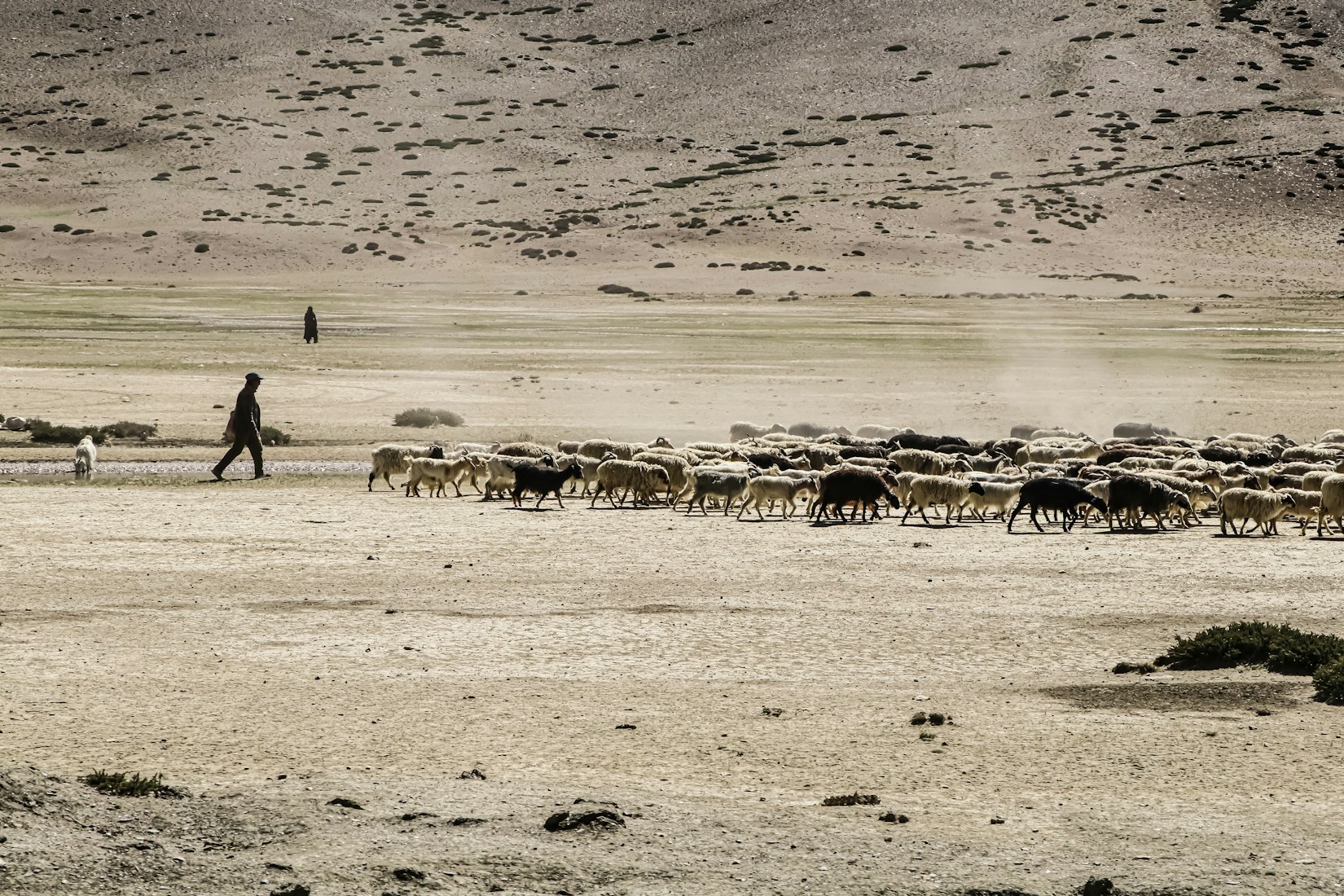
I have limited experience with sheep. The farm where Eva and I are currently living has three sheep and last week, while the family was away on vacation, we had to take care of said sheep. It isn’t all that hard — we had to take them out to the pasture in the morning, move them around during the day, and return them to their pen at night. It sounds simple but it was a little more involved than that. We had to make sure the sheep made it to their mobile pen in the pasture, a process that involves dragging them past much more appealing foliage to the foliage that we had chosen for them. It also sometimes involves chasing and catching said sheep to make sure they go where we wanted them to go. We also had to carry a 5 gallon bucket of water out to them and make sure that they stayed watered. When the grass in their moveable pen was consumed we needed to move them to a new location, sometimes ensuring that they had some shade. Daniel usually brought them in at night and his technique was running as fast as possible beside them so that they remained focussed on the destination rather than all the sweet grasses along the way.
I also recently watched Clarkson’s Farm on Amazon Prime. In the show, Jeremy Clarkson takes over his farm when his previous manager retired. The show follows him along as he learns the ropes on what it takes to run a farm in Britain. One aspect to Clarkson’s farm is sheep and there are several episodes devoted to what it means to farm sheep, including being up at all hours to birth them, making sure that the mothers and lambs are all caring for each other while in the pasture, and moving them to a new pasture without them getting into the neighbour’s fields.
It is a lot of work for those of us caring for just a few sheep. How much more a traditional shepherd with a full-size herd that she needs to keep track of? [Just as an aside, did you know that Rachel is one of the few named shepherds in the Bible? Check out her story in Genesis 29]
Which leads us to the question, “Why would a busy guy like Moses take the time to go see the burning bush?” What made him realise that it wasn’t merely a distraction and was something work making him take time out of his busy schedule? The Bible doesn’t say a lot about Moses’ thought process other than to say, “I must go over there and see this strange sight.” There was something strange that attracted his attention.
Moses’ situation reminds me to ask myself if I pay attention to “strange sights” in my day-to-day life that may be God’s attempts to get my attention. [Note that God will always eventually get my attention, as I have written about here.] In what ways does my busyness keep me from opportunities to encounter God? How do I distinguish distraction from a God-encounter? Are distractions in fact invitations from God?
I guess one type of distraction is internet use. But while some of the things that we encounter on the internet may be strange, this type of distraction can’t be labelled a “strange sight” in the way Moses labelled the burning bush. The burning bush got Moses’ attention while he was doing other things that he normally did. It pulled him away from the usual into the unusual. So sorry, we can’t use Moses as an excuse for always being on the internet.
Another type of distraction is escapist fiction. Who doesn’t love a great story that takes you away from your present life and allows you to live in a virtual world of adventure, excitement, and love? I am currently enjoying Burrough’s John Carter series. But yet again, this is a type of distraction that we bring upon ourselves and is not the type of distraction that God introduces into our loves for his purposes.
I suspect the kinds of distractions that God tries are things that distract us from our distractions. Some distractions are actually a call back to the real world. They interrupt our escapes and bring us back to reality. That’s what the burning bush did for Moses after all.
Once, many years ago, while I was talking to a friend, my daughter came up to me because she wanted to show me her new dress. Did I look at her new dress? No. I saw what she was doing as a distraction from what I was doing. If I had it to do over again I would say, Excuse me, to my friend and take a look at Emily’s new dress. Perhaps God was saying, “Pay attention to your family.”
What I my response when someone talks to me while I am watching a TV show? Do I see it as an interruption or a call to engage with someone in real life? What is my response when I and deeply thinking about the solution to a problem and my wife approaches me with a solution? Am I reminded that we are a team and can work things out together, or do I feel interrupted? What about when someone offers me constructive criticism? Do I see it as a change to improve or as a challenge to my abilities? I must confess that I often get these kinds of things wrong.
So what types of distractions have turned into God encounters for you?
As a Father, I wanted to teach my kids a valuable lesson that would help them later in life. A lesson that would help them through good times and hard times. A lesson that they would remember forever.
Of course, I taught them about Jesus and the Bible and tried to instil in them a love for God. But there was one phrase that I said to them as much as possible — so many times in fact that they remember it today. It’s actually a little bit of a family joke — as families often joke about their fathers. But every time they joke about it I am secretly pleased because I know that they have learned the lesson!
What was the lesson that I chose to repeat over and over again while they were growing up? “Life is rough.”
I wanted to contrast the popular fairy tale ending of “And they lived happily ever after,” because sometimes that isn’t true. Life isn’t always happy and orderly — it’s sometimes messy. Hence, “Life is rough.”
One question my family sometimes asks is, “Why is that the life lesson you wanted us to learn?” Let me begin by saying what the statement isn’t.
“Life is rough” isn’t “suck it up.” Suck it up means to suppress emotions while undergoing hardship. Something I have learned over the years (and after years of suppressing them) is that emotions are good. The only emotion that I allowed myself to express in the past was anger, and it took me a long time to get that under some semblance of control. Anger isn’t bad in and of itself but the way I expressed it was. I suspect that that kind of anger is what sucking it up eventually leads to. I don’t want that for my kids.
“Life is rough” isn’t “Life’s rough and then you die.” This was a popular phrase when I was growing up and it speaks directly to the hopelessness that we often feel in life. But it provides no motivation to change; no motivation to make things better. In fact one could argue that it expresses mere fatalism, as in, “Don’t bother doing anything more because you are only going to die in the end anyways.” That isn’t a value I wanted my kids to have.
“Life is rough” isn’t “Man up.” One of the most basic reasons why I didn’t choose this as my go to advice is simply because my eldest is a girl. But beyond that, the call to Man up implies that there is a standardised masculine norm that kids somehow have to figure out in order to succeed in life. This is in fact not true. Raewyn Connell’s groundbreaking book Masculinities teaches us that there are a variety of masculinities that each of us can choose from as we shape our own masculinities (and femininities I suppose). Quite often there is one masculinity that takes over — called hegemonic masculinity — but this one dominant form is my no means the only valid masculinity. While Man up is a call to act like a man, it also represents a hegemonic masculinity where men must fit into a specific mold. I don’t want my kids to fit into a mold.
So if Life is Rough isn’t one of these things then what is it?
Life is rough is a call to live a life that rolls with the punches. A life that sees hardship not as something unique and rare but something that helps a person grow into a someone stronger. It’s a call to a life lived solving problems creatively. It’s a call to struggle for something bigger and better than onesself. Life is Rough is an acknowledgment that even though things may not always go your way, you can learn to navigate through it and come out the other end. Life is Rough is a life lived with meaning. That’s the kind of life I want my kids to live. And finally life is rough is a realisation that life isn’t always rough so enjoy those times when they come too!
My study, conducted as part of my time in the UP Tri College PhD Philippine Studies program, examined how Filipino men understand and express religiosity (maka-Diyos) and masculinity (pagkalalaki) and how these two concepts inform our understanding of religious change (pagbabalik-loob). Central to this research is how the dynamics between pagkalalaki and maka-Diyos is mediated by factors such as family status, gender, class, national advocacy, religious congregation, age, chronotope; and how these, as a whole, shape the lives of Filipino men.
I used a Bakhtinian dialogic framework mediated through Walls’ transmission and appropriation concepts and de Mesa’s pagbabalik-loob and cultural appreciation in examining Filipino male perceptions of pagkalalaki and maka-Diyos.
This study debunks popular misconceptions about the Filipino male’s lack of maka-Diyos. Men’s identity as Filipinos is not in danger due to lack of maka-Diyos and men reveal an understanding of maka-Diyos that informs national discourse. Men are active in regular religious activities. They see these concepts as important. They have a complex epistemological process that includes ancient, communal, revelatory, and empirical sources. This leads them to believe in and respond to the supernatural. They understand what their pagkalalaki means and how to express it, but concepts of religion and religiosity may or may not play a role in these beliefs. It also leads them to find solutions to the problems and challenges that they face in the world.
You can’t sign up anymore because the event is over, but you can watch the lecture here.



 Michael J. Fast