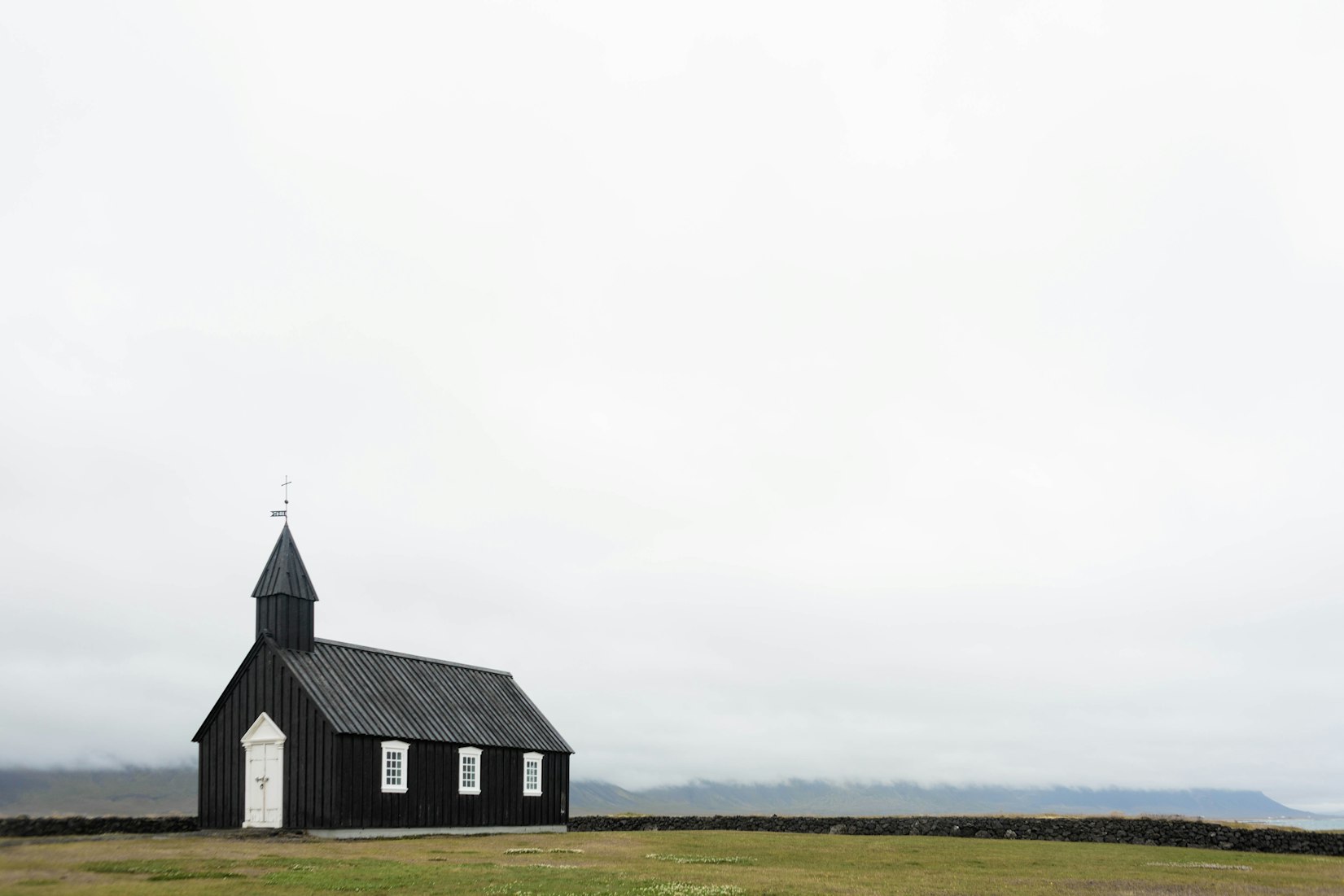
Babylon is Fallen: Is it Destruction… or Transformation?

We often focus on punishment and destruction when we think of evil. But the Bible reveals a more profound truth: God’s primary strategy is infiltration and transformation. From Manasseh to Babylon itself, God sends His people into broken systems and lives not to escape or destroy, but to redeem. Our calling isn’t to await the fall of our modern “Babylons,” but to actively participate in their restoration through faithful, everyday work—to plant crops in the cursed ground and pray for the peace of the city, believing that enemies can be turned into friends.

When I was younger, I was an aficionado of Resurrection Band. I even saw them in concert once at the Centennial Auditorium in Saskatoon and wore a signed T-shirt of theirs for many years. One of my favourite songs of theirs was entitled Babylon, which includes the bridge:

“I saw Babylon slowly start to burn
I heard the voices crying
Refusing ever to learn, Babylon”

The final line — that sticks in my mind until today — is “Babylon. Babylon is fallen!” This imagery hearkens back to the Revelation of John, where the great harlot, Babylon, the city that is opposed to God and works at spilling the blood of the Saints, is finally punished and destroyed. In the Bible, Babylon = evil.

I was mistaken for years in thinking that the only legitimate end for things that are evil like Babylon is punishment, as the song says. And part of me probably anticipated seeing this punishment enacted in my lifetime.

It’s part of our nature to want evil to be punished; especially evil committed against us by others. We’re not entirely excited when our own evils are called out and punished are we? But we like it when the bad guys lose and the good guys win — even if that means turning bad guys into Robin Hoods so that even worse guys can be punished.

But more recently I have come to realise that there are actually two destinations for things that are evil like Babylon. On the one hand, Babylon awaits destruction. Because after all, what does one do with their enemies? One fights against their enemies and seeks to defeat them. But is that what God does with his enemies? It seems that God instead enacts a plan so that his enemies strongholds are infiltrated by his people so that it becomes transformed and turned into something that is good.

The Tower of Babel and the Confusion of Languages

Babylon’s origin story is the tower of Babel, where God confused human languages so that people would spread around the world.

A commentary I recently read said the tower was an attempt by people on the Earth to fulfill God‘s promise of “all the nations being blessed.” Rather than relying upon God for that blessing, they decided to enact that blessing themselves. Perhaps that’s at the core of Babylon‘s label of being opposed to God.

Manasseh

Manasseh was one of the kings of Judah. He was a bad guy. 2 Chronicles 33 outlines the extent of the evils he intentionally implemented to the point that he “misled Judah and the inhabitants of Jerusalem so that they did more evil things than the nations that the Lord had destroyed when the Israelites arrived in the land” (2 Chronicles‬ ‭33‬:‭9‬‭).‬‬

As a result of this, God calls the army of Assyria to come and carry Manasseh off to his kingdom, where he experienced difficulty.

Then we read this amazing story in 2 Chronicles 33:

“When he experienced this distress, he begged the Lord his God to be kind and humbled himself in front of the God of his ancestors. He prayed to the Lord, and the Lord accepted his prayer and listened to his request. The Lord brought him back to his kingdom in Jerusalem. Then Manasseh knew that the Lord is God.”‬‬

Wow!

Jeremiah 29

In the book of Jeremiah, the inhabitants of Jerusalem are confronted with a horrible reality. It seems that King Nebuchadnezzar, the Emperor of Babylon, will be successful in conquering their city and carrying them off into captivity. The book outlines Jeremiah’s prophetic words from God to help the people of Jerusalem face this horrible possibility.

Apart from the fact that being a prisoner of war is a horrible thing in and of itself, for the people of Israel this reality was especially difficult to accept because as far as they were concerned they were the people of God who had been blessed by being the owners of Jerusalem and the land of Israel around them. Their understanding was that this was a promise that God gave to them in perpetuity. And so for them to be carried away was almost an impossibility — their theology didn’t support that. In fact, Jeremiah was the sole prophet who prophesied that they would actually be carried off into captivity (verse?). All the other prophets of his time had convinced the people that they would not be carried off into captivity but that they would only be gone for a few weeks or months (verse?). One of Jeremiah’s tasks was to prepare the people for a lengthy captivity in Babylon. In fact, many of them would die in Babylon because the captivity would last for 70 years.

So, what were they supposed to be doing while they were in Babylon? They were supposed to infiltrate Babylon become a part of the fabric of Babylonian community; make their lives in Babylon the lives that God had called them to; they were to build houses, and they were to plant crops, and they were to get married and have children, and have their children get married. All of these things are things that new immigrants do when they come to a new place. Furthermore, they were also to pray for the blessing of the City.

What does Jeremiah 29 teach us about how God deals with evil places like Babylon? God sends people to infiltrate it so that Babylon too can be transformed from a place of evil to a place of goodness.

The Emperor who became a cow

Nebuchadnezzar the Great was the Emperor of Babylon but at a certain point in his life, God turned him into a cow! The point I want to emphasise here is that God chose to interact in an immersive way with the most powerful human king the world has ever seen. As the emperor of Babylon, he personified opposition to God — they called him the King of the Universe. Which is perhaps why God chose to allow his context to change from the most powerful human on th earth to a mere domesticated animal. Nebuchadnezzar’s worldview was deconstructed in a dramatic way but was then reconstructed into something better — he moved from being the so-called “King of the Universe” to submitting himself to the Universe’s True King!

Jesus

Jesus was all about freeing people from sin and the effects of sin in their lives. Jesus’ death on the cross and his subsequent resurrection from the dead ensured that we too would be saved from our sins and have eternal life. But Jesus is about more than merely saving us from death. He wants our lives on Earth to also be reflective of his life on Earth. He wants us to be his disciples. He wants us to be like him. He wants us to be holy. If he was merely interested in saving us after we died, what’s the point in talking about holiness?

One of the clues to Jesus’ purpose on earth can be found in Luke 4. In Luke 4, Jesus returns to his hometown of Nazareth and is invited to speak in the synagogue. He stands up and asks them to read from Isaiah 61. According to the account, this is what was read:

“The Spirit of the Lord is with me. He has anointed me to tell the Good News to the poor. He has sent me  to announce forgiveness to the prisoners of sin and the restoring of sight to the blind, to forgive those who have been shattered by sin, to announce the year of the Lord’s favor.”

Jesus concludes his sermon with the words “today this scripture is fulfilled in your presence.”

Surprisingly, the congregation is enraged and wants to kill him. Why do they want to kill him? What’s so significant about these words that he’s saying? When Jesus said these words and when he referred to Isaiah 61 as being fulfilled in him, he was equating himself with God. The inhabitants of Nazareth who regularly attended synagogue knew the work of God was encapsulated in this passage from Isaiah 61.

This is something that we have often neglected is the evangelical church today. We’ve focused on the sweet by and by without thinking too much about the here and now. I realise that’s a generalisation and I generally try to avoid generalisation but if I look at my own journey I can see how at one time in my life I was very fascinated and fixated upon having the right theology and not so much about living a life that’s filled with good works. In fact, good works were identified as a bad thing in my early theology — something to be avoided — because they didn’t serve any purpose. At that stage in my theological development, any good thing that I tried to do was only self righteousness and was not of any benefit in salvation. What I avoided was understanding that we are created to do good works. We’re supposed to be good people. We’re supposed to do good things. We’re supposed to imitate the life Christ lived. This has nothing to do with our salvation, but is a result of our salvation. So my generalisation is based upon my own personal experience. I realise that your experience may be different than that, and if so then that’s wonderful.

What of the Flood or Sodom and Gomorrah?

There, sometimes a perception of the God of the Old Testament and the God of the New Testament of two different people. This perception typically identifies the God of the Old Testament as God of wrath and destruction, while the God of the New Testament is a God of love and peace and restoration. Of course we know this isn’t true. But then people point a certain events that happened in the Old Testament and say how can these be the actions of a loving God? Let’s look at a couple of things, including the story of the flood with Noah and the story of the destruction of Sodom and Gomorrah.

God went to extraordinary extremes to save Noah — the man who found grace in his eyes. Noah testified for 100 years. He lived his righteous life faithfully obeying God’s command to build a ship to save the people of earth from the flood he was going to send. Noah is an agent of salvation for the people of the earth. The flood is not necessarily an event that will destroy them — all they have to do is get on the ship. If they don’t then that’s on them. Isn’t it? This was Noah’s message to the world every day for 100 years.

Abram’s nephew Lot was given a choice of where he wanted to live. He chose to live in the lowlands because the land was richer. Note that this choice didn’t make Lot a bad man but it does lead us to ask the question of how successful Lot would become in the lowlands. We already know he was a successful farmer and business man — would this success follow him? We end up discovering that Lot was not as successful as he might have been because he wasn’t able to have a positive influence on the place he chose to live. We don’t know why this is but it’s clear that his presence in that city wasn’t enough to even influence 10 people to join the path of righteousness. Is that because Lot neglected his role? Is that because the people of the area were unwilling to listen to his message? We are explicitly told the answer but the fact that in the end God saves Lot and his family while fire rains down from the sky implies that those consumed had also made their own choices.

The Psalms provide us with a rationale for why there is war between God and humans in the Old Testament. Psalm 2:1 asks the question, “Why do the nations plot?” And it seems to me that the fact that there is a plot implies an explicit and intended opposition to God. This is a planned event. “We will be in rebellion against who God is.” We’ve talked about the tower of Babel. We’ve talked about Manasseh. We’ve talked about Babylon. We’ve talked about Nebuchadnezzar.

The best argument against claims that the God of the Old Testament is an evil God is that the very passage that describes how God’s people should engage society comes from this same Old Testament. And it’s interesting that in the midst of the distress that Israel is about to experience, there is a glimpse of the hope that God is bringing to the entire world. At this time it’s appropriate to bring out the verse that we most commonly associate with Jeremiah 29, namely verse 11, that says God has plans for us. What’s important for us to realize is that the good plans that God has for us are contingent upon our agreeing to those plans, aren’t they? Don’t the people Jeremiah is talking to within Jerusalem need to say, “OK God, I’m willing to accept the fact that we need to be exiled for 70 years, but that you have good plans for us”? Don’t the people of Babylon and also have to be willing to listen to the testimony of those who are in captivity so they too, can experience the good things that God has a store for them?

God’s love and call to repentance always come first, yet when that love is rejected, judgment surely follows. The fall of Babylon shows us both: an offer of transformation through grace, and, if spurned, the certainty of destruction. To keep both together — love before wrath, repentance before ruin — helps us see the fullness of God’s justice and mercy.

You and Me

Even though we’re talking about structural evil at the level of nations opposing God, we can’t ignore the fact that personal evil is also a major part of what goes on. We notice the engagement strategy that Jeremiah presents to the people of Israel is that they are supposed to live out their lives in a personal way, which includes homes for them to live in, families for their children, crops, etc. So, in order to be a good person in a society like Babylon I need to live out my life in a way as if I have a future there and there is a future for that city.

But this is not merely limited to making sure I live a good life in the midst of an evil city. Rather, it’s an understanding that through my living a good life in the city, setting down roots, and contributing to the economy of the city, I am also interested in the future of that city and praying for the city. Praying means calling upon God to help with the transformation of the city. Praying means calling upon God to make the city a place of justice, a place of goodness, a place of kindness, a place with love, with joy, with peace, with patience, with kindness, with goodness, with faithfulness, with self-control. And being a part of the fabric of the city means that we position ourselves for future leadership and guidance within that city as well.

Jeremiah 29 invites us to “Plant crops.” Even though the process of planting crops seems like a bit of a gamble. One of my friends referred to farmers as the people with the most faith in the world because they do everything they possibly can to invest in a product that is not guaranteed to emerge at the end of the process. Planting is hard but planting actually starts in the middle of the process. Before that we have to prepare the ground. I have to chop down trees and pull out stumps. We have to pick rocks. We have to break the ground. And then the broken ground needs to be broken up again. And only then can the crops be planted.

Growing crops is hard. Harvesting crops is hard. It’s a long and tedious process that takes a lifetime to perfect. And once you harvest him then you gotta try to sell it. Selling those crops at the end is hard, and some of the hardness of that process is directly because of the sin of Adam and Eve in the garden of Eden. The ground is cursed and it’s by the sweat of our brows that we can get something to emerge from the ground. In our farming processes, we need to go beyond adding to the curse of the land and try to find ways that help remove that curse. And of course, beyond planting there are other aspects to it.

An example with a Brazilian connection

I recently attended a seminar in Brazil, where we talked in part about the integration of faith and agriculture. A couple of the things emerged that help inform our discussion today.

I was introduced to a paper that spoke of Palissy’s idea that even an unlearned potter can question accepted wisdom and put forth his own ideas. He derives this from Jesus’ parable of the talents implying that each of us is given a task and responsibility and we need to use that appropriately. These talents for Palissy include the land and the forests that have been neglected and are in need of what he calls a true formula in order to be restored to their original intent. 

Palissy’s very direct statements about not wanting to engage in clear-cut logging with no restoration can be directly tied to the concept of eliminating the sin that’s in the world. If the world’s natural state itself is destroyed then what of the task that’s been given to humans to overcome the sin that’s in the world? 

These aren’t just better farming techniques; they are acts of spiritual warfare against the curse, a practical way to “pray for the peace of the city” by healing the very ground it stands on.

If these are the examples that the Bible gives us about how to confront evil, that means that you and I have to be intentional as well about confronting evil. Not with the goal that evil will be punished but with the goal that evil people escape punishment because they are transformed into good people. The Bible calls this transformation repentance or changing the way we think and act.

How can I start working on this today? I need to start with my own life and find areas in my life that I need to repent of — I need to start being good. I need to then look at society I’m a part of — whether that’s my community, my church, my city, my province, or my nation — and find areas that we as a group need to repent of. And then we need to start doing better. And then I need to look at the physical world around me and begin the hard, faithful work of planting crops.

Because there is hope, even though the presence of evil in the world makes it next to impossible for us to believe. The hope that the Bible gives us is that Jesus is the key to this hope. Only Jesus can offer a better leadership than the leaders that we have continued electing time and time again — and we can testify to the effectiveness of serving Him over others, proclaiming the gospel of grace that makes it possible. Only Jesus can give us the values we’ve been trying to establish — these can only be found in His kingdom and we can be witnesses to it. Only Jesus can give the hope that I can actually love my neighbour just as much as I love myself — and our love serves as testimony to this truth. Only Jesus can supply hope, through his interaction with us daily, that God is faithful — and we can also testify to that truth.

Getting back to Babylon

The final lines of Babylon show us the way forward:

“Time to build again
Babylon, Babylon is fallen”

Is Babylon fallen because it has experienced God’s punishment or is it fallen because it has been rebuilt into God’s kingdom? Revelation 11:15 gives the answer:

“When the seventh angel blew his trumpet, there were loud voices in heaven, saying, ‘The kingdom of the world has become the kingdom of our Lord and of his Messiah, and he will rule as king forever and ever.’”

The fall of Babylon is prefaced by the rebuilding started in Jeremiah 29 where God sent his agents into the enemy camp in order for the enemy to become a friend.

God wants the same things to happen today as well. He wants enemies transformed into friends. And that transformation begins with us.

Image by Boban Simonovski on Unsplash.

The ultimate question of the gospel is this: Is it a treasure to be buried & protected? or is it a fortune to be enjoyed & spent?

This is the ultimate question of the gospel: Is the good news a treasure to be buried and protected? or do is it a fortune to be enjoyed and spent?

Treasure has always fascinated us, hasn’t it? People spend a lifetime searching for buried treasure. We grew up hearing stories of pirate treasure that was buried. And there’s that show on the History Channel where they’ve been looking for this “buried treasure” for how many seasons? And of course, they’re never going to find anything because there’s nothing there. This is largely because pirates didn’t actually bury their treasure, did they? What did they do with it? They spent it! Because that’s what treasure is for.

The Gospel is a Treasure

It’s the same way with the Gospel. Sometimes we can get into the mindset that we’re in danger of losing the treasure that God has given us. We need to protect this treasure because there’s encroachment. There’s a war against the Gospel. There’s a war against culture. There’s an invasion of the enemy into our territory. We need to protect it and preserve it and bury it to make sure that it doesn’t disappear.

When we seek to protect what we hold sacred, it’s natural to build systems in theology that feel like vaults—thick walls to bury the treasure of the Gospel where no one can corrupt it. We form coalitions, draft statements, and amplify voices that align with our convictions, stacking stones around what we’ve deemed too precious to risk. Yet in this earnest effort, there’s a tension: We critique culture’s definitions of sin while rarely pausing to examine how our own understanding might be shaped by the very cultural lenses we claim to transcend. It’s easy to conflate vigilance with faithfulness, to mistake burying the treasure for keeping it safe. But what if the Gospel is less a hoard to be guarded and more a fortune to be spent—a currency of grace meant to circulate in the marketplace of human pain and longing? In our zeal to protect, do we risk forgetting that the church’s foundation isn’t ours to fortify? After all, the same Jesus who calls us to discernment assures us the “gates of hell will not prevail.” What if our buried treasure is meant to be dug up, traded, and multiplied—not as a possession to control, but as a gift that grows only when given away?

The thing about treasure is that it maintains its value regardless of the conditions surrounding it. If we read through the stories in the Bible, we realize that there is no need to protect the gospel of Jesus Christ, is there? It does not need protecting. It’s a treasure that’s intended to be spent.

What does Jesus say about the treasure? It’s like a man who finds a treasure buried in a field, and he goes off and spends everything he has to buy that field so the treasure can become his, or a person who finds a precious pearl and sells everything he has so that he can own that treasure so that it can be used, or a woman who loses a coin and expends all her efforts so she can find that coin, or a father who loses his son and spends all his time waiting for that son to return only to have his other son leave — but that’s a story for another day.

Jesus, the treasure, and the fortune.

Jesus confronted this head-on in the mind of Nicodemus, didn’t he? Nicodemus approached him at night and wanted to know what the truth was. And so Jesus says this is what the truth is: God loves the world. This rocked Nicodemus to his core because Nicodemus didn’t believe that the treasure was for the entire world, but that the treasure was only for him and his people. But Jesus said to him, know this: the treasure is for everyone in the world. We need to give it to everyone. Everyone needs to enjoy this fortune. Everyone needs to spend it. Because it’s for everyone in the entire world.

Jesus didn’t just talk about this, he exemplified it. He broke down the barriers between people that existed within his own culture. He also broke down barriers between his culture and other cultures. And of course, finally he commanded his disciples to bring this message to the four corners of the world.

How can I spend the fortune rather than protecting it?

Treasure is meant to be celebrated. There are three stories in Luke that talk about treasure that I mentioned above. One of them is a lost coin. One of them is a lost sheep. One of them is a couple of lost sons. What is common among all those stories is that when the lost is found, there’s a celebration! A party! Juicy steaks! Great drinks! Music and dancing! Neighbours! Celebration!

What’s also common in the stories is that every effort is expended in order to find that treasure so that the celebration can happen.

How am I looking for a hidden treasure? How am I living out the values of the Kingdom of God in my daily life? How am I proclaiming the fact that Jesus Christ is the only solution to the problems in my life, the problems in society around me, and the problems that the natural world itself faces? How am I loving my neighbor as I love myself, which means how am I letting them share in the treasure that I have? And what am I doing to call out the problems that we have in our personal lives, the problems that we have in society around us, and the problems that are brought upon us by the natural forces around us?

And beyond the search for hidden treasure, how can I learn to extravagantly spend the fortune that I already have? So how can I spend my fortune?

There is no greater treasure in the world. We’ve all heard lots of promises haven’t we? Promises of hope for the future. Every election that comes up, in every country, at every level of government, is a promise for a better future. But does that better future ever come about? Not really. The only way that a better future comes out is if the future is based upon the kingdom and values of Jesus Christ and is led by Jesus himself. That’s a treasure worth seeking, isn’t it?

The treasure has great values. And it’s a value that has no price tag. It’s priceless. There’s a famous credit card commercial that talks about the cost of various things but then if you spend your money using that credit card to buy those things, in the end, it leads to something that cannot be charged to a card — something that’s priceless. And that is the value that the Kingdom of God provides to us. It allows us to live lives as people who are transformed. Rather than all the things that we complain about in the world today, we have an opportunity to change that. We have an opportunity to it to express through a variety of values that are priceless. We can love. We can have joy. We can Work for peace. We can have patience. We can be kind. We can be gentle. We can be good. We can be faithful. And we can take charge of ourselves and have control of ourselves. A world that has people who live these values each day is a world that is a priceless treasure.

The treasure helps meet needs. It’s a treasure that’s relevant to the days-in-and-days-out of life. Jesus’ emphasis on healing the sick and raising the dead, his endless teachings on the proper use of finances, his advocacy for the kingdom of God, and his attention and interest in the downtrodden and those on the margins shows that the good news is a treasure that leads to peace and order for our society, to a righteous nation, to public justice, and to economic sufficiency.

The treasure is tangible. It’s just not a story that we hear that makes us feel good. There is actual experience involved in this. We’ve all experienced that haven’t we? I mean the Bible is pretty clear about that. We’ve experienced the understanding that there is a higher power. We’ve all experienced receiving the things that we need in a timely matter. We’ve all, in the midst of darkness and struggle, received hope and kept on keeping on. This is a tangible, real treasure.

So What?

What does the treasure look like for you? How are you experiencing God‘s goodness in your life today? Why not record your thoughts about this in the comments below?

And remember, sharing is what friends do. 

BCBC Improving your Serve – Abide to Thrive: Exploring the Church’s Identity in Christ & its Outward Function in the World

I recently had a chance to speak at the British Columbia Baptist Conference’s annual equipping session entitled Improving Your Serve. The theme this year was Abide to Thrive. In the seminar and subsequent reflection and discussion sessions, we reflected on how understanding our church identity informs community actions. We also considered how the good news, kingdom values, serving others, and truthtelling shape our identity. Then we explored where churches may need to realign their focus to be more present in today’s cultural conversations. All in all, we examined how abiding in Christ can lead to a more fruitful and impactful presence in the world.

If you missed the seminar, a video version of my talk can be found here, and a livestream here, but for those who are interested in getting the text of what I said here it is in its complete form.

Personal Story

When I was a kid, joining the church wasn’t just a formality – it was a process with theological requirements. Part of that process involved sharing my testimony. First, I had to present it to the church board. Once they approved, I had to stand before the entire congregation. Both groups had to vote before I could officially become a member. 

I remember envying those who had dramatic testimonies – stories – of being saved from lives of obvious, even salacious sin. My story wasn’t like that. It felt ordinary. I hadn’t strayed far or hit rock bottom. I didn’t have a before-and-after moment that felt remarkable. 

For a long time, I wrestled with the idea that my testimony wasn’t enough – that it didn’t measure up. But more recently, I’ve been struck by Connie Duarte’s words: ‘We are not called to be believers but disciples.’

That statement has challenged and reshaped how I see my journey of faith. It’s not merely about believing the right things or about meeting theological checklists. Nor is it about the level of initial transformation from darkness to light. Rather, it’s about abiding in Christ every day – submitting to Him, walking with Him, and letting His life flow through mine – journeying with him on a lifetime of being transformed. Being a disciple isn’t about how dramatic my testimony is; it’s about how deeply I abide. 

This shift in understanding has led me to see the gospel – and my place in it – in a whole new way. The gospel isn’t just something to believe; it’s something to live out daily. And abiding in Christ, particularly in His proclamation is at the heart of that.

The Vine Metaphor: A Living Metaphor

The title of our seminar is Improving Your Serve: Abiding to Thrive. When discussing the concept of abiding, there’s no better passage for us to examine than John 15. Here Jesus talks about us being the branches and he’s the vine. There’s lots and lots of rich imagery in this metaphor that we will spend some time looking at today. But if we want to get down to brass tacks, the basic message of this story is that whether we like it or not our lives are organically bound up in God’s and in each other’s – I like the fact that Jesus’ use of an organic example here shows that abiding is dynamic, not static. Adding to that, a vine is communal rather than singular: Fruit comes in clusters, and not in isolation; Pruning is necessary for the entire plant to both grow and produce fruit.

It’s this organic story of connection, care, growth, and production that’s a fabulous story of our identity. But we often stop here and say, “Okay, I can live my life now in satisfaction because I’m connected, and I’m identified with who I am.” Once we identify ourselves, we remain satisfied with that identity.

Identity is important. Let’s look at the church, for example – especially since that’s why we have gathered today. In the church we have a series of things that identify us for who we are.

Debie Thomas, in her Into the Mess and Other Jesus Stories: Reflections on the Life of Christ, says, “If God is the vine grower, Jesus is the vine, and we are the branches, what should we do? We have only one task: to abide. To tarry, to stay, to cling, to remain, to depend, to rely, to persevere, to commit. To hang in there for the long haul. To make ourselves at home.”  

Our seminar is entitled Improving Your Serve. And each of these three words in the title are significant for today’s conversation. That’s why, when speaking of identity, we will begin with the centre word: “Your.” So, let’s get into the nitty gritty of John 15!

ABIDING AS IDENTITY

The story starts with Jesus declaring “I AM.” This is God’s identity word – the name he uses when he introduces himself. Jesus’ ultimate identity, and we see this throughout the book of John, is his constant referral back to who he really is. He uses the technical term “I AM” to indicate that he is declaring that he is the same as the God who saved Israel from Egypt.

What’s interesting to note in John 15 is that Jesus does not simply say, “I AM.” Much like God’s declaration of who he was to Moses at the burning bush was not simply saying, “This is who I AM, period.” Jesus identifies himself as “I AM the vine.” I AM is connected to his creation – which is really how God initially identified himself in Exodus isn’t it? God made himself known to Moses at the burning bush, in response to hearing cries for help from his people!

YHWH exists for more to happen than mere existence – he exists also to save humans! We, too, are called to make this same movement from one thing to the next. And this progression starts with identity – Who are we? Who is God? – but then moves into ideas of purpose. It moves from merely being a vine and branches towards bearing fruit.

1. Worship as Identity

For example, we all engage in worship of some kind or another.  Every now and then we decide, “Hey, let’s worship without singing,” Matt Redman-style, but in all reality, singing forms the core of how we see worship. There’s all of this kind of stuff that we do that helps us identify who we are and the kind of church we are – and all of those things are music-related: Are we going to sing praise and worship songs? Are we going to sing from the hymn book? Are we going to use instruments? Are we not going to use instruments? Is there going to be a worship team in a band on the front or is it just going to be a guy in a toque playing a guitar with a candle burning? Years ago, at Missions Fest one church advertised “a massive wall of sound.”

All of that to say that sometimes rather than identifying ourselves as those who worship, we instead identify ourselves as those who worship this way.  

2. Word as Identity

We also identify ourselves through how we approach the Word of God. The Word of God – is it a significant part of our time when we gather, isn’t it?

Sermons, children’s songs such as “read your bible pray every day, and you’ll grow, grow, grow,” bible verses hanging on the church wall, arguments over bible translations, etc.

One of the churches I serve in the Philippines thought long and hard and eventually came up with the name, Metro Manila Bible Community – because for us as Bible believing Christians, the Bible is our sole source for faith and conduct. So much so that it becomes our identity.

But word is more than these things.

But then again, we often attach identity to the length of sermon – or bible translation used, or the place where the sermon is preached from, or whether or not we read through the bible in a year or not – rather than the fact there is a bible.

3. Sacrament as Identity

We have a third identifying mark. I have used the word “sacrament” here but some of you may be squirming in your seats because we generally avoid using that word. We say, “No, no, no, we’re Baptists. We don’t have sacraments; we have ordinances!”

In the long run, it doesn’t really matter what word we use. Rather what’s important is that we do have these things that are a significant part of how we identify ourselves. It’s right in there in our name: We are the BC Baptist Conference. Other groups don’t centralize baptism as much as we do, but rather they centralize the Lord supper. As members of BCBC, both of these are fairly intense processes for us.

I already told you my baptism story. There was a similar process when I wanted to participate in the Lord’s Supper. Mind you I didn’t have to convince the board. Rather, before I could take Lord’s Supper, I had to convince my dad that I understood what was happening so that I wouldn’t “partake in an unworthy manner.”

It’s different in the Philippines. Here children go through First Communion where they’re formally introduced into the rite. Why all the process? Because we have these things that we identify as being important, so much so they identify us with who we are.

4. System as Identity

A fourth identifying feature is system. I actually struggled with what word to use here. We could use governance. We could use discipline. We could use polity. But regardless, it’s the way we make sure that everything is orderly in our worship and our organization. How do we organize ourselves? We all have some kind of organizing system – whether we’re organized to attend church at a specific time, whether we’re organized into having a corporate worship and then a small discipleship or small group or Bible study, whether we have a Sunday school, whether we have a board of trustees or board of elders or board of directors, whether we have a pastoral team or not whether we agree that pastors are only male or can they also be female – all of this stuff is part of our discipline. It’s our way of addressing what’s in 1 Corinthians 12 to having an orderly experience and that’s also how we identify ourselves.

And of course we joke about this, right? Whenever you have two Baptists, you have three opinions!  Maybe we have an organizing system but maybe it’s not always that great.

ABIDING AS THRIVING

Now that we’ve looked at identity, let’s come back to abiding. Sometimes when we think about abiding, we think about abiding as identity – I’m connected to the Father, I’m connected to the vine – who is Jesus – because I’m one of the branches connected to this vine and I’m happy with that. But if we take the vine motif to its very end as Jesus does in his passage, we realize that this vine motif is more than merely identity and there’s this transition that happens as we transition from “being” to “doing.”

If we return to our title – Improving Your Serve – we’ve moved beyond Your to the Serve portion of the conversation.

When I was younger, we tried to avoid talking about doing largely because of Bible verses that say things like “We are saved by faith not by works.” We internalised this so much that when we came to other verses that seemed to value good works – such as James’ “faith without works is dead” – we struggled.

Another struggle with is avoidance of doing checklists as followers of Jesus Christ. And we have lots of checklists don’t we. When I was a kid, it was “Don’t drink, don’t smoke, don’t chew, or go with them that do.” Another checklist might be

  1. go to church every Sunday – & invite your friends,
  2. read your Bible and pray every day,
  3. share the gospel with whoever comes across your path,
  4. be involved in the church through other things, such as teaching a Sunday school class or singing in the choir.

We even found biblical support for this. We looked at the story of Mary and Martha, and we interpreted Jesus words to imply that we should simply be sitting at the feet of Jesus and not be so busy doing the things that need to be done.

There’s a pushback against checklists in part because we don’t want to turn our relationship with Jesus into some kind of a cosmic game of Good Manners and Right Conduct. We’re looking for something more authentic than that. We’re looking for something more organic than that.

What we realize is that these checklists are in fact ways for us to engage in discipleship. We are confronted by two questions: How can we be disciples of Jesus Christ? Is it possible to be disciples of Jesus Christ without doing the things Jesus Christ wanted us to do?

This adds a different nuance to the checklist. Instead of checking off things on the list we evaluate each situation we came to in life. You may have heard of this phrase that has actually appeared over the past hundred years of the church at least – It was illustrated by an acronym WWJD? meaning What would Jesus do? It was a question we asked ourselves when confronted with a situation we needed to evaluate. An area perhaps that wasn’t directly spoken about in scripture but was an area where we needed a make a decision. With no to pull out of scripture to serve as our guideline, we rather tried to understand the mind of Christ and applied that our situations.

The story of the vine and the branches has some troubling features to It. It talks about a gardener. It talks of being proved. And it talks about bearing fruit. These things are troubling to us because it seems to imply there are actions associated with our abiding. There’s an expectation of care, discipline, & fruitfulness.

Which is why Jesus spoke about this as a gardener-vine-branches-fruit process. It helps us understand this as something that’s natural and organic rather than something that’s forced and required.

Debie Thomas again:

“But ‘abide’ is a tricky word. Passive on the one hand, and active on the other. To abide is to stay rooted in place. But it is also to grow and change. It’s a vulnerable-making verb: if we abide, we’ll get pruned. It’s a risky verb: if we abide, we’ll bear fruit that others will see and taste. It’s a humbling verb: if we abide, we’ll have to accept nourishment that is not of our own making. It’s a communal verb; if we abide, we will have to coexist with our fellow branches.”

Gardening is all about growing a garden that produces delicious fruits. There are so many different kinds of fruits, and they come from all sorts of plants. Right now, I can see a bunch of fruits hanging from the trees outside my window. Some of them are picked for their leaves and used in soups, while others are eaten right off the tree, like coconuts, mangoes, avocados, and papayas. And let’s not forget the beautiful gardens themselves! We love looking at them, which is why there’s a magazine called Better Homes and Gardens. It shows off all these amazing gardens and tells us what makes them so special.

The parable of the talents tells of one of the servants who hid his money in the ground because he fundamentally misunderstood his master’s desires. The purpose of investment is the same as the purpose for a garden – to bear fruit. Do you know you do if you have money? Invest it. Do you know what you do if you have a garden? You prune and cultivate it, so it bears fruit. Do you know what you do if you have a family? You want the outcome of your kids’ lives to be better than your own.

So, what about the church? Do we know what we do if we have a church? We have seen what the church is. Now let’s look at what the church is all about. This means moving beyond checklists and identity and transitioning into thriving and fruitfulness. What does thriving and fruitfulness look like as the church abides in the vine? This is an important question because without asking this, we tend to focus on checklists and end up making statements such as, “Oh you’re not a part of us because you don’t keep the right lists you haven’t done everything haven’t checked everything off enough.” It leads to us creating lists that we argue about – lists to determine whether someone is in or out or not. But what Jesus really wants us to do in the church is to bear fruit. This is because fruit bearing is a natural outpouring, the organic result of what we do. As Jesus followers we bear fruit.  

How do we get to that thriving point because mere identity is not thriving unless there’s fruit that is borne. It means while we keep our identifying features – while worship God in spirit and in truth, while we focus on the word as the sole standard of faith and conduct, while we continue to see the significance of the sacraments in our lives, and while we continue to maintain orderly worship – we also go beyond that and ask ourselves, “How does all of this help me bear fruit?”

A. From Worship towards Promulgating Kingdom Values to Those Outside the Church’s Four Walls.

The first level of this interconnectedness is with the vine himself. Verse 1 says, “I am the vine, my Father is the vinedresser,” and a few verses later, “remain in me, as I remain in you.” There’s a mutuality to our connection with God and with the other parts of the vine. None of these branches grow in isolation from either the vine or the other branches; together they bear fruit.

The values of the kingdom are so important that we should share them with others. We want to worship God and live according to these values, but we also realize that they’re not just personal; they’re values we incorporate into our lives and should share with the world. We enjoy being one with God, imitating Christ, and being Jesus-followers. But how do we connect with others? Understanding kingdom values, bearing fruit, and being part of the vine requires a shift from individual to communal understanding. True worship creates genuine community through mutual transformation in Christ’s presence. Christ’s work in us produces fruit, which isn’t just food but a seed that sprouts and bears new vines and plants, spreading around the world.

The most explicit description of these values is found in the fruit of the Spirit and includes love, joy, peace, patience, kindness, goodness, faithfulness, gentleness, and self-control. The fact that they are fruit means they are obvious in the lives of Jesus’ followers.

We can work at revealing the joys of the kingdom of God to people outside of our faith community through active participation with like-minded faith communities, active cooperation with like-minded groups, and active accountability in both the religious and secular world. All this is typified with the Christian attitude of unity in matters essential, liberty in matters non-essential, and charity in all other matters.

B. From Word towards Proclaiming Jesus Christ’s Role as Shepherd-Lord to Those Outside the Church’s Four Walls.

One could be forgiven for assuming when reading v7 – “If you remain in me and my words remain in you” – that this means that all we need to do is remain connected to Christ. He’s with us and we are with him. But the story doesn’t stop there because in the very next verse, we read “you will bear much fruit.”

There is good news – we are connected to Christ – but that good news extends beyond the salvation moment, and into our lives as followers of Jesus Christ.

The Good News of Jesus Christ is that Jesus Christ is not only our Savior. He is also the Lord Jesus Christ. Jesus connects him with humanity, Christ connects him with being God’s plan for the salvation of all peoples, and Lord connects him with being the one in charge of the universe – the One ultimately responsible for ensuring we have peace and order, economic sufficiency, public justice, and national righteousness. We know he was responsible for this because of the way he introduced himself to the world laid out his terms of engagement with humanity. And what are these terms of engagement? We see them in Luke 4:18-19:

“The Spirit of the Lord is with me. He has anointed me to tell the Good News to the poor. He has sent meto announce forgiveness to the prisoners of sin and the restoring of sight to the blind, to forgive those who have been shattered by sin, to announce the year of the Lord’s favor.”

To see the gospel being limited to merely the salvation moment is to do it a disservice. While the salvation moment holds significance, it is not confined to that single event. Traditionally, the gospel has been understood as a one-way transaction, flowing from those who possess knowledge to those who lack it. However, the gospel transcends this notion and becomes a shared journey among all who seek the fulfillment of this message. Our journey through salvation extends beyond that, encompassing discipleship and a deeper commitment to following Jesus. We are not merely labeled as “Jesus people,” but as “Jesus followers,” embodying the essence of our faith.

If Jesus terms of engagement includes these things – if his presentation of what the good news is is described in this way – then we too must engage in more than merely the salvation moment but rather join into the salvation journey with our neighbors.

We see that in the book of Acts. In the city of Antioch the followers of Jesus were first called Christians. Now I don’t want to talk about Greek, but I’m going to talk about Greek. The word Christian is a grammatical construction in Greek; it’s a diminutive form of the word Christ. That means when people saw those who proclaimed Jesus walking around them, they identified them as being “little Christs.” There was something about these people that move beyond merely Jesus people, but people who followed Jesus and imitated him so much so that they became little Christs themselves.

I am reminded of Oscar Romero’s 1978 sermon where he says,

A community is a family that believes; it is a group where each member accepts God and feels strengthened by the others. In their moments of weakness, they help one another and love one another; they shed the light of their faith as an example for others. When that happens, the preachers no longer need to preach because there are Christians whose very lives have become a form of preaching.

Even though we have this authentic identity as Bible followers, this authentic identity leads us to proclaim the truths that we find in the bible. This is because, to abide is to remain connected for the purpose of bearing fruit. The thriving is bearing fruit through being connected to the vine.

Practically, this could look like declaring the Good News of Jesus Christ to all people. We declare Jesus as Lord and Saviour of our community and we recognise His central role in transforming the world through intentional evangelism, communicated effectively in a culturally relevant way by people who have themselves experienced the transforming power of God.

C. From Sacrament towards Serving God and Serving Those Outside the Church’s Four Walls.

If the sacrament is a way to be reminded of grace in our lives, how can we be grace to our community through this natural outflowing from sacrament to serving God, neighbor, and others?

In verses 4 and 5, the importance of connection is highlighted, saying that “no branch can bear fruit by itself” and “bears much fruit.” This shows how our relationship with the vine and the natural flow of that union into producing fruit are connected.

This connection starts fruit bearing, but it also means we can’t stop bearing fruit when we’re with the vine. This is because being with the vine naturally leads to the showing of fruit.

If we follow the vine and bear fruit, it changes us. Other people who follow the same path and bear fruit also have rituals that set them apart. Our rituals help us reflect, mourn, confess, and be restored. This reality, shown in our organization and how we’re run, can sometimes make us feel like we’re not in the world. But we need to move beyond these rituals and live a real life where we actively serve, love God, and love our neighbors as we love ourselves.

Sometimes, this emphasis on the daily details can be reduced to a checklist, focusing only on feeding, distributing, and doing enough. But the real meaning is being a real presence in our world.

Our connection to Christ is the foundation of this journey. By copying His example, we don’t necessarily mean sacrificing ourselves like Jesus did on the cross. Instead, we try to keep His life and teachings. Jesus was really interested in the everyday things of life, which is why He used parables, healed the sick, fed the hungry, clothed the naked, and comforted the grieving.

Practically, this could look like showing the love of God to people both inside and outside of our faith community though acts of mercy, relief rehab and development. We will be engaging in educational ministry services such as establishing schools of all levels. We will be delivering free medical-dental clinics. We will be conducting livelihood programs for the poor of our communities.

D. From Systems towards Testifying to Our Experience with the Truth to Those Outside the Church’s Four Walls.

The story starts with the Father’s role as a gardener, but it goes beyond that. We see that the whole purpose of the gardener is for us to show ourselves to be his disciples. This is evident from the beginning, where we read, “He cuts off… he prunes” all the way to the end, where we read, “showing yourselves to be my disciples.”

We’ve been so caught up in defining ourselves and setting rules that we’ve forgotten why we’re doing it. We need to go beyond just having clear terms and start living out our faith. Our goal is to become disciples of Jesus Christ, not just to have a well-defined identity.

The church has a problem: we’ve pulled away from engaging with the world. And guess what? That’s actually changed the world and made it more secular. We’ve been so caught up in the rules and systems of our churches that we’ve forgotten about the world around us. But Jesus’ story of the vine and branches is a wake-up call for us. It’s a reminder that we’re meant to be part of the world, not separate from it. We’re Christ’s body, and the gardener is taking care of us. We’re connected to the vine, so we can re-engage with the world from a place of authenticity. And when we do, our witness and our call to truth come from a genuine connection to Christ. That means we can connect with others on a deeper level and share our faith in a meaningful way.

Practically, this could look like being prophetic voice by engaging society with biblical truth through participation in public advocacy, social justice, value transformation, promotion of freedom, engagement in the public square, involvement in marketplaces, and the transformation of public perception through education, evangelism, church planting, intercessory prayer, and discipleship.

Momentary Conclusions.

The brilliance of the vine metaphor lies in its ability to portray fruit bearing as organic and natural, rather than programmatic. Identity isn’t merely a state of being; it’s not just about being connected to the vine, which would imply that our identity is solely determined by that connection. The very purpose of a vine, as well as all plants, animals, and organic processes in the world, is to bear fruit – and their identities are tied in with the fruit they bear. Therefore, our identity cannot be reduced to a mere connection with “being” – there must also be a “doing.”

However, it’s crucial to emphasize that this “doing” is not merely a means to an end; it’s organic and natural. It’s an inherent expression of our connection to the vine. Bearing fruit is an essential aspect of the nature of a vine. Without this bearing of fruit, there’s a sense of incompleteness, as our being is intrinsically linked to our actions. This is the essence of the Thrive aspect of our topic for today.

Where are we headed with all this? What does it mean for us in the BCBC as we strive to Improve our Serve, and Abide and Thrive? We must not only assert our identity but also become present wherever we are. We are integral to what we engage with, as Jesus became one with the world when he descended from heaven in Philippians 2. By this, he declared his intertwined future with the world’s. Similarly, our future is connected to the world’s. How can we unite our futures to connect with God? It’s a call to re-enter cultural spaces and engage authentically with the world as we strive to abide but thrive.

Debie Thomas, again:

“If only we would consent to see reality as it truly is. ‘I am the vine,’ Jesus tells his disciples. ‘You are the branches.’ It’s a done deal. Whether we like it or not, our lives are bound up in God’s and in each other’s. The only true life we will live in this world is the life we consent to live in relationship, messy and entangled though it might be. The only fruit worth sharing with the world is the fruit we’ll produce together.”

So, we’ve covered two of the three words in the name of our seminar improving your serve. We talked about Your which is our identity, we’ve talk about Serve, which means the responsibility we have to wear fruit, and now we get to the Improving part.

We’ve prepared a series of questions that you can discuss and there’s a panel discussion as well after this to help us as we think about how we can move onto the next step and Improve our serve.

So, from Quezon City, Philippines, this is Michael Fast greeting you a Magandang Araw! God bless you.

Debie Thomas, Into the Mess and Other Jesus Stories: Reflections on the Life of Christ (Eugene, OR: Cascade Books, 2022), 144-146. 
Óscar Romero, “The Church: A Communion of Life, Love, and Truth for the World’s Salvation,” homily, October 29, 1978.

If you enjoyed this post, why not share it with your network? After all, sharing is what friends do!

Juxtapositions: How sharing spaces with those different from us is good

I am sitting at my daughter’s dining room table looking out the window. I am always struck by what I can see when I am high up on top of something. It gets me thinking about how space is arranged within cities and how at times diverging or even opposing parties find themselves adjacent to one another.

There is a house immediately behind the condo building that has two prominent, colourful, pictures of Jesus — one on the garage and the other beside the front door (you can see them in the photo above). I should point out that having a picture of Jesus on the front of your house is not at all unusual in Metro Manila but in this instance it seems like a different message is being portrayed. Then I noticed that on the next street over was a small Iglesia ni Cristo [Church of Christ] chapel and I realised that this particular area has an abundance of members from that church. The Iglesia ni Cristo is a Filipino new religious movement whose main location is just a few minutes down the road. Because of this reality I suspect the homeowner is sending a message to their neighbours: We are Roman Catholics in this house.

Thinking along these lines got me to take a closer look at the other spaces I could see. The largest part by far is indeed taken up by the properties of the Iglesia ni Cristo. Sticking up from the greenery of the surrounding mango trees is the new hospital, media center, member apartments, and university. A little further around we can see the main worship center with its grand spires.

Immediately behind the INC site is the beautifully-treed University of the Philippines Arboretum. The space, although transited by a 16-lane highway, is connected to the greater University of the Philippines, the premier university in the Philippines and the place where three members of my family went to school.

Immediately in front of the vast INC estates lies the Culiat Muslim Compound, an islamic community made up of people whose primary origins are in the far south of the country. The space contains a large community of people and is also home to at least five mosques.

Several Roman Catholic orders also occupy adjacent space including the Augustinians who have a variety of training centers and chapels, the Claretians who include the Claret Seminary, the Claretian Missionary Sisters, and the The Institute For Consecrated Life In Asia, and the Adorers of the Blood of Christ with their St. Maria de Mattias Center Inc.

There is also the smaller Our Lord’s Temple Ministry compound squeezed in between these different groups.

Interspersed in between these various institutions are houses and homes occupied by people from all walks of life. From the wealthy members of exclusive subdivisions to the poorer members of various informal communities squeezed in between other more formal establishments.

What is interesting is that while there are a variety of religious beliefs, practices, and traditions represented, at the core they are all interested in making the world a better place. I wonder how the different beliefs impact this desire?

Another question it raises is how such diverse groups manage to survive beside on another. Certainly the niceties of modern societies prohibit any overt forms of harassment from one to another. I wonder if there is any cooperation between these groups as they try to make the world a better place?

Which, of course, leads to a question that is relevant to whoever is reading this blog: How do we survive in close proximity to others with divergent beliefs, practices, and traditions? Any suggestions or examples from your own life? Please comment below.

If this topic was of interest to you, why not consider liking and subscribing to this blog?

Remember sharing is what friends do.

Image is mine.

Community. A life lived together. On the street.

Life is certainly lived on the street here in Quezon City. I suppose it’s because the climate is so much more favourable to being outside. There isn’t as much variation as we experienced in Saskatchewan; every day starts at 25 and rises to at most 35. That means the occasional 21 degree mornings are surprisingly cold. In Saskatchewan we experienced a range of about 80 degrees over the nearly two years we lived there!

The small town of Herschel, Saskatchewan (yes the same Herschel immortalised by the backpack company) overcomes the weather when gathering by using a hockey rink. Monday evenings the buses don’t drop the kids at home. Instead everyone gathers at the rink, skates, talks, eats, and cooks. Sometimes a curling match breaks out. But nonetheless community happens. Inside.

Right now I am sitting at the carwash down the street from Emily’s new place and the videoke has just started up. For those unfamiliar, videoke is a singing system invented by a Filipino that features a TV showing various scenes accompanied by subtitle-like lyrics and thumping music. The quality of the voice isn’t as important as participating in community. But it sure is fun!

The carwash waiting area consists of three picnic tables places end to end. A variety of people are seated around these tables but their connection to the carwash has yet be determined. Neighbours? Friends? Passersby? At any rate, community is happening mist obviously through the friendly teasing of the carwash boy. Conversations in Tagalog about having to talk to me in English, which will give him a nosebleed because his brains will explode. Laughter later when they find out I understand them.

What is interesting is that there is never an option given of not speaking with me — because they want me to join them in their community making. Because in Filipino culture it’s not really us vs them but people who share community and identity together. The word here is kapwa and describes a complex relationship achieved after progressing from mere acquaintances to bosom buddies. Everything is about this shared identity: Classmates, barkada (originally those who travelled with you on the ship to prison but now simply meaning your closest friends), wearing a common t-shirt, dressing in the role you are currently in (road cyclists attire, school uniform, clothes for just popping out of the house, security guard uniform).

Everyone’s identity is shared with everyone else’s identity. Everyone knows where they fit.

Community. A life lived together. On the street.

What is your community like? Please comment below.

Remember sharing is what friends do.

Image is mine.

Did you know that church polity is more a reflection of political realities than some kind of biblical prescription? Did you also know that in the grand scheme of things it really isn’t a big deal what your church’s polity is?

Have you ever thought about your preferred form of church polity? Church polity basically means the ways church organise themselves. There are four main types of church polity: Episcopal, Presbyterian, Congregational, and Hybrid.

Episcopal. This word is derived from the the Greek word episkopos, which basically means overseers or bishops. As you might have guessed, these churches often have people serving in the role of Bishops. Churches in this tradition include Roman Catholic, Orthodox, Anglican, Episcopal, Lutheran, and Methodist. They find biblical support in Acts 6:6; 14:23; and Galatians 1:19; 2:9. They claim connection to the biblical Apostles because of Apostolic succession.

Reformed. The picture at the top identifies this as “Reformed” but a better term might be Presbyterian, derived from the Greek word presbuteros, which means basically elders. Presbyterian, Lutheran and Reformed churches all have this polity. The find biblical support in Acts 20:17; 1 Tim 5:17; and Titus 1:5. They claim connection to the biblical Apostles because they follow Apostolic teaching.

Congregational. Congregational churches put the congregation at the top of any organisational chart because it is the congregation that makes the decisions for the church. Churches in this tradition include Baptist, Mennonite, Evangelical Free, Congregational. They find biblical support in Acts 15:12, 22-25; Colossians 1:18; and 1 Peter 2:9. Like the Presbyterian system above, they claim connection to the biblical Apostles because they follow Apostolic teaching.

Hybrid. A blending of the above three. Churches in this tradition include many Pentecostal and charismatic groups. Because they are a blend, they find biblical support in the verses used by the other three traditions. They claim connection to the biblical Apostles because they exhibit the Apostolic signs.

As we can see, each of these systems has a series of biblical supports that they use to prove that theirs is the true biblical way. Of course that means that, if each of them has biblical proof, each one of them is biblical! It also means that none of them is actually prescribed by the Bible.

My missions professor in seminary, Dr. Vern Middleton, made an observation about church polity that has stayed with me until today. According to his observations a church’s polity is more a reflection of the political situation at the time the church was initially formed than it is of any biblical influence. Thus the Episcopal system was developed largely when Emperors, Kings, and Queens ruled; the Presbyterian system was developed largely when city and state councils ruled; the Congregational system was developed largely when democratic systems ruled; and Hybrid systems have developed only in the past 100 years or so. For example, in the Philippines many evangelical churches — even while being from a congregational tradition — often incorporate features from Episcopal systems because of the country’s long relationship with the Roman Catholic church.

More to the point, the term “New Testament church” should actually be the “New Testament churches because there was more than one of them. We often assume that the New Testament church is the one in Jerusalem as described in Acts. But what then about the other churches — in Corinth, Rome, Galatia, Ephesus, Philippi, etc? Are they not also New Testament churches? What also of the 7 churches in Revelation 2-3? Are they not also New Testament churches?

More importantly, does polity really matter? We often argue and act against other ways of doing things regardless of whether they matter or not. Oftentimes it’s merely an issue of preference or habit.

What really matters is functionality. Functionality is one of the main organising frameworks that I use in this blog so it shouldn’t be strange to us. In a nutshell, we propose that a church begin measuring its functionality using the fourfold matrix of kerygma, koinonia, diakonia, and marturia. Here is an example of what this looks like in real life.

I want to hear your voice. That’s why feedback is always welcome.

Sharing is what friends do.

Image from Vencer, A. (2004), DAWN Vision and Strategy (DAWN Ministries Leadership Development).

Alam mo ba ang tagubilin ng Matthew 18 na “puntahan mo siya at kausapin nang sarilinan” ay hindi lamang ang tanging paraan upang harapin ang hindi pagkakasundo ng mga Kristiyano?

Read in English

Tanungin ang sinumang Kristiyano kung paano makitungo sa tunggalian at huhugot nila ang Mateo 18 sapagkat inilalabas nito kung ano ang nakikita ng marami bilang TANGING PARAAN para makitungo ang mga Kristiyano sa kasalanan ng interpersonal. Sa loob ng maraming taon ay inilatag ng simbahan ang proseso ng pakikipag-usap sa tao nang paisa-isa, kung kung walang resolusyon magdala ng isang tao bilang saksi. Kung wala pa ring resolusyon, dalhin ang tao sa harap ng simbahan at kung wala pa ring resolusyon ay paalisin ang tao mula sa simbahan. Ito ang pamantayan ngunit paano kung sinabi ko sa iyo na hindi lamang ito ang biblikal na paraan na harapin ng pamilya ng Diyos ang kasalanan? Mayroong talagang hindi mabilang na mga halimbawa ng iba pang mga paraan ng paggawa ng parehong bagay na maaaring mas may kaugnayan sa iba pang mga konteksto ng kultura.

Sapagkat ang magkakaibang kultura ay mayroong magkakaibang paraan ng pagharap sa hidwaan. Ang di-tuwirang komunikasyon, sa pamamagitan ng mga konsepto tulad ng pahiwatig at pakikiramdam, ay pangunahing batayan ng komunikasyon at hidwaan ng ilang mga mamamayang Pilipino at mga Sinaunang Tao [First Nations] sa Hilagang Amerika. Ang Lupon Tagapamayapa ay isang mahalagang bahagi ng lipunang Pilipino at isang mabisang paraan upang mapanatili ang kapayapaan sa ating mga pamayanan.

Ang aklat ni Duane Elmer noong 1993 na Cross-Cultural Conflict: Building Relationships for effective ministry ay isang mahusay na teolohiya ng bibliya ng paglutas ng kontrahan na hindi nililimitahan ang sarili sa Mateo 18:15-20.

Para kay Elmer, ang diskarte sa Mateo 18 ay lalong kapaki-pakinabang sa tinaguriang mga lipunan sa Kanluranin kung saan ang paghaharap at pagiging prangka ay mga pagpapahalagang pangkultura. Tulad ng sinabi ni Elmer, kahit na “ang pagiging diretso, komprontasyon, pagiging lantad at lantad na pagsasalita ay pinahahalagahan at inaasahan sa kultura ng Kanluranin, sa karamihan ng mundo ang kaparehong mga halagang ito, kahit na ipinakita nang may paggalang, ay itinuturing na masungit, walang pino, masamang asal, masungit at nakakainsulto” (p. 62). Ang diskarte na ito ay hindi gaanong kapaki-pakinabang sa iba pang mga setting ng kultura kung saan ang komprontasyon at pagiging prangka ay talagang lumilikha ng mas maraming hidwaan. Idadagdag ko na ang pagtuon lamang sa Mateo 18 ay nagbibigay ng mga dahilan para sa mga nahuhuli sa kasalanan kasi ginamit ito paminsan-minsan bilang isang dahilan upang tanggihan ang anumang proseso ng pagkakasundo.

Hinahati ni Elmer ang kanyang diskarte sa apat na kategorya. Magbibigay ako ng isang maikling balangkas ng argumento ni Elmer kasama ang kahulugan at mga halimbawa mula sa bibliya sa bawat kategorya. Ang aklat ni Elmer ay higit na lumalagpas dito sa pagbibigay ng mga halimbawa mula sa tunay na mundo kung paano naging epektibo ang paggana ng iba’t ibang mga pamamaraan sa mga setting na cross-cultural subalit dapat kong ipahiwatig na lumalapit si Elmer sa karamihan ng mga sitwasyong ito bilang isang taong nasa labas ng kultura. Gayunpaman, hindi ito nakakaapekto sa teolohiya sa Bibliya na binuo niya sa libro.

Pamamagitan at ang Tagapamagitan [Mediation and the Mediator]. Ang isang hanay ng mga talata sa bibliya ay nagsasalita tungkol sa kung paano minsan nalulutas ang salungatan sa pamamagitan ng paggamit ng isang tagapamagitan. Ang pamamagitan ay sa katunayan isang malaking tema sa lahat ng banal na kasulatan, tulad ng nakikita natin sa ibaba.

Malinaw na sinabi ng 1 Timoteo 2:5-6 – “Sapagkat iisa lang ang Dios at iisa lang ang tagapamagitan sa Dios at sa mga tao. Itoʼy walang iba kundi ang taong si Cristo Jesus. Ibinigay niya ang buhay niya bilang pantubos sa lahat ng tao. Ito ang nagpapatunay na nais ng Dios na maligtas ang lahat ng tao , at inihayag niya ito sa takdang panahon.” Ang tungkulin ni Jesus bilang tagapamagitan ay pinalawak sa Juan 3:17, Roma 5:10-11, at Mga Hebreyo 78.

Si Moises ay tagapamagitan sa paghahatid ng batas, tulad ng pagbanggit ni Pablo sa Galacia 3:19-20, at tulad ng nakabalangkas sa Exodo 32:30-32 at Bilang 12:6-8.

Nais ni Job ang isang tagapamagitan upang tulungan siya sa kanyang kaso sa Job 9:33 – “Mayroon sanang mamagitan sa amin para pagkasunduin kaming dalawa ….”

Nagtayo si Joab ng isang tagapamagitan sa pagitan ni David at ng kanyang anak na si Absalom sa 2 Samuel 14:1-4 sa pagsisikap na makamit ang kapayapaan.

Ang mga Propeta (Deuteronomio 18:18-23) at mga Pari (Exodo 28:1; Levitico 9:7; 16:6; Hebreo 5:1-4) ay nagsilbi ring bilang tagapamagitan sa pagitan ng Diyos at ng mga tao.

Sinabi ni Elmer na ang isang tagapamagitan ay isang “iginagalang, walang kinikilingan, at layunin” at kumikilos bilang isang tulay sa pagitan ng dalawang partido na may salungatan na may layunin na makamit ang isang win-win solution. Ayon kay Elmer, ang paggamit ng isang tagapamagitan kapag naghahanap ng pagkakasundo ay normal sa maraming mga kultura. Tulad ng sinabi ni Elmer, “maraming mga kultura ng mundo ang mas gusto ang mga hindi direktang pamamaraan para sa paghawak ng salungatan at mga potensyal na salungatan. Ang isa sa mga pinaka-karaniwang hindi direktang pamamaraan ay ang paggamit ng isang tagapamagitan. Ni ang pagkakaroon ng isang tagapamagitan o ang mga pagpapaandar ng isang tagapamagitan ay dayuhan sa account sa banal na kasulatan. Habang ang lipunan ay maaaring nahawahan ang papel ng tagapamagitan o ginamit ito para sa makasarili, kahit sa mga masasamang hangarin, ito ay isang lehitimong papel na kailangang maunawaan at naaangkop na gamitin ng mga Kristiyano.”

Ang posisyon ng isang-baba at kahinaan [The one-down position and vulnerability]. Ang isa pang hanay ng mga sipi ng Bibliya ay nagsasalita tungkol sa kung paano nagaganap ang resolusyon kung kailan inilalagay ng isa o pareho ng mga partido ang kanilang mga sarili sa alinman sa mahina o mas mababang posisyon. Halimbawa, kapag ang mga pastol nina Abram at Lot ay nagkasalungatan sa mga karapatan sa pag-gamit ng pastulan sa Genesis 13:8, kinuha ni Abram ang isang-pababang posisyon sa paghingi ng resolusyon sa pamamagitan ng pag-aalok na ilipat sa ibang lugar.

Mamaya si Lot ay nasa posisyon na isang-pababa dahil siya ay nakuha ng ilang mga namamayagpag na hari sa Genesis 14:5-12. Si Abram ay dumating upang iligtas si Lot mula sa posisyon na ito sa Genesis 14:13-20.

Si David, sa kanyang pagkakasalungatan kay Absalom, ay nagpapalagay din sa posisyon na one-down. Sa 2 Samuel 14:1-4 sinenyasan ni Joab ang babae na sabihin, “Tulungan nʼyo po ako, Mahal na Hari!” sapagkat mailalagay nito ang babae sa isang pababang posisyon sa hari, na may obligasyong tulungan siya.

Sinabi ni Elmer, “Ang pagkuha ng one-down na posisyon ay nangangahulugang gawing mahina ang iyong sarili sa ibang tao o ipahiwatig na wala ang kanilang tulong ikaw ay nasa panganib na mapahiya o mawalan ng mukha.” “Mahalaga para sa iyo na huwag maging sanhi upang mawala ang mukha o mapahiya ng ibang tao, ngunit kung may panganib na mangyari sa iyo, maaari kang tumawag sa iba upang protektahan ka mula sa pagkawala ng mukha. Sa katunayan maaari ka ring tumawag sa sarili nitong nagbabanta sa iyong karangalan upang iligtas ka mula sa parehong kahihiyang maaaring dumating sa iyo. ”(p. 80) Binigyan ni Elmer ang pakikitungo ng Diyos kina Abram at David bilang mga halimbawa.

Pagkukuwento at salawikain [Story-telling and proverbs]. Ang pangatlong hanay ng mga sipi ng Bibliya ay nagbibigay diin sa mga kwento bilang mga tool sa paglutas ng hidwaan.

Marahil ang pinakamahusay na halimbawa nito sa Bibliya ay nang harapin ng propetang si Nathan si Haring David dahil sa kanyang kasalanan kay Batsheba (2 Samuel 12:1-9). Si Nathan ay nagsasabi ng isang detalyadong kuwento ng isang mayamang tao na nagnanakaw ng minamahal na tupa ng isang mahirap na tao. Kapag nagalit si David, pinapagal siya ni Nathan sa pagsasabing, “Ikaw ang taong iyon!” Ang resulta ay ang pagsisisi ni David.

Ginamit din ito ni Jesus nang maraming beses nang sinabi niya sa mga talinghaga na magturo ng mga pagpapahalagang nais niyang ituro. Kumbaga, maaari siyang direktang maglibot at hamunin ang mga tao tungkol sa kanilang kasalanan at masabing, “Magsisi kayo!” Sa halip ay pinili niya ang pagkukuwento bilang kanyang pangunahing anyo ng pakikipag-ugnayan.

Mayroong maraming mga halimbawa ng pagsasabi ni Jesus ng mga talinghaga, ngunit ang ilang mga makabuluhang halimbawa ay kasama ang Lucas 18:10-14, nang ikinuwento ni Jesus ang tungkol sa Fariseo at sa Maniningil ng Buwis sa isang pagsisikap na parehong maipakita ang pag-asa sa mga maniningil ng buwis at hikayatin ang pagsisisi ng mga Pariseo.

Ginagamit din ni Jesus ang pamamaraang ito nang harapin ng mga pinuno sa Mateo 21:23-27. Nang tanungin, “Ano ang awtoridad mong gumawa ng mga bagay na ginagawa mo? Sino ang nagbigay sa iyo ng awtoridad na iyan?” sumagot si Hesus sa pamamagitan ng paglalagay ng palaisipan na nagpapahintulot sa kanya na maiwasan ang isang direktang paghaharap.

Ang bisa ng pamamaraang ito ay ipinakita sa paglaon sa Mateo 21:33-46 nang ikuwento ni Jesus ang tungkol sa taong umarkila ng kanyang ubasan. Ang kanyang mga tagapaglingkod, na ipinadala upang kolektahin ang kanyang bahagi ng ani, ay pinapintasan at ang kanyang anak ay pinatay. Kapag natapos na ang kuwento nalaman natin na ang Punong mga Pari at Pariseo ay alam na pinag-uusapan sila ni Jesus – ibig sabihin ay hindi direktang naihatid ni Jesus ang kanyang mensahe.

Elmer muli: “Ang pagkukuwento sa ganitong pang-unawa ay hindi simpleng paggamit ng mga kwento ngunit… ang pagtuturo, pagwawasto at nuanced na paggamit ng mga salita …. upang makisalamuha ang mga mas batang kasapi ng isang lipunan sa mga pamantayan at halaga ng lipunang iyon. Gayunpaman ang parehong mga tool na ito ay madaling gawin sa mga tugon sa mga sitwasyon ng kontrahan.”

Tandaan din ang pag-unlad na kasama sa pagpipiliang ito: Ang isa ay pinapayagan na maging mas direkta kung ang mga inilaan na target ng kuwento ay hindi masyadong makakonekta sa kanilang sarili.

Hindi pagkilos, maling direksyon, katahimikan, at mga taong walang katiyakan [Inaction, misdirection, silence, and indefinite persons]. Ang huling hanay ng mga sipi ng Bibliya ay titingnan natin ang mga pag-uusap tungkol sa kung paano nalulutas kung minsan ang pagkakasalungatan gamit ang hindi direktang paraan. Ang ilang mga kultura ay binibigyang diin ang higit na hindi tuwirang mga paraan ng pakikipag-ugnayan at humantong ito sa isa pang uri ng pamamahala ng salungatan na binibigyang diin ang kawalang-derekta.

Dalawang Hebreong komadrona sina Shifrah at Pua na tinalakay sa Exodo 1:8-19. Matapos mag-utos ng Paraon “Kung magpapaanak kayo ng mga babaeng Hebreo, patayin ninyo kung lalaki ang anak, pero kung babae, huwag nʼyo nang patayin” tumugon ang mga kumadrona sa hiling ng Paraon sa maraming paraan: katahimikan dahil walang direktang sagot mula sa kanila sa utos ng Paraon; hindi pagkilos (v17) sa “hindi nila sinunod ang iniutos ng hari”; at maling direksyon (v19) sa kung saan sinisi nila ang kalusugan ng mga babaeng Hebrew bilang dahilan kung bakit hindi sila maaaring sumunod. Ang kwentong ito ay maaaring mukhang kakaiba, hindi bababa sa mula sa isang pananaw sa Kanluran na maaaring bigyang kahulugan ang mga komadrona bilang hindi matapat. Gayunpaman, ang katotohanang “kaya pinagpala ng Diyos ang mga komadrona” ay nagsasabi sa atin na inaprubahan niya ang kanilang mga pamamaraan.

Nakita rin natin ang mga prinsipyong ito sa mga kwento ni Haring Saul (1 Samuel 10:27) at sa Esther.

Sa Marcos 9:33-37 mababasa natin na ang mga alagad ni Jesus ay “hindi sumagot.” Ito ay dahil nais nilang iligtas ang kanilang mga sarili mula sa kahihiyang pagkakaroon ng pagtatapat sa kanilang tinatalakay sa kalsada. Hindi sila hinarap ni Jesus tungkol dito ngunit sa halip ay gumagamit sya ng isang hindi direktang object lesson upang matulungan silang mas maunawaan ang mismong tanong na pinagtatalunan nila.

Si Hesus mismo ay gumagamit ng katahimikan nang subukang pilitin siya ng mga Pariseo na kondenahin ang babaeng nahuli sa pangangalunya sa Juan 8:1-11. Gumamit siya ng maling direksyon upang ibalik ang tanong sa mga akusado nang sabihin niya na, “Kung sino sa inyo ang walang kasalanan ay siya ang maunang bumato sa kanya.”

At syempre si Jesus ay nanatiling tahimik din sa Mateo 27:14 nang tinanong sya ni Pilato.

Sa pakikipag-usap sa katahimikan sinabi ni Elmer, “ang katahimikan ay hindi nangangahulugang naayos na ang isyu o naabot na ang kasunduan. Karaniwan nang nangangahulugan ito ng pagkaantala hanggang sa maaaring magamit ang ibang naaangkop na diskarte …. Mayroong oras para sa katahimikan at oras para sa pagiging maingay. Tila ang grabidad ng isyu ay isang tagapagpahiwatig para sa pagpili, tulad ng pagiging maagap.”

Ang ilang mga huling pangungusap. Napagtatanto na wala sa mga pagpipiliang ito ang eksklusibo ay ang susi sa pag-unawa sa iba pang mga anyo ng paglutas ng salungatan sa Bibliya. Sa halip maaari nating paikutin ang iba’t ibang mga paraan ng mga pamamaraang ito na may layunin na makarating sa isang sitwasyon na win-win sa huli. Mahalagang tandaan din na kailangan nating gamitin ang mga porma ng paglutas ng tunggalian na angkop sa kultura , na may hangarin ng aktwal na resolusyon. Hindi lamang natin nais na pumili ng pamamaraan na pinakamahusay na susuporta sa aming panig ng isyu. Kailangan nating piliin ang diskarte na pinakamahusay na hahantong sa resolusyon.

Ito ay maaaring isang pagkakataon na pumunta sa palengke upang mamili lamang ng gusto natin pag dating sa conflict resolution at piliin ang pinakamahusay na magsisilbi sa aming panig ng hidwaan. Hindi iyon ang punto ng ehersisyo na ito. Ipinapakita sa atin na paminsan-minsan ang ating paggamit ng Mateo 18 ay nagpapatibay sa hidwaan kaysa sa paglutas nito sapagkat nilalayon itong magamit sa isang partikular na setting ng kultura. Ang pagpili ng isa sa iba pang mga pagpipilian ay maaaring humantong sa mas mahusay na mga resulta sa iba pang mga konteksto.

Ito rin ay isang magandang lugar upang banggitin na ang tinatawag na mga Western theology ay hegemonic. Nangangahulugan ito na mayroon sila, ayon sa dami ng isinulat ng mga taga-kanluranin, kinuha ang pamamayani at ginamit na kapangyarihan sa Iba. Kailangan itong magbago habang ang ibang mga kultura ay pumasok sa pag-uusap kasama ang kanilang sariling mga konteksto at system. Ang resulta ay magiging isang teolohiya na mas mayaman sa huli.

Ano ang palagay mo sa mga iginigiit ni Elmer? Sa palagay mo ba ay nagbibigay ito sa simbahan ng ilang mga mas mahusay na pagpipilian para sa pagharap at paglutas ng hidwaan? Mayroon bang mga hindi nalutas na isyu na mayroon ka sa isang tao na maaayos kung sumunod ka sa ibang proseso?

Gusto kong marinig ang boses mo. Kaya palaging malugod na tinatanggap ang feedback.

Pagbabahagi ang ginagawa ng mga kaibigan.

Larawan ni Charl Folscher sa Unsplash.

Ang mga sipi ng Banal na Kasulatan ay kinuha mula sa Ang Salita Ng Dios Biblia. Karapatang magpalathala © 2009, 2011, 2014, 2015 ng Biblica, Inc.® Ginamit nang may pahintulot.

How can the church partner with the world while maintaining its identity? By imitating Jesus’ Changing Water into Wine. Lessons from Thomas Aquinas.

“All truth is God’s truth.”

I can’t tell you how many times I heard this while I was in seminary. And that was a good thing because I needed to hear it. I had spent the years leading up to seminary developing my understanding of truth that was pretty much limited to what the Bible (or at least my interpretation of the Bible) had to say. Any claims to truth outside of the Bible were suspect for me.

I even remember a time in a class I took at USask on Religious Perspectives on Death and Dying when I had to comment (in a test) on the validity of the fictional Death of Ivan Illich to my understanding of death and dying. My reply was that since it was fiction it wasn’t true! Wise Professor Robert Kennedy pointed out that truth can be found in a variety of areas of life including fictional accounts.

And it appears this debate isn’t all that new. The other day I took a look at Mitchell Atencio’s interview Why Nathan Cartagena Teaches Critical Race Theory to Evangelicals with Nathan Cartagena on Sojourners and saw a great idea from Thomas Aquinas.

In 1261, a few years before I went to seminary, Thomas Aquinas wrote a commentary on Boethius’ On The Trinity. Apparently some agreed with my early ideas — that blending God’s Truth with rational truths somehow muddies the mixture. Article 3 of Super Boethium De Trinitate by Thomas Aquinas answers this question in a very interesting way:

“5. It may be said: No conclusive argument can be drawn from figurative speech, as the Master (Peter Lombard) says. Dionysius also says in his letter to Titus that symbolic theology has no weight of proof, especially when such interprets no authority. Nevertheless it can be said that When one of two things passes into the nature of another, the product is not considered a mixture except when the nature of both is altered. Wherefore those who use philosophical doctrines in sacred Scripture in such a way as to subject them to the service of faith, do not mix water with wine, but change water into wine.”

Part of the problem that I faced in the early years of my theological formation was that I somehow believed that the world was divided into two parts: Sacred and Secular. As as young Christian I was warned about the dangers of the world — the danger that I would become worldly. This came out in many areas, including concepts like Christian music, Christian schools and colleges, and Christian bookstores. There was also the idea that people needed to leave the world and join the church. Interestingly there was never an idea that through my influence the world would become holy.

How can we apply Aquinas’ concepts of changing water to wine to the whole sacred-secular debate? The sacred-secular debate keeps the two worlds apart because of fear of contamination — but a contamination that always goes from good to bad. Aquinas says that in order for two ideas to mix that they both need to change. When it comes to God’s truth however, the end result is not a mixture of good and bad but a transformation of the bad into good, much in the same way that Jesus changed water into wine.

So, that brings us to current issues where this can be applied. I can think of three examples. When I was younger the bad guy was psychotherapy. Psychotherapy was bad for reasons that I can’t remember. Fortunately today I have personally benefitted from people who have been successful in blending the truths of God that can be found in psychotherapy with the truths of God found in scripture and have applied those truths into my life.

Christians have also had a love-hate relationship with science throughout the years. Some have suggested that vaccine hesitancy among some Christians is a direct result of the religion-science debate. The argument seems to go along the lines of, “Science promotes evolution that directly goes against the creation accounts of the Bible. If then scientists tell us that vaccines are ok that must mean that they aren’t ok.” What we as Christians often forget, though, is that the early scientists were in fact men and women of faith who desired to know more about God’s creation and started an in-depth study of it.

There has been a lot of talk of late in the church about Critical Race Theory. And that is in fact with the Nathan Cartagena interview is about. The main objection appears to be something like, “CRT is bad because it is Marxism.” Once again the fear of the world influencing the church rather than the church influencing the world rears its ugly head. What we often forget is that justice is one of the key aspects of the Kingdom of God but since it has been neglected so much by the church we need the expertise of those who have thought about justice issues in depth.

Of course I am not advocating an uncritical approach to these issues. As Aquinas himself tells us to “subject [rational philosophies] to the service of faith.” But what I am advocating is that Christians tap every resource available as we seek to turn the water of the world into the wine of proclaiming the Good News of Jesus Christ, establishing the values of the kingdom of God, serving God and neighbour, and testifying to God’s truth.

After all, Jesus promises that “the gates of hell will not prevail” against the church. Why should we act as if it already has?

Feedback is always welcome.

Sharing is what friends do.

Image by Klara Kulikova on Unsplash.

Church, modified.

Church.

It doesn’t matter what you add to the word or how you modify it, it still means the same basic thing.

  • Underground church is a church that remains as hidden as possible due to persecution.
  • Local Church is a church in one community.
  • House church is a church that meets in someone’s house (or office, or third place).
  • Universal church is the church that has existed, exists today, and will exist in the future.
  • Indigenous church is a church that is contextualized to a certain society.
  • Persecuted church is a church that is being persecuted by another religion or by the government.
  • Mega Church is a really big church.
  • Cell Church is a really small church.
  • Online church is the online portion of a local church, whether live or prerecorded.
  • Virtual church is where every aspect of the church exists in the virtual world.
  • Live-streamed church is when a church broadcasts it’s Sunday morning services live online.
  • In-person church is when people gather for face-to-face meetings.
  • Church at home is when families worship at home.

But guess what? It’s all still church.

So what does that mean?

We should continue to be the church regardless of which modifier we pick.

  • We should continue to proclaim the good news the Jesus is our king.
  • We should live out the values of the Kingdom of God.
  • We should love God and love our neighbour.
  • We should bear witness to the truth.

How will you be the church today?

Feedback is always welcome!

Image by Skull Kat on Unsplash.

Nightmares vs Daydreams: Which do you think are more dangerous?

People often said when I was younger that I lived in a dream world — and that was true. I did spend a lot of time dreaming of an imaginary world. It is strange, however, that daydreams are often thought of as being a trivial waste of time. “It’s better,” they say, “to live in the real world.” What is also interesting is that we often think of nightmares as dangerous We worry about nightmares. We try to stop nightmares. We even make movies about them that frighten us into even more nightmares!

In reality, we should really spend more time concentrating on daydreams. Nightmares, after all, only last for a few brief moments. It’s the dreams that we have while awake that are truly dangerous because we can dream them for a lifetime, and in the end make them come true. 

As TE Lawrence says, 

“All men dream, but not equally. Those who dream by night in the dusty recesses of their minds, wake in the day to find that it was vanity: but the dreamers of the day are dangerous men, for they may act on their dreams with open eyes, to make them possible.”

Here are my daydreams:

  • I dream of a world where the rule and leadership of Jesus makes the world a better place. A place where the poor hear good news, where prisoners are made free, where the blind can see, where the oppressed are set free, and where the Lord looks with favour on all people. 
  • I dream of a world where the values of the world are the values of God’s kingdom. 
  • I dream of a world where we love each other like we love ourselves. This is best expressed by the Tagalog word kapwa, or “shared being.” 
  • I dream of a world where the truths we shape is the Truth that is revealed to everyone by God, applied to our own cultural and local contexts. 

It is easy to dream such dreams. It is harder to make these dreams come true. But as the old saying goes, “Begin with the end in sight.” 

Keep on daydreaming!

Photo by Jonathan Mabey on Unsplash.