I’m wearing an orange shirt today. This is because September 30 in Canada is the National Day for Truth and Reconciliation aka Orange Shirt Day. One of the ways that this truth and reconciliation is remembered is through the wearing of an orange shirt. Even though I am far removed from Canada and haven’t lived there for any length of time for 26 years, the shirt that I put on today reminds me of two key aspects to what it means to be a follower of Jesus: Truth & Reconciliation.
I should point out before we continue that I do have skin in the game. One branch of my family has a long heritage of both First Nations and Metis peoples and I am a citizen of the Metis Nation of Saskatchewan. My Great-great-great grandfather, the MaškēkowakRev. James Settee, spent his life ministering through Manitoba and Saskatchewan, introducing people to the good news of Jesus Christ and how that good news can help transform their lives.
If you’re a longtime reader of this blog, you’ll realize that these two words are a key aspect to how I think that we need to frame our lives and our engagement as Jesus followers. The whole framework — that we call the functional church — includes the Good News of Jesus Christ, the Values of God’s Kingdom, Loving God and Neighbour, and Truthtelling.
Orange Reminds Me of Truthtelling at Both the Political and Theological Levels
The first is through truthtelling. Jesus came not only to represent the truth, but to be the Truth. And part of this truth means we need to reflect on ourselves, on the way we think, and on the foundations we’ve built, and to find ways that God wants us to change these for the better. Unfortunately, in the history of Canada, Jesus’ followers have not always exhibited the kind of truth that Jesus would have us exhibit. (This is by no means limited to issues in Canada). One of the truths we need to face is that it’s difficult for us to tie up our political beliefs with our biblical beliefs. Sometimes we connect following Jesus to our adherence with a specific political party or political ideology. One of the truths that some of our founding fathers believed was that First Nations identity was bad and this needed to be changed into something good. Thus we have residential schools that were explicitly designed to “remove the Indian from the child.” This is all clearly documented in the reports of the Truth and Reconciliation Commission, and also in quotes like this:
When the school is on the reserve the child lives with its parents, who are savages; he is surrounded by savages, and though he may learn to read and write his habits, and training and mode of thought are Indian. He is simply a savage who can read and write. It has been strongly pressed on myself, as the head of the Department, that Indian children should be withdrawn as much as possible from the parental influence, and the only way to do that would be to put them in central training industrial schools where they will acquire the habits and modes of thought of white men.
John A. MacDonald, 1883
This was not merely a political failure; it was a theological one. These political ideas, in turn, fostered and were justified by a flawed theology. What do I mean by that? There are several theological flaws at play here.
Flawed Understanding of Politics and Theology
The first, of course, is that it represents a marriage between politics and theology where political theory is prioritised over theology rather than the other way around. All of life needs to be informed by scripture.
Where do we see this today? It happens when we assume a political party’s platform is synonymous with God’s will, or when we dismiss a fellow believer’s faith because they vote differently.
Humans Were Created Originally Righteous
The Bible clearly teaches us that humans were originally created good. It was only after a specific choice to rebel that sin entered into the world. I’ve written a little bit about that here. That means we cannot look at people from another part of the world who may have different cultures or different languages or different political structures or different technological levels, and say that somehow because they’re not as developed as we are, they’re not worthy of receiving the gospel of Jesus Christ on their own terms. The message of Jesus must be communicated in a way that is understandable to them. There is no command in scripture for us to transform other peoples’ cultures for them. In fact, each person in each culture is called to do their own internal transformation as their own minds are renewed.
Recognizing that truth is the foundation for repentance, healing, and reconciliation.
Imago Dei
The very first words after the creation story in Genesis 1:27 declare that all peoples on the earth are in the image of God.
“So God created humans in his image. In the image of God he created them. He created them male and female.”
The very truths of the Bible condemn the attempts of others to erase languages, traditions, and identities as not only cruel, but also as a denial of Scripture itself. The Good News of Jesus Christ is not an attempt to replace a lost image, but rather a call for all peoples to be reconciled to God and, in that process, to restore and renew their own cultures in Christ, purifying and elevating what aligns with God’s truth and rejecting what does not (Colossians 3:10; Ephesians 4:24).
The truth of the Bible is far from this idea and clearly teaches that the image of God was not erased by the Fall. Genesis 9:6 plainly states human life is sacred because people still bear God’s image. James 3:9 warns against cursing others because they still reflect God’s likeness. Paul describes men and women as God’s image-bearers in the present tense (1 Corinthians 11:7). The truth runs through the whole Bible: every person, every people, every culture carries this dignity.
One tragedy of the residential schools was deeply theological because of the idea that First Nations peoples were somehow less than fully human, or less than fully made in the image of God. This has been framed as “robbing communities and individuals of their cultural and spiritual identity.”
Heaven Will be Explicitly Multicultural
The truth of the matter is that God accepts people from every tribe, language, nation, and people in the world and each of these groups will be represented in heaven. There’s this great image from Revelation 7:9-10 that sees John open his eyes to the reality of the kingdom of God that contains all of these People.
“After this I saw a great crowd of people, too many to count, from every nation, tribe, clan, and language. They were standing before the seat of honor and before the Lamb, dressed in pure white regalia, holding palm tree branches in their hands. They lifted their voices and shouted, ‘The power to set us free and make us whole belongs to the Great Spirit who sits upon the seat of honor, and to the Lamb!’” Book of the Great Revealing 7:9-10
The truth is that we need to work towards a more intentional welcoming of people from all nations into God’s Kingdom, not as peoples whose cultures have been stripped away in favour of our own, but as peoples whose cultures express God’s goodness and love. Maybe these new perspectives will reveal to us that our own culture is flawed and in need of transformation. Unfortunately, for many, this is a very scary prospect because it means that we all need to admit our flaws and work towards repentance and restoration. The culture that we may want to protect; the way of life that we may want to preserve may in fact not be worth protecting or preserving because of their built-in flaws. Maybe instead of preservation we need to work towards growth.
This isn’t just a historical error. We see it when we dismiss other cultures as “unreached” because they lack Western infrastructure, or when we implicitly value some lives over others based on nationality, wealth, or social status.
Wearing Orange not only reminds me of my commitment to truth, it also reminds me of something else.
Orange Reminds Me Of Reconciliation
The second word that this orange shirt I’m wearing reminds me of is reconciliation. There is good news, even in light of the fact that we have made mistakes in the past there is good news because God is working to reconcile us to himself. He has even indicated that Jesus followers are to be agents of this reconciliation. We are to find ways to connect to God with people and people with God. We are to find ways to bring Hope to a world that is hopeless. We must find ways to help others be lifted up as they journey towards God.
But as I was reminded today, in conversation with my Spiritual Director Len Thompson, we may not always see the fruit that we are looking forward to. Len reminded me of Hebrews 11 and 12 where all of these great heroes of our faith worked very hard to establish God’s Kingdom here on earth, but they did not yet experience that kingdom during their own lifetimes. Each had a contribution to make to establishing the Kingdom but the establishment of that Kingdom supersedes any one lifetime or era. What’s especially significant for us today — as pointed out by Andrew Walls — is that we too are waiting to see that Kingdom established! This not only means that you and I each have our own contribution to make, it also means that our contributions are essential!
The legacy of this theological failure isn’t confined to history books. It echoes in the ongoing trauma of survivors, the systemic inequalities Indigenous people still face, and in our own complacency. So, what’s the next step for us, right now?
What’s the next step?
So, today, feel free to wear an orange shirt. But it’s not merely enough to just wear an orange shirt. We are called to be truth-tellers and reconcilers today, and this historical example shows us what happens when we fail that call. Here’s how we can live it out now.
How can I apply the truth of God to my life? To my society’s life? To my use of the land?
How can I be an agent of reconciliation today? Encourage individuals to return to a right relationship with God? Reshape my society so that it has a proper relationship with God? Improve my relationship with the land in a way that God desires?
Will you join me in being a truth teller? Will you join me in being an agent of reconciliation?
We often focus on punishment and destruction when we think of evil. But the Bible reveals a more profound truth: God’s primary strategy is infiltration and transformation. From Manasseh to Babylon itself, God sends His people into broken systems and lives not to escape or destroy, but to redeem. Our calling isn’t to await the fall of our modern “Babylons,” but to actively participate in their restoration through faithful, everyday work—to plant crops in the cursed ground and pray for the peace of the city, believing that enemies can be turned into friends.
When I was younger, I was an aficionado of Resurrection Band. I even saw them in concert once at the Centennial Auditorium in Saskatoon and wore a signed T-shirt of theirs for many years. One of my favourite songs of theirs was entitled Babylon, which includes the bridge:
“I saw Babylon slowly start to burn I heard the voices crying Refusing ever to learn, Babylon”
The final line — that sticks in my mind until today — is “Babylon. Babylon is fallen!” This imagery hearkens back to the Revelation of John, where the great harlot, Babylon, the city that is opposed to God and works at spilling the blood of the Saints, is finally punished and destroyed. In the Bible, Babylon = evil.
I was mistaken for years in thinking that the only legitimate end for things that are evil like Babylon is punishment, as the song says. And part of me probably anticipated seeing this punishment enacted in my lifetime.
It’s part of our nature to want evil to be punished; especially evil committed against us by others. We’re not entirely excited when our own evils are called out and punished are we? But we like it when the bad guys lose and the good guys win — even if that means turning bad guys into Robin Hoods so that even worse guys can be punished.
But more recently I have come to realise that there are actually two destinations for things that are evil like Babylon. On the one hand, Babylon awaits destruction. Because after all, what does one do with their enemies? One fights against their enemies and seeks to defeat them. But is that what God does with his enemies? It seems that God instead enacts a plan so that his enemies strongholds are infiltrated by his people so that it becomes transformed and turned into something that is good.
The Tower of Babel and the Confusion of Languages
Babylon’s origin story is the tower of Babel, where God confused human languages so that people would spread around the world.
A commentary I recently read said the tower was an attempt by people on the Earth to fulfill God‘s promise of “all the nations being blessed.” Rather than relying upon God for that blessing, they decided to enact that blessing themselves. Perhaps that’s at the core of Babylon‘s label of being opposed to God.
Manasseh
Manasseh was one of the kings of Judah. He was a bad guy. 2 Chronicles 33 outlines the extent of the evils he intentionally implemented to the point that he “misled Judah and the inhabitants of Jerusalem so that they did more evil things than the nations that the Lord had destroyed when the Israelites arrived in the land” (2 Chronicles 33:9).
As a result of this, God calls the army of Assyria to come and carry Manasseh off to his kingdom, where he experienced difficulty.
“When he experienced this distress, he begged the Lord his God to be kind and humbled himself in front of the God of his ancestors. He prayed to the Lord, and the Lord accepted his prayer and listened to his request. The Lord brought him back to his kingdom in Jerusalem. Then Manasseh knew that the Lord is God.”
Wow!
Jeremiah 29
In the book of Jeremiah, the inhabitants of Jerusalem are confronted with a horrible reality. It seems that King Nebuchadnezzar, the Emperor of Babylon, will be successful in conquering their city and carrying them off into captivity. The book outlines Jeremiah’s prophetic words from God to help the people of Jerusalem face this horrible possibility.
Apart from the fact that being a prisoner of war is a horrible thing in and of itself, for the people of Israel this reality was especially difficult to accept because as far as they were concerned they were the people of God who had been blessed by being the owners of Jerusalem and the land of Israel around them. Their understanding was that this was a promise that God gave to them in perpetuity. And so for them to be carried away was almost an impossibility — their theology didn’t support that. In fact, Jeremiah was the sole prophet who prophesied that they would actually be carried off into captivity (verse?). All the other prophets of his time had convinced the people that they would not be carried off into captivity but that they would only be gone for a few weeks or months (verse?). One of Jeremiah’s tasks was to prepare the people for a lengthy captivity in Babylon. In fact, many of them would die in Babylon because the captivity would last for 70 years.
So, what were they supposed to be doing while they were in Babylon? They were supposed to infiltrate Babylon become a part of the fabric of Babylonian community; make their lives in Babylon the lives that God had called them to; they were to build houses, and they were to plant crops, and they were to get married and have children, and have their children get married. All of these things are things that new immigrants do when they come to a new place. Furthermore, they were also to pray for the blessing of the City.
What does Jeremiah 29 teach us about how God deals with evil places like Babylon? God sends people to infiltrate it so that Babylon too can be transformed from a place of evil to a place of goodness.
The Emperor who became a cow
Nebuchadnezzar the Great was the Emperor of Babylon but at a certain point in his life, God turned him into a cow! The point I want to emphasise here is that God chose to interact in an immersive way with the most powerful human king the world has ever seen. As the emperor of Babylon, he personified opposition to God — they called him the King of the Universe. Which is perhaps why God chose to allow his context to change from the most powerful human on th earth to a mere domesticated animal. Nebuchadnezzar’s worldview was deconstructed in a dramatic way but was then reconstructed into something better — he moved from being the so-called “King of the Universe” to submitting himself to the Universe’s True King!
Jesus
Jesus was all about freeing people from sin and the effects of sin in their lives. Jesus’ death on the cross and his subsequent resurrection from the dead ensured that we too would be saved from our sins and have eternal life. But Jesus is about more than merely saving us from death. He wants our lives on Earth to also be reflective of his life on Earth. He wants us to be his disciples. He wants us to be like him. He wants us to be holy. If he was merely interested in saving us after we died, what’s the point in talking about holiness?
One of the clues to Jesus’ purpose on earth can be found in Luke 4. In Luke 4, Jesus returns to his hometown of Nazareth and is invited to speak in the synagogue. He stands up and asks them to read from Isaiah 61. According to the account, this is what was read:
“The Spirit of the Lord is with me. He has anointed me to tell the Good News to the poor. He has sent me to announce forgiveness to the prisoners of sin and the restoring of sight to the blind, to forgive those who have been shattered by sin, to announce the year of the Lord’s favor.”
Jesus concludes his sermon with the words “today this scripture is fulfilled in your presence.”
Surprisingly, the congregation is enraged and wants to kill him. Why do they want to kill him? What’s so significant about these words that he’s saying? When Jesus said these words and when he referred to Isaiah 61 as being fulfilled in him, he was equating himself with God. The inhabitants of Nazareth who regularly attended synagogue knew the work of God was encapsulated in this passage from Isaiah 61.
This is something that we have often neglected is the evangelical church today. We’ve focused on the sweet by and by without thinking too much about the here and now. I realise that’s a generalisation and I generally try to avoid generalisation but if I look at my own journey I can see how at one time in my life I was very fascinated and fixated upon having the right theology and not so much about living a life that’s filled with good works. In fact, good works were identified as a bad thing in my early theology — something to be avoided — because they didn’t serve any purpose. At that stage in my theological development, any good thing that I tried to do was only self righteousness and was not of any benefit in salvation. What I avoided was understanding that we are created to do good works. We’re supposed to be good people. We’re supposed to do good things. We’re supposed to imitate the life Christ lived. This has nothing to do with our salvation, but is a result of our salvation. So my generalisation is based upon my own personal experience. I realise that your experience may be different than that, and if so then that’s wonderful.
What of the Flood or Sodom and Gomorrah?
There, sometimes a perception of the God of the Old Testament and the God of the New Testament of two different people. This perception typically identifies the God of the Old Testament as God of wrath and destruction, while the God of the New Testament is a God of love and peace and restoration. Of course we know this isn’t true. But then people point a certain events that happened in the Old Testament and say how can these be the actions of a loving God? Let’s look at a couple of things, including the story of the flood with Noah and the story of the destruction of Sodom and Gomorrah.
God went to extraordinary extremes to save Noah — the man who found grace in his eyes. Noah testified for 100 years. He lived his righteous life faithfully obeying God’s command to build a ship to save the people of earth from the flood he was going to send. Noah is an agent of salvation for the people of the earth. The flood is not necessarily an event that will destroy them — all they have to do is get on the ship. If they don’t then that’s on them. Isn’t it? This was Noah’s message to the world every day for 100 years.
Abram’s nephew Lot was given a choice of where he wanted to live. He chose to live in the lowlands because the land was richer. Note that this choice didn’t make Lot a bad man but it does lead us to ask the question of how successful Lot would become in the lowlands. We already know he was a successful farmer and business man — would this success follow him? We end up discovering that Lot was not as successful as he might have been because he wasn’t able to have a positive influence on the place he chose to live. We don’t know why this is but it’s clear that his presence in that city wasn’t enough to even influence 10 people to join the path of righteousness. Is that because Lot neglected his role? Is that because the people of the area were unwilling to listen to his message? We are explicitly told the answer but the fact that in the end God saves Lot and his family while fire rains down from the sky implies that those consumed had also made their own choices.
The Psalms provide us with a rationale for why there is war between God and humans in the Old Testament. Psalm 2:1 asks the question, “Why do the nations plot?” And it seems to me that the fact that there is a plot implies an explicit and intended opposition to God. This is a planned event. “We will be in rebellion against who God is.” We’ve talked about the tower of Babel. We’ve talked about Manasseh. We’ve talked about Babylon. We’ve talked about Nebuchadnezzar.
The best argument against claims that the God of the Old Testament is an evil God is that the very passage that describes how God’s people should engage society comes from this same Old Testament. And it’s interesting that in the midst of the distress that Israel is about to experience, there is a glimpse of the hope that God is bringing to the entire world. At this time it’s appropriate to bring out the verse that we most commonly associate with Jeremiah 29, namely verse 11, that says God has plans for us. What’s important for us to realize is that the good plans that God has for us are contingent upon our agreeing to those plans, aren’t they? Don’t the people Jeremiah is talking to within Jerusalem need to say, “OK God, I’m willing to accept the fact that we need to be exiled for 70 years, but that you have good plans for us”? Don’t the people of Babylon and also have to be willing to listen to the testimony of those who are in captivity so they too, can experience the good things that God has a store for them?
God’s love and call to repentance always come first, yet when that love is rejected, judgment surely follows. The fall of Babylon shows us both: an offer of transformation through grace, and, if spurned, the certainty of destruction. To keep both together — love before wrath, repentance before ruin — helps us see the fullness of God’s justice and mercy.
You and Me
Even though we’re talking about structural evil at the level of nations opposing God, we can’t ignore the fact that personal evil is also a major part of what goes on. We notice the engagement strategy that Jeremiah presents to the people of Israel is that they are supposed to live out their lives in a personal way, which includes homes for them to live in, families for their children, crops, etc. So, in order to be a good person in a society like Babylon I need to live out my life in a way as if I have a future there and there is a future for that city.
But this is not merely limited to making sure I live a good life in the midst of an evil city. Rather, it’s an understanding that through my living a good life in the city, setting down roots, and contributing to the economy of the city, I am also interested in the future of that city and praying for the city. Praying means calling upon God to help with the transformation of the city. Praying means calling upon God to make the city a place of justice, a place of goodness, a place of kindness, a place with love, with joy, with peace, with patience, with kindness, with goodness, with faithfulness, with self-control. And being a part of the fabric of the city means that we position ourselves for future leadership and guidance within that city as well.
Jeremiah 29 invites us to “Plant crops.” Even though the process of planting crops seems like a bit of a gamble. One of my friends referred to farmers as the people with the most faith in the world because they do everything they possibly can to invest in a product that is not guaranteed to emerge at the end of the process. Planting is hard but planting actually starts in the middle of the process. Before that we have to prepare the ground. I have to chop down trees and pull out stumps. We have to pick rocks. We have to break the ground. And then the broken ground needs to be broken up again. And only then can the crops be planted.
Growing crops is hard. Harvesting crops is hard. It’s a long and tedious process that takes a lifetime to perfect. And once you harvest him then you gotta try to sell it. Selling those crops at the end is hard, and some of the hardness of that process is directly because of the sin of Adam and Eve in the garden of Eden. The ground is cursed and it’s by the sweat of our brows that we can get something to emerge from the ground. In our farming processes, we need to go beyond adding to the curse of the land and try to find ways that help remove that curse. And of course, beyond planting there are other aspects to it.
An example with a Brazilian connection
I recently attended a seminar in Brazil, where we talked in part about the integration of faith and agriculture. A couple of the things emerged that help inform our discussion today.
I was introduced to a paper that spoke of Palissy’s idea that even an unlearned potter can question accepted wisdom and put forth his own ideas. He derives this from Jesus’ parable of the talents implying that each of us is given a task and responsibility and we need to use that appropriately. These talents for Palissy include the land and the forests that have been neglected and are in need of what he calls a true formula in order to be restored to their original intent.
Palissy’s very direct statements about not wanting to engage in clear-cut logging with no restoration can be directly tied to the concept of eliminating the sin that’s in the world. If the world’s natural state itself is destroyed then what of the task that’s been given to humans to overcome the sin that’s in the world?
These aren’t just better farming techniques; they are acts of spiritual warfare against the curse, a practical way to “pray for the peace of the city” by healing the very ground it stands on.
If these are the examples that the Bible gives us about how to confront evil, that means that you and I have to be intentional as well about confronting evil. Not with the goal that evil will be punished but with the goal that evil people escape punishment because they are transformed into good people. The Bible calls this transformation repentance or changing the way we think and act.
How can I start working on this today? I need to start with my own life and find areas in my life that I need to repent of — I need to start being good. I need to then look at society I’m a part of — whether that’s my community, my church, my city, my province, or my nation — and find areas that we as a group need to repent of. And then we need to start doing better. And then I need to look at the physical world around me and begin the hard, faithful work of planting crops.
Because there is hope, even though the presence of evil in the world makes it next to impossible for us to believe. The hope that the Bible gives us is that Jesus is the key to this hope. Only Jesus can offer a better leadership than the leaders that we have continued electing time and time again — and we can testify to the effectiveness of serving Him over others, proclaiming the gospel of grace that makes it possible. Only Jesus can give us the values we’ve been trying to establish — these can only be found in His kingdom and we can be witnesses to it. Only Jesus can give the hope that I can actually love my neighbour just as much as I love myself — and our love serves as testimony to this truth. Only Jesus can supply hope, through his interaction with us daily, that God is faithful — and we can also testify to that truth.
Getting back to Babylon
The final lines of Babylon show us the way forward:
“Time to build again Babylon, Babylon is fallen”
Is Babylon fallen because it has experienced God’s punishment or is it fallen because it has been rebuilt into God’s kingdom? Revelation 11:15 gives the answer:
“When the seventh angel blew his trumpet, there were loud voices in heaven, saying, ‘The kingdom of the world has become the kingdom of our Lord and of his Messiah, and he will rule as king forever and ever.’”
The fall of Babylon is prefaced by the rebuilding started in Jeremiah 29 where God sent his agents into the enemy camp in order for the enemy to become a friend.
God wants the same things to happen today as well. He wants enemies transformed into friends. And that transformation begins with us.
This is the ultimate question of the gospel: Is the good news a treasure to be buried and protected? or do is it a fortune to be enjoyed and spent?
Treasure has always fascinated us, hasn’t it? People spend a lifetime searching for buried treasure. We grew up hearing stories of pirate treasure that was buried. And there’s that show on the History Channel where they’ve been looking for this “buried treasure” for how many seasons? And of course, they’re never going to find anything because there’s nothing there. This is largely because pirates didn’t actually bury their treasure, did they? What did they do with it? They spent it! Because that’s what treasure is for.
The Gospel is a Treasure
It’s the same way with the Gospel. Sometimes we can get into the mindset that we’re in danger of losing the treasure that God has given us. We need to protect this treasure because there’s encroachment. There’s a war against the Gospel. There’s a war against culture. There’s an invasion of the enemy into our territory. We need to protect it and preserve it and bury it to make sure that it doesn’t disappear.
When we seek to protect what we hold sacred, it’s natural to build systems in theology that feel like vaults—thick walls to bury the treasure of the Gospel where no one can corrupt it. We form coalitions, draft statements, and amplify voices that align with our convictions, stacking stones around what we’ve deemed too precious to risk. Yet in this earnest effort, there’s a tension: We critique culture’s definitions of sin while rarely pausing to examine how our own understanding might be shaped by the very cultural lenses we claim to transcend. It’s easy to conflate vigilance with faithfulness, to mistake burying the treasure for keeping it safe. But what if the Gospel is less a hoard to be guarded and more a fortune to be spent—a currency of grace meant to circulate in the marketplace of human pain and longing? In our zeal to protect, do we risk forgetting that the church’s foundation isn’t ours to fortify? After all, the same Jesus who calls us to discernment assures us the “gates of hell will not prevail.” What if our buried treasure is meant to be dug up, traded, and multiplied—not as a possession to control, but as a gift that grows only when given away?
The thing about treasure is that it maintains its value regardless of the conditions surrounding it. If we read through the stories in the Bible, we realize that there is no need to protect the gospel of Jesus Christ, is there? It does not need protecting. It’s a treasure that’s intended to be spent.
What does Jesus say about the treasure? It’s like a man who finds a treasure buried in a field, and he goes off and spends everything he has to buy that field so the treasure can become his, or a person who finds a precious pearl and sells everything he has so that he can own that treasure so that it can be used, or a woman who loses a coin and expends all her efforts so she can find that coin, or a father who loses his son and spends all his time waiting for that son to return only to have his other son leave — but that’s a story for another day.
Jesus, the treasure, and the fortune.
Jesus confronted this head-on in the mind of Nicodemus, didn’t he? Nicodemus approached him at night and wanted to know what the truth was. And so Jesus says this is what the truth is: God loves the world. This rocked Nicodemus to his core because Nicodemus didn’t believe that the treasure was for the entire world, but that the treasure was only for him and his people. But Jesus said to him, know this: the treasure is for everyone in the world. We need to give it to everyone. Everyone needs to enjoy this fortune. Everyone needs to spend it. Because it’s for everyone in the entire world.
Jesus didn’t just talk about this, he exemplified it. He broke down the barriers between people that existed within his own culture. He also broke down barriers between his culture and other cultures. And of course, finally he commanded his disciples to bring this message to the four corners of the world.
How can I spend the fortune rather than protecting it?
Treasure is meant to be celebrated. There are three stories in Luke that talk about treasure that I mentioned above. One of them is a lost coin. One of them is a lost sheep. One of them is a couple of lost sons. What is common among all those stories is that when the lost is found, there’s a celebration! A party! Juicy steaks! Great drinks! Music and dancing! Neighbours! Celebration!
What’s also common in the stories is that every effort is expended in order to find that treasure so that the celebration can happen.
How am I looking for a hidden treasure? How am I living out the values of the Kingdom of God in my daily life? How am I proclaiming the fact that Jesus Christ is the only solution to the problems in my life, the problems in society around me, and the problems that the natural world itself faces? How am I loving my neighbor as I love myself, which means how am I letting them share in the treasure that I have? And what am I doing to call out the problems that we have in our personal lives, the problems that we have in society around us, and the problems that are brought upon us by the natural forces around us?
And beyond the search for hidden treasure, how can I learn to extravagantly spend the fortune that I already have? So how can I spend my fortune?
There is no greater treasure in the world. We’ve all heard lots of promises haven’t we? Promises of hope for the future. Every election that comes up, in every country, at every level of government, is a promise for a better future. But does that better future ever come about? Not really. The only way that a better future comes out is if the future is based upon the kingdom and values of Jesus Christ and is led by Jesus himself. That’s a treasure worth seeking, isn’t it?
The treasure has great values. And it’s a value that has no price tag. It’s priceless. There’s a famous credit card commercial that talks about the cost of various things but then if you spend your money using that credit card to buy those things, in the end, it leads to something that cannot be charged to a card — something that’s priceless. And that is the value that the Kingdom of God provides to us. It allows us to live lives as people who are transformed. Rather than all the things that we complain about in the world today, we have an opportunity to change that. We have an opportunity to it to express through a variety of values that are priceless. We can love. We can have joy. We can Work for peace. We can have patience. We can be kind. We can be gentle. We can be good. We can be faithful. And we can take charge of ourselves and have control of ourselves. A world that has people who live these values each day is a world that is a priceless treasure.
The treasure helps meet needs. It’s a treasure that’s relevant to the days-in-and-days-out of life. Jesus’ emphasis on healing the sick and raising the dead, his endless teachings on the proper use of finances, his advocacy for the kingdom of God, and his attention and interest in the downtrodden and those on the margins shows that the good news is a treasure that leads to peace and order for our society, to a righteous nation, to public justice, and to economic sufficiency.
The treasure is tangible. It’s just not a story that we hear that makes us feel good. There is actual experience involved in this. We’ve all experienced that haven’t we? I mean the Bible is pretty clear about that. We’ve experienced the understanding that there is a higher power. We’ve all experienced receiving the things that we need in a timely matter. We’ve all, in the midst of darkness and struggle, received hope and kept on keeping on. This is a tangible, real treasure.
So What?
What does the treasure look like for you? How are you experiencing God‘s goodness in your life today? Why not record your thoughts about this in the comments below?
I recently had a chance to speak at the British Columbia Baptist Conference’s annual equipping session entitled Improving Your Serve. The theme this year was Abide to Thrive. In the seminar and subsequent reflection and discussion sessions, we reflected on how understanding our church identity informs community actions. We also considered how the good news, kingdom values, serving others, and truthtelling shape our identity. Then we explored where churches may need to realign their focus to be more present in today’s cultural conversations. All in all, we examined how abiding in Christ can lead to a more fruitful and impactful presence in the world.
If you missed the seminar, a video version of my talk can be found here, and a livestream here, but for those who are interested in getting the text of what I said here it is in its complete form.
Personal Story
When I was a kid, joining the church wasn’t just a formality – it was a process with theological requirements. Part of that process involved sharing my testimony. First, I had to present it to the church board. Once they approved, I had to stand before the entire congregation. Both groups had to vote before I could officially become a member.
I remember envying those who had dramatic testimonies – stories – of being saved from lives of obvious, even salacious sin. My story wasn’t like that. It felt ordinary. I hadn’t strayed far or hit rock bottom. I didn’t have a before-and-after moment that felt remarkable.
For a long time, I wrestled with the idea that my testimony wasn’t enough – that it didn’t measure up. But more recently, I’ve been struck by Connie Duarte’s words: ‘We are not called to be believers but disciples.’
That statement has challenged and reshaped how I see my journey of faith. It’s not merely about believing the right things or about meeting theological checklists. Nor is it about the level of initial transformation from darkness to light. Rather, it’s about abiding in Christ every day – submitting to Him, walking with Him, and letting His life flow through mine – journeying with him on a lifetime of being transformed. Being a disciple isn’t about how dramatic my testimony is; it’s about how deeply I abide.
This shift in understanding has led me to see the gospel – and my place in it – in a whole new way. The gospel isn’t just something to believe; it’s something to live out daily. And abiding in Christ, particularly in His proclamation is at the heart of that.
The Vine Metaphor: A Living Metaphor
The title of our seminar is Improving Your Serve: Abiding to Thrive. When discussing the concept of abiding, there’s no better passage for us to examine than John 15. Here Jesus talks about us being the branches and he’s the vine. There’s lots and lots of rich imagery in this metaphor that we will spend some time looking at today. But if we want to get down to brass tacks, the basic message of this story is that whether we like it or not our lives are organically bound up in God’s and in each other’s – I like the fact that Jesus’ use of an organic example here shows that abiding is dynamic, not static. Adding to that, a vine is communal rather than singular: Fruit comes in clusters, and not in isolation; Pruning is necessary for the entire plant to both grow and produce fruit.
It’s this organic story of connection, care, growth, and production that’s a fabulous story of our identity. But we often stop here and say, “Okay, I can live my life now in satisfaction because I’m connected, and I’m identified with who I am.” Once we identify ourselves, we remain satisfied with that identity.
Identity is important. Let’s look at the church, for example – especially since that’s why we have gathered today. In the church we have a series of things that identify us for who we are.
Debie Thomas, in her Into the Mess and Other Jesus Stories: Reflections on the Life of Christ, says, “If God is the vine grower, Jesus is the vine, and we are the branches, what should we do? We have only one task: to abide. To tarry, to stay, to cling, to remain, to depend, to rely, to persevere, to commit. To hang in there for the long haul. To make ourselves at home.”
Our seminar is entitled Improving Your Serve. And each of these three words in the title are significant for today’s conversation. That’s why, when speaking of identity, we will begin with the centre word: “Your.” So, let’s get into the nitty gritty of John 15!
ABIDING AS IDENTITY
The story starts with Jesus declaring “I AM.” This is God’s identity word – the name he uses when he introduces himself. Jesus’ ultimate identity, and we see this throughout the book of John, is his constant referral back to who he really is. He uses the technical term “I AM” to indicate that he is declaring that he is the same as the God who saved Israel from Egypt.
What’s interesting to note in John 15 is that Jesus does not simply say, “I AM.” Much like God’s declaration of who he was to Moses at the burning bush was not simply saying, “This is who I AM, period.” Jesus identifies himself as “I AM the vine.” I AM is connected to his creation – which is really how God initially identified himself in Exodus isn’t it? God made himself known to Moses at the burning bush, in response to hearing cries for help from his people!
YHWH exists for more to happen than mere existence – he exists also to save humans! We, too, are called to make this same movement from one thing to the next. And this progression starts with identity – Who are we? Who is God? – but then moves into ideas of purpose. It moves from merely being a vine and branches towards bearing fruit.
1. Worship as Identity
For example, we all engage in worship of some kind or another. Every now and then we decide, “Hey, let’s worship without singing,” Matt Redman-style, but in all reality, singing forms the core of how we see worship. There’s all of this kind of stuff that we do that helps us identify who we are and the kind of church we are – and all of those things are music-related: Are we going to sing praise and worship songs? Are we going to sing from the hymn book? Are we going to use instruments? Are we not going to use instruments? Is there going to be a worship team in a band on the front or is it just going to be a guy in a toque playing a guitar with a candle burning? Years ago, at Missions Fest one church advertised “a massive wall of sound.”
All of that to say that sometimes rather than identifying ourselves as those who worship, we instead identify ourselves as those who worship this way.
2. Word as Identity
We also identify ourselves through how we approach the Word of God. The Word of God – is it a significant part of our time when we gather, isn’t it?
Sermons, children’s songs such as “read your bible pray every day, and you’ll grow, grow, grow,” bible verses hanging on the church wall, arguments over bible translations, etc.
One of the churches I serve in the Philippines thought long and hard and eventually came up with the name, Metro Manila Bible Community – because for us as Bible believing Christians, the Bible is our sole source for faith and conduct. So much so that it becomes our identity.
But word is more than these things.
But then again, we often attach identity to the length of sermon – or bible translation used, or the place where the sermon is preached from, or whether or not we read through the bible in a year or not – rather than the fact there is a bible.
3. Sacrament as Identity
We have a third identifying mark. I have used the word “sacrament” here but some of you may be squirming in your seats because we generally avoid using that word. We say, “No, no, no, we’re Baptists. We don’t have sacraments; we have ordinances!”
In the long run, it doesn’t really matter what word we use. Rather what’s important is that we do have these things that are a significant part of how we identify ourselves. It’s right in there in our name: We are the BC Baptist Conference. Other groups don’t centralize baptism as much as we do, but rather they centralize the Lord supper. As members of BCBC, both of these are fairly intense processes for us.
I already told you my baptism story. There was a similar process when I wanted to participate in the Lord’s Supper. Mind you I didn’t have to convince the board. Rather, before I could take Lord’s Supper, I had to convince my dad that I understood what was happening so that I wouldn’t “partake in an unworthy manner.”
It’s different in the Philippines. Here children go through First Communion where they’re formally introduced into the rite. Why all the process? Because we have these things that we identify as being important, so much so they identify us with who we are.
4. System as Identity
A fourth identifying feature is system. I actually struggled with what word to use here. We could use governance. We could use discipline. We could use polity. But regardless, it’s the way we make sure that everything is orderly in our worship and our organization. How do we organize ourselves? We all have some kind of organizing system – whether we’re organized to attend church at a specific time, whether we’re organized into having a corporate worship and then a small discipleship or small group or Bible study, whether we have a Sunday school, whether we have a board of trustees or board of elders or board of directors, whether we have a pastoral team or not whether we agree that pastors are only male or can they also be female – all of this stuff is part of our discipline. It’s our way of addressing what’s in 1 Corinthians 12 to having an orderly experience and that’s also how we identify ourselves.
And of course we joke about this, right? Whenever you have two Baptists, you have three opinions! Maybe we have an organizing system but maybe it’s not always that great.
ABIDING AS THRIVING
Now that we’ve looked at identity, let’s come back to abiding. Sometimes when we think about abiding, we think about abiding as identity – I’m connected to the Father, I’m connected to the vine – who is Jesus – because I’m one of the branches connected to this vine and I’m happy with that. But if we take the vine motif to its very end as Jesus does in his passage, we realize that this vine motif is more than merely identity and there’s this transition that happens as we transition from “being” to “doing.”
If we return to our title – Improving Your Serve – we’ve moved beyond Your to the Serve portion of the conversation.
When I was younger, we tried to avoid talking about doing largely because of Bible verses that say things like “We are saved by faith not by works.” We internalised this so much that when we came to other verses that seemed to value good works – such as James’ “faith without works is dead” – we struggled.
Another struggle with is avoidance of doing checklists as followers of Jesus Christ. And we have lots of checklists don’t we. When I was a kid, it was “Don’t drink, don’t smoke, don’t chew, or go with them that do.” Another checklist might be
go to church every Sunday – & invite your friends,
read your Bible and pray every day,
share the gospel with whoever comes across your path,
be involved in the church through other things, such as teaching a Sunday school class or singing in the choir.
We even found biblical support for this. We looked at the story of Mary and Martha, and we interpreted Jesus words to imply that we should simply be sitting at the feet of Jesus and not be so busy doing the things that need to be done.
There’s a pushback against checklists in part because we don’t want to turn our relationship with Jesus into some kind of a cosmic game of Good Manners and Right Conduct. We’re looking for something more authentic than that. We’re looking for something more organic than that.
What we realize is that these checklists are in fact ways for us to engage in discipleship. We are confronted by two questions: How can we be disciples of Jesus Christ? Is it possible to be disciples of Jesus Christ without doing the things Jesus Christ wanted us to do?
This adds a different nuance to the checklist. Instead of checking off things on the list we evaluate each situation we came to in life. You may have heard of this phrase that has actually appeared over the past hundred years of the church at least – It was illustrated by an acronym WWJD? meaning What would Jesus do? It was a question we asked ourselves when confronted with a situation we needed to evaluate. An area perhaps that wasn’t directly spoken about in scripture but was an area where we needed a make a decision. With no to pull out of scripture to serve as our guideline, we rather tried to understand the mind of Christ and applied that our situations.
The story of the vine and the branches has some troubling features to It. It talks about a gardener. It talks of being proved. And it talks about bearing fruit. These things are troubling to us because it seems to imply there are actions associated with our abiding. There’s an expectation of care, discipline, & fruitfulness.
Which is why Jesus spoke about this as a gardener-vine-branches-fruit process. It helps us understand this as something that’s natural and organic rather than something that’s forced and required.
Debie Thomas again:
“But ‘abide’ is a tricky word. Passive on the one hand, and active on the other. To abide is to stay rooted in place. But it is also to grow and change. It’s a vulnerable-making verb: if we abide, we’ll get pruned. It’s a risky verb: if we abide, we’ll bear fruit that others will see and taste. It’s a humbling verb: if we abide, we’ll have to accept nourishment that is not of our own making. It’s a communal verb; if we abide, we will have to coexist with our fellow branches.”
Gardening is all about growing a garden that produces delicious fruits. There are so many different kinds of fruits, and they come from all sorts of plants. Right now, I can see a bunch of fruits hanging from the trees outside my window. Some of them are picked for their leaves and used in soups, while others are eaten right off the tree, like coconuts, mangoes, avocados, and papayas. And let’s not forget the beautiful gardens themselves! We love looking at them, which is why there’s a magazine called Better Homes and Gardens. It shows off all these amazing gardens and tells us what makes them so special.
The parable of the talents tells of one of the servants who hid his money in the ground because he fundamentally misunderstood his master’s desires. The purpose of investment is the same as the purpose for a garden – to bear fruit. Do you know you do if you have money? Invest it. Do you know what you do if you have a garden? You prune and cultivate it, so it bears fruit. Do you know what you do if you have a family? You want the outcome of your kids’ lives to be better than your own.
So, what about the church? Do we know what we do if we have a church? We have seen what the church is. Now let’s look at what the church is all about. This means moving beyond checklists and identity and transitioning into thriving and fruitfulness. What does thriving and fruitfulness look like as the church abides in the vine? This is an important question because without asking this, we tend to focus on checklists and end up making statements such as, “Oh you’re not a part of us because you don’t keep the right lists you haven’t done everything haven’t checked everything off enough.” It leads to us creating lists that we argue about – lists to determine whether someone is in or out or not. But what Jesus really wants us to do in the church is to bear fruit. This is because fruit bearing is a natural outpouring, the organic result of what we do. As Jesus followers we bear fruit.
How do we get to that thriving point because mere identity is not thriving unless there’s fruit that is borne. It means while we keep our identifying features – while worship God in spirit and in truth, while we focus on the word as the sole standard of faith and conduct, while we continue to see the significance of the sacraments in our lives, and while we continue to maintain orderly worship – we also go beyond that and ask ourselves, “How does all of this help me bear fruit?”
A. From Worship towards Promulgating Kingdom Values to Those Outside the Church’s Four Walls.
The first level of this interconnectedness is with the vine himself. Verse 1 says, “I am the vine, my Father is the vinedresser,” and a few verses later, “remain in me, as I remain in you.” There’s a mutuality to our connection with God and with the other parts of the vine. None of these branches grow in isolation from either the vine or the other branches; together they bear fruit.
The values of the kingdom are so important that we should share them with others. We want to worship God and live according to these values, but we also realize that they’re not just personal; they’re values we incorporate into our lives and should share with the world. We enjoy being one with God, imitating Christ, and being Jesus-followers. But how do we connect with others? Understanding kingdom values, bearing fruit, and being part of the vine requires a shift from individual to communal understanding. True worship creates genuine community through mutual transformation in Christ’s presence. Christ’s work in us produces fruit, which isn’t just food but a seed that sprouts and bears new vines and plants, spreading around the world.
The most explicit description of these values is found in the fruit of the Spirit and includes love, joy, peace, patience, kindness, goodness, faithfulness, gentleness, and self-control. The fact that they are fruit means they are obvious in the lives of Jesus’ followers.
We can work at revealing the joys of the kingdom of God to people outside of our faith community through active participation with like-minded faith communities, active cooperation with like-minded groups, and active accountability in both the religious and secular world. All this is typified with the Christian attitude of unity in matters essential, liberty in matters non-essential, and charity in all other matters.
B. From Word towards Proclaiming Jesus Christ’s Role as Shepherd-Lord to Those Outside the Church’s Four Walls.
One could be forgiven for assuming when reading v7 – “If you remain in me and my words remain in you” – that this means that all we need to do is remain connected to Christ. He’s with us and we are with him. But the story doesn’t stop there because in the very next verse, we read “you will bear much fruit.”
There is good news – we are connected to Christ – but that good news extends beyond the salvation moment, and into our lives as followers of Jesus Christ.
The Good News of Jesus Christ is that Jesus Christ is not only our Savior. He is also the Lord Jesus Christ. Jesus connects him with humanity, Christ connects him with being God’s plan for the salvation of all peoples, and Lord connects him with being the one in charge of the universe – the One ultimately responsible for ensuring we have peace and order, economic sufficiency, public justice, and national righteousness. We know he was responsible for this because of the way he introduced himself to the world laid out his terms of engagement with humanity. And what are these terms of engagement? We see them in Luke 4:18-19:
“The Spirit of the Lord is with me. He has anointed me to tell the Good News to the poor. He has sent meto announce forgiveness to the prisoners of sin and the restoring of sight to the blind, to forgive those who have been shattered by sin, to announce the year of the Lord’s favor.”
To see the gospel being limited to merely the salvation moment is to do it a disservice. While the salvation moment holds significance, it is not confined to that single event. Traditionally, the gospel has been understood as a one-way transaction, flowing from those who possess knowledge to those who lack it. However, the gospel transcends this notion and becomes a shared journey among all who seek the fulfillment of this message. Our journey through salvation extends beyond that, encompassing discipleship and a deeper commitment to following Jesus. We are not merely labeled as “Jesus people,” but as “Jesus followers,” embodying the essence of our faith.
If Jesus terms of engagement includes these things – if his presentation of what the good news is is described in this way – then we too must engage in more than merely the salvation moment but rather join into the salvation journey with our neighbors.
We see that in the book of Acts. In the city of Antioch the followers of Jesus were first called Christians. Now I don’t want to talk about Greek, but I’m going to talk about Greek. The word Christian is a grammatical construction in Greek; it’s a diminutive form of the word Christ. That means when people saw those who proclaimed Jesus walking around them, they identified them as being “little Christs.” There was something about these people that move beyond merely Jesus people, but people who followed Jesus and imitated him so much so that they became little Christs themselves.
I am reminded of Oscar Romero’s 1978 sermon where he says,
A community is a family that believes; it is a group where each member accepts God and feels strengthened by the others. In their moments of weakness, they help one another and love one another; they shed the light of their faith as an example for others. When that happens, the preachers no longer need to preach because there are Christians whose very lives have become a form of preaching.
Even though we have this authentic identity as Bible followers, this authentic identity leads us to proclaim the truths that we find in the bible. This is because, to abide is to remain connected for the purpose of bearing fruit. The thriving is bearing fruit through being connected to the vine.
Practically, this could look like declaring the Good News of Jesus Christ to all people. We declare Jesus as Lord and Saviour of our community and we recognise His central role in transforming the world through intentional evangelism, communicated effectively in a culturally relevant way by people who have themselves experienced the transforming power of God.
C. From Sacrament towards Serving God and Serving Those Outside the Church’s Four Walls.
If the sacrament is a way to be reminded of grace in our lives, how can we be grace to our community through this natural outflowing from sacrament to serving God, neighbor, and others?
In verses 4 and 5, the importance of connection is highlighted, saying that “no branch can bear fruit by itself” and “bears much fruit.” This shows how our relationship with the vine and the natural flow of that union into producing fruit are connected.
This connection starts fruit bearing, but it also means we can’t stop bearing fruit when we’re with the vine. This is because being with the vine naturally leads to the showing of fruit.
If we follow the vine and bear fruit, it changes us. Other people who follow the same path and bear fruit also have rituals that set them apart. Our rituals help us reflect, mourn, confess, and be restored. This reality, shown in our organization and how we’re run, can sometimes make us feel like we’re not in the world. But we need to move beyond these rituals and live a real life where we actively serve, love God, and love our neighbors as we love ourselves.
Sometimes, this emphasis on the daily details can be reduced to a checklist, focusing only on feeding, distributing, and doing enough. But the real meaning is being a real presence in our world.
Our connection to Christ is the foundation of this journey. By copying His example, we don’t necessarily mean sacrificing ourselves like Jesus did on the cross. Instead, we try to keep His life and teachings. Jesus was really interested in the everyday things of life, which is why He used parables, healed the sick, fed the hungry, clothed the naked, and comforted the grieving.
Practically, this could look like showing the love of God to people both inside and outside of our faith community though acts of mercy, relief rehab and development. We will be engaging in educational ministry services such as establishing schools of all levels. We will be delivering free medical-dental clinics. We will be conducting livelihood programs for the poor of our communities.
D. From Systems towards Testifying to Our Experience with the Truth to Those Outside the Church’s Four Walls.
The story starts with the Father’s role as a gardener, but it goes beyond that. We see that the whole purpose of the gardener is for us to show ourselves to be his disciples. This is evident from the beginning, where we read, “He cuts off… he prunes” all the way to the end, where we read, “showing yourselves to be my disciples.”
We’ve been so caught up in defining ourselves and setting rules that we’ve forgotten why we’re doing it. We need to go beyond just having clear terms and start living out our faith. Our goal is to become disciples of Jesus Christ, not just to have a well-defined identity.
The church has a problem: we’ve pulled away from engaging with the world. And guess what? That’s actually changed the world and made it more secular. We’ve been so caught up in the rules and systems of our churches that we’ve forgotten about the world around us. But Jesus’ story of the vine and branches is a wake-up call for us. It’s a reminder that we’re meant to be part of the world, not separate from it. We’re Christ’s body, and the gardener is taking care of us. We’re connected to the vine, so we can re-engage with the world from a place of authenticity. And when we do, our witness and our call to truth come from a genuine connection to Christ. That means we can connect with others on a deeper level and share our faith in a meaningful way.
Practically, this could look like being prophetic voice by engaging society with biblical truth through participation in public advocacy, social justice, value transformation, promotion of freedom, engagement in the public square, involvement in marketplaces, and the transformation of public perception through education, evangelism, church planting, intercessory prayer, and discipleship.
Momentary Conclusions.
The brilliance of the vine metaphor lies in its ability to portray fruit bearing as organic and natural, rather than programmatic. Identity isn’t merely a state of being; it’s not just about being connected to the vine, which would imply that our identity is solely determined by that connection. The very purpose of a vine, as well as all plants, animals, and organic processes in the world, is to bear fruit – and their identities are tied in with the fruit they bear. Therefore, our identity cannot be reduced to a mere connection with “being” – there must also be a “doing.”
However, it’s crucial to emphasize that this “doing” is not merely a means to an end; it’s organic and natural. It’s an inherent expression of our connection to the vine. Bearing fruit is an essential aspect of the nature of a vine. Without this bearing of fruit, there’s a sense of incompleteness, as our being is intrinsically linked to our actions. This is the essence of the Thrive aspect of our topic for today.
Where are we headed with all this? What does it mean for us in the BCBC as we strive to Improve our Serve, and Abide and Thrive? We must not only assert our identity but also become present wherever we are. We are integral to what we engage with, as Jesus became one with the world when he descended from heaven in Philippians 2. By this, he declared his intertwined future with the world’s. Similarly, our future is connected to the world’s. How can we unite our futures to connect with God? It’s a call to re-enter cultural spaces and engage authentically with the world as we strive to abide but thrive.
Debie Thomas, again:
“If only we would consent to see reality as it truly is. ‘I am the vine,’ Jesus tells his disciples. ‘You are the branches.’ It’s a done deal. Whether we like it or not, our lives are bound up in God’s and in each other’s. The only true life we will live in this world is the life we consent to live in relationship, messy and entangled though it might be. The only fruit worth sharing with the world is the fruit we’ll produce together.”
So, we’ve covered two of the three words in the name of our seminar improving your serve. We talked about Your which is our identity, we’ve talk about Serve, which means the responsibility we have to wear fruit, and now we get to the Improving part.
We’ve prepared a series of questions that you can discuss and there’s a panel discussion as well after this to help us as we think about how we can move onto the next step and Improve our serve.
So, from Quezon City, Philippines, this is Michael Fast greeting you a Magandang Araw! God bless you.
I get inspired sitting in church listening to sermons, and yesterday I got this idea about the gospel. I guess my mind has been reflecting on it of late since a recent SEATS class with Dr. Jason Hallig about how our gospel is often too small. An idea came to me of the gospel as being dialogic.
So I posted, “The gospel is dialogical. No one single voice has priority. It is shaped as we dialogue with one another. Note we aren’t seeking some kind of uniformity but rather unity through diversity.” Not all understood this very short paragraph so I thought I’d write a longer explanation of what was behind my thoughts in this brief statement.
Mikhail Bakhtin developed the idea of dialogic and heteroglossia. Bakhtin observed is that truth is formed through a multiplicity of voices. One aspect to remember about heteroglossia is that it never arrives at a universal definition. Rather these multiple voices are more a unity in diversity rather than a uniformity.
We all have our own Favourite Theologies, don’t we?
Rei Lemuel Crizaldo posted something a few days ago that referred to universalisation in the context of theology. A good example of one of these universalisations is in the debate between human agency and determinism. These are commonly connected to theologians such as Augustine, Pelagius, Calvin and Arminius, whose theologies are named after them (or at least the theologies we identify with them are named after them even if they themselves wouldn’t recognise them). They basically approach the relationship of God’s sovereignty with human free will, when it comes to salvation.
Crizaldo’s point was that adhering uncritically to these universalisms is an identity issue, given that universalisms suppress individual identity. Others have pointed this out, particularly Lila Abu Lughod, who wrote against culture saying that generalising something into a “culture” erodes the particularity of individual cultures and sub cultures.
Both Rei and Abu Lughod are correct in their rejection of generalizations or universalisms. That’s not to say that there is no truth associated with these generalizations or universalisms, but rather these very truths are themselves particular, contextual, local, and not indeed, universal! If I am, for example, saved by grace through faith, I also have choices to make in my life as to whether to follow God or not. On the other hand, repentance is real, but that doesn’t mean that God is not sovereign in the world.
What contribution does this voice make to the gospel? It shows me that each person, tribe, nation, and language, has their own particularities that allow the gospel to be understood in particular ways. Awareness of these particularities makes the gospel richer.
The Voice of the Question of WWJD?
A number of years ago an idea was revisited that used the initials WWJD? This stands for What Would Jesus Do? and relates to how Jesus-followers can shape their lives with a simple question of “how can I imitate Jesus in what I am doing today?” There was push back against this largely from people who have set aside an idea of good works and focused on salvation through God alone. They said the proper question should be “What did Jesus do?” implying that he’s already saved us, and that’s all that there is to the story. The problem is that while it’s true we aren’t saved through good works, we are still supposed to do good works as Christians. We have to both except that Jesus saves us not through our works, but continue to do good works for him.
What contribution does this voice make to the gospel? It shows us that Jesus is not only our Saviour, he is also our Lord. That means that we should work at imitating him in our lives and not merely anticipating his presence once we die.
The Voice of Honour-Shame
Another idea that has taken root lately is commonly referred to as honour-shame. It tries to approach the gospel from the framework of different cultures. One idea that it pushes against it the idea that the guilt-righteousness motif is universal. While often present in gospel presentations it works best in some cultures but not so well in others. At least two other motifs are presented: Shame-Honour and Fear-Power. What’s the difference? Here’s something I have written elsewhere:
Guilt to Innocence is the most common understanding of personal evil, largely due to the predominance of western Bible interpretations. It uses a courtroom as its motif. This understanding has led to popular gospel presentations such as the Four Spiritual Laws, Evangelism Explosion, and the Roman Road to salvation. The emphasis to this approach is that all are guilty of sin and are thus in need of righteousness. This perspective is common among individualistic societies. Shame to Honour is another perspective on personal evil. In recent years, students of culture have seen that many peoples on the earth do not see things in light of guilt and innocence. Some people better understand a proper relationship with God through concepts of honour and shame. Shame to Honour emphasises relationships and how they can be restored. This perspective is common in communal societies. A third approach to understanding personal evil is Fear to Power. In recent years, students of culture have seen that many peoples on the earth do not see things in light of guilt and innocence. Some people better understand a proper relationship with God through concepts of Power and Fear. Jesus overcame the power of Satan and death on the cross and gives power to those who are afraid.
What contribution does this voice make to the gospel? It allows us to see beyond the gospel as a mere courtroom transaction and expand into the realm of relationships and power. God didn’t merely remove our guilt, he also restored our relationship with him, and freed us from the power of sin and death.
I could go on with Frost and Hirsch’s shift from Church as Worship toward the Church as Mission, or Joash Thomas’ shift from championing slaveholders’ theologies toward identification of slaveholders’ theologies as suspect and seeking voices that are more balanced, or hearing the voices of indigenous peoples and First Nations who didn’t find a whole lot of good in the way the Good News was presented (event though many found good in the Good News itself) towards working on reconciliation, or shifting from “David and Bathsheba committed adultery” toward “David raped Bathsheba,” and so on.
How does all of this relate to the title of this post?
Thus, the truth of the gospel can only be understood in community. Truth doesn’t emerge in any practical form in isolation. It’s only through engaging with others with their own backgrounds, languages, cultures, ideas, genders, roles, values, etc. that I can begin to understand truth in its fullest form. But even though what I continually discover may approach the truth, it is by no means the only way that truth may be approached.
Jesus-followers are uniform in their relationship with Jesus — the main test of orthodoxy after all is believing that Jesus is Lord and that God raised him from the dead. That’s it. There is no more to it. Knowing that Jesus is Lord and that God raised him from the dead allows me to reflect on what that means for me — how I can treat him as Lord of my life — and shape a life that gives glory to him. It is unity not uniformity.
Dialoging about the good news of Jesus Christ gives me a richer understanding of the gospel. Recognising that I don’t always agree with my siblings in the Lord gives me a greater understanding of the power of God’s grace in the world.
Like what you just read? Please click Like or Subscribe to make sure you don’t miss the next instalment.
There are lots of scary words being thrown around these days, words that are used not necessarily with their original meanings attached but used merely as labels to scare us. We label what we don’t like. That means we no longer need to engage or seek understanding. Without the label we need to accept that our vision of the world may not be as neat as we might like. What we have done, instead, is to turn the dialogue into a monologue that keeps us firmly in the driver’s seat. What’s more, these words are used together with other words — words that we think we agree with — so that we automatically agree with the statement and claim that the scary word is in fact scary.
Liberal.
A couple of years ago I was called a “liberal Canadian pastor” by an USA-ian former classmate and FB friend. I had to laugh because the term liberal is so diverse in its meanings that the statement made no sense. Is he saying, Liberal, in the sense of being a part of the political party in Canada or liberalism in the Canadian sense? Is he saying theological liberal in the sense of having the same theology as Protestant mainline churches? Is he saying liberal in the sense of liberal democracy that he himself is also a part of? Is he saying liberal as in liberal arts, a field of study in many universities including those universities that label themselves “Christian.” Is he saying liberal as opposed to conservative? Or is he defining liberal in some USA-ian way that I don’t understand? I honestly suspect that he really didn’t know what his label meant other than “a Canadian pastor who believes something different than me and who I suspect is wrong.” Now I may be reading too much into it is but subsequent interactions with him seem to support my view. Certainly there are some aspects of the term that deserve caution but other aspects merely identify who we are as a society today.
CRT.
Another scary word is actually an acronym: CRT. CRT, for those who don’t know, stands for Critical Race Theory, a theoretical framework that originated as a critique of USA laws that seem to favour one race over others. It has become a touchstone for more recent debates about race and culture in the USA particularly. Do you know what the big issue really is? It’s that there are racial discriminations underlying USA society and these are embedded in the very definition of what it means to be a USA-ian. It’s entirely a framework that is based in the USA. But lest we Canadians think these same things aren’t true for us we have another think coming. Racial discrimination is live and well in Canada, too. And it needs to be addressed. In some ways, this scary word has the least number of potential real issues associated with it.
Progressive.
Here’s the kicker. For many years the political party that was slightly right of centre was called “Progressive Conservative.” Isn’t that funny? How can something be both of those things? I guess I should also point out that, at least in years past, the political spectrum in Canada was primarily centrist — the massive swings we see in today’s political landscape haven’t really existed in the mainstream in Canada. Now the term progressive has been applied to Christianity. This term does have a specific meaning, and certain aspects have real issues of its own, but it is often used as another of those terms to indicate someone whose theology I disagree with. I suspect that most people have issue with it’s connection to post-modernism. (However, I would like to point out that if you are 60 years old or younger, your own personal system of thought is post-modern. Sorry.) What is even stranger, even biblical requirements of the gospel such as social peace and public justice get lumped into the term even though these issues are core to what the gospel is. What I suspect has happened is that people have blended their political ideas in with the gospel to create some kind of Frankenstein religion.
What’s the Takeaway?
So, what’s the takeaway from all these scary words? Know what words mean before I use them. Many philosophies and ideologies are difficult to define definitively — there is always nuance needed. That’s why labels don’t work because there is no nuance allowed. When I see someone who I think believes something different, it’s perhaps best to engage in dialogue rather than merely labelling and ignoring them. Who knows, I may discover that I am the one who needs adjustment. Make the world a better place for everyone.
Don’t get me wrong. I am not advocating becoming progressive or liberal or some other such label. What I am advocating for is using labels less. For me the bottom line especially when it comes to Jesus followers is depends on how we answer the question, “Who is LORD?” If someone says, “Jesus is LORD,” then guess what? They are automatically a part of our faith community. “But what if they don’t believe the right stuff?” you may ask. My reply is that we didn’t understand the ins and outs of the scary words above but we don’t use that limitation to disqualify ourselves from Jesus family. Why then do we want to disqualify others?
What should we focus on instead?
I genuinely believe that our main task here on earth is to follow the example of God Almighty who “did not send his son into the world to condemn the world but to save the world through him.” And I guess love is the most basic theological truth we need, isn’t it? Jesus even tells us. Twice. Matthew 22:37-39. That means doctrinal issues necessarily come second, doesn’t it? I mean, if Jesus wanted us to believe a specific statement of faith wouldn’t he have listed that instead?
I assume some of you disagree with my take on these things. If so, why not engage in some dialogue in the comment section below? Please tell me where my understanding is lacking. Let me understand your perspective. Let’s talk.
A friend’s recent passing got me thinking about my legacy today. What is it that I have to leave behind? I know that we are supposed to live our lives for the Lord and not for the glories of humans but by legacy I am talking about the things that I have done to make other’s lives easier, the connections with God that I have left, and the example of how to be a good man I have been.
“What if I stumble? What if I fall? What if I lose my step and make fools of us all? Will the love continue when the walk becomes a crawl? What if I stumble? What if I fall?”
℗ 1995 ForeFront Records
It’s a question we all face, isn’t it? DC Talk, coming from their position as the top Christian Music act of their time, was thinking of what consequences would result if the realities of life were discovered by their fans. Not many of us have the fame or fans of DC Talk but all of us have those we want to impact. It may be family members. It may be friends. It may be those we minister to. Even though we are not building up treasures on earth, we do want to make an impact for God’s Kingdom while we can. After all, Jesus’ final command to us before returning to heaven was “Make disciples of all nations.”
That’s why I thought the verse that I discussed in today’s TikTok was appropriate.
‘But if we live in the light in the same way that God is in the light, we have a relationship with each other. And the blood of his Son Jesus cleanses us from every sin. If we say, “We aren’t sinful” we are deceiving ourselves, and the truth is not in us. God is faithful and reliable. If we confess our sins, he forgives them and cleanses us from everything we’ve done wrong. If we say, “We have never sinned,” we turn God into a liar and his Word is not in us.’ 1 John 1:7-10
These verses makes it clear that none of us are perfect. All of us engage in sin. All of us struggle with making things right. The solution offered is confession and forgiveness. Both of these together make up what we commonly refer to as an apology. What does that look like and is it possible in situations like this? Keep in mind that I am no expert in these things but maybe we can fumble through it together.
Confession is when I admit to someone else some things that I have done are wrong. Here is where problems often arise. I am not very good at this part. Sometimes I find myself saying, “I am sorry that you felt that way.” This is not really confession because it doesn’t acknowledge that I have done something wrong only that the other person felt a certain way around it. Sometimes I confess only a portion of what I have done wrong — the portion that is perhaps the most palatable for me to accept, maybe? Or perhaps the portion that I can speak about without a deep feeling of shame. For me, confession is a process as I move through these stages towards the actual issue that needs addressing in my own life.
The next stage in an apology is forgiveness. Forgiveness is hard because it means giving up my rights to retribution. Regardless of how well-crafted or thought out the confession portion is, the offended party needs to actively forgive. The Jesus-follower has a different basis for offering forgiveness. Rather than waiting for the offender to admit they were wrong and ask for help, Jesus asks us to forgive first. Why is this? Because that’s exactly what Jesus did. The Bible tells us that Jesus died for us while we were still sinners. He didn’t wait and so he asks us to imitate him.
What is interesting is that someone can confess even without forgiveness. Someone can also forgive even without confession. That means my forgiveness isn’t dependent upon the quality of the apology, if any, given by my offender. Nor is my confession dependent upon eventually being forgiven. But when both of those things happen reconciliation happens, too.
We reap what we sow and that is true in this case as well. It would be easy for me to say, “Well, Jesus asks you to forgive me before I ask for it so I don’t need to do anything.” This is actually a rather embarrassing situation to put oneself in because in one sentence I both accept Jesus’ forgiveness for me but reject any offense I may have caused you.
It actually is worse than this. The Bible also tells us that God will avenge us. But we know how that turned out don’t we? God’s idea of vengeance is sending Jesus to die on the cross for the sins of the world. So, rather than assuming (hoping??) that our enemies will face God’s wrath, what happens instead is that Jesus, through his death and resurrection, forgives them, just as he forgives us.
Back to me and my friend. I know that he loved the bible. He read it. He studied it. He memorised it. He argued using it. But he had problems living it. Apart from his relationship problems, he also had several vices. And at this point it is now only between him and God.
But what about me? I, too, love the bible. I, too, read it. I, too, study it. I, too, have memorised small portions of it. I even go further and teach it. And I, too, have problems living it.
Being at the wake made me wish that when it’s time for my own funeral that my kids will want to be there. Not because I am now dead but because I have left something good behind. It leads me to ask some questions:
Has my love for the bible caused me to love others too or merely love my own knowledge? Has my reading of the bible led me to be a better father and husband or merely to fit into a mold? Has my teaching others the bible meant that I also have taught myself or do I think that I already know it all? In my authority have I remained humble or have I lorded it over others? These are tough questions.
But it’s not all bad. There are moments of hope in the midst of darkness. A desire to see justice reign is hopeful. A desire to go to God’s word when facing problems is hopeful. A desire to be a part of a faith community is hopeful. And sometimes we see things when it’s too late. Words of friends who knew a different side of him. Remembered fragments of a life lived. Hope in the midst of hopeless. A challenge to live my life better in light of the shortcomings of others.
What legacies are you trying to live up to? Or perhaps live down? Why not leave a comment below?
If you have enjoyed this, please considering clicking Like or Subscribe.
The publisher’s product description says, “Jesus and John Wayne is a sweeping, revisionist history of the last seventy-five years of white evangelicalism, revealing how evangelicals have worked to replace the Jesus of the Gospels with an idol of rugged masculinity and Christian nationalism―or in the words of one modern chaplain, with ‘a spiritual badass.’”
I like reading books because of where they take me and how they get my mind to go down trails that may or may not have been the intent of the author. This book is no different. What follows is not so much a critique as it is a train of thought brought about by the book.
I enjoyed this book immensely and highly recommend it. As is obvious from some of my previous posts, masculinities are an important part of my life and ministry. Du Mez presents a view of evangelical masculinity that is frankly disturbing. Rather than evangelicals having a carefully thought out theological argument for being men, what we discover is a political argument for being men that is then adopted by the evangelical church. Each paragraph is footnoted with sources so readers can double check what is said.
At this point I need to point out that while I was reading I did find it a bit like watching the neighbours through their living room window. I was born and raised in Canada and have spent almost half my life in Southeast Asia so the American context is largely someone else’s context. Any understanding of a necessary close connection between evangelical masculinity and politics escapes me. I really can’t for the life of me understand why my evangelical masculinity needs to be so closely connected with politics and political systems.
I will say this with regards to politics: I do believe that all people need to be involved in nationbuilding, Christians in particular. We need to tell people that Jesus is the best possible leader. We need to tell people that Jesus’ Kingdom has an unparalleled set of values. We also need to work at serving them. Finally we need to spend time together discovering the truth.
But beyond that, it is not a part of my framework to connect that with some kind of political system (which I think the Bible refers to as a wild animal rather than a lamb who was slain). So that’s the part that I don’t get. I guess it makes it even harder for me to believe it when I find out that some of the American presidential candidates most hated by evangelicals were in fact evangelicals themselves (and their most loved rivals were anything but). I just don’t get it but that may be because I am not from there.
I do know the names of the key players in the story because they are also of influence in the parts of the world with which I am more familiar. I have attended Promise Keeper’s rallies and seminars. I have been encouraged by Eldredge’s books. I have shown Dobson videos to my youth group. My best friend’s father was heavily into Gothard when I was a kid. So these are familiar names. I must say that it was disturbing to me to see how carefully the crafted a version of masculinity that was so politically motivated. It made be question the things that I had learned from them and wonder what shortcomings my own perspectives have.
I will tell you one thing: As I have written elsewhere (here, here, & here), I don’t hold to universal gender roles, much less God-appointed gender roles. Rarely do we find someone who lives out their theoretical framework (read “theology” in this context) perfectly in life. And rarely do we find a framework that exactly explains everything in the world. As Rorty says, “A + B = C, unless it doesn’t.” The same applies to gender roles. My wife handles our finances because she is better gifted at it — we would be quickly bankrupt if I were to take the reins. My wife is a better missionary than be because she seems to have the abilities to make connections and carry out plans while I struggle along. Both of us are involved in public ministry as our callings and giftings determine. We both cook at home because we both enjoy it. I suspect it’s the same with you.
My wife and I enjoy watching cooking shows — particularly contest shows. What surprises me is the predominance of men in professional cooking and the fact that the women who participate say that it’s a hard industry for them to enter. Wait a minute. I thought that cooking was supposed to be the realm of women? (I see a lot of references to sandwiches on Twitter). What happened? What happened was that the framework that we have been presented with is flawed. Patriarchy still rears its ugly head even in realms where we think that it doesn’t.
Du Mez emphasises one strain of masculinity in her book. At first I saw that as a limitation but then realised that Du Mez does periodically refer to other sides to the story but these are only in passing and in the context of having been rejected by the subjects of her book. She is in fact tracing a hegemonic form of masculinity through the evangelical church. If you don’t remember, hegemonic masculinity is a term developed by Connell to identify the form of masculinity that is the norm in the cultural psyche, even if this norm is not actually the normal masculinity when it comes to practice (Connell & Messerschmidt, 2005). It does leave me with the question of whether there is there a range of masculinities among American evangelical men? Du Mez may have highlighted the hegemonic form but what about the other, perhaps more practiced, forms that exist? How can we champion those? Is it possible to affect change in the cultural psyche so that more harmful forms of masculinity become marginalised?
I also was surprised to see the inclusion of fundamentalists in the realm of evangelicals, since the fundamentalists that I know try to distinguish themselves from evangelicals. But that is really neither here nor there since the underlying theme tracing is hegemonic masculinity.
The book caused me to reflect on what I truly believe masculinities to be. It got me to examine my assumptions on a deeper level. What is masculinity for me? How does it differ from femininity? Is it even important to make a distinction? Am I, as a man, somehow specially prepared/gifted/enabled/called to something that perhaps a women isn’t? Or are those things determined by personality? How can I best use my manhood (if that’s even possible) for the furtherance of God’s kingdom here on earth?
My own masculinity research, where I talked with men in my community, tells me that some men see themselves sometimes as humans, with the same problems that all humans share. “Tao lang ako” [“I’m only human”] is a phrase often on the lips of the men when they describe their ability to be obedient to God. It encapsulates both their desire to do what is right but also gives them some leeway in their performance since “tao lang ako.” It reiterates their weakness and sets themselves apart from God, who wouldn’t have any problem being obedient.
But men are also men and as such need to become better people. They want to redefine themselves from the traditional ideas that men are violent or womanizers into something better. Knowing Christ has helped one of my friends overcome his hot headedness. He also said that in his opinion womanizers aren’t really true men because all that results is that their families are destroyed.
I don’t have many answers yet but Du Mez’ book has helped me deepen the process of discovery. It may help you as well. Why not pick it up and read it? It may cause you to reflect on your own situation as well.
Then again, maybe God has given you insight into these things. Please feel free to share in the comments below.
Remember sharing is what friends do.
Please consider subscribing either via email or WordPress itself.
Image is a screen shot from the cover of the ebook I read and is copyright Liveright Publishing.
The 2021 Shawn Levy film, Free Guy, starring Ryan Reynolds, is a great show even if you are not a video game person. Spoilers follow.
The story follows Guy, an NPC in a popular video game, who “discovers he is actually a background player in an open-world video game, and decides to become the hero of his own story. Now, in a world where there are no limits, he is determined to be the guy who saves his world his way before it’s too late.” An NPC, or non player character, is a character in a game that isn’t controlled by the player. They provide background colour that makes the game more realistic. Guy goes through much of the movie clueless that he is actually an NPC living inside a video game.
There’s a great scene at the turning point of the movie, where Guy lets his fellow NPCs know the truth.
GUY: Everyone! Gather around! Thank you for coming. Now, you know me, I’m Guy. NPCS: Hi, Guy. GUY: Hi. What I’m about to say may be hard to understand. Really hard to understand. But, are you sick of living in the background? (NPCS AGREEING) GUY: Aren’t you sick of being shot at? NPCS: Enough. GUY: Taken hostage? NPCS: No more. GUY: Run over? NPCS: We done with that. GUY: Robbed? Stabbed? Used as a human shield? BUDDY: (EXCITEDLY) We are tired of being stabbed! GUY: Buddy! BUDDY: Sorry. What are you trying to say, Guy? GUY: I’m tryin’ to say that things in this city don’t have to be this way. Things can be different. HOSTAGE: Different how? GUY: For starters, you can put your arms down. HOSTAGE: Yeah. (GRUNTING) GUY: There you go. You got it. Yeah. Keep pushing. There you go. HOSTAGE: (CONTINUES GRUNTING) GUY: Breathe through it. There you go. BANK MANAGER: Do it. Do it. Do it. HOSTAGE: No, not gonna happen. Nope. That feels unnatural. I mean, what about when someone runs in with a gun? Having my arms up is just a real time saver. GUY: Except, what if the guy with the gun doesn’t come? OFFICER JOHNNY: What? OFFICER 2: What? NPCS: There’s always a guy with a gun. So many guys with guns. GUY: People, what if our world doesn’t have to be so scary? What if we can change it?
The scene is very much reminiscent of Jesus presenting the good news of the kingdom to the people of Galilee and Judea. Jesus’ intent was to open the door to a world run, not by sin and evil, but by God Himself. This kingdom that he spoke of was so unique that many people couldn’t grasp it at first. As Guy says, “What if the guy with the gun doesn’t come” and the other NPCs can’t even understand that.
It is a struggle to grasp, sometimes, just like the Hostage in the above scene found out when he tried to lower his arms. He had been so used to having his arms in the air that anything else seemed unnatural.
This is why the Gospel — or Good News — is more than simply “Jesus died to save you from your sins.” It extends beyond merely something that happens after we die to something that encompasses the entire universe. God’s reign makes everything better in the here and now just as much as it does in the hereafter!
Why do I say this?
Isaiah paints a picture of the impact of the good news on the world when he writes, “Every valley will be raised. Every mountain and hill will be lowered. Steep places will be made level. Rough places will be made smooth. Then the Lord’s glory will be revealed and all people will see it together. The Lord has spoken” (Isaiah 40:4-5).
That’s why Jesus went around trying to get people to understand the Kingdom. By healing the sick he was saying, “What if our world doesn’t have to be so scary?” By making the blind see he was saying, “What if our world doesn’t have to be so scary?” By confronting the religious leaders of his community he was saying, “What if our world doesn’t have to be so scary?” By dying on the cross and being raised from the dead he was saying, “What if our world doesn’t have to be so scary?”
This certainly sounds like good news to me. “What if our world doesn’t have to be so scary?”
What are your thoughts? What makes the good news good for you?
I really would like to hear your voice. That’s why comments are enabled below.
Have you ever thought about your preferred form of church polity? Church polity basically means the ways church organise themselves. There are four main types of church polity: Episcopal, Presbyterian, Congregational, and Hybrid.
Episcopal. This word is derived from the the Greek word episkopos, which basically means overseers or bishops. As you might have guessed, these churches often have people serving in the role of Bishops. Churches in this tradition include Roman Catholic, Orthodox, Anglican, Episcopal, Lutheran, and Methodist. They find biblical support in Acts 6:6; 14:23; and Galatians 1:19; 2:9. They claim connection to the biblical Apostles because of Apostolic succession.
Reformed. The picture at the top identifies this as “Reformed” but a better term might be Presbyterian, derived from the Greek word presbuteros, which means basically elders. Presbyterian, Lutheran and Reformed churches all have this polity. The find biblical support in Acts 20:17; 1 Tim 5:17; and Titus 1:5. They claim connection to the biblical Apostles because they follow Apostolic teaching.
Congregational. Congregational churches put the congregation at the top of any organisational chart because it is the congregation that makes the decisions for the church. Churches in this tradition include Baptist, Mennonite, Evangelical Free, Congregational. They find biblical support in Acts 15:12, 22-25; Colossians 1:18; and 1 Peter 2:9. Like the Presbyterian system above, they claim connection to the biblical Apostles because they follow Apostolic teaching.
Hybrid. A blending of the above three. Churches in this tradition include many Pentecostal and charismatic groups. Because they are a blend, they find biblical support in the verses used by the other three traditions. They claim connection to the biblical Apostles because they exhibit the Apostolic signs.
As we can see, each of these systems has a series of biblical supports that they use to prove that theirs is the true biblical way. Of course that means that, if each of them has biblical proof, each one of them is biblical! It also means that none of them is actually prescribed by the Bible.
My missions professor in seminary, Dr. Vern Middleton, made an observation about church polity that has stayed with me until today. According to his observations a church’s polity is more a reflection of the political situation at the time the church was initially formed than it is of any biblical influence. Thus the Episcopal system was developed largely when Emperors, Kings, and Queens ruled; the Presbyterian system was developed largely when city and state councils ruled; the Congregational system was developed largely when democratic systems ruled; and Hybrid systems have developed only in the past 100 years or so. For example, in the Philippines many evangelical churches — even while being from a congregational tradition — often incorporate features from Episcopal systems because of the country’s long relationship with the Roman Catholic church.
More to the point, the term “New Testament church” should actually be the “New Testament churches“ because there was more than one of them. We often assume that the New Testament church is the one in Jerusalem as described in Acts. But what then about the other churches — in Corinth, Rome, Galatia, Ephesus, Philippi, etc? Are they not also New Testament churches? What also of the 7 churches in Revelation 2-3? Are they not also New Testament churches?
More importantly, does polity really matter? We often argue and act against other ways of doing things regardless of whether they matter or not. Oftentimes it’s merely an issue of preference or habit.
What really matters is functionality. Functionality is one of the main organising frameworks that I use in this blog so it shouldn’t be strange to us. In a nutshell, we propose that a church begin measuring its functionality using the fourfold matrix of kerygma, koinonia, diakonia, and marturia. Here is an example of what this looks like in real life.
I want to hear your voice. That’s why feedback is always welcome.
Sharing is what friends do.
Image from Vencer, A. (2004), DAWN Vision and Strategy (DAWN Ministries Leadership Development).







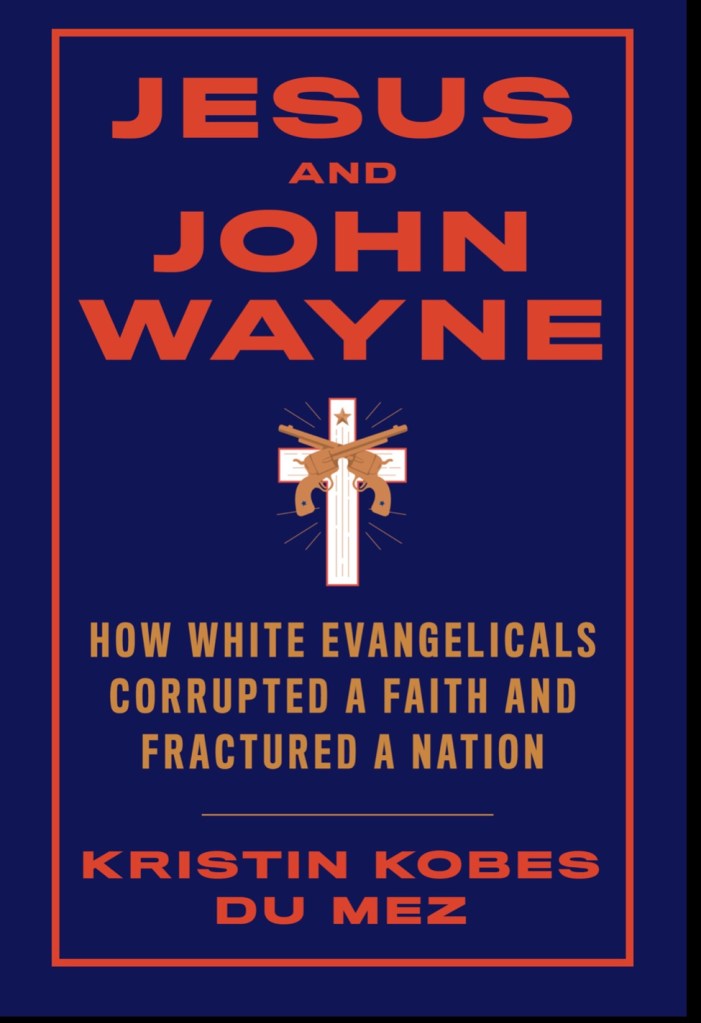


 Michael J. Fast