The events that happened are the past, but ‘history’ is the record of those events. The two are rarely identical. Our connection with history is mediated through the stories we hear and remember. These stories can be skewed, and there is nothing wrong with trying to bring them more in line with reality.
I experienced this tension recently when I finished John Grisham’s Camino Ghosts. I had started it last year but put it down, finding the story initially uncompelling. Last week, while browsing my Kindle, I realized I had never finished it. I gave it another chance because Grisham is a favorite author of mine; I love how he connects his stories with real-world situations, helping me see things in a different light.
I finished the book earlier today and found myself weeping at the end. Briefly, the story follows a writer documenting an island off the north Florida coast inhabited solely by descendants of former slaves. The last inhabitant, an 80-year-old woman, is fighting a ruthless casino developer who wants to take over the island. The story has a good ending, but I found myself reflecting on why it moved me so deeply.
This reflection connected with another activity I’d been doing: genealogy. I decided this weekend to set aside time to look at my family tree, exploring the history of my great-great-great-grandfather, Rev. James Settee. I was researching his progenitors and came across an article written by Raymond Shirritt-Beaumont for a public school curriculum in Northern Manitoba. It discussed Rev. James Settee and his cousin — and later colleague — William Garrioch.
The author made a cryptic remark that a Joseph Smith was Settee’s great-grandfather. The article explored various possibilities before focusing on one person: a Joseph Smith who arrived in the Hudson Bay in the late 1700s. He made five journeys inland into what is now southern Manitoba and Saskatchewan, primarily to connect First Nations people with the Hudson’s Bay Company for trade. Smith eventually died on one of these trips. Remarks in his boss’s journal seemed to imply he had a “local family.”
For those unfamiliar with this history, that was very common. European men often formed families with First Nations women. Their children are known today as the Métis or Country Born. The article speculates that this child was Rev. James Settee’s grandfather. There’s no concrete proof; it’s a historical speculation based on Settee’s own claim of a Smith ancestor. This is where the past and the record of it — history — diverge.
“Certainly the glimpse Settee gave us of life among the Swampy Cree in the early years of the nineteenth century reveals a culture in transition, a unique blend of aboriginal and European that defies easy definition. For the Garriochs and Settees, that cross-cultural exchange had been going on for four generations, and perhaps longer, when James Settee and William Garrioch set out in 1824 for the mission school at Red River. It continues today among their descendants; indeed, one might say that the family represents Canada in microcosm. From its multicultural beginnings, the Garrioch family has become a new people, one that is firmly planted on this continent, but with roots stretching out across the seas. When all is said and done, what could be more Canadian than that?”
[Raymond Shirritt-Beaumont, Wabowden: Mile 137 on the Hudson Bay Railway, (Frontier School Division, 2004), 129.]
It was with this understanding of my own ancestors’ blended history that I returned to the story of the island in Camino Ghosts. Reading the story of a woman whose ancestors were slaves, who grew up on the fringes, and who finally saw justice done connected me directly to the story of the First Nations and Métis people of Canada — my ancestors. Reading how they worked not only in the fur trade but also in spreading the gospel of Jesus Christ throughout Manitoba and Saskatchewan connected me personally.
I am a long time removed from that period. Yet, thinking about their journeys through the wilderness of Northern Canada brought me back to my own experiences in that same wild. As I read, pictures of the lakes, trees, animals, and fish came directly to my mind.
The story became profoundly meaningful because I could feel a direct connection. Through my ancestors, their stories — the injustices they experienced through displacement and cultural pressure and the hardships they endured — became real. The theme of justice in Grisham’s book resonated with that personal history.
This reminds me again of the importance of relationship. It is impossible for me to care about the world or to desire to make it a better place without a relationship with it. That’s why perspectives are important. I must expose myself to other people’s perspectives — to understand their point of view, to hear their stories of joy, hardship, and justice. It is only through hearing these stories that we can connect our stories together.
I’ll close with a moment from the show Alone. In Season 10, set at Reindeer Lake, the producers invited Cree elders from the Peter Ballantyne Cree Nation to give a blessing. An elder stood and prayed over them in nîhithawîwin — the subtitle translation was the words of the Lord’s Prayer. This prayer had become so integral to this First Nations community’s way of life that their blessing invoked a connection with the God of Jesus.
I connect directly back to that because it was my great-great-great-grandfather, Rev. James Settee, a missionary with the Church Missionary Society in Northern Saskatchewan, who worked at making that prayer meaningful for First Nations peoples as he planted churches and communities of Jesus-followers in that part of the world. It felt like a full circle moment — a story connecting past to present, and history to the heart. This reveals what Shirritt-Beaumont so ably stated above, “a unique blend of aboriginal and European that defies easy definition.”
These are the connections have I found, but every story depends upon its listener. What’s your perspective? How do you connect with the world around you in a deeper way? How does your family story impact your experience so that you too can weep — like me — when you see beauty? If that is a new idea for you, what’s the first step towards discovery?
Photo of Rev. James Settee from the The Cathedral Church of St. John Archives.
I’m wearing an orange shirt today. This is because September 30 in Canada is the National Day for Truth and Reconciliation aka Orange Shirt Day. One of the ways that this truth and reconciliation is remembered is through the wearing of an orange shirt. Even though I am far removed from Canada and haven’t lived there for any length of time for 26 years, the shirt that I put on today reminds me of two key aspects to what it means to be a follower of Jesus: Truth & Reconciliation.
I should point out before we continue that I do have skin in the game. One branch of my family has a long heritage of both First Nations and Metis peoples and I am a citizen of the Metis Nation of Saskatchewan. My Great-great-great grandfather, the MaškēkowakRev. James Settee, spent his life ministering through Manitoba and Saskatchewan, introducing people to the good news of Jesus Christ and how that good news can help transform their lives.
If you’re a longtime reader of this blog, you’ll realize that these two words are a key aspect to how I think that we need to frame our lives and our engagement as Jesus followers. The whole framework — that we call the functional church — includes the Good News of Jesus Christ, the Values of God’s Kingdom, Loving God and Neighbour, and Truthtelling.
Orange Reminds Me of Truthtelling at Both the Political and Theological Levels
The first is through truthtelling. Jesus came not only to represent the truth, but to be the Truth. And part of this truth means we need to reflect on ourselves, on the way we think, and on the foundations we’ve built, and to find ways that God wants us to change these for the better. Unfortunately, in the history of Canada, Jesus’ followers have not always exhibited the kind of truth that Jesus would have us exhibit. (This is by no means limited to issues in Canada). One of the truths we need to face is that it’s difficult for us to tie up our political beliefs with our biblical beliefs. Sometimes we connect following Jesus to our adherence with a specific political party or political ideology. One of the truths that some of our founding fathers believed was that First Nations identity was bad and this needed to be changed into something good. Thus we have residential schools that were explicitly designed to “remove the Indian from the child.” This is all clearly documented in the reports of the Truth and Reconciliation Commission, and also in quotes like this:
When the school is on the reserve the child lives with its parents, who are savages; he is surrounded by savages, and though he may learn to read and write his habits, and training and mode of thought are Indian. He is simply a savage who can read and write. It has been strongly pressed on myself, as the head of the Department, that Indian children should be withdrawn as much as possible from the parental influence, and the only way to do that would be to put them in central training industrial schools where they will acquire the habits and modes of thought of white men.
John A. MacDonald, 1883
This was not merely a political failure; it was a theological one. These political ideas, in turn, fostered and were justified by a flawed theology. What do I mean by that? There are several theological flaws at play here.
Flawed Understanding of Politics and Theology
The first, of course, is that it represents a marriage between politics and theology where political theory is prioritised over theology rather than the other way around. All of life needs to be informed by scripture.
Where do we see this today? It happens when we assume a political party’s platform is synonymous with God’s will, or when we dismiss a fellow believer’s faith because they vote differently.
Humans Were Created Originally Righteous
The Bible clearly teaches us that humans were originally created good. It was only after a specific choice to rebel that sin entered into the world. I’ve written a little bit about that here. That means we cannot look at people from another part of the world who may have different cultures or different languages or different political structures or different technological levels, and say that somehow because they’re not as developed as we are, they’re not worthy of receiving the gospel of Jesus Christ on their own terms. The message of Jesus must be communicated in a way that is understandable to them. There is no command in scripture for us to transform other peoples’ cultures for them. In fact, each person in each culture is called to do their own internal transformation as their own minds are renewed.
Recognizing that truth is the foundation for repentance, healing, and reconciliation.
Imago Dei
The very first words after the creation story in Genesis 1:27 declare that all peoples on the earth are in the image of God.
“So God created humans in his image. In the image of God he created them. He created them male and female.”
The very truths of the Bible condemn the attempts of others to erase languages, traditions, and identities as not only cruel, but also as a denial of Scripture itself. The Good News of Jesus Christ is not an attempt to replace a lost image, but rather a call for all peoples to be reconciled to God and, in that process, to restore and renew their own cultures in Christ, purifying and elevating what aligns with God’s truth and rejecting what does not (Colossians 3:10; Ephesians 4:24).
The truth of the Bible is far from this idea and clearly teaches that the image of God was not erased by the Fall. Genesis 9:6 plainly states human life is sacred because people still bear God’s image. James 3:9 warns against cursing others because they still reflect God’s likeness. Paul describes men and women as God’s image-bearers in the present tense (1 Corinthians 11:7). The truth runs through the whole Bible: every person, every people, every culture carries this dignity.
One tragedy of the residential schools was deeply theological because of the idea that First Nations peoples were somehow less than fully human, or less than fully made in the image of God. This has been framed as “robbing communities and individuals of their cultural and spiritual identity.”
Heaven Will be Explicitly Multicultural
The truth of the matter is that God accepts people from every tribe, language, nation, and people in the world and each of these groups will be represented in heaven. There’s this great image from Revelation 7:9-10 that sees John open his eyes to the reality of the kingdom of God that contains all of these People.
“After this I saw a great crowd of people, too many to count, from every nation, tribe, clan, and language. They were standing before the seat of honor and before the Lamb, dressed in pure white regalia, holding palm tree branches in their hands. They lifted their voices and shouted, ‘The power to set us free and make us whole belongs to the Great Spirit who sits upon the seat of honor, and to the Lamb!’” Book of the Great Revealing 7:9-10
The truth is that we need to work towards a more intentional welcoming of people from all nations into God’s Kingdom, not as peoples whose cultures have been stripped away in favour of our own, but as peoples whose cultures express God’s goodness and love. Maybe these new perspectives will reveal to us that our own culture is flawed and in need of transformation. Unfortunately, for many, this is a very scary prospect because it means that we all need to admit our flaws and work towards repentance and restoration. The culture that we may want to protect; the way of life that we may want to preserve may in fact not be worth protecting or preserving because of their built-in flaws. Maybe instead of preservation we need to work towards growth.
This isn’t just a historical error. We see it when we dismiss other cultures as “unreached” because they lack Western infrastructure, or when we implicitly value some lives over others based on nationality, wealth, or social status.
Wearing Orange not only reminds me of my commitment to truth, it also reminds me of something else.
Orange Reminds Me Of Reconciliation
The second word that this orange shirt I’m wearing reminds me of is reconciliation. There is good news, even in light of the fact that we have made mistakes in the past there is good news because God is working to reconcile us to himself. He has even indicated that Jesus followers are to be agents of this reconciliation. We are to find ways to connect to God with people and people with God. We are to find ways to bring Hope to a world that is hopeless. We must find ways to help others be lifted up as they journey towards God.
But as I was reminded today, in conversation with my Spiritual Director Len Thompson, we may not always see the fruit that we are looking forward to. Len reminded me of Hebrews 11 and 12 where all of these great heroes of our faith worked very hard to establish God’s Kingdom here on earth, but they did not yet experience that kingdom during their own lifetimes. Each had a contribution to make to establishing the Kingdom but the establishment of that Kingdom supersedes any one lifetime or era. What’s especially significant for us today — as pointed out by Andrew Walls — is that we too are waiting to see that Kingdom established! This not only means that you and I each have our own contribution to make, it also means that our contributions are essential!
The legacy of this theological failure isn’t confined to history books. It echoes in the ongoing trauma of survivors, the systemic inequalities Indigenous people still face, and in our own complacency. So, what’s the next step for us, right now?
What’s the next step?
So, today, feel free to wear an orange shirt. But it’s not merely enough to just wear an orange shirt. We are called to be truth-tellers and reconcilers today, and this historical example shows us what happens when we fail that call. Here’s how we can live it out now.
How can I apply the truth of God to my life? To my society’s life? To my use of the land?
How can I be an agent of reconciliation today? Encourage individuals to return to a right relationship with God? Reshape my society so that it has a proper relationship with God? Improve my relationship with the land in a way that God desires?
Will you join me in being a truth teller? Will you join me in being an agent of reconciliation?
We often focus on punishment and destruction when we think of evil. But the Bible reveals a more profound truth: God’s primary strategy is infiltration and transformation. From Manasseh to Babylon itself, God sends His people into broken systems and lives not to escape or destroy, but to redeem. Our calling isn’t to await the fall of our modern “Babylons,” but to actively participate in their restoration through faithful, everyday work—to plant crops in the cursed ground and pray for the peace of the city, believing that enemies can be turned into friends.
When I was younger, I was an aficionado of Resurrection Band. I even saw them in concert once at the Centennial Auditorium in Saskatoon and wore a signed T-shirt of theirs for many years. One of my favourite songs of theirs was entitled Babylon, which includes the bridge:
“I saw Babylon slowly start to burn I heard the voices crying Refusing ever to learn, Babylon”
The final line — that sticks in my mind until today — is “Babylon. Babylon is fallen!” This imagery hearkens back to the Revelation of John, where the great harlot, Babylon, the city that is opposed to God and works at spilling the blood of the Saints, is finally punished and destroyed. In the Bible, Babylon = evil.
I was mistaken for years in thinking that the only legitimate end for things that are evil like Babylon is punishment, as the song says. And part of me probably anticipated seeing this punishment enacted in my lifetime.
It’s part of our nature to want evil to be punished; especially evil committed against us by others. We’re not entirely excited when our own evils are called out and punished are we? But we like it when the bad guys lose and the good guys win — even if that means turning bad guys into Robin Hoods so that even worse guys can be punished.
But more recently I have come to realise that there are actually two destinations for things that are evil like Babylon. On the one hand, Babylon awaits destruction. Because after all, what does one do with their enemies? One fights against their enemies and seeks to defeat them. But is that what God does with his enemies? It seems that God instead enacts a plan so that his enemies strongholds are infiltrated by his people so that it becomes transformed and turned into something that is good.
The Tower of Babel and the Confusion of Languages
Babylon’s origin story is the tower of Babel, where God confused human languages so that people would spread around the world.
A commentary I recently read said the tower was an attempt by people on the Earth to fulfill God‘s promise of “all the nations being blessed.” Rather than relying upon God for that blessing, they decided to enact that blessing themselves. Perhaps that’s at the core of Babylon‘s label of being opposed to God.
Manasseh
Manasseh was one of the kings of Judah. He was a bad guy. 2 Chronicles 33 outlines the extent of the evils he intentionally implemented to the point that he “misled Judah and the inhabitants of Jerusalem so that they did more evil things than the nations that the Lord had destroyed when the Israelites arrived in the land” (2 Chronicles 33:9).
As a result of this, God calls the army of Assyria to come and carry Manasseh off to his kingdom, where he experienced difficulty.
“When he experienced this distress, he begged the Lord his God to be kind and humbled himself in front of the God of his ancestors. He prayed to the Lord, and the Lord accepted his prayer and listened to his request. The Lord brought him back to his kingdom in Jerusalem. Then Manasseh knew that the Lord is God.”
Wow!
Jeremiah 29
In the book of Jeremiah, the inhabitants of Jerusalem are confronted with a horrible reality. It seems that King Nebuchadnezzar, the Emperor of Babylon, will be successful in conquering their city and carrying them off into captivity. The book outlines Jeremiah’s prophetic words from God to help the people of Jerusalem face this horrible possibility.
Apart from the fact that being a prisoner of war is a horrible thing in and of itself, for the people of Israel this reality was especially difficult to accept because as far as they were concerned they were the people of God who had been blessed by being the owners of Jerusalem and the land of Israel around them. Their understanding was that this was a promise that God gave to them in perpetuity. And so for them to be carried away was almost an impossibility — their theology didn’t support that. In fact, Jeremiah was the sole prophet who prophesied that they would actually be carried off into captivity (verse?). All the other prophets of his time had convinced the people that they would not be carried off into captivity but that they would only be gone for a few weeks or months (verse?). One of Jeremiah’s tasks was to prepare the people for a lengthy captivity in Babylon. In fact, many of them would die in Babylon because the captivity would last for 70 years.
So, what were they supposed to be doing while they were in Babylon? They were supposed to infiltrate Babylon become a part of the fabric of Babylonian community; make their lives in Babylon the lives that God had called them to; they were to build houses, and they were to plant crops, and they were to get married and have children, and have their children get married. All of these things are things that new immigrants do when they come to a new place. Furthermore, they were also to pray for the blessing of the City.
What does Jeremiah 29 teach us about how God deals with evil places like Babylon? God sends people to infiltrate it so that Babylon too can be transformed from a place of evil to a place of goodness.
The Emperor who became a cow
Nebuchadnezzar the Great was the Emperor of Babylon but at a certain point in his life, God turned him into a cow! The point I want to emphasise here is that God chose to interact in an immersive way with the most powerful human king the world has ever seen. As the emperor of Babylon, he personified opposition to God — they called him the King of the Universe. Which is perhaps why God chose to allow his context to change from the most powerful human on th earth to a mere domesticated animal. Nebuchadnezzar’s worldview was deconstructed in a dramatic way but was then reconstructed into something better — he moved from being the so-called “King of the Universe” to submitting himself to the Universe’s True King!
Jesus
Jesus was all about freeing people from sin and the effects of sin in their lives. Jesus’ death on the cross and his subsequent resurrection from the dead ensured that we too would be saved from our sins and have eternal life. But Jesus is about more than merely saving us from death. He wants our lives on Earth to also be reflective of his life on Earth. He wants us to be his disciples. He wants us to be like him. He wants us to be holy. If he was merely interested in saving us after we died, what’s the point in talking about holiness?
One of the clues to Jesus’ purpose on earth can be found in Luke 4. In Luke 4, Jesus returns to his hometown of Nazareth and is invited to speak in the synagogue. He stands up and asks them to read from Isaiah 61. According to the account, this is what was read:
“The Spirit of the Lord is with me. He has anointed me to tell the Good News to the poor. He has sent me to announce forgiveness to the prisoners of sin and the restoring of sight to the blind, to forgive those who have been shattered by sin, to announce the year of the Lord’s favor.”
Jesus concludes his sermon with the words “today this scripture is fulfilled in your presence.”
Surprisingly, the congregation is enraged and wants to kill him. Why do they want to kill him? What’s so significant about these words that he’s saying? When Jesus said these words and when he referred to Isaiah 61 as being fulfilled in him, he was equating himself with God. The inhabitants of Nazareth who regularly attended synagogue knew the work of God was encapsulated in this passage from Isaiah 61.
This is something that we have often neglected is the evangelical church today. We’ve focused on the sweet by and by without thinking too much about the here and now. I realise that’s a generalisation and I generally try to avoid generalisation but if I look at my own journey I can see how at one time in my life I was very fascinated and fixated upon having the right theology and not so much about living a life that’s filled with good works. In fact, good works were identified as a bad thing in my early theology — something to be avoided — because they didn’t serve any purpose. At that stage in my theological development, any good thing that I tried to do was only self righteousness and was not of any benefit in salvation. What I avoided was understanding that we are created to do good works. We’re supposed to be good people. We’re supposed to do good things. We’re supposed to imitate the life Christ lived. This has nothing to do with our salvation, but is a result of our salvation. So my generalisation is based upon my own personal experience. I realise that your experience may be different than that, and if so then that’s wonderful.
What of the Flood or Sodom and Gomorrah?
There, sometimes a perception of the God of the Old Testament and the God of the New Testament of two different people. This perception typically identifies the God of the Old Testament as God of wrath and destruction, while the God of the New Testament is a God of love and peace and restoration. Of course we know this isn’t true. But then people point a certain events that happened in the Old Testament and say how can these be the actions of a loving God? Let’s look at a couple of things, including the story of the flood with Noah and the story of the destruction of Sodom and Gomorrah.
God went to extraordinary extremes to save Noah — the man who found grace in his eyes. Noah testified for 100 years. He lived his righteous life faithfully obeying God’s command to build a ship to save the people of earth from the flood he was going to send. Noah is an agent of salvation for the people of the earth. The flood is not necessarily an event that will destroy them — all they have to do is get on the ship. If they don’t then that’s on them. Isn’t it? This was Noah’s message to the world every day for 100 years.
Abram’s nephew Lot was given a choice of where he wanted to live. He chose to live in the lowlands because the land was richer. Note that this choice didn’t make Lot a bad man but it does lead us to ask the question of how successful Lot would become in the lowlands. We already know he was a successful farmer and business man — would this success follow him? We end up discovering that Lot was not as successful as he might have been because he wasn’t able to have a positive influence on the place he chose to live. We don’t know why this is but it’s clear that his presence in that city wasn’t enough to even influence 10 people to join the path of righteousness. Is that because Lot neglected his role? Is that because the people of the area were unwilling to listen to his message? We are explicitly told the answer but the fact that in the end God saves Lot and his family while fire rains down from the sky implies that those consumed had also made their own choices.
The Psalms provide us with a rationale for why there is war between God and humans in the Old Testament. Psalm 2:1 asks the question, “Why do the nations plot?” And it seems to me that the fact that there is a plot implies an explicit and intended opposition to God. This is a planned event. “We will be in rebellion against who God is.” We’ve talked about the tower of Babel. We’ve talked about Manasseh. We’ve talked about Babylon. We’ve talked about Nebuchadnezzar.
The best argument against claims that the God of the Old Testament is an evil God is that the very passage that describes how God’s people should engage society comes from this same Old Testament. And it’s interesting that in the midst of the distress that Israel is about to experience, there is a glimpse of the hope that God is bringing to the entire world. At this time it’s appropriate to bring out the verse that we most commonly associate with Jeremiah 29, namely verse 11, that says God has plans for us. What’s important for us to realize is that the good plans that God has for us are contingent upon our agreeing to those plans, aren’t they? Don’t the people Jeremiah is talking to within Jerusalem need to say, “OK God, I’m willing to accept the fact that we need to be exiled for 70 years, but that you have good plans for us”? Don’t the people of Babylon and also have to be willing to listen to the testimony of those who are in captivity so they too, can experience the good things that God has a store for them?
God’s love and call to repentance always come first, yet when that love is rejected, judgment surely follows. The fall of Babylon shows us both: an offer of transformation through grace, and, if spurned, the certainty of destruction. To keep both together — love before wrath, repentance before ruin — helps us see the fullness of God’s justice and mercy.
You and Me
Even though we’re talking about structural evil at the level of nations opposing God, we can’t ignore the fact that personal evil is also a major part of what goes on. We notice the engagement strategy that Jeremiah presents to the people of Israel is that they are supposed to live out their lives in a personal way, which includes homes for them to live in, families for their children, crops, etc. So, in order to be a good person in a society like Babylon I need to live out my life in a way as if I have a future there and there is a future for that city.
But this is not merely limited to making sure I live a good life in the midst of an evil city. Rather, it’s an understanding that through my living a good life in the city, setting down roots, and contributing to the economy of the city, I am also interested in the future of that city and praying for the city. Praying means calling upon God to help with the transformation of the city. Praying means calling upon God to make the city a place of justice, a place of goodness, a place of kindness, a place with love, with joy, with peace, with patience, with kindness, with goodness, with faithfulness, with self-control. And being a part of the fabric of the city means that we position ourselves for future leadership and guidance within that city as well.
Jeremiah 29 invites us to “Plant crops.” Even though the process of planting crops seems like a bit of a gamble. One of my friends referred to farmers as the people with the most faith in the world because they do everything they possibly can to invest in a product that is not guaranteed to emerge at the end of the process. Planting is hard but planting actually starts in the middle of the process. Before that we have to prepare the ground. I have to chop down trees and pull out stumps. We have to pick rocks. We have to break the ground. And then the broken ground needs to be broken up again. And only then can the crops be planted.
Growing crops is hard. Harvesting crops is hard. It’s a long and tedious process that takes a lifetime to perfect. And once you harvest him then you gotta try to sell it. Selling those crops at the end is hard, and some of the hardness of that process is directly because of the sin of Adam and Eve in the garden of Eden. The ground is cursed and it’s by the sweat of our brows that we can get something to emerge from the ground. In our farming processes, we need to go beyond adding to the curse of the land and try to find ways that help remove that curse. And of course, beyond planting there are other aspects to it.
An example with a Brazilian connection
I recently attended a seminar in Brazil, where we talked in part about the integration of faith and agriculture. A couple of the things emerged that help inform our discussion today.
I was introduced to a paper that spoke of Palissy’s idea that even an unlearned potter can question accepted wisdom and put forth his own ideas. He derives this from Jesus’ parable of the talents implying that each of us is given a task and responsibility and we need to use that appropriately. These talents for Palissy include the land and the forests that have been neglected and are in need of what he calls a true formula in order to be restored to their original intent.
Palissy’s very direct statements about not wanting to engage in clear-cut logging with no restoration can be directly tied to the concept of eliminating the sin that’s in the world. If the world’s natural state itself is destroyed then what of the task that’s been given to humans to overcome the sin that’s in the world?
These aren’t just better farming techniques; they are acts of spiritual warfare against the curse, a practical way to “pray for the peace of the city” by healing the very ground it stands on.
If these are the examples that the Bible gives us about how to confront evil, that means that you and I have to be intentional as well about confronting evil. Not with the goal that evil will be punished but with the goal that evil people escape punishment because they are transformed into good people. The Bible calls this transformation repentance or changing the way we think and act.
How can I start working on this today? I need to start with my own life and find areas in my life that I need to repent of — I need to start being good. I need to then look at society I’m a part of — whether that’s my community, my church, my city, my province, or my nation — and find areas that we as a group need to repent of. And then we need to start doing better. And then I need to look at the physical world around me and begin the hard, faithful work of planting crops.
Because there is hope, even though the presence of evil in the world makes it next to impossible for us to believe. The hope that the Bible gives us is that Jesus is the key to this hope. Only Jesus can offer a better leadership than the leaders that we have continued electing time and time again — and we can testify to the effectiveness of serving Him over others, proclaiming the gospel of grace that makes it possible. Only Jesus can give us the values we’ve been trying to establish — these can only be found in His kingdom and we can be witnesses to it. Only Jesus can give the hope that I can actually love my neighbour just as much as I love myself — and our love serves as testimony to this truth. Only Jesus can supply hope, through his interaction with us daily, that God is faithful — and we can also testify to that truth.
Getting back to Babylon
The final lines of Babylon show us the way forward:
“Time to build again Babylon, Babylon is fallen”
Is Babylon fallen because it has experienced God’s punishment or is it fallen because it has been rebuilt into God’s kingdom? Revelation 11:15 gives the answer:
“When the seventh angel blew his trumpet, there were loud voices in heaven, saying, ‘The kingdom of the world has become the kingdom of our Lord and of his Messiah, and he will rule as king forever and ever.’”
The fall of Babylon is prefaced by the rebuilding started in Jeremiah 29 where God sent his agents into the enemy camp in order for the enemy to become a friend.
God wants the same things to happen today as well. He wants enemies transformed into friends. And that transformation begins with us.
“I’m only human.” We’ve all said it or heard it. It’s the universal excuse for our limitations and our failures. But what if we’ve gotten it all wrong? What if that phrase isn’t an apology, but a declaration of our greatest purpose? What if being ‘only human’ is actually the whole point of God’s plan?
There is a narrative popular today that views humans as a blight on the earth. This narrative focuses on the bad things that humans do, including environmental degradation, wars, religious conflict, etc. It’s almost as if we’re to believe that humans shouldn’t even exist on the face of the Earth.
A popular example of this, at least from my generation, is the very first episode of Star Trek: The Next Generation where Q puts humanity on trial for all of the bad things that they’ve done. In some ways, the rest of the series is an attempt to address the issues that Q raises.
I was watching Building the Band last night, and in one of the songs they sang was “Human.” The chorus of it goes, “I’m only human after all.” The singers found it powerful because it framed ‘being human’ as an excuse for their limitations and failures — a sentiment I think we all understand.
But the song got me thinking about being “only human after all” and I realized that scripture has a different understanding of what that means. Scripture doesn’t put it in a negative light. To be human is not to be a curse upon the world, but to be a blessing.
What makes me say this? At the very, very beginning of scripture, God creates humans in his image (Ge 1:27). So that means that humans are a significant part of creation. Nothing else is described as being created in his image. Only humans. Humans are also placed into the garden to oversee it, to care for it (Ge 2:15). Adam names all the animals in the world. And humans have a very significant role to play in the care of the earth.
Even after sin enters and messes everything up — and enslaves humans, structures, and the physical world — humans continue trying to free themselves from sin (more on that here). Ultimately, Jesus provides that freedom through his death, sacrifice, and resurrection so that we too might be dead to sin and raised to new life in Christ (Ro 6:1-11; 1Pe 2:24). But to be human is not a bad thing. Jesus did come from heaven to earth, lived here for 30 years, taught, made disciples, and trained a group of humans — both male and female — to carry on His mission. Then, after three years of ministry, He left. He went back to heaven and said, “I’m leaving you all here with a task to make disciples of all nations” (Mt 28:19-20).
To be human is to be somebody significant, to be someone whom God has created specifically to carry out and fulfill his mission here on Earth, and that is the mission of reconciliation with him (2Co 5:18-20), to glorify him, to praise him. In their original, created design, humans are not bad; humans are good.
An Alternative Perspective
At this point, I should point out that there is an alternative perspective to the common science fiction trope that humans are a blight on the universe. There’s a series of Reddit posts that are expanded upon in several TikTok videos that take the form of fanfiction and describe a future where aliens have invaded the world but can’t defeat the humans because of human resourcefulness, because of their idiosyncrasies, and because of their ability to embrace multiple forms of truth at one time. In fact, these fanfic renditions are closer to the truth than we might think.
But there is a Problem
So how do we live up to this potential? How do we overcome this sin problem that is so pervasive it often becomes the defining feature of humanity? (Ro 3:23). How can we do what God wants us to do here on earth?
The frustrating reality is that sin clearly messes things up. It’s the issue that each of us has had to grapple with for our entire existence. It’s so pervasive and its impact is felt so much in our entire world that sometimes sin becomes the defining feature of what it means to be a human. And yet, God still maintains humans as an essential part of his plan for the salvation of the world. Please note that I’m not saying that humans save themselves (Ep 2:8-9) but that God incorporates humans into his plan as key agents. We’ve already touched on the Great Commission. Humans have even had a significant role in deciding how this Great Commission is carried out as we see in Acts 11, where there was a jump made from Jewish followers of Jesus towards Gentiles who had no natural connection to Jesus. Beyond that we are identified as agents of reconciliation (2Co 5:18-20). Even beyond that we are part of the long list of witnesses in Hebrews that have a contribution to make to the story of the good news. And ultimately, we will share together in the celebration of God’s victory in heaven in the end of time (Re 19:1-10).
To step into this role, we must discuss a little bit about the choices we can to make as humans. James talks about this in chapter 4.
Pagbabalik-loob, or Returning to our Authentic Selves
But before we get to that, we have to understand a Filipino concept that has a significant role to play in our discussion. Ka Jose de Mesa has pointed out that the English word translated “conversion” has a variety of meanings in different languages. For example, in Greek, it’s “Metanoia,” which talks about a changing of the mind. Conversion itself talks about a complete refurbishment. In the Philippines, we have pagbabalik-loob which indicates a return to our authentic self. This authentic self is what we see in Genesis 1, where God is happy with the world he has created. Humans have been created in his image, both male and female, and there are no problems. This is the authentic self that we need to return to. There has not been any impact of sin in the lives of humans at this point, and when we harken back to the way things could be when we dream about a better world, we dream about returning to this time before the entry of sin and death into the world. In a nutshell, it means that when we become Jesus’ followers, we start our journey back towards that original innocent condition. 
James’ Steps on Returning To Our Authentic Selves
James (4:7-9) describes a series of steps that help us return.
The first step is to “Submit to God.” This is the ultimate act of humility because it’s where we recognize His authority. As I have said elsewhere, the Gospel is a political statement. It’s a choice we make to either follow other humans as our leader, or to truly follow Jesus as our leader.
Next is to “Resist the Devil and he will flee.” For me, this is one of the most amazing statements made in scripture because typically when we think of the devil, we think of somebody that we’re supposed to be afraid of. Somebody with horns and a fork tail and a trident. Somebody who is the epitome of evil, but yet the only thing we need to do is to resist him and then he’ll just take off? That’s a pretty powerful statement. Ultimately it’s to actively reject the world’s value system. Just before you read about the fruits of the spirit in Galatians 5 we see a list of things that are not so good things that are to be avoided. Resisting the devil is avoiding these things. While the devil is a real, personal being, his primary attack isn’t as a monster we wrestle face-to-face. Rather, he most often works by laying down a set of values that are opposed to the values of God. So the way to resist that is to oppose those worldly values. The key to resisting is to look at the list and find the things that jump out as being difficult to do. Those are the things need to focus on. We don’t need to focus on the other stuff because we’ve already got that covered.
It’s not simply enough to resist the devil and he will flee. We also need to “Draw near to God and he will draw near to us.” How then can we return to God? There are two ways of doing this. First of all we can work on the fruits of the spirit in our lives. Making sure that these things come out making sure that our lives are known as bearing these different fruit. In the same way with the negative values when we come to the fruits of the spirit, we look at those things that jump out at us as perhaps being difficult to do in those of the things we focus on.
There’s a second aspect to drawing near to God and that is to keep connection with Christ’s body here on earth. We is this body? It’s the church. We need to stay connected to the church.
James asks us to “Cleanse our hands.” Purify yourself from being double-minded—trying to serve two masters. The fact that even though I may now be far from God, all it takes for me to return is to wash my hands. This is a hopeful statement because I am not eternally separated but I have an opportunity to return.
Finally, James calls on us to “Be sorrowful, mourn, and weep.” Just as the woman who washed Jesus feet with her tears and dried them with her hair , we too must get to the point where we feel the weight of our broken relationship with God so we can appreciate His blessings. There is a weight to the evil in our world. Without a true understanding of this evil, without feeling the weight of that evil, without being brought tears because of our failure to truly do what God wants us to do, we haven’t truly repented.
So, Now That We’ve Returned, What’s the Next Step?
The narrative is set. The world says we are a blight. God says we are a blessing. The fanfics get it half-right—humans are resourceful and resilient. But the full truth is even better: We are redeemed and repurposed.
Our next step is to live like we believe God’s story. Your humanity is not a liability; it is your qualification for the mission. You are perfectly placed in your family, your job, and your city to be an agent of reconciliation.
Therefore, our call to action is this: Embrace our operational mandate. This is our opportunity:
· It is our opportunity to not only declare that Jesus is our leader, but to practice it, submitting every decision — big and small — to His authority.
· It is our opportunity to not only declare the values of His kingdom, but to practice them, actively rejecting the world’s values of greed, pride, and conflict in favor of love, joy, and peace.
· It is our opportunity to not only declare the command to love God and love our neighbor, but to practice it, making it the practical, daily outpouring of our faith.
· It is our opportunity to not only declare God’s goodness, but to practically live it out, allowing our personal experiences of His grace to become a testament that blesses others.
This is how we step into our potential. This is how we trade the excuse of “I’m only human” for the declaration of “I am made human, for God’s glory.”
May maliit na daanan dito sa Kagubatan. Hindi naman sya yung kita na yung lupa, parang nadaganan lang yung lumot na nakalatag. Anong kulay? Parang golden green ba ‘to?
Sa likod, may mga squirrels at chipmunks na nagkukulitan. Paminsan, may biglang maingay na uwak na sisira sa katahimikan… yung malayong “tuk-tuk-tuk” ng woodpecker… yung “tweet-tweet” ng mga ibon… yung mahinang hagikhik ng mga dahon kapag hinihipan ng hangin… tapos yung alon sa dalampasigan.
Pero huwag naman isipin na tahimik lang palagi ang Kagubatan. After ilang days, naalala ko bigla kung gaano ito kaingay. Bukod sa mga ibon na kumakanta, uwak na nag-uungol, agila na sumisigaw, seagull na tumatawag, at squirrels na nagkukwentuhan, may dagdag pa yung alon kapag mahangin. Lalong lumalakas yung ingay dahil sa mga dahon. Syempre, yung tuluy-tuloy na ingay ng mga hayop, minsan parang ang gulo-gulo na. Pero kahit ganun, nagde-declare pa rin ang Kagubatan ng glory ng Diyos. Patuloy na sumisigaw ang mga bato. Patuloy na nagpapaalam ang kalangitan. Andaming testimonya galing mismo sa Kagubatan tungkol sa Diyos.
Ito ang Kagubatan. Gawa ng Diyos. Bakit nga ba ginawa ng Diyos itong partikular na sulok? Ngayon, may mga bahay na dito, pero sa nakalipas na trilyon-trilyong taon, walang taong nakakita sa ganda nito. Ginawa kaya ito ng Diyos para lang sa akin? Wag naman! Hindi naman ako center ng creation. Feeling ko, nangyari lang na narito ako. Sabi sa Psalm 19, “Pinpakita ng langit na, grabe, ang galing ng Diyos!” Ang katotohanang meron nitong sulok ng bush, testimonya ‘yan tungkol sa Diyos. Pero para kanino? Para lang ba sa mga taong nadadaan? O iba pa? Mahirap sagutin ‘to.
Ang testimonya, parang may trial na nangyayari—kailangan ng mga witnesses. Sino ba nasa trial? Si God ba? Kung si God, sino naman judge?
Tayo pala ang mga judge! Kapag nagtatanong tayo ng, “Kung merong Diyos, bakit ang dami masama sa mundo?” parang inaakusa natin si God. At parang gusto pa niya ‘yon! Kaya nga sa Bible, paulit-ulit niyang sinasabi na faithful siya. Tulad ng, “subukan mo ako at makikita mo,” o “tikman mo at makikita mong mabuti ako.” Parang sinasabi niya, “Ikaw na bahala humusga.” Yung mga sinasabi niya tungkol sa kanyang karapatan, parang “Ako ang best na Diyos para sa’yo.”
At isa sa mga paraan ng testimonya niya ang creation. Kapag tinatanong natin siya tungkol sa kasamaan, gaya ng ginawa niya kay Job—hindi teolohiya ang sagot, kundi ituturo niya tayo sa wild, kumplikado, at malayong mundo na kanyang pinapanatili (Job 38-41). Ang Kagubatan hindi lang scenery; Exhibit A ito sa depensa ng Diyos.
Ano naman ang ambag nitong sulok na ‘to sa usapang ‘yon? Paano yung lumot, mga bato, lupa, mga insektong kumikinang sa araw, mga patpat na parang driftwood? Yung mga blueberry sa paligid? Yung mga nabali at nabubulok na sanga? Yung makinis na asul-berdeng lawa? Yung kislap ng araw sa maliliit na alon sa harap ko? Yung eroplanong pantubig na kayang lumipad at lumapag sa tubig mamaya? O yung seagull na ganon din? Paano nagte-testify ang lahat ng ito sa kabutihan ng Diyos?
Yung iba’t ibang kulay at hayop dito, nagpapatunay na mahilig ang Diyos sa detalye, diversity, ingay, at kulay. Yung lawa na malawak pero kita mo bawat alon, nagpapakita na mahal niya ang simple at kumplikado. Yung iba’t ibang ingay sa maghapon, nagpapatunay na mahal niya ang katahimikan. Yung bulok na puno, patunay na hindi basta itinatapon ng Diyos ang mga bagay na tapos na. Yung mga blueberry, sabi na nagbibigay siya ng pagkain kahit sa sulok ng mundo—patunay yung mga bakas ng bear na nandiyan sa isang tabi! Yung kakayanan ng mga ibon na lumipad, lumangoy, at sumisid, kasabay ng pagkakaroon nila ng balahibo, parang sabi na mahal niya ang kalayaan at kaayusan. Malinaw na ang Diyos ay hindi lang nag-e-embrace ng variety—siya ang source. Kahit iisa ang buong creation, ang diversity nito mismo ay nagpapakita na hindi niya kailangan ng uniformity. Ayaw niya ng iisang boses lang ang kanyang pinapakinggan—gusto niyang pakinggan ang lahat ng boses.
Nagpapatanong din sa akin ang Gubat.
Pero may mas malalim pa ba? Sa Bible, inihanda ng Diyos ang mundo para sa tao. Naglaan siya ng pagkain at tirahan. Yung salitang “lupa” sa umpisa, may dalawang ibig sabihin. Pwedeng mundo pwede ding lugar para sa tao. Ibig sabihin, may direktang koneksyon ang lupa at tao, gaya ng sinasabi sa Ps 65:9-13: “Inaalagaan mo ang lupa. dinidiligan at pinapataba.”
Kaya balik sa Kagubatan. Ano ba talaga ang significance ng lupa? Sa Job, parang isa itong tagapamagitan para makilala natin ang Diyos. Hindi ko sinasabi dito si Jesus bilang tagapamagitan sa kaligtasan. Ang ibig ko, ang creation mismo ang nagpapakilala sa Diyos. Na-touch na natin yung Psalms. Pwede bang mahanap sa Kagubatan ang sagot sa iba pa nating tanong tungkol sa Diyos? Paano nga ba magsisimula? At habang nakaupo ako rito, sarili ko lang ba ang naririnig ko, o kinakausap din talaga ako ng Diyos?
Malayo man sa mga problema ng tao, at sa parte ng mundo na hindi umaasa sa tao, nagpapakilala pa rin ang Diyos. Direktang nagpapakita siya sa atin, at pati sa paligid. Hindi lang siya ang nagsasalita sa akin tungkol sa Kanya, o ang Kagubatan tungkol sa Kanya—ang pagpapakita ng Diyos ay hindi nakadepende kung makikilala ko ba o hindi.
Dagdag pa, kahit na naapektuhan ng kasalanan ang Kagubatan (cf. Ro 8:20-22)—naalipin dahil kay Adam—sapat pa rin dito para makilala ng lahat na Diyos ang Diyos. Ibig ba nitong sabihin, kahit na alipin din ako ng kasalanan, may natitira pa ring image ng Diyos sa akin para makilala siya sa pamamagitan ko?
Bilang parte rin ng creation, nagpapakilala rin ang Diyos sa pamamagitan ko, diba?
Kasi ang role ng tao ay hindi lang makinig sa testimonya ng Kagubatan at mamili kung sino ang best na Diyos. Bilang parte ng creation, may tungkulin din tayo magpatotoo tungkol sa Diyos. Pwedeng magsalita ang Diyos sa pamamagitan ko, pero pwedeng magsalita rin ako para sa Kanya—trabaho natin ang magsabi ng katotohanan (marturia). At dahil testimonya ito, ibig sabihin, personal nating naranasan.
Ang truthtelling (marturia) ay nakatuon sa pagpapatotoo kay Cristo, pagtatanggol ng katotohanan, at paglaban sa kasinungalingan. Paulit-ulit ito sa Bible: “Kayo ang magiging mga saksi Ko; makipagkasundo kayo sa Diyos” (Is 43:10,12; 44:8; Ac 1:8; 2Co 5:20).
Sad to say, hindi ako kasing effective ng creation sa pag-uugnay ng tao sa Diyos. Dahil alipin din ako ng kasalanan, nahihirapan akong maging maayos—kahit nagsisikap ako. Parang struggle ni San Pablo sa Romans 7: “gusto kong gumawa ng mabuti, pero yung ayaw ko ang nagagawa ko.”
Nadadagdagan pa ito dahil ang kultura natin mismo ay naalipin ng kasalanan. Normal na lang ang ilang masama, at napapasama ako. Yung privilege ko, inaasahan na. Yung kapangyarihan ko, pinoprotektahan. Yung prejudices ko, parang banal na. Laban ito sa Bible (Ex 23:6-8; De 16:19; Is 10:1–2): Dapat unahin ang kapwa, at huwag abusuhin ang kapangyarihan. Mas malala, kapag pinatahimik ko ang iba dahil sa prejudice ko, hinahadlangan ko silang magpatotoo.
At dagdag mo pa, itong mismong Kagubatan na pinag-uusapan natin, naalipin din ng kasalanan. Kaya nahihirapan din itong magpatotoo nang malinaw. Imbes na lugar ng pagkamangha, naging lugar ito ng takot—sakuna, sakit, hirap—ayon sa pangako ng Bible, matutubos din ito.
Dito na papasok ang tanong: Kailangan ba ng pagkilala ko para magpakilala ang Diyos? Syempre, bilang tao, feeling ko ako ang pinakamahalaga. Pero malinaw sa Bible na mas malawak ang creation kaysa sa atin. Kung totoong alipin ng kasalanan ang tao, ang mga sistema natin, at ang pisikal na mundo, ibig sabihin, bawat isa sa atin ay may pribilehiyong magpahayag ng kaluwalhatian ng Diyos. Kaya kahit ayaw kong tumupad sa role ko, hindi ibig sabihin na hindi na ito magagawa ng lipunan o ng mundo. Pwedeng magawa ng bawat isa—tao, lipunan, kalikasan—ang purpose nila nang mag-isa.
Ibig sabihin, itong maliit na parte ng Gubat na tinatamasa ko ngayon, nagde-declare ng glory ng Diyos dahil gusto niya lang! Nagkataon na nasa tamang lugar lang ako para masaksihan ito.
Lahat ng Boses Kumakanta ng Sabay-Sabay
Kapag sinabing ”lahat ng kalangitan ay nagpapaalam,” parang iisang boses lang. Pero sa totoo lang, base sa karanasan natin sa Kagubatan at sa kapwa, maraming boses ang naririnig, bawat isa ay para magpahayag ng kaluwalhatian ng Diyos. Kung lahat ng creation nagpapatotoo, paano tayo sasabay? Kailangan nating matutong umawit nang sabay-sabay sa kanila.
At ayon sa Revelation 5:13, ito ang goal natin:
“Tapos narinig ko ang bawat nilalang sa langit, sa lupa, sa ilalim ng lupa, at sa dagat, at lahat-lahat ng nandun, kumakanta sila: ‘Bigyan natin ang nakaupo sa trono at ang Tupa, ng papuri at karangalan, ng kaluwalhatian at kalakasan magpakailanman’”
Kaya eto ang mga tanong para sa atin ngayon:
Paano ko maririnig ang mga boses ng Kagubatan? Kung hindi ko marinig, problema ba ng boses o kailangan ko lang makinig nang mabuti? Ang pinakasimpleng paraan para tulungan ang mundo na magpatotoo? Munting basura ibulsa muna!
Paano ko iparirinig ang sarili kong boses? Bago magsalita, kailangan mismong buhay ko ay nagpapakita ng kaluwalhatian ng Diyos—hindi hanggang salita lang kundi may gawa.
Paano ko matutulungan ang boses ng lipunan? Minsan iniisip natin, ang solusyon lang ay pumili ng tamang pulitiko. Hindi pa nangyayari ‘yon kahit saan ka man sa mundo! Kailangan nating piliin si Jesus bilang Hari, mabuhay bilang citizen ng Kanyang kaharian—gamitin ang skills natin (negosyo, pagtuturo, pag-aalaga) para labanan ang injustice. Anong isang skill ang magagamit mo ngayong linggo para i-amplify ang boses ng isang napapabayaan?
Kung naka-relate ka sa reflection na ‘to, share mo sa comments kung paano ka sasabay sa pagpapatotoo ng creation ngayong linggo.
A faint trail winds its way through the Bush. Not enough to expose the dirt underneath, but a simple pressing down of the moss that covers the ground. What colour is it? Maybe it’s Golden green?
Squirrels and chipmunks chatter in the background. Once in a while, the raucous cry of a crow disturbs the peace… the faint ratatatat thumping of a woodpecker somewhere in the distance… the cheep-cheep-cheeping of Cedar waxwings and sparrows… the faint rustle of the nearly circular leaves as the gentle breeze moves them… the waves lapping at the shore.
But lest we think the Bush is always quiet and peaceful, I’m reminded a few days later of how noisy it can be. Apart from the noise of birds singing, crows cawing, Eagles screaming, gulls calling, and squirrels chattering, we also have the waves that crash against the shore when it’s windy. The noise is enhanced by the leaves rustling. And of course, the continual noise of the squirrels, and the birds in the background make for a sometimes cacophonous experience. But yet, even in the midst of the cacophony, the Bush is declaring the glory of God. The stones continue to cry out. The heavens continue to declare. Testimony abounds from the Bush that tells us about God.
This is the Bush. God’s creation. Why did God create this particular part of the Bush, I wonder? Today, houses and cabins are interspersed in the bush, but for the past gazillion years or so, no human eyes looked upon the wonders that surround me. Did God create this little corner simply so I could experience it today? I don’t think so simply because I am not the central figure in creation. I think experiencing this piece of Bush is coincidental to God’s creating it at the beginning of time. Psalm 19 tells us that “all heavens declare the glory of God.” The fact that this little corner of the bush exists testifies about God. But to whom does it testify? Merely to humans who might by chance come across it or is this testimony something different? It’s a question that’s difficult to answer.
Testimony implies some kind of a trial that’s happening — a trial that needs witnesses who can testify to something. Who is on trial? Is it God? And if God’s on trial, then who is the judge?
It’s we humans who are the judges! When we ask questions like, “If there is a God in heaven, why does such evil exist in the world?” we put God on trial. And God seems happy to be put on trial! That is what’s behind the many statements in the Bible of how God says that he is faithful. Even statements as blatant as “test me in this and see if I will prove to be faithful,” or things such as “taste and see that the Lord is good,” are examples of God saying to us, “You be the judge.” His constant statements of His worthiness are His calls to judge him — “I am the best God for you to choose.”
And creation is one of the ways that He testifies. When we put God on trial with questions like “Why does evil exist?” He responds like He did to Job — not with theological treatises, but by directing our gaze to the wild, intricate, untamed world He sustains (Job 38-41). The Bush isn’t just scenery; it’s Exhibit A in God’s defense.
What does this little corner of the Bush that I am enjoying today contribute to that conversation? What about the contributions of the moss, the rocks, the dirt, the shiny insects wandering across the rocks’ faces in the sun, the driftwood-coloured sticks that litter this area? Of the lowbush blueberries that grow around me? Of the broken cedar bows and rotted cedar trunk? Of the blue-green-rippled-smooth surface of the lake that I gaze upon? Of the sun glinting on the tiny waves washing up on the shelf of rocks on the island in front of me? Of the fact that a float plane can both ‘float’ in the air as it flies by and eventually on the water when it lands later today? Or the seagull doing the same thing? How does all of this testify to the goodness of God?
The variety of colours and species that I see around me testifies that God loves detail and diversity and noise and colour. The views of the lake that reveal both a vast expanse of water as well as individual waves, reveal that He loves simplicity and complexity. The variety of noises at various times of the day show that He loves silence and peace. The rotted cedar trunk testifies that God doesn’t simply get rid of things that are past their expiry date. The lowbush blueberries testify that God provides food even in the very corners of the earth — the bear tracks nearby attest to their tastiness! The birds’ ability to soar, swim, and dive coupled with the fact that they are all feathered hints that He loves freedom and order. He is clearly a God that not only embraces a variety of things but is also the source of that variety. That means that even though God has created a unified whole creation, the diversity of that creation itself exemplifies that he does not need uniformity. He doesn’t only want to hear one voice — he wants to hear all voices.
The Bush leads me to ask questions, too
But is there more to it? Scripture tells the story of how God prepared the world for human habitation. He assigned food for us to eat and places for us to live. One of the first words the bible uses is commonly interpreted earth actually also encompasses land — a word that has specific connection to humanity. That means that there is a direct connection between the land God created and the humans that he created it for, as Ps 65:9-13 reminds us, “You even prepare the ground. You drench plowed fields ⌞with rain⌟ and level their clumps of soil. You soften them with showers and bless what grows in them.”
Which brings us back to my experience in the Bush. Of what significance is the land? Our reading of Job implies that the land — i.e. this little slice of Bush — is one of the ways God mediates his relationship with us. I am not talking about Jesus’ role as the exclusive mediator when it comes to salvation. Rather, I am talking about how creation mediates knowledge of God. We’ve touched on the Psalms that talk about the glory of God being mediated through the Bush. Can we also find solutions to the other questions that we use to judge God here in the Bush? How would I even begin trying to answer that question? Furthermore, as I sit here in the Bush, am I merely listening to my own thoughts on this matter or is God communicating with me as well?
Far removed from the problems we face as humans, and in a part of the world not dependent upon people, God still makes himself known. He makes himself known through directly revealing himself to us as well as indirectly revealing himself. It’s not only God speaking to me about Himself or the Bush is speaking to me about who God is — God’s revelation is not dependent upon my recognising it.
What’s more, even though the Bush is tainted by sin (cf. Ro 8:20-22) — enslaved as a result of Adam’s actions back in the garden — there is still enough here for everyone to acknowledge that God is God. Does that mean that enough of God’s image remains in me, even though I too am a slave to sin, so that God is revealed through me?
As a part of creation myself, God also then reveals Himself through me, doesn’t he?
Because humanity’s role is more than simply listening to the testimony of the Bush and judging which God is the best. As a part of creation, we too are tasked with testifying about God. God can speak through me but I can also speak on God’s behalf, doing the work of truthtelling. The fact that this is called testimony means it’s something I have personally experienced.
Truthtelling (marturia) is focussed on bearing witness to Christ, defending truth, and resisting falsehood. Multiple parts of the bible, in both Old and New Testaments, repeat this basic command: “You shall be my witnesses; be reconciled to God” (Is 43:10,12; 44:8; Ac 1:8; 2Co 5:20).
Unfortunately I am not always as successful at connecting people with God as creation is. My own personal enslavement to sin hinders my ability to behave in an optimal way — even though I try to work at it. It’s much like Paul’s struggle in Romans 7 where I face a daily struggle between wanting “to walk in a good way, but I end up doing the things I hate.”
My lack of success is also compounded by the fact that the culture I live in has also been enslaved by sin, thereby normalising some of the evil that I end up participating in. My privilege becomes expected. My power becomes protected. My prejudices become sacrosanct. Scripture speaks against this in multiple places, including Ex 23:6-8; De 16:19; and Is 10:1–2, that testify of our need to prioritise Others over self and condemn the abuse of power through unjust laws that oppress the vulnerable. What’s worse, when my prejudices silence others, I hinder their ability to testify.
To top it all off, the very Bush that we have talked about since the beginning of this post is also enslaved by sin, hindering its ability to testify clearly. Instead, it often turns into a part of life to be feared — natural disasters, sicknesses, labour, etc. — rather than a place of wonder, strength, prosperity. Scripture promises that it too will be redeemed.
At this point we have to tackle the question of whether my own human recognition of God‘s revelation of himself is essential to God revealing himself or not? Of course as a human I like to recognise myself as the pinnacle of creation but scripture is also very clear that there is far more to creation than merely me and you. If it’s true that humans are enslaved to sin, and that our structures and societies are enslaved to sin, and the physical world is enslaved to sin, that means that each of these has the privilege of being capable of declaring the glories of our risen Lord. So, even though I may not be willing to fulfill my role of proclaiming God’s glory that doesn’t mean that society or the physical world is also unable. Rather each of these three aspects of creation can fulfill its purpose independent of the other two.
This means that the small piece of Bush that I’m enjoying right now declares the glory of God merely because it wants to! I just happen to be here now to share in the experience.
All voices singing in harmony
“All heaven declares” might seem to imply that there’s only one voice speaking. But our reality with experiencing the Bush and with experiencing connection with fellow humans shows us there are many voices that can be heard, each of them intended to be used to declare the glories of God. If all creation testifies, how do we join this chorus? Our goal must be to learn to sing in harmony with these other voices.
And according to Revelation 5:13, this is our ultimate goal. We read,
“Then I heard all of creation, those in the spirit-world above, on the earth below, under the earth, and in the sea of great waters. They were singing, “All blessing, respect, honor, and chiefly rule belong to the one who sits on the seat of honor and to the Lamb, to the time beyond the end of all days!”
Which raises some questions for us to act upon today:
1. How can I hear the voices of the Bush? If I can’t hear the voice, does that mean that the voice itself needs help or does it mean that I need to be attuned to the voice? The simplest way for me to help the physical world around me declare the glory of God is to throw my garbage in the garbage can.
2. How can I make my voice heard in declaring the glories of God by recounting my own experience with God? Before opening my mouth, I need to make sure that my life itself reflects God’s glory — I can’t just tell; I also need to show.
3. How I can help society’s voice be heard? We sometimes think that the only hope for our society is to choose the right politicians so that they will make things right. That obviously hasn’t happened yet. We need to choose Jesus as our king, actively living as citizens of His kingdom — using our skills (business, teaching, caring) to dismantle injustice. What one skill can you leverage this week to amplify a marginalized voice?
If this reflection resonates, share in the comments how you’ll join creation’s testimony this week.
Photo taken by yours truly on the northern shores of Lake Superior.
At first glance, the grey concrete Soviet block-era high rises across the street from me. Lifeless, uniform, and uninteresting. There’s no sense of individuality, just one window after another after another after another. Lifeless. Uninteresting. Uniform. Bland. Blah.
I have heard of places like this all of my life. Places designed to crush a human soul. But despite the cloudy, rainy skies that are covering this town — that I’m only just visiting for the first time — there is not a sense of dismalness here but a sense of life.
They were designed and implemented by a philosophy that says all humans should be the same with no one rising up and no one lower down. But equal. Egalitarian. Balanced. The same.
And the philosophers can’t be faulted for their good intentions. They wanted to eliminate discrimination and inequality, and they sought to use something as simple as a domestic domicile in order to do that. The home is where our heart is after all, and if we can modify the home, it might also modify our heart. But just as evil has enslaved our hearts and has enslaved our natural world so too it has enslaved our concept of domicile. So rather than merely pushing us and nudging us in the right direction, the evil that enslaved these buildings has eliminated all sense of individuality and diversity and joy.
But then I look closer and I realize in this later end of their life, these solidly poured concrete structures do exhibit life. I can see on the end of the buildings, the inlaid fancy designs in the concrete that show arches and curves and nibs and bumps and nubs; that show some sense of style. And as I look towards the neighbouring buildings, I realized that they’re not entirely uniform, but each has its own distinct features. Is each of these minor details and differences evidence of resistance on the part of the original designers and architects?
And now, at this time, probably at least 50 years since they were built, there’s a sense of individuality. People have changed their balconies. People have applied paint. People have installed air conditioners, people have installed new windows. And you realize that these buildings that were designed to be uniform and lifeless and proletarian have now become something else entirely: a place where life can continue, a place where people must not merely subsist, but survive and thrive. A place people can call their own and they can say, “Oh, I have some differences.” “I have some preferences.” “I have some changes.” “I like things to be the way they are.” “I like the light gray. I like cream.” “I like dark gray and brighter cream color.” “I like white.” “I like to have aluminum windows.” “I like tiles.” “I like air conditioning.” “I like fancy railings.” “I like plain cement.” “I like reflective windows.” “I like clear windows.” “I like brown windows.” “I like white windows.” “I don’t like windows at all and I want to brick them up.”
But these personalisations aren’t intended to infringe upon other’s spaces — in spite of the difficulty of painting the exterior wall on the sixth floor or the 10th floor people’s individual spaces remain clearly demarcated. The only infringement upon the neighbors is through the sense of sight, but there’s an idea that this sense of sight is meant to be influenced in a positive way rather than a negative way.
And then there’s the signs of life. These aren’t just inanimate concrete structures, but inanimate concrete structures that house life. A string of laundry left out too long, now soaked by rain. Five lights of a chandelier seen through one window; another window ajar where a face looked out moments before; and families emerging from the streets in between these buildings, heading somewhere. Revealing their diverse senses of fashion in their attire and in the vehicles they drive.
The city, which is the historical centre of Georgia, abounds in religious imagery! Crosses appear at street corners. Churches dot the mountain tops. Even the national flag with its five crosses, denotes the five wounds of Christ on the cross. I wonder how these religious ideas have impacted this Soviet Block community that I’m looking at? How deeply has the truth behind those images and icons transformed the people who live within these blocks? This is a profoundly, starkly Christian nation. How has that Christianity worked at chipping away the years of negative political philosophy that formerly controlled this place?
As the legend goes, the Georgians were the last ones in line to receive a land from God. According to the story, they were too busy partying and didn’t make it on time. When they finally arrived and came face-to-face with God, he said “I have no land left because you guys are late.” In response, they happen to mention part of their celebration included a toast it to God himself. God‘s response of, “Since you have toasted me then I have a piece of land here that I was reserving for myself. I would like to give it to you instead” reveals a deep-seated Georgian understanding that even the very land that they live in is blessed by God.
It makes one wonder why humans decided to reshape this perfect landscape into the form of concrete apartments. And I also wonder how the deep embedded Christianity of Georgia made it resistant to Soviet philosophy? Was there truly no hope that this philosophy would take hold and thrive? Was it inevitable that Jesus and his influence on not only people’s individual lives but also on their national life would make them inherently resistant to other philosophies?
Is the metal cross, bell, and icon planted at the foot of one of these buildings, a sign of this pervading hope in the divine? Is this a more recent addition or does its presence here today signify this religious attitude’s continual presence in the hearts of the people here?
Somehow the human desire for uniqueness and beauty and colour and life emerges, even though the original plan meant to suppress and hold this back. It reminds me that there’s always hope for a better future and that when God created us, he created us with the ability to not be satisfied with the way people want us to be, but to live and thrive, and enjoy life.
Turns out people are the same after all aren’t they? They like to have beauty and joy and colour and variety and diversity.
I’m sitting here in one of the fanciest, most high-tech, and newest recreation centres I’ve ever been in. It has a gym, physiotherapy, library, fitness rooms, pool tables, Foosball tables, hockey rink, swimming pool. Outside is a carefully manicured garden. I can look across the street and see a 7-Eleven, some condominiums, and other businesses. But just beyond that I can see the bush. A mountain rises directly in front of me — full of trees; evergreen trees by the look of it. It’s steep-sided, with no sign of any human settlement. And I know that if you go further beyond that mountain there are thousands of kilometres of other mountains just like it. Periodically roads cross it; perhaps a house or a small town; but there is no civilisation of any significance until you get to the north pole (where Santa has his workshop).
How is it possible for civilisation and wilderness be together like this? Inside this fabulously modern recreation centre there’s a sign that reminds us how to live with bears. Because you see, periodically creatures pass back-and-forth across the boundaries from civilisations to wildernesses. Bears come down from the mountain to feed on the salmon that are spawning in the river today — and upon garbage when there are no salmon! And humans brave the wilderness and climb up into the bush to see the wonderful views overlooking this valley.
This reminds me of the church.
This tension between boundaries and coexistence isn’t new—it echoes through history, even in how we’ve built our sacred spaces.
Throughout certain times in church history, churches were built like forts. That’s because there was a perception of the need of protection. From what, I don’t know. Hostile natives?? Enemies?? Natural disasters?? I wasn’t alive back then. I don’t know what the situation was, but I suspect that these threats were more imagined than real. I do know that my Métis forbears who were alive back then served as intermediaries between the Europeans who came to North America and the native peoples who lived here. Many of them served significant roles in the church. But their story — of bridging worlds without erasing them — is one we desperately need today.
But is there a way for such opposites to coexist? I think the perception back way back then was that the world was divided in two. There was the Christian world. There was also the Pagan world. A fairly clear dividing line existed between the two. One of the key marks of that division was civilisation, or rather if people conform to whatever civilisation means. Often it meant wearing clothes of a certain style and design, using technology of a certain kind, living in houses of a certain kind, thinking a certain way, having a “Christian” name, or receiving an education to remove all traces of Indigeneity.
But do we still need forts today? Apart from forts falling out of favour as a military option, perhaps they aren’t valid as a church option either. I am reminded of Theodore Wedel’s The Lifesaving Station, that tells the story of how a crude lifesaving station eventually transitioned into a clubhouse for members and forgot its original purpose — to save the lives of shipwrecked people. I wonder if as churches we need to break down the walls that make us look like forts and build bridges and windows to connect with our communities? Perhaps we need to embody the bridges rather than the walls of our past.
How does the Bible inform us on this?
The Bible speaks of all heavens proclaiming the Lord’s glory and stars communicating the wonders of God. Occasionally, my Facebook feed is filled with posts about the northern lights, and I’ve even taken my own pictures of them. What’s striking about these pictures is the frequent statements of awe and wonder, like “Look at the glory of God’s creation.” Even though from my perspective, I see a mountain covered in wilderness, from God’s perspective, I’m already in this wilderness.
This concept is called prevenient grace. It suggests that God precedes us in our global missions. That’s why it’s crucial to remember that wherever we go, God is already there engaged in his mission. We join him on this mission, not the other way around! We don’t bring God to them; our task as people entering the world is to share our experiences with the God they already know. Since he has already begun revealing himself, we can journey together. One recent example of this prevenient grace I’ve discussed is the redemptive analogies found throughout different cultures.
Bush vs Babylon (Wilderness vs. Empire).
It needs to be said that just because some places are civilized does not mean that God is automatically there. Babylon is the name often given to civilisation — based on Babel, the first place where the gathered peoples of the earth wanted to usurp God’s place. But even Babylon is not without hope. Israel’s captivity into Babylon was also an opportunity. Babylon received a group of people dedicated to its restoration. God says, “You know what? I will take you to the city — the city that is the ultimate example of evil in the world, the city of Babylon — and you will live in that city. You will build houses, plant crops, get married, have children, and your children will get married. You will pray for the blessing of the city and work toward its success, through the context of me as God — not only your God but the God of that city as well.” Thus God even appears among the civilised and his call to his people wasn’t to look back to their glorious past in the Promised Land but to look ahead to where Babylon also became a part of that land!
There are also countless examples from scripture and from history where, because of people’s sin and rebellion, God has said, “I’m here but I’ll let you guys figure things out a little bit and then I’ll come back.” This is the idea behind 2 Chronicles 7:14 — “if my people, who are called by my name, will humble themselves, pray, search for me, and turn from their evil ways, then I will hear ⌞their prayer⌟ from heaven, forgive their sins, and heal their land,” a passage that was not only relevant back in the day but also serves as a blueprint for those wanting to return to God today.
So what does this mean for us?
The bear foraging in a 7-Eleven parking lot, the northern lights over a prairie town, the Métis bridging two worlds — these are glimpses of a God who refuses to be confined by our categories. Civilization and wilderness aren’t opposites to reconcile but layers of a world God permeates. Our task isn’t to build walls or conquer, but to notice where grace has already gone ahead… and join in.
Babylon, like our recreation centers, isn’t inherently godless — it’s where God plants exiles to cultivate hope. Even in steel-and-concrete jungles, the wilderness of human longing for meaning persists, and grace meets us there.
Do you remember back to the time when you were first figuring God out? Did you experience prevenient Grace yourself?
Where do you see God already at work in the ‘wilderness’ of your life — the chaos, the unfamiliar, the seemingly secular? Share your story. Because if a bear can wander into a 7-Eleven and spark awe, imagine what our stories could do.
In May 2024, I had the privilege of speaking at the BGC Canada Celebration in Calgary. Because the theme of the conference centred on Mordecai’s words to Esther “for such a time as this,” one of the sessions I gave was basically laying out the framework that SEATS has been developing for the past 20 years on how the church can engage society “in such a time as this.” The session covered two aspects. The first aspect was the theology of evils, which I’ve written about many times on this blog. The other aspect looked at the functional church, which we see as essential to our identity in the church and society.
The session was more of a download, laying everything out in a long, complex, complicated system. I apologise if it was a little bit inaccessible because of that. I also wasn’t as clear in stating it during my talk, but I think that Canada is now a mission field and as Jesus’ followers we need to approach it as such.
This reality was made clear by many other presentations at the conference that talked about ways Canadians perceive the world. The Evangelical Fellowship of Canada’s Rick Hiemstra was very clear in providing statistics and surveys to help us understand the way Canadians think. And all of these reinforce the idea that Canada is a Mission field.
What does it mean to say that Canada is a Mission field?
Before we go further, I want to highlight that current missions theory sees all parts of the world as the “mission field.” Yet, we often still think of missions as someone leaving their own home to go to another place.
I understand that there are two ways we could define “Canada is a mission field.” One way is “the world is coming to Canada so they’re at our doorstep so we can present the gospel to them.” And this certainly may be true.
BGC Canada addressed this about 30 years ago when we formed GLOBAL Ministries. The tagline at the time was “across the street, around the world.” This was a recognition that people are coming to Canada, which presents an opportunity for us to reach out to them wherever they might be. Eva and I were privileged to be selected for that team at the very beginning and are grateful to continue serving in Southeast Asia. We also know that many of you also are finding ways to reach “across the street” as well as “around the world.” We’re happy to be together on the same team in doing this!
The problem is this is only half the story. It is true that Canadian missionaries have had a tremendous impact on the world as they followed God‘s call to bring the message of his good news around the world. But there’s more to the story.
The other way of defining “Canada is a mission field” is by recognising that new immigrants to Canada are bringing their Christian faith to a place that is no longer Christian. I particularly enjoy the fact this includes Filipinos. For many years now the Philippines has been the number one source of new Canadians. One way this impacts Canada is by Filipino Christians coming to work in Canada, moving to small towns with dying churches, and injecting new life into those churches. Alison Marshall from Brandon University has written a lot on this specific subject.
So what are the implications of “Canada is a mission field”?
Given the fact that Canada is now a Mission field I thought it important to discuss some ways we can think about this. What can I do as I live in my Canadian community, pastor my Canadian Church, and dream about reaching Canada for Christ? How can I tweak the perceptions I have about the world and about Canada and about the gospel so that they can become more understandable to one another? What are some practical ways that the Canadian church can engage society?
It may also mean that the way we’ve traditionally done things may not work anymore. We may need to think about what the church will look like in the next generations.
If Canada is a mission field, we need to approach Canada as if it’s a place we do not understand or we’re not familiar with. We’re unaware of the culture. We’re unaware of the language. We’re unaware of the practices. This means we must come in with a fresh mind asking, “How can we help the people of this place connect with God on an understandable level?“ And “How will my journey with these people help me draw closer to God, myself?”
(I should mention as an aside that while the immediate context of my talk was Canada, since I was invited to a Canadian conference, these principles apply to any culture around the world. So those who are thinking about doing missions in it any other country can figure out ways to make these relevant to their new context as well.)
Jose de Mesa’s Hermeneutics of Appreciation is a usable framework for Canadian churches wanting to go “across the street.”
What comes to mind immediately is Jose de Mesa’s hermeneutics of appreciation as a framework for how the church can engage society. (I have already written a bit on de Mesa’s ideas, here.) de Mesa developed this framework in the 1970s. He was a contemporary of other Filipino academics who collectively realised that the Western-based systems of history, psychology, and anthropology were inadequate in describing the Philippine situation. They worked at reconstructing these ideas using the Philippine context as a base. Jose de Mesa approached the area of theology in the same way.
De Mesa’s insights into how Christianity entered the Philippines is helpful for us as we think about how the church of Jesus Christ can re-enter Canadian society. He developed a hermeneutic of appreciation for use when Jesus’ followers from one culture approach people from another. I thought it might be useful to see how his four hermeneutical steps may apply to the church in Canada today with the hope that this may serve as a model for us to use in the church today.
It’s important for us to remember at this point that de Mesa was largely reacting to issues he observed as a cultural insider to how the gospel was and is understood in the Philippines — his approach is in direct opposition to a hermeneutic of suspicion. It’s also important to realize that de Mesa writes as a deeply devoted Christian who sees Jesus as his Saviour and the Saviour of his nation. But having said that, it’s important to realize that there is a critique in this hermeneutic – a critique that’s useful in helping us understand our own ways of approaching others with the gospel.
Attitude #1 Presume the cultural element or aspect under consideration to be positive (at least in intent) until proven otherwise.
A lot of the stuff we do in churches is cultural, even though we assume it’s biblical. I guess what I’m trying to say is that there is sometimes a blending of how we interpret the Bible with how we view the world. What sometimes happens as we go somewhere else and see how other people live is that we immediately assume that they are doing things for all the wrong reasons. We understand that sin enslaves the entire world and we assume that those who have not yet heard about Jesus Christ are also slaves themselves. But that doesn’t necessarily mean that everything that everyone does is done for bad reasons.
Sometimes these things are just different cultural preferences. I remember reading Peace Child by Don Richardson. You may have read the book or seen the movie. It’s a powerful example of how a missionary to New Guinea found a redemptive analogy within his mountain tribe. Richardson’s thesis is that every culture contains what he calls redemptive analogies. Richardson even goes through and illustrates other examples of redemptive analogies that he has found in other times and in other parts of the world. More on this below.
We won’t find Redemptive analogies if we approach a culture from the idea that we are right and they are wrong — if we approach another culture with the idea that these are all pagan people with no connection with God and that we are the first voice of God that people have heard. This is actually against what scripture teaches. Typically theology refers to two types of revelation: One of them is general revelation where God makes himself known to all people through means not limited by language — including emotion, conscience, and will (Ps 19:1-2; Job 12:7-10; De 8:18; Pr 16:9; Pr 20:27; Ge 3:7-8). The other is special revelation where God makes himself known specifically through his word — both Living and written (Is 53:5-6; Mic 5:2; De 6:6-7; Ps 119:105).
Popular advice states that we should avoid two topics of discussion in life: religion and politics. Why is that? Because we tend to argue and fight over them don’t we? To apply de Mesa’s framework here we would need to seek understanding of the Other rather than to push the rightness of our own belief. This is scary, isn’t it? Because we must relinquish  power in order to do that. But yet it’s only through vulnerability that we can connect with others in the world around us, isn’t it? 
Presuming that the culture element is positive rather than negative also acknowledges the fact that God is already at work in an among that culture, and some of the things that God has revealed to them may come out through the culture.
Attitude #2 Be aware of your own cultural presuppositions and adopt the insider’s point of view.
Sometimes when it comes to presenting the gospel we take an exclusivistic approach. An exclusivistic approach means that we know what’s right and nobody else does. We need to present the gospel to Them. This leads us to approach people as if They are wrong and We are right. That’s because the exclusivistic approach is the approach of the Outsider.
I had a conversation the other day with a close friend and colleague is also a pastor. We were discussing preaching and the role of the preacher in the message. We reminded ourselves that the first audience of any sermon is the preacher themself. But there’s also an aspect in the Bible where through the prophets God tells people that they are wrong. The key to remember is that the prophets also recognize themselves as being wrong too. For example, Isaiah says “every word that passes through my lips is sinful,” indicating his desire to be disqualified from this ministry. In the same way, we too as preachers need to recognize our own complicity in sin. Other people are not the only sinners in the world. We, too, are included in that. So when we approach the subject of sin and repentance, we need to approach it in an inclusivistic way. Meaning rather than saying, “You are all a bunch of sinners and need to repent,” we say, “We are all sinners and we all need to repent.” There’s an inclusive aspect to the Gospel.
This is what de Mesa is talking about in his “Be aware of your own cultural presuppositions and adopt the insider’s point of view”
So we use inclusivistic language — words like us and we — and find ways how we too need to hear God’s gospel in the situation. We also assume that God has been at work in the world before we arrive with his message. Back to Richardson’s redemptive analogies. He describes examples such as the peace child of his tribe in New Guinea, and the banana tree/book among other tribes. He even mentions Paul’s recognition of the Athenian “altar to the unknown God” as an example. Bruce Olsen, in his autobiographical Bruchko, describes waiting five years before finding the culturally-appropriate way to present Jesus to his tribe in Colombia. These redemptive analogies provide bridges into a culture to help them understand the goodness of who God is and help introduce them to his special revelation for all humans.
What redemptive analogies do we find around us? What ways has God prepared Canadians to understand and accept the good news? What artifacts in Canadian cultures bridge us to God?
For example, Canadians have a deep connection to the land. This includes First Nations, Inuit, Metis, and Settler cultures (I should point out here that I have family connections with each of these four groups). It’s important to realize that there’s a word that’s sometimes translated land in the Bible and other times translated as earth. But connection to the earth is often among disputed among Christians, isn’t it? I remember a younger me pushing against the idea of creation care because it seemed like it was worshiping nature rather than worshiping God. I thought that as humans we were supposed to “subdue” creation. However, connection to land is one of the key aspects of the gospel of Jesus Christ. Not only is that a main part of ancient Israel‘s connection with him, but it also emerges when others are trying to understand God. It’s especially significant in God‘s conversations with Job where God clarifies and reveals himself to Job through the land. Perhaps understanding this connection with the land or earth is a redemptive analogy for Canadians.
Another example for Canadians may be our internationally-acknowledged kindness. Kindness appears to be under attack today. I’ve seen pushback against the concept of empathy and also against being a “nice man.” In fact, I engaged in a short dialogue on X with someone the other day who was advocating that men should no longer be “nice.” However, kindness is a key part of the gospel of Jesus Christ. For example, the reason that we are saved is because God showed his kindness to us. And the evidence of the fact we are saved includes, among other things, kindness towards others. Perhaps kindness is another redemptive analogy for Canadians.
Can you think of any more redemptive analogies for Canadians or even for your own culture?
Attitude #3 Go beyond cultural stereotypes.
When I was in Grade 5 at Lorne Haselton School in Saskatoon, Saskatchewan, the Gideons came and presented each of us with a New Testament, including the Psalms and Proverbs. I remember mine was red. Afterwards, at recess, we were discussing these New Testaments, and one of my classmates came up to me to talk about it, and I blurted out to him, “What are you gonna do, rip it up?” And he had this look of confusion on his face. I think about that interaction a lot and wonder, “What was it that caused me to assume that my classmates who didn’t go to church would just be interested in ripping up the Bible?” Well, I think it’s because there was a cultural presupposition when I was growing up that the world was divided into Believers and Unbelievers. Believers did everything God wanted them to do, and Unbelievers did nothing that God wanted them to do. And so, I assumed that a Unbeliever receiving a New Testament would just be interested in getting rid of it because it was something good. Of course, looking back on this and on my Grade 5 self, I realize that I was deeply mistaken and that my cultural presuppositions towards those who were not-yet-Christians were wrong.
One of the key influences in my life was Les Goertz’ book, The Not-Yet-Christian. Goertz approaches the issue with the understanding that people are on a journey towards God. People who come from a point of being originally righteous in Genesis 1, but subsequently slaves to sin, are on a journey back towards that original identity. The idea of looking at someone as a not-yet-Christian reminds us of the hope that at some point someone’s relationship with God will become better — even as my own relationship with God hopefully becomes better over time.
Attitude #4 Use the vernacular as a key to understanding the culture in its own terms.
I took my first ancient Greek class in university. It was actually Attic Greek. I did this in anticipation of attending Canadian Baptist Seminary after I graduated. (I had heard horror stories of crash Greek and wanted to avoid that experience.) When I got to seminary I was able to skip crash Greek and go straight into Greek exegesis. One of the things I remember learning in studying Greek was that there was a lot of belief that we could find the specific meaning of each of these words. And so we used various grammatical forms, we looked at various words, and determined various definitions for them. But a couple of cracks appeared in the picture as I was studying Greek. One of them was that we weren’t actually defining the words we were translating. Rather, we were giving them glosses. A gloss is a something shiny that looks good and helps us think that we understand something but hides something deeper and non-understandable beneath it. A number of years later in my career, I moved to the Philippines and learned Tagalog — a language I now use to conduct most of my daily affairs. And what I learned was that there is no such thing as a simple transition from one language to another. All translation is betrayal simply because there is no one-to-one relationship between languages! Some languages don’t have the words used in other languages, which often makes it difficult to transmit ideas from one language to another.
Further complicating things is that we often think of text as relating to words and thus the term vernacular as relating to the spoken language specific to a certain context. However, Hanks tells is that text goes beyond merely written word and looks at the systems and structures of a society. “… text can be taken … to designate any configuration of signs that is coherently interpretable by some community of users.”
There’s a current program for Missionary Kids or Third-culture kids when they end up coming to Canada at the end of their schooling and whatever country they grew up in. One of the aspects of this Reboot program is introducing these young people to Canadian culture. This includes introduction to the vernacular, where they learn such things as the true meaning of the phrase, “Netflix and chill” — a term that when interpreted at face value is NOT correct.
Now some people are going to complain and say, “My church isn’t like that.” I realize that and I agree with you. However, in the mind of people outside the church, they label us ALL as Christians — in the same way that we label people outside the church as Pagans. There is a little understanding of the nuanced denominationalism that we understand as Insiders. We are all guilty of generalising when it comes to identifying others. Lila Abu-Lughod says some good stuff about generalization and advocates for focussing on particularities instead. But that’s a conversation for another day.
What I’m saying is here is that if our basic core message is misunderstood, it’s probably for one of two reasons: Either we’re not getting it right, or we’re not making it understandable in the vernacular of the day.
What’s the next Step?
What’s your take on this? Does the Canadian church have some work to do in the future? Are there redemptive analogies that would be beneficial for helping the church engage society?
Whether you agree, disagree, or have a fresh perspective, drop a comment and let’s discuss!
If you enjoyed this post, why not share it with your network? Remember, sharing is what friends do!
This is the ultimate question of the gospel: Is the good news a treasure to be buried and protected? or do is it a fortune to be enjoyed and spent?
Treasure has always fascinated us, hasn’t it? People spend a lifetime searching for buried treasure. We grew up hearing stories of pirate treasure that was buried. And there’s that show on the History Channel where they’ve been looking for this “buried treasure” for how many seasons? And of course, they’re never going to find anything because there’s nothing there. This is largely because pirates didn’t actually bury their treasure, did they? What did they do with it? They spent it! Because that’s what treasure is for.
The Gospel is a Treasure
It’s the same way with the Gospel. Sometimes we can get into the mindset that we’re in danger of losing the treasure that God has given us. We need to protect this treasure because there’s encroachment. There’s a war against the Gospel. There’s a war against culture. There’s an invasion of the enemy into our territory. We need to protect it and preserve it and bury it to make sure that it doesn’t disappear.
When we seek to protect what we hold sacred, it’s natural to build systems in theology that feel like vaults—thick walls to bury the treasure of the Gospel where no one can corrupt it. We form coalitions, draft statements, and amplify voices that align with our convictions, stacking stones around what we’ve deemed too precious to risk. Yet in this earnest effort, there’s a tension: We critique culture’s definitions of sin while rarely pausing to examine how our own understanding might be shaped by the very cultural lenses we claim to transcend. It’s easy to conflate vigilance with faithfulness, to mistake burying the treasure for keeping it safe. But what if the Gospel is less a hoard to be guarded and more a fortune to be spent—a currency of grace meant to circulate in the marketplace of human pain and longing? In our zeal to protect, do we risk forgetting that the church’s foundation isn’t ours to fortify? After all, the same Jesus who calls us to discernment assures us the “gates of hell will not prevail.” What if our buried treasure is meant to be dug up, traded, and multiplied—not as a possession to control, but as a gift that grows only when given away?
The thing about treasure is that it maintains its value regardless of the conditions surrounding it. If we read through the stories in the Bible, we realize that there is no need to protect the gospel of Jesus Christ, is there? It does not need protecting. It’s a treasure that’s intended to be spent.
What does Jesus say about the treasure? It’s like a man who finds a treasure buried in a field, and he goes off and spends everything he has to buy that field so the treasure can become his, or a person who finds a precious pearl and sells everything he has so that he can own that treasure so that it can be used, or a woman who loses a coin and expends all her efforts so she can find that coin, or a father who loses his son and spends all his time waiting for that son to return only to have his other son leave — but that’s a story for another day.
Jesus, the treasure, and the fortune.
Jesus confronted this head-on in the mind of Nicodemus, didn’t he? Nicodemus approached him at night and wanted to know what the truth was. And so Jesus says this is what the truth is: God loves the world. This rocked Nicodemus to his core because Nicodemus didn’t believe that the treasure was for the entire world, but that the treasure was only for him and his people. But Jesus said to him, know this: the treasure is for everyone in the world. We need to give it to everyone. Everyone needs to enjoy this fortune. Everyone needs to spend it. Because it’s for everyone in the entire world.
Jesus didn’t just talk about this, he exemplified it. He broke down the barriers between people that existed within his own culture. He also broke down barriers between his culture and other cultures. And of course, finally he commanded his disciples to bring this message to the four corners of the world.
How can I spend the fortune rather than protecting it?
Treasure is meant to be celebrated. There are three stories in Luke that talk about treasure that I mentioned above. One of them is a lost coin. One of them is a lost sheep. One of them is a couple of lost sons. What is common among all those stories is that when the lost is found, there’s a celebration! A party! Juicy steaks! Great drinks! Music and dancing! Neighbours! Celebration!
What’s also common in the stories is that every effort is expended in order to find that treasure so that the celebration can happen.
How am I looking for a hidden treasure? How am I living out the values of the Kingdom of God in my daily life? How am I proclaiming the fact that Jesus Christ is the only solution to the problems in my life, the problems in society around me, and the problems that the natural world itself faces? How am I loving my neighbor as I love myself, which means how am I letting them share in the treasure that I have? And what am I doing to call out the problems that we have in our personal lives, the problems that we have in society around us, and the problems that are brought upon us by the natural forces around us?
And beyond the search for hidden treasure, how can I learn to extravagantly spend the fortune that I already have? So how can I spend my fortune?
There is no greater treasure in the world. We’ve all heard lots of promises haven’t we? Promises of hope for the future. Every election that comes up, in every country, at every level of government, is a promise for a better future. But does that better future ever come about? Not really. The only way that a better future comes out is if the future is based upon the kingdom and values of Jesus Christ and is led by Jesus himself. That’s a treasure worth seeking, isn’t it?
The treasure has great values. And it’s a value that has no price tag. It’s priceless. There’s a famous credit card commercial that talks about the cost of various things but then if you spend your money using that credit card to buy those things, in the end, it leads to something that cannot be charged to a card — something that’s priceless. And that is the value that the Kingdom of God provides to us. It allows us to live lives as people who are transformed. Rather than all the things that we complain about in the world today, we have an opportunity to change that. We have an opportunity to it to express through a variety of values that are priceless. We can love. We can have joy. We can Work for peace. We can have patience. We can be kind. We can be gentle. We can be good. We can be faithful. And we can take charge of ourselves and have control of ourselves. A world that has people who live these values each day is a world that is a priceless treasure.
The treasure helps meet needs. It’s a treasure that’s relevant to the days-in-and-days-out of life. Jesus’ emphasis on healing the sick and raising the dead, his endless teachings on the proper use of finances, his advocacy for the kingdom of God, and his attention and interest in the downtrodden and those on the margins shows that the good news is a treasure that leads to peace and order for our society, to a righteous nation, to public justice, and to economic sufficiency.
The treasure is tangible. It’s just not a story that we hear that makes us feel good. There is actual experience involved in this. We’ve all experienced that haven’t we? I mean the Bible is pretty clear about that. We’ve experienced the understanding that there is a higher power. We’ve all experienced receiving the things that we need in a timely matter. We’ve all, in the midst of darkness and struggle, received hope and kept on keeping on. This is a tangible, real treasure.
So What?
What does the treasure look like for you? How are you experiencing God‘s goodness in your life today? Why not record your thoughts about this in the comments below?

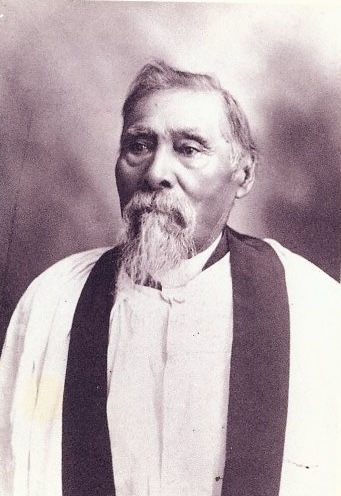








 Michael J. Fast