

Basahin sa wikang Tagalog.
A faint trail winds its way through the Bush. Not enough to expose the dirt underneath, but a simple pressing down of the moss that covers the ground. What colour is it? Maybe it’s Golden green?
Squirrels and chipmunks chatter in the background. Once in a while, the raucous cry of a crow disturbs the peace… the faint ratatatat thumping of a woodpecker somewhere in the distance… the cheep-cheep-cheeping of Cedar waxwings and sparrows… the faint rustle of the nearly circular leaves as the gentle breeze moves them… the waves lapping at the shore.
But lest we think the Bush is always quiet and peaceful, I’m reminded a few days later of how noisy it can be. Apart from the noise of birds singing, crows cawing, Eagles screaming, gulls calling, and squirrels chattering, we also have the waves that crash against the shore when it’s windy. The noise is enhanced by the leaves rustling. And of course, the continual noise of the squirrels, and the birds in the background make for a sometimes cacophonous experience. But yet, even in the midst of the cacophony, the Bush is declaring the glory of God. The stones continue to cry out. The heavens continue to declare. Testimony abounds from the Bush that tells us about God.
This is the Bush. God’s creation. Why did God create this particular part of the Bush, I wonder? Today, houses and cabins are interspersed in the bush, but for the past gazillion years or so, no human eyes looked upon the wonders that surround me. Did God create this little corner simply so I could experience it today? I don’t think so simply because I am not the central figure in creation. I think experiencing this piece of Bush is coincidental to God’s creating it at the beginning of time. Psalm 19 tells us that “all heavens declare the glory of God.” The fact that this little corner of the bush exists testifies about God. But to whom does it testify? Merely to humans who might by chance come across it or is this testimony something different? It’s a question that’s difficult to answer.
Testimony implies some kind of a trial that’s happening — a trial that needs witnesses who can testify to something. Who is on trial? Is it God? And if God’s on trial, then who is the judge?
It’s we humans who are the judges! When we ask questions like, “If there is a God in heaven, why does such evil exist in the world?” we put God on trial. And God seems happy to be put on trial! That is what’s behind the many statements in the Bible of how God says that he is faithful. Even statements as blatant as “test me in this and see if I will prove to be faithful,” or things such as “taste and see that the Lord is good,” are examples of God saying to us, “You be the judge.” His constant statements of His worthiness are His calls to judge him — “I am the best God for you to choose.”
And creation is one of the ways that He testifies. When we put God on trial with questions like “Why does evil exist?” He responds like He did to Job — not with theological treatises, but by directing our gaze to the wild, intricate, untamed world He sustains (Job 38-41). The Bush isn’t just scenery; it’s Exhibit A in God’s defense.
What does this little corner of the Bush that I am enjoying today contribute to that conversation? What about the contributions of the moss, the rocks, the dirt, the shiny insects wandering across the rocks’ faces in the sun, the driftwood-coloured sticks that litter this area? Of the lowbush blueberries that grow around me? Of the broken cedar bows and rotted cedar trunk? Of the blue-green-rippled-smooth surface of the lake that I gaze upon? Of the sun glinting on the tiny waves washing up on the shelf of rocks on the island in front of me? Of the fact that a float plane can both ‘float’ in the air as it flies by and eventually on the water when it lands later today? Or the seagull doing the same thing? How does all of this testify to the goodness of God?
The variety of colours and species that I see around me testifies that God loves detail and diversity and noise and colour. The views of the lake that reveal both a vast expanse of water as well as individual waves, reveal that He loves simplicity and complexity. The variety of noises at various times of the day show that He loves silence and peace. The rotted cedar trunk testifies that God doesn’t simply get rid of things that are past their expiry date. The lowbush blueberries testify that God provides food even in the very corners of the earth — the bear tracks nearby attest to their tastiness! The birds’ ability to soar, swim, and dive coupled with the fact that they are all feathered hints that He loves freedom and order. He is clearly a God that not only embraces a variety of things but is also the source of that variety. That means that even though God has created a unified whole creation, the diversity of that creation itself exemplifies that he does not need uniformity. He doesn’t only want to hear one voice — he wants to hear all voices.
The Bush leads me to ask questions, too
But is there more to it? Scripture tells the story of how God prepared the world for human habitation. He assigned food for us to eat and places for us to live. One of the first words the bible uses is commonly interpreted earth actually also encompasses land — a word that has specific connection to humanity. That means that there is a direct connection between the land God created and the humans that he created it for, as Ps 65:9-13 reminds us, “You even prepare the ground. You drench plowed fields ⌞with rain⌟ and level their clumps of soil. You soften them with showers and bless what grows in them.”
Which brings us back to my experience in the Bush. Of what significance is the land? Our reading of Job implies that the land — i.e. this little slice of Bush — is one of the ways God mediates his relationship with us. I am not talking about Jesus’ role as the exclusive mediator when it comes to salvation. Rather, I am talking about how creation mediates knowledge of God. We’ve touched on the Psalms that talk about the glory of God being mediated through the Bush. Can we also find solutions to the other questions that we use to judge God here in the Bush? How would I even begin trying to answer that question? Furthermore, as I sit here in the Bush, am I merely listening to my own thoughts on this matter or is God communicating with me as well?
Far removed from the problems we face as humans, and in a part of the world not dependent upon people, God still makes himself known. He makes himself known through directly revealing himself to us as well as indirectly revealing himself. It’s not only God speaking to me about Himself or the Bush is speaking to me about who God is — God’s revelation is not dependent upon my recognising it.
What’s more, even though the Bush is tainted by sin (cf. Ro 8:20-22) — enslaved as a result of Adam’s actions back in the garden — there is still enough here for everyone to acknowledge that God is God. Does that mean that enough of God’s image remains in me, even though I too am a slave to sin, so that God is revealed through me?
As a part of creation myself, God also then reveals Himself through me, doesn’t he?
Because humanity’s role is more than simply listening to the testimony of the Bush and judging which God is the best. As a part of creation, we too are tasked with testifying about God. God can speak through me but I can also speak on God’s behalf, doing the work of truthtelling. The fact that this is called testimony means it’s something I have personally experienced.
Truthtelling (marturia) is focussed on bearing witness to Christ, defending truth, and resisting falsehood. Multiple parts of the bible, in both Old and New Testaments, repeat this basic command: “You shall be my witnesses; be reconciled to God” (Is 43:10,12; 44:8; Ac 1:8; 2Co 5:20).
Unfortunately I am not always as successful at connecting people with God as creation is. My own personal enslavement to sin hinders my ability to behave in an optimal way — even though I try to work at it. It’s much like Paul’s struggle in Romans 7 where I face a daily struggle between wanting “to walk in a good way, but I end up doing the things I hate.”
My lack of success is also compounded by the fact that the culture I live in has also been enslaved by sin, thereby normalising some of the evil that I end up participating in. My privilege becomes expected. My power becomes protected. My prejudices become sacrosanct. Scripture speaks against this in multiple places, including Ex 23:6-8; De 16:19; and Is 10:1–2, that testify of our need to prioritise Others over self and condemn the abuse of power through unjust laws that oppress the vulnerable. What’s worse, when my prejudices silence others, I hinder their ability to testify.
To top it all off, the very Bush that we have talked about since the beginning of this post is also enslaved by sin, hindering its ability to testify clearly. Instead, it often turns into a part of life to be feared — natural disasters, sicknesses, labour, etc. — rather than a place of wonder, strength, prosperity. Scripture promises that it too will be redeemed.
At this point we have to tackle the question of whether my own human recognition of God‘s revelation of himself is essential to God revealing himself or not? Of course as a human I like to recognise myself as the pinnacle of creation but scripture is also very clear that there is far more to creation than merely me and you. If it’s true that humans are enslaved to sin, and that our structures and societies are enslaved to sin, and the physical world is enslaved to sin, that means that each of these has the privilege of being capable of declaring the glories of our risen Lord. So, even though I may not be willing to fulfill my role of proclaiming God’s glory that doesn’t mean that society or the physical world is also unable. Rather each of these three aspects of creation can fulfill its purpose independent of the other two.
This means that the small piece of Bush that I’m enjoying right now declares the glory of God merely because it wants to! I just happen to be here now to share in the experience.
All voices singing in harmony
“All heaven declares” might seem to imply that there’s only one voice speaking. But our reality with experiencing the Bush and with experiencing connection with fellow humans shows us there are many voices that can be heard, each of them intended to be used to declare the glories of God. If all creation testifies, how do we join this chorus? Our goal must be to learn to sing in harmony with these other voices.
And according to Revelation 5:13, this is our ultimate goal. We read,
“Then I heard all of creation, those in the spirit-world above, on the earth below, under the earth, and in the sea of great waters. They were singing, “All blessing, respect, honor, and chiefly rule belong to the one who sits on the seat of honor and to the Lamb, to the time beyond the end of all days!”
Which raises some questions for us to act upon today:
1. How can I hear the voices of the Bush? If I can’t hear the voice, does that mean that the voice itself needs help or does it mean that I need to be attuned to the voice? The simplest way for me to help the physical world around me declare the glory of God is to throw my garbage in the garbage can.
2. How can I make my voice heard in declaring the glories of God by recounting my own experience with God? Before opening my mouth, I need to make sure that my life itself reflects God’s glory — I can’t just tell; I also need to show.
3. How I can help society’s voice be heard? We sometimes think that the only hope for our society is to choose the right politicians so that they will make things right. That obviously hasn’t happened yet. We need to choose Jesus as our king, actively living as citizens of His kingdom — using our skills (business, teaching, caring) to dismantle injustice. What one skill can you leverage this week to amplify a marginalized voice?
If this reflection resonates, share in the comments how you’ll join creation’s testimony this week.
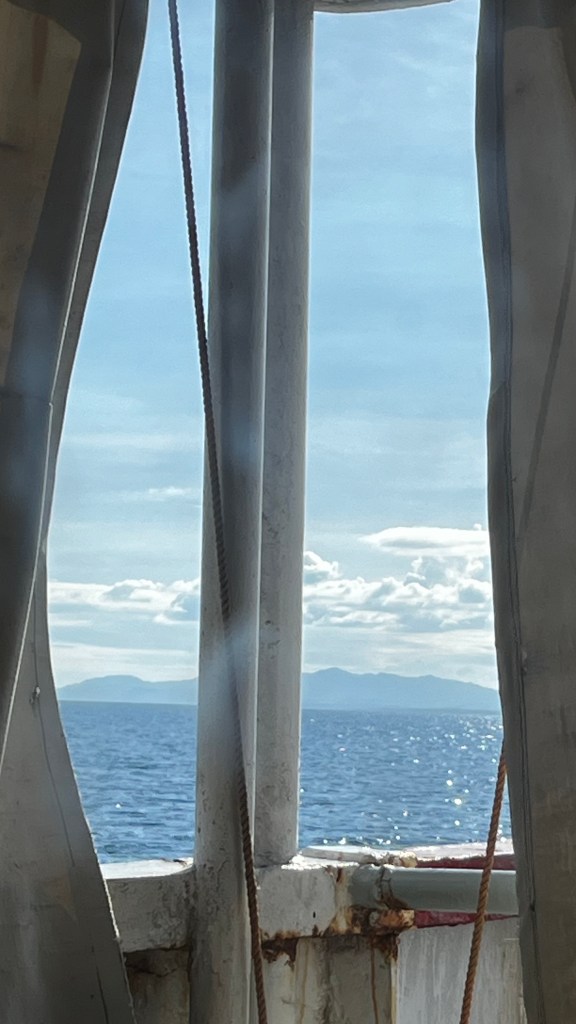
Photo taken by yours truly on the northern shores of Lake Superior.
 Michael J. Fast