The Stories That Make Us Weep

The events that happened are the past, but ‘history’ is the record of those events. The two are rarely identical. Our connection with history is mediated through the stories we hear and remember. These stories can be skewed, and there is nothing wrong with trying to bring them more in line with reality.

I experienced this tension recently when I finished John Grisham’s Camino Ghosts. I had started it last year but put it down, finding the story initially uncompelling. Last week, while browsing my Kindle, I realized I had never finished it. I gave it another chance because Grisham is a favorite author of mine; I love how he connects his stories with real-world situations, helping me see things in a different light.

I finished the book earlier today and found myself weeping at the end. Briefly, the story follows a writer documenting an island off the north Florida coast inhabited solely by descendants of former slaves. The last inhabitant, an 80-year-old woman, is fighting a ruthless casino developer who wants to take over the island. The story has a good ending, but I found myself reflecting on why it moved me so deeply.

This reflection connected with another activity I’d been doing: genealogy. I decided this weekend to set aside time to look at my family tree, exploring the history of my great-great-great-grandfather, Rev. James Settee. I was researching his progenitors and came across an article written by Raymond Shirritt-Beaumont for a public school curriculum in Northern Manitoba. It discussed Rev. James Settee and his cousin — and later colleague — William Garrioch.

The author made a cryptic remark that a Joseph Smith was Settee’s great-grandfather. The article explored various possibilities before focusing on one person: a Joseph Smith who arrived in the Hudson Bay in the late 1700s. He made five journeys inland into what is now southern Manitoba and Saskatchewan, primarily to connect First Nations people with the Hudson’s Bay Company for trade. Smith eventually died on one of these trips. Remarks in his boss’s journal seemed to imply he had a “local family.”

For those unfamiliar with this history, that was very common. European men often formed families with First Nations women. Their children are known today as the Métis or Country Born. The article speculates that this child was Rev. James Settee’s grandfather. There’s no concrete proof; it’s a historical speculation based on Settee’s own claim of a Smith ancestor. This is where the past and the record of it — history — diverge.

“Certainly the glimpse Settee gave us of life among the Swampy Cree in the early years of the nineteenth century reveals a culture in transition, a unique blend of aboriginal and European that defies easy definition. For the Garriochs and Settees, that cross-cultural exchange had been going on for four generations, and perhaps longer, when James Settee and William Garrioch set out in 1824 for the mission school at Red River. It continues today among their descendants; indeed, one might say that the family represents Canada in microcosm. From its multicultural beginnings, the Garrioch family has become a new people, one that is firmly planted on this continent, but with roots stretching out across the seas. When all is said and done, what could be more Canadian than that?”

[Raymond Shirritt-Beaumont, Wabowden: Mile 137 on the Hudson Bay Railway, (Frontier School Division, 2004), 129.]

It was with this understanding of my own ancestors’ blended history that I returned to the story of the island in Camino Ghosts. Reading the story of a woman whose ancestors were slaves, who grew up on the fringes, and who finally saw justice done connected me directly to the story of the First Nations and Métis people of Canada — my ancestors. Reading how they worked not only in the fur trade but also in spreading the gospel of Jesus Christ throughout Manitoba and Saskatchewan connected me personally.

I am a long time removed from that period. Yet, thinking about their journeys through the wilderness of Northern Canada brought me back to my own experiences in that same wild. As I read, pictures of the lakes, trees, animals, and fish came directly to my mind.

The story became profoundly meaningful because I could feel a direct connection. Through my ancestors, their stories — the injustices they experienced through displacement and cultural pressure and the hardships they endured — became real. The theme of justice in Grisham’s book resonated with that personal history.

This reminds me again of the importance of relationship. It is impossible for me to care about the world or to desire to make it a better place without a relationship with it. That’s why perspectives are important. I must expose myself to other people’s perspectives — to understand their point of view, to hear their stories of joy, hardship, and justice. It is only through hearing these stories that we can connect our stories together.

I’ll close with a moment from the show Alone. In Season 10, set at Reindeer Lake, the producers invited Cree elders from the Peter Ballantyne Cree Nation to give a blessing. An elder stood and prayed over them in nîhithawîwin — the subtitle translation was the words of the Lord’s Prayer. This prayer had become so integral to this First Nations community’s way of life that their blessing invoked a connection with the God of Jesus.

I connect directly back to that because it was my great-great-great-grandfather, Rev. James Settee, a missionary with the Church Missionary Society in Northern Saskatchewan, who worked at making that prayer meaningful for First Nations peoples as he planted churches and communities of Jesus-followers in that part of the world. It felt like a full circle moment — a story connecting past to present, and history to the heart. This reveals what Shirritt-Beaumont so ably stated above, “a unique blend of aboriginal and European that defies easy definition.”

These are the connections have I found, but every story depends upon its listener. What’s your perspective? How do you connect with the world around you in a deeper way? How does your family story impact your experience so that you too can weep — like me — when you see beauty? If that is a new idea for you, what’s the first step towards discovery?

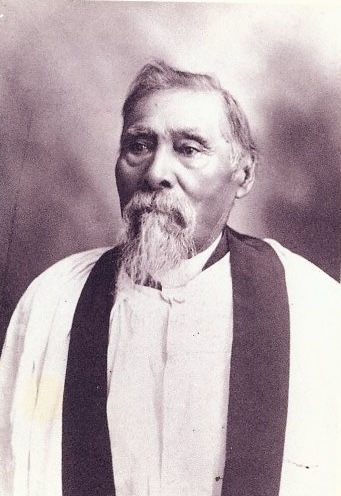
Photo of Rev. James Settee from the The Cathedral Church of St. John Archives.

Orange is more than just a shirt: It’s a call to live the life Jesus wants us to live!

I’m wearing an orange shirt today. This is because September 30 in Canada is the National Day for Truth and Reconciliation aka Orange Shirt Day. One of the ways that this truth and reconciliation is remembered is through the wearing of an orange shirt. Even though I am far removed from Canada and haven’t lived there for any length of time for 26 years, the shirt that I put on today reminds me of two key aspects to what it means to be a follower of Jesus: Truth & Reconciliation.

I should point out before we continue that I do have skin in the game. One branch of my family has a long heritage of both First Nations and Metis peoples and I am a citizen of the Metis Nation of Saskatchewan. My Great-great-great grandfather, the Maškēkowak Rev. James Settee, spent his life ministering through Manitoba and Saskatchewan, introducing people to the good news of Jesus Christ and how that good news can help transform their lives.

If you’re a longtime reader of this blog, you’ll realize that these two words are a key aspect to how I think that we need to frame our lives and our engagement as Jesus followers. The whole framework — that we call the functional church — includes the Good News of Jesus Christ, the Values of God’s Kingdom, Loving God and Neighbour, and Truthtelling.

Orange Reminds Me of Truthtelling at Both the Political and Theological Levels

The first is through truthtelling. Jesus came not only to represent the truth, but to be the Truth. And part of this truth means we need to reflect on ourselves, on the way we think, and on the foundations we’ve built, and to find ways that God wants us to change these for the better. Unfortunately, in the history of Canada, Jesus’ followers have not always exhibited the kind of truth that Jesus would have us exhibit. (This is by no means limited to issues in Canada). One of the truths we need to face is that it’s difficult for us to tie up our political beliefs with our biblical beliefs. Sometimes we connect following Jesus to our adherence with a specific political party or political ideology. One of the truths that some of our founding fathers believed was that First Nations identity was bad and this needed to be changed into something good. Thus we have residential schools that were explicitly designed to “remove the Indian from the child.” This is all clearly documented in the reports of the Truth and Reconciliation Commission, and also in quotes like this:

When the school is on the reserve the child lives with its parents, who are savages; he is surrounded by savages, and though he may learn to read and write his habits, and training and mode of thought are Indian. He is simply a savage who can read and write. It has been strongly pressed on myself, as the head of the Department, that Indian children should be withdrawn as much as possible from the parental influence, and the only way to do that would be to put them in central training industrial schools where they will acquire the habits and modes of thought of white men.

John A. MacDonald, 1883

This was not merely a political failure; it was a theological one. These political ideas, in turn, fostered and were justified by a flawed theology. What do I mean by that? There are several theological flaws at play here.

Flawed Understanding of Politics and Theology

The first, of course, is that it represents a marriage between politics and theology where political theory is prioritised over theology rather than the other way around. All of life needs to be informed by scripture.

Where do we see this today? It happens when we assume a political party’s platform is synonymous with God’s will, or when we dismiss a fellow believer’s faith because they vote differently.

Humans Were Created Originally Righteous

The Bible clearly teaches us that humans were originally created good. It was only after a specific choice to rebel that sin entered into the world. I’ve written a little bit about that here. That means we cannot look at people from another part of the world who may have different cultures or different languages or different political structures or different technological levels, and say that somehow because they’re not as developed as we are, they’re not worthy of receiving the gospel of Jesus Christ on their own terms. The message of Jesus must be communicated in a way that is understandable to them. There is no command in scripture for us to transform other peoples’ cultures for them. In fact, each person in each culture is called to do their own internal transformation as their own minds are renewed.

Recognizing that truth is the foundation for repentance, healing, and reconciliation.

Imago Dei

The very first words after the creation story in Genesis 1:27 declare that all peoples on the earth are in the image of God.

“So God created humans in his image. In the image of God he created them. He created them male and female.”

The very truths of the Bible condemn the attempts of others to erase languages, traditions, and identities as not only cruel, but also as a denial of Scripture itself. The Good News of Jesus Christ is not an attempt to replace a lost image, but rather a call for all peoples to be reconciled to God and, in that process, to restore and renew their own cultures in Christ, purifying and elevating what aligns with God’s truth and rejecting what does not (Colossians 3:10; Ephesians 4:24).

The truth of the Bible is far from this idea and clearly teaches that the image of God was not erased by the Fall. Genesis 9:6 plainly states human life is sacred because people still bear God’s image. James 3:9 warns against cursing others because they still reflect God’s likeness. Paul describes men and women as God’s image-bearers in the present tense (1 Corinthians 11:7). The truth runs through the whole Bible: every person, every people, every culture carries this dignity.

One tragedy of the residential schools was deeply theological because of the idea that First Nations peoples were somehow less than fully human, or less than fully made in the image of God. This has been framed as “robbing communities and individuals of their cultural and spiritual identity.”

Heaven Will be Explicitly Multicultural

The truth of the matter is that God accepts people from every tribe, language, nation, and people in the world and each of these groups will be represented in heaven. There’s this great image from Revelation 7:9-10 that sees John open his eyes to the reality of the kingdom of God that contains all of these People.

“After this I saw a great crowd of people, too many to count, from every nation, tribe, clan, and language. They were standing before the seat of honor and before the Lamb, dressed in pure white regalia, holding palm tree branches in their hands. They lifted their voices and shouted, ‘The power to set us free and make us whole belongs to the Great Spirit who sits upon the seat of honor, and to the Lamb!’” Book of the Great Revealing 7:9-10

The truth is that we need to work towards a more intentional welcoming of people from all nations into God’s Kingdom, not as peoples whose cultures have been stripped away in favour of our own, but as peoples whose cultures express God’s goodness and love. Maybe these new perspectives will reveal to us that our own culture is flawed and in need of transformation. Unfortunately, for many, this is a very scary prospect because it means that we all need to admit our flaws and work towards repentance and restoration. The culture that we may want to protect; the way of life that we may want to preserve may in fact not be worth protecting or preserving because of their built-in flaws. Maybe instead of preservation we need to work towards growth.

This isn’t just a historical error. We see it when we dismiss other cultures as “unreached” because they lack Western infrastructure, or when we implicitly value some lives over others based on nationality, wealth, or social status.

Wearing Orange not only reminds me of my commitment to truth, it also reminds me of something else.

Orange Reminds Me Of Reconciliation

The second word that this orange shirt I’m wearing reminds me of is reconciliation. There is good news, even in light of the fact that we have made mistakes in the past there is good news because God is working to reconcile us to himself. He has even indicated that Jesus followers are to be agents of this reconciliation. We are to find ways to connect to God with people and people with God. We are to find ways to bring Hope to a world that is hopeless. We must find ways to help others be lifted up as they journey towards God.

But as I was reminded today, in conversation with my Spiritual Director Len Thompson, we may not always see the fruit that we are looking forward to. Len reminded me of Hebrews 11 and 12 where all of these great heroes of our faith worked very hard to establish God’s Kingdom here on earth, but they did not yet experience that kingdom during their own lifetimes. Each had a contribution to make to establishing the Kingdom but the establishment of that Kingdom supersedes any one lifetime or era. What’s especially significant for us today — as pointed out by Andrew Walls — is that we too are waiting to see that Kingdom established! This not only means that you and I each have our own contribution to make, it also means that our contributions are essential!

The legacy of this theological failure isn’t confined to history books. It echoes in the ongoing trauma of survivors, the systemic inequalities Indigenous people still face, and in our own complacency. So, what’s the next step for us, right now?

What’s the next step?

So, today, feel free to wear an orange shirt. But it’s not merely enough to just wear an orange shirt. We are called to be truth-tellers and reconcilers today, and this historical example shows us what happens when we fail that call. Here’s how we can live it out now.

  • How can I apply the truth of God to my life? To my society’s life? To my use of the land?
  • How can I be an agent of reconciliation today? Encourage individuals to return to a right relationship with God? Reshape my society so that it has a proper relationship with God? Improve my relationship with the land in a way that God desires?

Will you join me in being a truth teller? Will you join me in being an agent of reconciliation?

If Orange Shirt Day is painful for you, help is available. Call the 24-hour national Indian Residential Schools Crisis Line: 1 (800) 721-0066.

Is the Kingdom slipping away from us or is God shifting towards a new centre for the church?

I hear a lot of talk about the how the Christian influence in the west is slipping away. Sometimes this is referred to as the culture wars. Other times it’s referred to by terms such as multiculturalism, open borders, and statements like, “When people come to our country they should learn to do things your way because this is our country!” This is coupled with an uptick in things often labelled as “persecution” often tied to complaints that others are now calling the shots when it comes to values and morality.

And one can’t deny that change is happening. There is a definite change in Western societies’ values and morals and the influence of the church is definitely waning. Values that have long been identified as being Judeo-Christian are being replaced by other values and this has some Christians worried that the church is dying.

There is another perspective to this, however. Sometimes we confuse church with Kingdom and assume that our little corner of what God is doing is everything. Change can happen in various parts of a Kingdom without the Kingdom itself being destroyed. I grew up in Saskatoon, a small city in Western Canada that was fairly homogenous. Most people living there 30 years ago had a European heritage with some First Nations and Metis peoples seemingly on the fringes of society. That has all changed. Saskatoon is now a very cosmopolitan city boasting citizens from all around the world, with large non-European immigrant populations. The voices of the First Nations and Metis peoples are also stronger in the new society. In spite of all these changes Saskatoon is still Saskatoon — it is just a better and more interesting Saskatoon than when I was younger.

Andrew Walls, a missiologist and church historian, talked about the nature of the church worldwide. He saw how through church history the centre of the church would shift from one place to another. Walls described this is shifting “serial” rather than progressive. This means that the centre tends to shift from one place to another. For example, even though the church may have started in Jerusalem, Jerusalem is no longer the centre of the church today. That centre has shifted throughout history from one place to another. When we look at the current situation in the west that has been the centre of the church for so many years we can see that centre is shifting away. A 2009 study by Johnson & Chung tracks this center around the Mediteranean from Jerusalem, north through Europe, and currently moving south in Africa. Others have made similar claims.

So what does that mean for us today in the west? Well, we can mourn the loss of influence that we are having in the world and will have. We can also rejoice that God is moving the centre of his church to other places who are taking up the challenge of leading his church into the future.

We can understand that we can also survive on the fringes. After all, many of our fellow Jesus-followers have been there for a long time. They can teach us how to live under persecution, how to live even though no one focusses specifically on our spiritual needs, how to live when theologizing happens primarily in a language foreign to us, and how to live when the recognised spiritual authorities are from somewhere else.

Part of our responsibility is to help facilitate this transition. How can we help the transition to become smoother? We need to be gracious and realize that the things are changing are important. We need to listen to the voices of those who were previously been a minority even as we now move into being a minority now. We need to be open to the challenge to our traditional ideas — that have up until now been standard in the church — the challenges that are brought to these traditional ideas from new perspectives. We need to prioritize the voices of those who are now at the centre and submit to their leadership, realizing that even as God may have placed us in a place a priority in the past we are moving out of that.

If indeed God is the one who oversees the shifting centre of the church, then that means the things that are happening today in the world are of God. We need to honour that. What will you do to honour your changing role in the church today? How will you give way to those who have previously been minorities as they take up the mantle of leadership in the church today?

I want to hear your voice on this issue. That’s why feedback is always welcome.

Sharing is what friends do.

Image by Matthias Speicher on Unsplash.

Speaking into truth & reconciliation, how would you apply Jesus’ words, “If your hand causes you to sin, cut it off”??

Last week I posted some thoughts on truth and reconciliation on Canada’s National Day for Truth and Reconciliation. My thoughts centered around Mark‬ ‭9:42-50‬ ‭GW‬‬, and how these verses about protecting children’s faith is in the context of the verses that talk about dealing with sin our lives. If your hand cause you to sin cut it off. If your foot causes you to sin cut it off. If your eye causes you to sin pluck it out. I realize that the sins of the hand, the foot, and the eye are central to the legacy of the abuse suffered through Indian Residential Schools.

Krystal Wawrzyniak, one of my colleagues at BGC Canada and currently seconded to Indian Life Ministries, asked, “I’m curious about your thoughts surrounding the application of ‘if your hand causes you to sin, cut it off,’ or the foot or eye. Speaking into truth and reconciliation, how would you apply this??” I did respond to Krystal on Facebook but thought it might be a good idea to flesh out some of my ideas in another blog post.

First off I need to say that the best approach is to listen because it’s only through listening to Others’ stories that we can both understand them and see the things that need to be changed in ourselves.

It’s also important to examine ourselves to see if we can find areas that need change. This happens through reflection and through listening. I think that because few of us were directly involved in the Indian Residential School system (the last school closed in 1996) we can’t simply call for repentance on a personal level. The areas where change needs to happen (ie. the parts that need to get cut off) are the systems and structures that still exist in our society — including our churches and theology — that are a part of the framework that led to Indian Residential Schools. These need to be excised from our identity as both Christians and Canadians.

On the national level this might include how the doctrine of discovery and the Treaty of Tordesillas — which blended religious and commercial interests — continues to impact Canadian institutions such as the Indian act, unclean water on First Nations, and unequal access to health care. Other issues include how the Missing and Murdered Indigenous Women and Girls and the Overrepresentation of Indigenous People in the Canadian Criminal Justice System reveal problems with the justice system.

On the theological level we need to revisit our understanding of God’s prevenient grace, get rid of our theological superiority that prioritises theologies from the Global North over and above those of the Global South, and read the Bible through the eyes of the Other. Jose de Mesa’s hermeneutics of appreciation is a good starting point for this and will teach us how to listen.

Ka Jose de Mesa (1946-2021) was a Filipino lay theologian who worked for many years on issues surrounding contextualisation and theology. In his Mga aral sa daan: Dulog at paraang kultural sa Kristolohiya he develops a hermeneutics of appreciation as a way to correct errors he saw in how the church crossed cultures.

The “Hermeneutics of appreciation” is presented as a series of attitudes that serve as guides for those engaging in cross-cultural interactions. How can we apply them to the Indian Residential School issue?

Attitude #1: Presume the cultural element or aspect under consideration to be positive (at least in intent) until proven otherwise. Indian Residential Schools were designed to do the exact opposite of this — to remove all traces of “Indian” from the children who were forced to attend. There is certainly nothing positive about this. A better approach would be to recognise that the Kingdom of God consists of people from “every nation, tribe, people, and language” and that includes First Nations and Metis peoples.

Attitude #2: Be aware of your own cultural presuppositions and adopt the insider’s point of view. When we look back at some of the statements made by the proponents of the Indian Residential School system we can’t help but wonder what they were thinking? To people living and thriving in the postmodern world of 2021’s Canada, the ideas of our forefathers are more than odd — they are offensive. But did they know that? Did they realise the meaning of statements like “Kill the Indian, save the man” and that ideas of assimilation were actually cultural genocide? It’s hard to believe that they didn’t realise these things. Knowledge of de Mesa’s Attitude #2 would have gone a long ways towards developing a true understanding between the various cultures.

Attitude #3: Go beyond the cultural stereotypes. It is obvious that the use of terms such as “Indian problem” and “dirty Indian” that stereotypes were the only standard of practice in these schools. As Duncan Campbell Scott said when developing his policies, “I want to get rid of the Indian problem. I do not think as a matter of fact, that the country ought to continuously protect a class of people who are able to stand alone. . . . Our objective is to continue until there is not a single Indian in Canada that has not been absorbed into the body politic and there is no Indian question, and no Indian Department, that is the whole object of this Bill.”

Attitude #4: Use the vernacular as a key to understanding the culture in its own terms. Indian Residential Schools made a concerted effort to eliminate the various languages of the First Nations. A deeper understanding of language always leads to a deeper understanding of culture.

Unfortunately, nothing about the experience that First Nations and Metis peoples have had with either the government or the church in Canada seems to reflect these attitudes. Let’s hope that we can work towards changing some of these attitudes as we work towards truth, healing, and reconciliation.

Help is available. Call the 24-hour national Indian Residential Schools Crisis Line: 1 (800) 721-0066.

Feedback is always welcome. 

Sharing is what friends do.

Image by Liviu Florescu on Unsplash.

Scripture is taken from GOD’S WORD®.
© 1995, 2003, 2013, 2014, 2019, 2020 by God’s Word to the Nations Mission Society. 
Used by permission.

Thoughts on drought in a very dry year. Is this drought a call for justice?

Saskatchewan is in the middle of a drought. A drought in its simplest form is when there isn’t enough rain to make the crops grow. The lack of snow and rain over the past year, coupled with record-high temperatures, have succeeded in drying out the soil to the point where crops are not growing. It isn’t the first drought to hit Saskatchewan and probably won’t be the last. Some say that drought is a direct result of climate change, which some say is caused by human activity.

The plight of the Saskatchewan farmer has more meaning for me this year since my wife and I have been spending a lot of time on the farm. It makes me want to find ways to help.

The Bible says that drought can at times be a sign of God’s judgment against structural evil. It got me thinking. Is it possible that the current drought is connected with recent revelations about Canada’s founding principles? For those unaware, headlines in Canada have been dominated by stories of the Indian Residential School System, an official policy by the Government of Canada and church groups to “remove the Indian” from First Nations children — basically the government of Canada had a policy of cultural genocide against First Nations peoples in an effort to both make them better citizens and to convert them to Christianity. North American society has also been rocked over the past several years with calls for justice for the systemic mistreatment of women, for systemic racism, for legacies of slavery, and for other historical injustices. I have written about some of these things here, here, and here.

At this point I need to offer some clarification lest I be misunderstood: As I have written elsewhere, structural and natural evils are different from personal evil. Structural evil is a system or pattern of beliefs or activities in an organization or culture that hinders or opposes the advance of God’s kingdom in this world. Natural evil includes things like famine, drought, disease, wild animals, floods, storms, and disease. So any judgment on structural or natural evil is not on individual farmers for their sins but on society as a whole for its sins.

But even though the reasons may be systemic, the impact is indeed personal. There are mental stresses associated with farming and drought. Farmers are extremely resilient. I recall a conversation I had with someone in the Ag industry in Saskatchewan a few years ago. He said he respects how farmers are able to do everything that they can to grow good crops but the fact remains that a major part of farming is out of their control — namely the weather — and that they continue to do it year in and year out regardless of how the previous year went.

In times like this, Christians like to quote 2 Chronicles 7:14 which reads, “However, if my people, who are called by my name, will humble themselves, pray, search for me, and turn from their evil ways, then I will hear ⌞their prayer⌟ from heaven, forgive their sins, and heal their country” (God’s Word).

Of course Canada has never claimed to be Christian nation so I am genuinely not sure how this verse can be applied today, but the Bible gives many examples of God’s interest in the nations including both blessings and curses.

The very first mention of natural evil in the Bible is in the context of farming. Adam was told by God in Genesis 3:17-19:

”The ground is cursed because of you. Through hard work you will eat ⌞food that comes⌟ from it every day of your life. The ground will grow thorns and thistles for you, and you will eat wild plants. By the sweat of your brow, you will produce food to eat until you return to the ground, because you were taken from it. You are dust, and you will return to dust” (God’s Word).

So it’s not completely crazy to assume that the land responds to structural sin, meaning that even if the 2 Chronicles 7:14 quote isn’t entirely apropos for today’s world, it might be apropos for drought situations since the immediate context of the verse is drought brought upon by society’s sins.

In any case, what would “humble themselves and seek my face” mean in light of the new call for social justice?

One aspect would have to include repentance. Repentance is hard to do because it involves not only humility but admitting that we are wrong. I don’t know about you but I don’t like doing that. So just at that level repentance is problematic. How much more public repentance?

Another aspect would have to be renovation. Repentance also includes making sure the future is better. It means changing the way I think and act. It means rectifying the past — rectification means rebuilding or renovating those past actions that I want to repent from. Renovation is hard because it starts with tearing things down. Some use the word “deconstruction” for this — a rather complex term that we don’t have time to go into today. I will say this, though. While deconstruction may include the use of a sledgehammer, it also has a level of control. It’s not mere demolition but needs to have some order to it, it needs to be systematic, and it needs to be useful.

The Bible does speak of a generational aspect to sin, which connects us to the sins of the past even if we weren’t present during those times. The lives we live today may have been directly impacted by decisions made by our progenitors and that means that we may still benefit from their sins.

Reconciliation also has to be a part of it. To be reconciled is to have a restored relationship. It is what happens when people humble themselves, repent, and renovate.

So then, how can we help farmers? We need to make some decisions. What does our nation need to repent from? What do we need to tear down? What do we need to renovate? How can I participate in building a new nation?

Maybe we can start here:

  • Revisit “truth.” Is what I think to be true actually the Truth?
  • Repent & Ask Forgiveness.
  • Practice Reconciliation.

Feedback is always welcome.

Sharing is what friends do.

Image by Maud Correa on Unsplash.

Oh no, Canada: Reflections on Canada on Canada Day

Reflection is good for the soul because it causes us to look back on events that we normally view on default and look at them with new eyes. Canada Day is one of these things, especially in light of a recent push to reconcile history with the past. Even using the term “default” is actually problematic because what may be default thinking for me is different for someone else. The history that I read may be different from the history someone else reads. My understanding of the past is also almost certainly different from the actual past.

Canada’s Truth and Reconciliation Commission identified the residential school system as a form of cultural genocide. What we are beginning to realise is that some form of physical genocide may also have been happening. Certainly the past was a lot more dangerous than the present, with diseases like TB and the influenza pandemic of 1918 taking many lives, but there are also documented cases of abuse and death at the very hands of those entrusted with the care of these young First Nations children. What makes things worse is that it doesn’t seem to be merely a government issue (and governments do tend to be animal-like), but also a church issue. This is because churches were an integral part of the Residential School system.

Because of these issues there have been calls to rethink Canada Day. After all, why celebrate the country when the country is built on such shameful actions that has made some many mistakes? Some communities are cancelling Canada Day celebrations, while others are planning alternative events to help incorporate victims of Residential Schools into Canada’s story.

So what is the answer? I think it lies in the concepts of Truth, reconciliation, and repentance.

Truth. This is the debate between history and the past (that I have discussed elsewhere). In a nutshell, history is “texts” about the past from a certain perspective. Texts can include writing of course but can also include any aspect of society (citation) including statues, memorials, and events like Canada Day. The past is the actual events that have happened and are being interpreted when doing history. History changes all the time as new perspectives create new interpretations but the past remains the same.

Reconciliation, or restoring relationships, is supposed to be a major part of the church. After all, God has given the church the “ministry of reconciliation.” Relationships need to be restored people and God but relationships between people and other people also need restoration. The church has emphasised the first aspect throughout the years — and in many ways this emphasis may have led to the residential school disaster by ignoring God’s command to love our neighbour as we love ourselves — but hasn’t worked as hard on the restoration of interpersonal relationships. We haven’t been as good at this part as we could have been.

“What about forgiveness?” some may ask. Forgiveness does need to happen, as Matt Stovall, writing from a First Nations’ perspective, points out in his great FB post on this. However, forgiveness works best when it is coupled with repentance, which means the church, as the offending party, needs to repent and ask forgiveness.

So what needs to be reflected upon this Canada Day? Where does reconciliation need to happen? Where does truth need to be reevaluated? How can I ask forgiveness?

On Canada Day, let’s reflect on Canada and repent of our sins. Our eyes are finally opening to the our ugly past. How will we make a better future? Listen to someone’s stories of their residential experience. Read the Truth and Reconciliation Commission Report. Read Dr. Peter Bryce’s 1907 Report on the Indian schools of Manitoba and the North-West Territories. Read about residential schools, reconciliation and the experience of Indigenous peoples.

On Canada Day, let’s reflect on the church and repent of our sins. It’s quite simple. For church insiders there is a wide range of church types and theologies, that are unknown and even meaningless to church outsiders. The specific churches involved in the Residential School System cannot be separated in people’s minds from the idea of “church.” As I have said elsewhere, “even if we weren’t physically present during these atrocities, we are still complicit in them because people bearing Jesus’ name did these things. Don’t we also bear Jesus name?” So as churches we need to seek ways to ask forgiveness. We need to reflect on the theologies that we hold that led to the whole Residential School system. We need to find ways to connect with First Nations People. We need to reflect on what repentance looks like for you and me.

On Canada Day, let’s reflect on Truth and repent of the untruths and half-truths we have believed instead. I have written elsewhere on truth. Suffice it to say, none of us has a complete understanding of absolute truth. Don’t get me wrong— I do believe in absolute truth but at best I can say we are approaching absolute truth. That means that part of the way forward includes reflecting on the truths that I know and how those truths coincide with the truths that others know and changing our truths so the future is better than the past.

Feedback is always welcome!

Please consider following or liking this blog.

Remember, sharing is what friends do!

Image by Derek Thomson on Unsplash.