Babylon is Fallen: Is it Destruction… or Transformation?

We often focus on punishment and destruction when we think of evil. But the Bible reveals a more profound truth: God’s primary strategy is infiltration and transformation. From Manasseh to Babylon itself, God sends His people into broken systems and lives not to escape or destroy, but to redeem. Our calling isn’t to await the fall of our modern “Babylons,” but to actively participate in their restoration through faithful, everyday work—to plant crops in the cursed ground and pray for the peace of the city, believing that enemies can be turned into friends.

When I was younger, I was an aficionado of Resurrection Band. I even saw them in concert once at the Centennial Auditorium in Saskatoon and wore a signed T-shirt of theirs for many years. One of my favourite songs of theirs was entitled Babylon, which includes the bridge:

“I saw Babylon slowly start to burn
I heard the voices crying
Refusing ever to learn, Babylon”

The final line — that sticks in my mind until today — is “Babylon. Babylon is fallen!” This imagery hearkens back to the Revelation of John, where the great harlot, Babylon, the city that is opposed to God and works at spilling the blood of the Saints, is finally punished and destroyed. In the Bible, Babylon = evil.

I was mistaken for years in thinking that the only legitimate end for things that are evil like Babylon is punishment, as the song says. And part of me probably anticipated seeing this punishment enacted in my lifetime.

It’s part of our nature to want evil to be punished; especially evil committed against us by others. We’re not entirely excited when our own evils are called out and punished are we? But we like it when the bad guys lose and the good guys win — even if that means turning bad guys into Robin Hoods so that even worse guys can be punished.

But more recently I have come to realise that there are actually two destinations for things that are evil like Babylon. On the one hand, Babylon awaits destruction. Because after all, what does one do with their enemies? One fights against their enemies and seeks to defeat them. But is that what God does with his enemies? It seems that God instead enacts a plan so that his enemies strongholds are infiltrated by his people so that it becomes transformed and turned into something that is good.

The Tower of Babel and the Confusion of Languages

Babylon’s origin story is the tower of Babel, where God confused human languages so that people would spread around the world.

A commentary I recently read said the tower was an attempt by people on the Earth to fulfill God‘s promise of “all the nations being blessed.” Rather than relying upon God for that blessing, they decided to enact that blessing themselves. Perhaps that’s at the core of Babylon‘s label of being opposed to God.

Manasseh

Manasseh was one of the kings of Judah. He was a bad guy. 2 Chronicles 33 outlines the extent of the evils he intentionally implemented to the point that he “misled Judah and the inhabitants of Jerusalem so that they did more evil things than the nations that the Lord had destroyed when the Israelites arrived in the land” (2 Chronicles‬ ‭33‬:‭9‬‭).‬‬

As a result of this, God calls the army of Assyria to come and carry Manasseh off to his kingdom, where he experienced difficulty.

Then we read this amazing story in 2 Chronicles 33:

“When he experienced this distress, he begged the Lord his God to be kind and humbled himself in front of the God of his ancestors. He prayed to the Lord, and the Lord accepted his prayer and listened to his request. The Lord brought him back to his kingdom in Jerusalem. Then Manasseh knew that the Lord is God.”‬‬

Wow!

Jeremiah 29

In the book of Jeremiah, the inhabitants of Jerusalem are confronted with a horrible reality. It seems that King Nebuchadnezzar, the Emperor of Babylon, will be successful in conquering their city and carrying them off into captivity. The book outlines Jeremiah’s prophetic words from God to help the people of Jerusalem face this horrible possibility.

Apart from the fact that being a prisoner of war is a horrible thing in and of itself, for the people of Israel this reality was especially difficult to accept because as far as they were concerned they were the people of God who had been blessed by being the owners of Jerusalem and the land of Israel around them. Their understanding was that this was a promise that God gave to them in perpetuity. And so for them to be carried away was almost an impossibility — their theology didn’t support that. In fact, Jeremiah was the sole prophet who prophesied that they would actually be carried off into captivity (verse?). All the other prophets of his time had convinced the people that they would not be carried off into captivity but that they would only be gone for a few weeks or months (verse?). One of Jeremiah’s tasks was to prepare the people for a lengthy captivity in Babylon. In fact, many of them would die in Babylon because the captivity would last for 70 years.

So, what were they supposed to be doing while they were in Babylon? They were supposed to infiltrate Babylon become a part of the fabric of Babylonian community; make their lives in Babylon the lives that God had called them to; they were to build houses, and they were to plant crops, and they were to get married and have children, and have their children get married. All of these things are things that new immigrants do when they come to a new place. Furthermore, they were also to pray for the blessing of the City.

What does Jeremiah 29 teach us about how God deals with evil places like Babylon? God sends people to infiltrate it so that Babylon too can be transformed from a place of evil to a place of goodness.

The Emperor who became a cow

Nebuchadnezzar the Great was the Emperor of Babylon but at a certain point in his life, God turned him into a cow! The point I want to emphasise here is that God chose to interact in an immersive way with the most powerful human king the world has ever seen. As the emperor of Babylon, he personified opposition to God — they called him the King of the Universe. Which is perhaps why God chose to allow his context to change from the most powerful human on th earth to a mere domesticated animal. Nebuchadnezzar’s worldview was deconstructed in a dramatic way but was then reconstructed into something better — he moved from being the so-called “King of the Universe” to submitting himself to the Universe’s True King!

Jesus

Jesus was all about freeing people from sin and the effects of sin in their lives. Jesus’ death on the cross and his subsequent resurrection from the dead ensured that we too would be saved from our sins and have eternal life. But Jesus is about more than merely saving us from death. He wants our lives on Earth to also be reflective of his life on Earth. He wants us to be his disciples. He wants us to be like him. He wants us to be holy. If he was merely interested in saving us after we died, what’s the point in talking about holiness?

One of the clues to Jesus’ purpose on earth can be found in Luke 4. In Luke 4, Jesus returns to his hometown of Nazareth and is invited to speak in the synagogue. He stands up and asks them to read from Isaiah 61. According to the account, this is what was read:

“The Spirit of the Lord is with me. He has anointed me to tell the Good News to the poor. He has sent me  to announce forgiveness to the prisoners of sin and the restoring of sight to the blind, to forgive those who have been shattered by sin, to announce the year of the Lord’s favor.”

Jesus concludes his sermon with the words “today this scripture is fulfilled in your presence.”

Surprisingly, the congregation is enraged and wants to kill him. Why do they want to kill him? What’s so significant about these words that he’s saying? When Jesus said these words and when he referred to Isaiah 61 as being fulfilled in him, he was equating himself with God. The inhabitants of Nazareth who regularly attended synagogue knew the work of God was encapsulated in this passage from Isaiah 61.

This is something that we have often neglected is the evangelical church today. We’ve focused on the sweet by and by without thinking too much about the here and now. I realise that’s a generalisation and I generally try to avoid generalisation but if I look at my own journey I can see how at one time in my life I was very fascinated and fixated upon having the right theology and not so much about living a life that’s filled with good works. In fact, good works were identified as a bad thing in my early theology — something to be avoided — because they didn’t serve any purpose. At that stage in my theological development, any good thing that I tried to do was only self righteousness and was not of any benefit in salvation. What I avoided was understanding that we are created to do good works. We’re supposed to be good people. We’re supposed to do good things. We’re supposed to imitate the life Christ lived. This has nothing to do with our salvation, but is a result of our salvation. So my generalisation is based upon my own personal experience. I realise that your experience may be different than that, and if so then that’s wonderful.

What of the Flood or Sodom and Gomorrah?

There, sometimes a perception of the God of the Old Testament and the God of the New Testament of two different people. This perception typically identifies the God of the Old Testament as God of wrath and destruction, while the God of the New Testament is a God of love and peace and restoration. Of course we know this isn’t true. But then people point a certain events that happened in the Old Testament and say how can these be the actions of a loving God? Let’s look at a couple of things, including the story of the flood with Noah and the story of the destruction of Sodom and Gomorrah.

God went to extraordinary extremes to save Noah — the man who found grace in his eyes. Noah testified for 100 years. He lived his righteous life faithfully obeying God’s command to build a ship to save the people of earth from the flood he was going to send. Noah is an agent of salvation for the people of the earth. The flood is not necessarily an event that will destroy them — all they have to do is get on the ship. If they don’t then that’s on them. Isn’t it? This was Noah’s message to the world every day for 100 years.

Abram’s nephew Lot was given a choice of where he wanted to live. He chose to live in the lowlands because the land was richer. Note that this choice didn’t make Lot a bad man but it does lead us to ask the question of how successful Lot would become in the lowlands. We already know he was a successful farmer and business man — would this success follow him? We end up discovering that Lot was not as successful as he might have been because he wasn’t able to have a positive influence on the place he chose to live. We don’t know why this is but it’s clear that his presence in that city wasn’t enough to even influence 10 people to join the path of righteousness. Is that because Lot neglected his role? Is that because the people of the area were unwilling to listen to his message? We are explicitly told the answer but the fact that in the end God saves Lot and his family while fire rains down from the sky implies that those consumed had also made their own choices.

The Psalms provide us with a rationale for why there is war between God and humans in the Old Testament. Psalm 2:1 asks the question, “Why do the nations plot?” And it seems to me that the fact that there is a plot implies an explicit and intended opposition to God. This is a planned event. “We will be in rebellion against who God is.” We’ve talked about the tower of Babel. We’ve talked about Manasseh. We’ve talked about Babylon. We’ve talked about Nebuchadnezzar.

The best argument against claims that the God of the Old Testament is an evil God is that the very passage that describes how God’s people should engage society comes from this same Old Testament. And it’s interesting that in the midst of the distress that Israel is about to experience, there is a glimpse of the hope that God is bringing to the entire world. At this time it’s appropriate to bring out the verse that we most commonly associate with Jeremiah 29, namely verse 11, that says God has plans for us. What’s important for us to realize is that the good plans that God has for us are contingent upon our agreeing to those plans, aren’t they? Don’t the people Jeremiah is talking to within Jerusalem need to say, “OK God, I’m willing to accept the fact that we need to be exiled for 70 years, but that you have good plans for us”? Don’t the people of Babylon and also have to be willing to listen to the testimony of those who are in captivity so they too, can experience the good things that God has a store for them?

God’s love and call to repentance always come first, yet when that love is rejected, judgment surely follows. The fall of Babylon shows us both: an offer of transformation through grace, and, if spurned, the certainty of destruction. To keep both together — love before wrath, repentance before ruin — helps us see the fullness of God’s justice and mercy.

You and Me

Even though we’re talking about structural evil at the level of nations opposing God, we can’t ignore the fact that personal evil is also a major part of what goes on. We notice the engagement strategy that Jeremiah presents to the people of Israel is that they are supposed to live out their lives in a personal way, which includes homes for them to live in, families for their children, crops, etc. So, in order to be a good person in a society like Babylon I need to live out my life in a way as if I have a future there and there is a future for that city.

But this is not merely limited to making sure I live a good life in the midst of an evil city. Rather, it’s an understanding that through my living a good life in the city, setting down roots, and contributing to the economy of the city, I am also interested in the future of that city and praying for the city. Praying means calling upon God to help with the transformation of the city. Praying means calling upon God to make the city a place of justice, a place of goodness, a place of kindness, a place with love, with joy, with peace, with patience, with kindness, with goodness, with faithfulness, with self-control. And being a part of the fabric of the city means that we position ourselves for future leadership and guidance within that city as well.

Jeremiah 29 invites us to “Plant crops.” Even though the process of planting crops seems like a bit of a gamble. One of my friends referred to farmers as the people with the most faith in the world because they do everything they possibly can to invest in a product that is not guaranteed to emerge at the end of the process. Planting is hard but planting actually starts in the middle of the process. Before that we have to prepare the ground. I have to chop down trees and pull out stumps. We have to pick rocks. We have to break the ground. And then the broken ground needs to be broken up again. And only then can the crops be planted.

Growing crops is hard. Harvesting crops is hard. It’s a long and tedious process that takes a lifetime to perfect. And once you harvest him then you gotta try to sell it. Selling those crops at the end is hard, and some of the hardness of that process is directly because of the sin of Adam and Eve in the garden of Eden. The ground is cursed and it’s by the sweat of our brows that we can get something to emerge from the ground. In our farming processes, we need to go beyond adding to the curse of the land and try to find ways that help remove that curse. And of course, beyond planting there are other aspects to it.

An example with a Brazilian connection

I recently attended a seminar in Brazil, where we talked in part about the integration of faith and agriculture. A couple of the things emerged that help inform our discussion today.

I was introduced to a paper that spoke of Palissy’s idea that even an unlearned potter can question accepted wisdom and put forth his own ideas. He derives this from Jesus’ parable of the talents implying that each of us is given a task and responsibility and we need to use that appropriately. These talents for Palissy include the land and the forests that have been neglected and are in need of what he calls a true formula in order to be restored to their original intent. 

Palissy’s very direct statements about not wanting to engage in clear-cut logging with no restoration can be directly tied to the concept of eliminating the sin that’s in the world. If the world’s natural state itself is destroyed then what of the task that’s been given to humans to overcome the sin that’s in the world? 

These aren’t just better farming techniques; they are acts of spiritual warfare against the curse, a practical way to “pray for the peace of the city” by healing the very ground it stands on.

If these are the examples that the Bible gives us about how to confront evil, that means that you and I have to be intentional as well about confronting evil. Not with the goal that evil will be punished but with the goal that evil people escape punishment because they are transformed into good people. The Bible calls this transformation repentance or changing the way we think and act.

How can I start working on this today? I need to start with my own life and find areas in my life that I need to repent of — I need to start being good. I need to then look at society I’m a part of — whether that’s my community, my church, my city, my province, or my nation — and find areas that we as a group need to repent of. And then we need to start doing better. And then I need to look at the physical world around me and begin the hard, faithful work of planting crops.

Because there is hope, even though the presence of evil in the world makes it next to impossible for us to believe. The hope that the Bible gives us is that Jesus is the key to this hope. Only Jesus can offer a better leadership than the leaders that we have continued electing time and time again — and we can testify to the effectiveness of serving Him over others, proclaiming the gospel of grace that makes it possible. Only Jesus can give us the values we’ve been trying to establish — these can only be found in His kingdom and we can be witnesses to it. Only Jesus can give the hope that I can actually love my neighbour just as much as I love myself — and our love serves as testimony to this truth. Only Jesus can supply hope, through his interaction with us daily, that God is faithful — and we can also testify to that truth.

Getting back to Babylon

The final lines of Babylon show us the way forward:

“Time to build again
Babylon, Babylon is fallen”

Is Babylon fallen because it has experienced God’s punishment or is it fallen because it has been rebuilt into God’s kingdom? Revelation 11:15 gives the answer:

“When the seventh angel blew his trumpet, there were loud voices in heaven, saying, ‘The kingdom of the world has become the kingdom of our Lord and of his Messiah, and he will rule as king forever and ever.’”

The fall of Babylon is prefaced by the rebuilding started in Jeremiah 29 where God sent his agents into the enemy camp in order for the enemy to become a friend.

God wants the same things to happen today as well. He wants enemies transformed into friends. And that transformation begins with us.

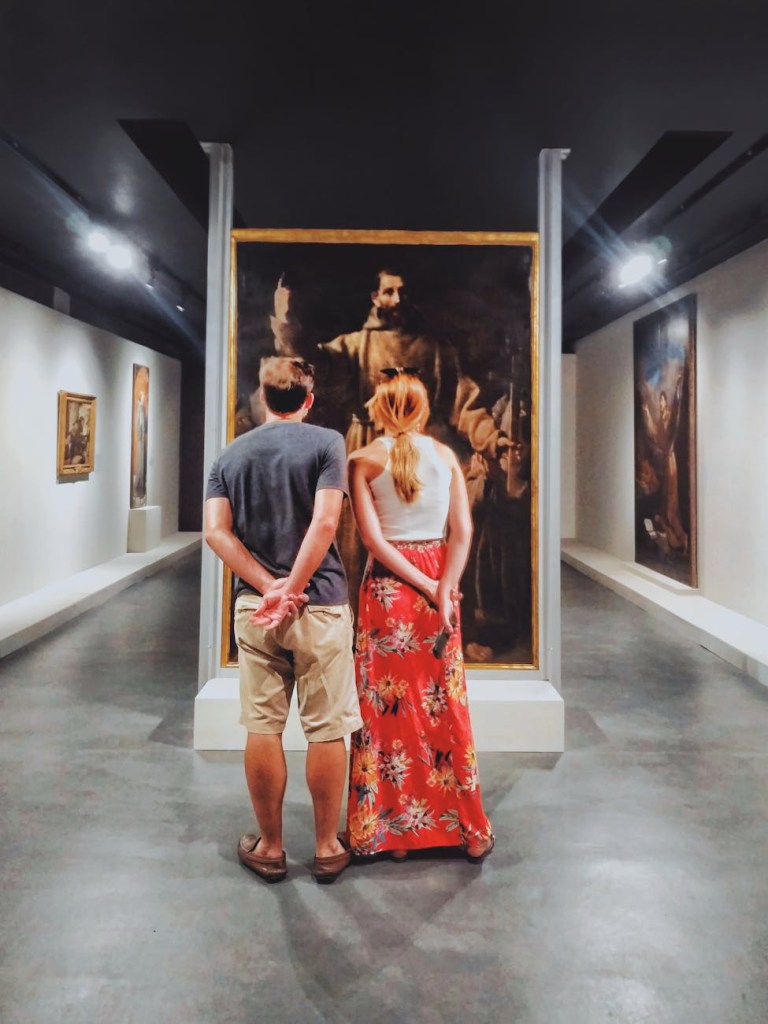
Image by Boban Simonovski on Unsplash.

The Divine Imprint: How God’s Design Outlasted the Soviet Plan

At first glance, the grey concrete Soviet block-era high rises across the street from me. Lifeless, uniform, and uninteresting. There’s no sense of individuality, just one window after another after another after another. Lifeless. Uninteresting. Uniform. Bland. Blah.

I have heard of places like this all of my life. Places designed to crush a human soul. But despite the cloudy, rainy skies that are covering this town — that I’m only just visiting for the first time — there is not a sense of dismalness here but a sense of life.

They were designed and implemented by a philosophy that says all humans should be the same with no one rising up and no one lower down. But equal. Egalitarian. Balanced. The same.

And the philosophers can’t be faulted for their good intentions. They wanted to eliminate discrimination and inequality, and they sought to use something as simple as a domestic domicile in order to do that. The home is where our heart is after all, and if we can modify the home, it might also modify our heart. But just as evil has enslaved our hearts and has enslaved our natural world so too it has enslaved our concept of domicile. So rather than merely pushing us and nudging us in the right direction, the evil that enslaved these buildings has eliminated all sense of individuality and diversity and joy.

But then I look closer and I realize in this later end of their life, these solidly poured concrete structures do exhibit life. I can see on the end of the buildings, the inlaid fancy designs in the concrete that show arches and curves and nibs and bumps and nubs; that show some sense of style. And as I look towards the neighbouring buildings, I realized that they’re not entirely uniform, but each has its own distinct features. Is each of these minor details and differences evidence of resistance on the part of the original designers and architects?

And now, at this time, probably at least 50 years since they were built, there’s a sense of individuality. People have changed their balconies. People have applied paint. People have installed air conditioners, people have installed new windows. And you realize that these buildings that were designed to be uniform and lifeless and proletarian have now become something else entirely: a place where life can continue, a place where people must not merely subsist, but survive and thrive. A place people can call their own and they can say, “Oh, I have some differences.” “I have some preferences.” “I have some changes.” “I like things to be the way they are.” “I like the light gray. I like cream.” “I like dark gray and brighter cream color.” “I like white.” “I like to have aluminum windows.” “I like tiles.” “I like air conditioning.” “I like fancy railings.” “I like plain cement.” “I like reflective windows.” “I like clear windows.” “I like brown windows.” “I like white windows.” “I don’t like windows at all and I want to brick them up.”

But these personalisations aren’t intended to infringe upon other’s spaces — in spite of the difficulty of painting the exterior wall on the sixth floor or the 10th floor people’s individual spaces remain clearly demarcated. The only infringement upon the neighbors is through the sense of sight, but there’s an idea that this sense of sight is meant to be influenced in a positive way rather than a negative way.

And then there’s the signs of life. These aren’t just inanimate concrete structures, but inanimate concrete structures that house life. A string of laundry left out too long, now soaked by rain. Five lights of a chandelier seen through one window; another window ajar where a face looked out moments before; and families emerging from the streets in between these buildings, heading somewhere. Revealing their diverse senses of fashion in their attire and in the vehicles they drive.

The city, which is the historical centre of Georgia, abounds in religious imagery! Crosses appear at street corners. Churches dot the mountain tops. Even the national flag with its five crosses, denotes the five wounds of Christ on the cross. I wonder how these religious ideas have impacted this Soviet Block community that I’m looking at? How deeply has the truth behind those images and icons transformed the people who live within these blocks? This is a profoundly, starkly Christian nation. How has that Christianity worked at chipping away the years of negative political philosophy that formerly controlled this place?

As the legend goes, the Georgians were the last ones in line to receive a land from God. According to the story, they were too busy partying and didn’t make it on time. When they finally arrived and came face-to-face with God, he said “I have no land left because you guys are late.” In response, they happen to mention part of their celebration included a toast it to God himself. God‘s response of, “Since you have toasted me then I have a piece of land here that I was reserving for myself. I would like to give it to you instead” reveals a deep-seated Georgian understanding that even the very land that they live in is blessed by God.

It makes one wonder why humans decided to reshape this perfect landscape into the form of concrete apartments. And I also wonder how the deep embedded Christianity of Georgia made it resistant to Soviet philosophy? Was there truly no hope that this philosophy would take hold and thrive? Was it inevitable that Jesus and his influence on not only people’s individual lives but also on their national life would make them inherently resistant to other philosophies?

Is the metal cross, bell, and icon planted at the foot of one of these buildings, a sign of this pervading hope in the divine? Is this a more recent addition or does its presence here today signify this religious attitude’s continual presence in the hearts of the people here?

Somehow the human desire for uniqueness and beauty and colour and life emerges, even though the original plan meant to suppress and hold this back. It reminds me that there’s always hope for a better future and that when God created us, he created us with the ability to not be satisfied with the way people want us to be, but to live and thrive, and enjoy life.

Turns out people are the same after all aren’t they? They like to have beauty and joy and colour and variety and diversity.

Who would’ve imagined?

Following up on BGCC Celebration 2024: How Jose de Mesa’s Hermeneutics of Appreciation provides a practical way for Canadian churches to engage society

In May 2024, I had the privilege of speaking at the BGC Canada Celebration in Calgary. Because the theme of the conference centred on Mordecai’s words to Esther “for such a time as this,” one of the sessions I gave was basically laying out the framework that SEATS has been developing for the past 20 years on how the church can engage society “in such a time as this.” The session covered two aspects. The first aspect was the theology of evils, which I’ve written about many times on this blog. The other aspect looked at the functional church, which we see as essential to our identity in the church and society. 

The session was more of a download, laying everything out in a long, complex, complicated system. I apologise if it was a little bit inaccessible because of that. I also wasn’t as clear in stating it during my talk, but I think that Canada is now a mission field and as Jesus’ followers we need to approach it as such.

This reality was made clear by many other presentations at the conference that talked about ways Canadians perceive the world. The Evangelical Fellowship of Canada’s Rick Hiemstra was very clear in providing statistics and surveys to help us understand the way Canadians think. And all of these reinforce the idea that Canada is a Mission field.

What does it mean to say that Canada is a Mission field?

Before we go further, I want to highlight that current missions theory sees all parts of the world as the “mission field.” Yet, we often still think of missions as someone leaving their own home to go to another place.

I understand that there are two ways we could define “Canada is a mission field.” One way is “the world is coming to Canada so they’re at our doorstep so we can present the gospel to them.” And this certainly may be true.

BGC Canada addressed this about 30 years ago when we formed GLOBAL Ministries. The tagline at the time was “across the street, around the world.” This was a recognition that people are coming to Canada, which presents an opportunity for us to reach out to them wherever they might be. Eva and I were privileged to be selected for that team at the very beginning and are grateful to continue serving in Southeast Asia. We also know that many of you also are finding ways to reach “across the street” as well as “around the world.” We’re happy to be together on the same team in doing this!

The problem is this is only half the story. It is true that Canadian missionaries have had a tremendous impact on the world as they followed God‘s call to bring the message of his good news around the world. But there’s more to the story.

The other way of defining “Canada is a mission field” is by recognising that new immigrants to Canada are bringing their Christian faith to a place that is no longer Christian. I particularly enjoy the fact this includes Filipinos. For many years now the Philippines has been the number one source of new Canadians. One way this impacts Canada is by Filipino Christians coming to work in Canada, moving to small towns with dying churches, and injecting new life into those churches. Alison Marshall from Brandon University has written a lot on this specific subject.

So what are the implications of “Canada is a mission field”?

Given the fact that Canada is now a Mission field I thought it important to discuss some ways we can think about this. What can I do as I live in my Canadian community, pastor my Canadian Church, and dream about reaching Canada for Christ? How can I tweak the perceptions I have about the world and about Canada and about the gospel so that they can become more understandable to one another? What are some practical ways that the Canadian church can engage society?

It may also mean that the way we’ve traditionally done things may not work anymore. We may need to think about what the church will look like in the next generations.

If Canada is a mission field, we need to approach Canada as if it’s a place we do not understand or we’re not familiar with. We’re unaware of the culture. We’re unaware of the language. We’re unaware of the practices. This means we must come in with a fresh mind asking, “How can we help the people of this place connect with God on an understandable level?“ And “How will my journey with these people help me draw closer to God, myself?”

(I should mention as an aside that while the immediate context of my talk was Canada, since I was invited to a Canadian conference, these principles apply to any culture around the world. So those who are thinking about doing missions in it any other country can figure out ways to make these relevant to their new context as well.)

Jose de Mesa’s Hermeneutics of Appreciation is a usable framework for Canadian churches wanting to go “across the street.”

What comes to mind immediately is Jose de Mesa’s hermeneutics of appreciation as a framework for how the church can engage society. (I have already written a bit on de Mesa’s ideas, here.) de Mesa developed this framework in the 1970s. He was a contemporary of other Filipino academics who collectively realised that the Western-based systems of history, psychology, and anthropology were inadequate in describing the Philippine situation. They worked at reconstructing these ideas using the Philippine context as a base. Jose de Mesa approached the area of theology in the same way.

De Mesa’s insights into how Christianity entered the Philippines is helpful for us as we think about how the church of Jesus Christ can re-enter Canadian society. He developed a hermeneutic of appreciation for use when Jesus’ followers from one culture approach people from another. I thought it might be useful to see how his four hermeneutical steps may apply to the church in Canada today with the hope that this may serve as a model for us to use in the church today.

It’s important for us to remember at this point that de Mesa was largely reacting to issues he observed as a cultural insider to how the gospel was and is understood in the Philippines — his approach is in direct opposition to a hermeneutic of suspicion. It’s also important to realize that de Mesa writes as a deeply devoted Christian who sees Jesus as his Saviour and the Saviour of his nation. But having said that, it’s important to realize that there is a critique in this hermeneutic – a critique that’s useful in helping us understand our own ways of approaching others with the gospel.

Attitude #1 Presume the cultural element or aspect under consideration to be positive (at least in intent) until proven otherwise.

A lot of the stuff we do in churches is cultural, even though we assume it’s biblical. I guess what I’m trying to say is that there is sometimes a blending of how we interpret the Bible with how we view the world. What sometimes happens as we go somewhere else and see how other people live is that we immediately assume that they are doing things for all the wrong reasons. We understand that sin enslaves the entire world and we assume that those who have not yet heard about Jesus Christ are also slaves themselves. But that doesn’t necessarily mean that everything that everyone does is done for bad reasons.

Sometimes these things are just different cultural preferences. I remember reading Peace Child by Don Richardson. You may have read the book or seen the movie. It’s a powerful example of how a missionary to New Guinea found a redemptive analogy within his mountain tribe. Richardson’s thesis is that every culture contains what he calls redemptive analogies. Richardson even goes through and illustrates other examples of redemptive analogies that he has found in other times and in other parts of the world. More on this below.

Richardson‘s theology incorporates the ideas that “all have sinned fall short of the glory of God” with the idea that “God has placed eternity in the hearts of humans.” He ties the two together by saying that God has hidden clues in each society and culture that help people move from sinners towards eternity.

We won’t find Redemptive analogies if we approach a culture from the idea that we are right and they are wrong — if we approach another culture with the idea that these are all pagan people with no connection with God and that we are the first voice of God that people have heard. This is actually against what scripture teaches. Typically theology refers to two types of revelation: One of them is general revelation where God makes himself known to all people through means not limited by language — including emotion, conscience, and will (Ps 19:1-2; Job 12:7-10; De 8:18; Pr 16:9; Pr 20:27; Ge 3:7-8). The other is special revelation where God makes himself known specifically through his word — both Living and written (Is 53:5-6; Mic 5:2; De 6:6-7; Ps 119:105).

Popular advice states that we should avoid two topics of discussion in life: religion and politics. Why is that? Because we tend to argue and fight over them don’t we? To apply de Mesa’s framework here we would need to seek understanding of the Other rather than to push the rightness of our own belief. This is scary, isn’t it? Because we must relinquish  power in order to do that. But yet it’s only through vulnerability that we can connect with others in the world around us, isn’t it? 

Presuming that the culture element is positive rather than negative also acknowledges the fact that God is already at work in an among that culture, and some of the things that God has revealed to them may come out through the culture.

Attitude #2 Be aware of your own cultural presuppositions and adopt the insider’s point of view. 

Sometimes when it comes to presenting the gospel we take an exclusivistic approach. An exclusivistic approach means that we know what’s right and nobody else does. We need to present the gospel to Them. This leads us to approach people as if They are wrong and We are right. That’s because the exclusivistic approach is the approach of the Outsider.

I had a conversation the other day with a close friend and colleague is also a pastor. We were discussing preaching and the role of the preacher in the message. We reminded ourselves that the first audience of any sermon is the preacher themself. But there’s also an aspect in the Bible where through the prophets God tells people that they are wrong. The key to remember is that the prophets also recognize themselves as being wrong too. For example, Isaiah says “every word that passes through my lips is sinful,” indicating his desire to be disqualified from this ministry. In the same way, we too as preachers need to recognize our own complicity in sin. Other people are not the only sinners in the world. We, too, are included in that. So when we approach the subject of sin and repentance, we need to approach it in an inclusivistic way. Meaning rather than saying, “You are all a bunch of sinners and need to repent,” we say, “We are all sinners and we all need to repent.” There’s an inclusive aspect to the Gospel.

This is what de Mesa is talking about in his “Be aware of your own cultural presuppositions and adopt the insider’s point of view”

So we use inclusivistic language — words like us and we — and find ways how we too need to hear God’s gospel in the situation. We also assume that God has been at work in the world before we arrive with his message. Back to Richardson’s redemptive analogies. He describes examples such as the peace child of his tribe in New Guinea, and the banana tree/book among other tribes. He even mentions Paul’s recognition of the Athenian “altar to the unknown God” as an example. Bruce Olsen, in his autobiographical Bruchko, describes waiting five years before finding the culturally-appropriate way to present Jesus to his tribe in Colombia. These redemptive analogies provide bridges into a culture to help them understand the goodness of who God is and help introduce them to his special revelation for all humans.

What redemptive analogies do we find around us? What ways has God prepared Canadians to understand and accept the good news? What artifacts in Canadian cultures bridge us to God?

For example, Canadians have a deep connection to the land. This includes First Nations, Inuit, Metis, and Settler cultures (I should point out here that I have family connections with each of these four groups). It’s important to realize that there’s a word that’s sometimes translated land in the Bible and other times translated as earth. But connection to the earth is often among disputed among Christians, isn’t it? I remember a younger me pushing against the idea of creation care because it seemed like it was worshiping nature rather than worshiping God. I thought that as humans we were supposed to “subdue” creation. However, connection to land is one of the key aspects of the gospel of Jesus Christ. Not only is that a main part of ancient Israel‘s connection with him, but it also emerges when others are trying to understand God. It’s especially significant in God‘s conversations with Job where God clarifies and reveals himself to Job through the land. Perhaps understanding this connection with the land or earth is a redemptive analogy for Canadians.

Another example for Canadians may be our internationally-acknowledged kindness. Kindness appears to be under attack today. I’ve seen pushback against the concept of empathy and also against being a “nice man.” In fact, I engaged in a short dialogue on X with someone the other day who was advocating that men should no longer be “nice.” However, kindness is a key part of the gospel of Jesus Christ. For example, the reason that we are saved is because God showed his kindness to us. And the evidence of the fact we are saved includes, among other things, kindness towards others. Perhaps kindness is another redemptive analogy for Canadians. 

Can you think of any more redemptive analogies for Canadians or even for your own culture?

Attitude #3 Go beyond cultural stereotypes.

When I was in Grade 5 at Lorne Haselton School in Saskatoon, Saskatchewan, the Gideons came and presented each of us with a New Testament, including the Psalms and Proverbs. I remember mine was red. Afterwards, at recess, we were discussing these New Testaments, and one of my classmates came up to me to talk about it, and I blurted out to him, “What are you gonna do, rip it up?” And he had this look of confusion on his face. I think about that interaction a lot and wonder, “What was it that caused me to assume that my classmates who didn’t go to church would just be interested in ripping up the Bible?” Well, I think it’s because there was a cultural presupposition when I was growing up that the world was divided into Believers and Unbelievers. Believers did everything God wanted them to do, and Unbelievers did nothing that God wanted them to do. And so, I assumed that a Unbeliever receiving a New Testament would just be interested in getting rid of it because it was something good. Of course, looking back on this and on my Grade 5 self, I realize that I was deeply mistaken and that my cultural presuppositions towards those who were not-yet-Christians were wrong.

One of the key influences in my life was Les Goertz’ book, The Not-Yet-Christian. Goertz approaches the issue with the understanding that people are on a journey towards God. People who come from a point of being originally righteous in Genesis 1, but subsequently slaves to sin, are on a journey back towards that original identity. The idea of looking at someone as a not-yet-Christian reminds us of the hope that at some point someone’s relationship with God will become better — even as my own relationship with God hopefully becomes better over time.

Attitude #4 Use the vernacular as a key to understanding the culture in its own terms. 

I took my first ancient Greek class in university. It was actually Attic Greek. I did this in anticipation of attending Canadian Baptist Seminary after I graduated. (I had heard horror stories of crash Greek and wanted to avoid that experience.) When I got to seminary I was able to skip crash Greek and go straight into Greek exegesis. One of the things I remember learning in studying Greek was that there was a lot of belief that we could find the specific meaning of each of these words. And so we used various grammatical forms, we looked at various words, and determined various definitions for them. But a couple of cracks appeared in the picture as I was studying Greek. One of them was that we weren’t actually defining the words we were translating. Rather, we were giving them glosses. A gloss is a something shiny that looks good and helps us think that we understand something but hides something deeper and non-understandable beneath it. A number of years later in my career, I moved to the Philippines and learned Tagalog — a language I now use to conduct most of my daily affairs. And what I learned was that there is no such thing as a simple transition from one language to another. All translation is betrayal simply because there is no one-to-one relationship between languages! Some languages don’t have the words used in other languages, which often makes it difficult to transmit ideas from one language to another.

Further complicating things is that we often think of text as relating to words and thus the term vernacular as relating to the spoken language specific to a certain context. However, Hanks tells is that text goes beyond merely written word and looks at the systems and structures of a society. “… text can be taken … to designate any configuration of signs that is coherently interpretable by some community of users.”

There’s a current program for Missionary Kids or Third-culture kids when they end up coming to Canada at the end of their schooling and whatever country they grew up in. One of the aspects of this Reboot program is introducing these young people to Canadian culture. This includes introduction to the vernacular, where they learn such things as the true meaning of the phrase, “Netflix and chill” — a term that when interpreted at face value is NOT correct.

In some ways it appears that the church in Canada has lost its grasp of the vernacular. Why do I say this? A year or two ago there was an Angus Reid poll that came out where one of the surprising findings was that — at least among a certain segment of Canadian society — the church is viewed as “damaging to society.” Which is odd, isn’t it? After all, the message the church isn’t one of danger, but love and salvation and a God who wants a relationship and wants the oppressed to be freed and wants the blind to see and wants to lame to walk and wants the prisoners to be set free. So then how come, all of a sudden, there is this idea that the church is something that’s damaging to society? It may be because we’ve lost a grasp of the vernacular.

Now some people are going to complain and say, “My church isn’t like that.” I realize that and I agree with you. However, in the mind of people outside the church, they label us ALL as Christians — in the same way that we label people outside the church as Pagans. There is a little understanding of the nuanced denominationalism that we understand as Insiders. We are all guilty of generalising when it comes to identifying others. Lila Abu-Lughod says some good stuff about generalization and advocates for focussing on particularities instead. But that’s a conversation for another day.

What I’m saying is here is that if our basic core message is misunderstood, it’s probably for one of two reasons: Either we’re not getting it right, or we’re not making it understandable in the vernacular of the day.

What’s the next Step?

What’s your take on this? Does the Canadian church have some work to do in the future? Are there redemptive analogies that would be beneficial for helping the church engage society?

Whether you agree, disagree, or have a fresh perspective, drop a comment and let’s discuss!

If you enjoyed this post, why not share it with your network? Remember, sharing is what friends do!

Photo by Matheus Viana on Pexels.

Do you want a haircut? No I want them all cut! 

I got tongue tied when giving directions to the tricycle on which barber shop I wanted to go to but I arrive nonetheless. Fortunately I have been there before so I am able to guide the driver. Unfortunately there is a lineup today. I guess that’s what I get from getting a haircut on Saturday afternoon. 

I climb out if the tricycle (not made for people as big as I am) and hand over the fare. Then I pop my head in to ask, “Is there any hope?” I am number 2 so that’s not too bad. It looks like today Noel has another guy cutting, too, so that makes the line go down quickly. Noel, the owner of Marvin’s Barber shop, has been cutting my hair ever since I moved to Pingkian 12 years ago. Once I find a good barber I tend to stick with them. It’s gotten to the point where I just sit down and Noel knows what cut I want. Nice!

I sit outside along the front of the shop on a stack of two monoblock chairs. A bench of similar design is already occupied by three other people. The shop features the typical striped colours symbolic if barbershops the world over. It’s glass front featuring a painted lettered sign “Marvin’s BARBER SHOP.” A black plastic bucket on the ground beside the door catches water the drips constantly from the air conditioner. Faded photos of haircuts are featured prominently in the windows. 

Life passes us by. Tandang Sora avenue is always busy. Only two lanes but it leads people past several schools, a mall or two, and a wet market. The road has improved over the years. Now it boasts a smooth asphalt surface that makes driving easy. The steep edges, however, make walkers a little more cautious. 

Small delivery trucks, jeepneys, vans, motorcycles, tricycles, and cars pass by going here, there, and everywhere. Pedestrians also frequent the way carrying bags, purses, or books. 

Directly across from the shop is a brand new stripmall, still unoccupied. Looks like there is room for fourteen shops on two floors, each with it own rollup door. A roofdeck is on the third floor. It’s one of the new places that are constantly being built in anticipation of the road being widened to 4 lanes. 

The urban sprawl tends to hide the physical geography, but signs peek out from time to time. The south side of the road, where I am sitting, appears to be higher and the ground slopes away across the road towards the creek that I know is there. 

The bench just emptied itself of people — I guess the lineup wasn’t as long as I thought. Soon it will be my turn. All of a sudden I see the nod and head on in. He seats me in his barber’s chair and starts the preparations. As I look into the full-width mirror I see Noel’s tools of the traded arrayed before me. There are seven electric clippers. A box holds 8 different types of brush with a couple more in various places on the shelves. An assortment of bottles sits on the left, ready to be applied during various stages of the haircut. Scissors and combs abound! A TV hangs on the wall behind me, playing the latest telenovela. I can see a reverse image in the mirror in front of me. This mirror is actually an infinity mirror since it works in conjunction with the mirror on the back wall. 

A strip of toilet paper is wrapped around my neck to be held in place by the striped cape that will protect my clothes from falling hair. The clippers are chosen, and will be exchanged with other clippers at various times — why? I don’t know. From time to time the scissors come out, being used rapidly, sometimes held vertically as Noel swiftly operates them and spins them around the back of my head. Then the razor comes out to make sure the edges are neatly trimmed. At one point, the cape is removed, shaken out, then replaced as the final push begins. A razor makes sure the edges are neat.

Then comes perhaps the most interesting part. After putting rubbing alcohol on my hair, he begins to massage my neck and shoulders, making sure all the “lamig” is removed from my muscles. Then, with a sudden move, there is the head twist and neck jerk move that frees up all the bones there. This is always accompanied by a a laughing “Ayus!” on his part. The secret is to just relax and let it happen. But it is always a little freaky. Then a quick brush off of any fallen hairs and the process is done!

Guwapo na!

What is your favourite haircut story? Why not record it for posterity in the comments below?

Remember sharing is what friends do.

Image is mine.

Positionality: How knowing about the interconnections I have with others makes life more understandable

Dolly Parton and Kenny Rogers sang, “Islands in the stream that is what we are …,” a song of two people who assume their one-night relationship has no impact on anyone or anything beyond the two of them. A better philosophy might be John Donne’s “No one is an island,” that recognises the complexity of human relationships. How does knowing about our interconnections with other humans help us understand life in a deeper way?

It used to be common knowledge that if you wanted to study something or someone else you needed to maintain distance between you and the subject. This distance was designed to reduce any bias that you have that may influence your observations, analysis, or conclusions. Extreme versions of this practice led to studies the included hidden cameras, uninformed subjects, and other unethical research practices. All based on the assumption that we can extract people from their contexts and put them into a petri dish for study.

Nowadays, thankfully, that common knowledge is changing to recognise that biases exist, really can’t be eliminated, nor should they be. There is a newer recognition that any study includes the interaction between the researcher and their research counterparts, who have just as much a role to play in the shaping of knowledge as the researcher. I can’t say much for the so-called hard sciences since my expertise lies in social science, but bias is still an integral part of the hard sciences, too. For example, who makes the choice as to what is being studied? Who decides where to point the hidden cameras? Who decides what questions to ask? Who decides what factors are important? Who decides to develop nuclear weapons rather than nuclear power? All of these decisions are made because of some kind of researcher bias or another.

This is much more complicated when we enter the realm of social science that seeks to understand how humans interact with one another. For example, in my study of how Filipino men in my community conceptualise and create their understandings their own masculinity and their being maka-Diyos it was necessary for me to identify my own positionality to the men and the subjects.

I should point out that maka-Diyos is a Filipino term that doesn’t exist in English. It encompasses godliness and religiosity but goes much deeper than that. It is related to loving our family, our neighbour, and our God.

What does positionality entail?

At face value, I am an outsider to my community. I was born 11,700 km away in a different context and culture. I don’t look the same as those around me, my mother tongue is not Tagalog, I prefer running shoes to flip-flops, and I don’t handle the heat all that well. When kids see my blue eyes, they stare. I am taller than most people that I meet. Almost everything that people notice about me sets me apart as different.

But on another level maybe I am not as far out there as one might think. My obvious identity as an outsider aside, Filipinos are very accommodating, and a couple of things cause me to question my outsider status. I am a pastor, a role that is still seen in a positive way by much of Philippine society, my wife and I have also been welcomed into close relationships with people in our community, we try to communicate in Tagalog as much as possible. All this is possible because Filipinos have a complex understanding of interpersonal relationships. Rather than simply identifying someone as either insider or outsider, Filipinos have a range of relational milestones that show how someone transitions from being an outsider to being an insider. But that is a discussion for another post.

At this time we need to recognise that positionality recognises and includes the role of the researcher into the life of the community of the researched. Both parties contribute to shaping knowledge is a way that benefits others.

Positionality for non-Researchers.

You may ask, “How does this relate to me since I am not a researcher?”

Life is collaborative. I once heard that even the most introverted people influence 10,000 people over their lifetimes. Family relationships give us a glimpse as to how this works. A married couple represents at least two relationships but once they start having children the number of relationships increases exponentially. Not to mention that the two individuals who form the initial two relationships bring with them their own set of complex relationships. That means that each of us is constantly creating a life in collaboration with an increasing number of people. That also means that it’s impossible to extract and individual from this complex dance and expect the dance to remain the same. In order to make sense of this world and find some way of becoming successful in it, we need to recognise our own positionality in it.

What this all means is that our current divided society can be rectified through understanding positionality. Once we see how each of us is connected, and how we really have no choice but to interact with one another, we come to understanding, we see things from other’s points of view, we realise they, too, have legitimate perspectives. We are no longer individuals — nor individual families — but are rather a part of a larger community that is all journeying together towards a better future.

How are you positioned? How does who you are position you to have a better connection with your community? Why not let us know by commenting below?

Did you like what you read here and want to read more? Why not consider liking and following my blog?

Remember sharing is what friends do.

Image is by Ahmad Odeh on Unsplash.

Tiktok: Bakit ako sumali sa isang social media phenomena na puno ng mga tao mula sa ibang henerasyon?

Read this post in English.

Oh. Nasa Tiktok na ako. Baka isipin mo na nagsimula na akong sumayaw o gusto kong bumagsak ang aking karera sa musika, huwag mag-alala. May paliwanag ako. Ang Tiktok ay nasa likod ng aking isipan mula pa noong isang klase na itinuro namin sa SEATS noong 2021 na nagrekomenda ng paggamit ng plataporma para sa ministeryo sa simbahan ngunit dahil wala akong ganap na karanasan sa Tiktok ay hindi ko naisip kung paano eksaktong gamitin ito. So anong nangyari para makumbinsi ako?

Ilang taon na ang nakararaan pinangasiwaan ko ang pagtatayo ng isang paanakan malapit sa aming bahay. Hindi ko makuha ang kredito para sa paanakan — naroroon ako para sa mga kapanganakan nina Emily at Daniel ngunit wala akong pagnanais na dumalo para sa mga kapanganakan ng sinumang bata — ngunit nakapagbigay ng ilang input pagdating sa pagsasama-sama ng pasilidad kung saan ipinanganak ang mga sanggol.

Ang isang pangunahing aspeto sa anumang uri ng konstruksiyon ay ang mga manggagawa na gumagawa ng aktwal na trabaho. Mayroon silang iba’t ibang mga kasanayan. Ang ilan ay kasangkot sa proseso ng disenyo. Ang iba ay likas na matalino sa pangangasiwa sa gawain. Ang mga skilled ay may mga espesyal na kasanayan tulad ng pagkakarpintero o pagmamason. Ang mga labor ay gumagawa ng mabigat na pag-aangat ng pangkalahatang paggawa. Masaya at marami akong nakilalang lalaki. Bilang bahagi ng aking kontribusyon sa pagsisikap, nagsagawa ako ng lingguhang pag-aaral sa Bibliya tuwing Sabado bago matapos ang araw (kung kailan sila matatanggap ng kanilang suweldo para sa linggo).

Isang araw sinabi ko sa isang kaibigang pastor ang tungkol sa aming proyekto, alam kong kamakailan lang ay nasangkot siya sa isang katulad na proyekto nang itayo nila ang kanilang bahay sambahan. Ipinagmamalaki kong sinabi sa kanya na nagsasagawa ako ng pag-aaral ng Bibliya sa aming mga manggagawa bawat linggo. Bumalik siya na may pahayag na nagsagawa siya ng pag-aaral ng bibliya araw-araw bago magsimula ang trabaho! Nagulat ako pero napaisip ako. Ang resulta ay nagkaroon ako ng maikling debosyonal bago kami magsimulang magtrabaho tuwing umaga. Ang mga lalaki sa pangkalahatan ay hindi nahihiyang makipag-usap tungkol sa Bibliya sa normal na buhay at pinahahalagahan nila ang mga panalangin para sa kanilang kaligtasan araw-araw, kaya naging maayos ang lahat.

Noong isang araw, habang naglalakad ako sa clinic at iniisip ang huling yugto ng proyekto (na inaasahan nating magsisimula sa bagong taon), naalala ko na kapag nagsimula muli ang konstruksiyon ay kailangan kong pag-isipang muli ang mga pang-araw-araw na debosyonal. Noon natamaan ako. Maaari na akong magsimulang gumawa ng maikling araw-araw na debosyonal ngayon sa Tiktok! Nagpo-post ako ng pang-araw-araw na talata sa bibliya sa nakalipas na ilang taon sa mga social media account ng aming mga ministeryo kaya hindi ganoon kahirap gawin iyon para maging pang-araw-araw na debosyonal. Kaya gumawa agad ako ng Tiktok account at nagsimulang mag-record ng mga video.

Sa puntong ito wala akong ideya kung hanggang kailan ito magpapatuloy o kung anong mga partikular na benepisyo ang maaari nitong ibigay sa mga tao. Gayunpaman, ang mga tao sa loob ng aking ministry circle ay nagpahayag na mahalaga sa kanila ang araw-araw na mga talata sa bibliya na aking ipinadala. Mayroon ding mga tao sa aming komunidad na hindi makalabas ng kanilang mga bahay dahil sa malalaking isyu sa kalusugan at maganda ang video patungkol sa Bibliya para sa kanila .

Anong mga kakaibang bagong bagay ang ipinapagawa sa yo ng ng Diyos? Ano sa tingin mo ang kakailanganin para makumbinsi ka na gawin ito? Paki iwan ang iyong sagot sa comment box sa ibaba?

Tandaan na ang pagbabahagi ay ginagawa ng mga kaibigan.

Kung nasiyahan ka sa pagbabasa na ito, mangyaring huwag kalimutang i-like at i-follow ang aking blog.

Para sa mga kawili-wiling malaman ang higit pa tungkol sa aming proyekto sa paanakan narito ang isang maikling video na naglalarawan sa aming ginagawa.

Larawan ng SCREEN POST sa Unsplash.

Tiktok: Why I joined a social media phenomena full of people from a different generation

Basahin mo sa wikang Tagalog.

So I’m on Tiktok. Lest you think that I have taken up dancing or want my music career to take off, don’t worry. I have an explanation. Tiktok has been in the back of my mind ever since a class we taught at SEATS in 2021 recommended using the platform for church ministry but since I have absolutely no experience with Tiktok I wasn’t able to conceptualise exactly how to use it. So what happened to convince me?

A couple of years ago I supervised construction of a birthing clinic near our house. I can’t take credit for the clinic — I was present for the births of Emily & Daniel but have no desire to be present for anyone else’s kid’s births — but was able to provide some input when it came to putting together a facility within which babies are delivered.

A key aspect to any kind of construction is the workers who do the actual work. They have various skills. Some are involved in the design process. Others are gifted at overseeing the work. Some have special skills like carpentry or masonry. Others do the heavy lifting of general labour. It was fun and I got to know a lot of men. As a part of my contribution to the effort, I conducted a weekly bible study every Saturday just prior to the day’s end (when they would receive their pay for the week).

One day I was telling a pastor-friend about our project, knowing that he had recently been involved in a similar project when they built their church building. I proudly told him that I was having a bible study with our workers every week. He came back with the statement that he had done a bible study every day before work! I was taken aback but it got me thinking. The result was that I had a short devotional before we began work each morning. The men in general don’t shy away from talking about the Bible in normal life and they appreciate prayers for safety during the day, so it all worked out well.

The other day, while walking past the clinic and thinking of the final phase of the project (that we hope to begin in the new year), I was reminded that when construction starts again I would need to think about daily devotionals again. That’s when it hit me. I could start now doing a short daily devotional on Tiktok! I have been posting a daily bible verse for the past couple of years on our ministries’ social media accounts so to turn that into a daily devotional wasn’t all that hard to do. So I bit the bullet and created a Tiktok account and started recording videos.

At this point I have no idea how long this will go on for or what specific benefits it might offer people. However, people within my ministry circle have expressed their appreciation for the daily bible verses that I have sent. There are also people in our community who are unable to leave their houses due to major health issues and for whom an option to watch a video about the Bible is a blessing.

What strange new things is God calling you to do? What do you think it will take to convince you to do it? Why not leave your answer in the comment box below?

Remember sharing is what friends do.

If you enjoyed this read, please don’t forget to like and follow my blog.

For those interesting in finding out more about our birthing clinic project here is a short video describing what we are doing.

Image by SCREEN POST on Unsplash.

Sakay: What is it like to travel the densest metropolitan area in the entire world? Here is what a typical journey looks like in my community

It’s always a challenge to drive by a wet market. Because it’s a destination for so many people, that means (surprisingly enough) that there will be lots of people there! People also means traffic, the bane of most inhabitants of Metro Manila. The road from our house was pretty clear for the first while. In fact, I commented to Eva that there were only a few people on it. I guess leaving just after 8AM meant we missed the Monday morning rush. Normally when we get to the main corner, I avoid a left turn because not only does it lead to the market, it also goes past an elementary school, a mall, and a grocery store. During old normal times, driving past a school is always a bit touch and go because if you happen to hit a time when kids are either going to, or coming from school you can expect a rather long wait. It does help develop patience, however. 

Today, however, we needed to visit a drug store right beside the market to pick up some medical supplies to help a friend. Our trip went fairly quickly and arrived at the drug store in good time. I did have trouble parking for two reasons. The first is because there were no more slots left in front of the store. The second was because there was a line of people standing on the street in front of the store. Lest you think that there was a sale on and people were lining up for that, I need to tell you that most people in Metro Manila do not drive their own vehicles. Rather they take public transportation. These people were lined up to take the next available ride to their destination.

Public transportation in the Philippines is both convenient and complex — at least to a certain extent — because it’s possible to take a ride from basically your front doorstep all the way to wherever you want to go in the Philippines. Here is what a typical journey looks like.

Before leaving home, I gather everything that I need for the journey — keys, coins, handkerchief, hat — and then head downstairs. Then head back upstairs for my face mask. Once I get my shoes on, I head out the gate, then go back inside to get my umbrella. 

[If you are unaware of what an umbrella is, here is a simple explanation: An umbrella is a somewhat cumbersome device that if you take it with you it doesn’t rain but if you leave it at home — saying to yourself after looking at the sky, ‘It’s not going to rain today’ — then rain is guaranteed.]

As I walk down the lane from our house to the street, I see a green tricycle stop and signal to me if I want a ride. A raised finger eyebrow is all that’s needed to engage their services while a wave of the hand means, ‘No.’ (If I choose to not hire the roving tricycle, I can always walk a few steps to the corner where there is an official terminal for yellow tricycles). For the uninitiated, a tricycle is a motorcycle with a covered sidecar attached. Passengers can either sit in the sidecar, which is equipped with 3 seats, or sit sidesaddle behind the driver (2 more seats). In our area there are three main tricycle associations, each with their own colours. 

The tricycle payment system is rather complex. If you hire a tricycle that is in the terminal lineup it costs P25 for a ride out to the main road. If the tricycle is not full, the driver is allowed to pick up other passengers on the way (who pay P10 each), with the proviso that the initial hire gets to sit in the best seat.  

Once we get out to the main street, about 1.6km away, the tricycle pulls over to the side and we get out and pay the driver. There is a small market area here, too, in case we need to get something on the way home. But since we are going further we head around the corner to where the jeepney awaits. If the front seat is full, we need to board from the door in the rear, entering crouched over we make our way to the front and hope there is room on one of the two bench seats that run down each side. On the rare occasion that the jeep is full, it’s possible for men to hang from the back (sorry ladies, you will have to wait for space on the inside). 

Payment for the jeepney is also interesting, if less complex than that of the tricycle. The base fare is P9 and increases are based on distance travelled. When unsure it’s possible to simply ask how much it will cost from one point to another. When it’s time to pay, you simply say something like, “Bayad ho” [“Here’s my payment”] and reach your hand toward the driver with your money in it. One of your fellow passengers will grab your money and keep passing it forward. When it gets to the front, the driver will ask, “Ilan?” [“For how many?”] and then pass back the appropriate change (if necessary). 

Once at your destination, simply say something like, “Para ho sa tabi” [“Please stop at the side”] and the jeepney will stop for you. Exit is through the same door you entered. If you are going further, you can always take a bus, either to somewhere else within the city or to somewhere else in the country. The rule of thumb is, the smaller the vehicle the higher the fare. Thus tricycles are the most expensive and busses are the cheapest. 

Apart from this there are also airconditioned options such as taxis, FXs, busses, and the LRT/MRT. But we need to save those journeys for another day. 

How do you get around where you live? What unique features does your public transportation system have? Please let us know in the comments below.

Remember sharing is what friends do.

Don’t forget to like and subscribe!

Image is my own. 

Thoughts after reading Beth Allison Barr’s “The Making of Biblical Womanhood: How the Subjugation of Women Became Gospel Truth”

Not gonna lie. Any book that includes The Usual Suspects as part of its organising motif is pretty good. But that is only a minor reason why I enjoyed reading this great book. I love how it jumps straight into discussions of structural evil in relation to patriarchy because without a complex theology of evil we can’t successfully address issues like this. But I am getting ahead of myself.

Beth Allison Barr’s The Making of Biblical Womanhood: How the Subjugation of Women Became Gospel Truth paints a picture that combines her own personal journey with her expertise as a historian of medieval times. Barr’s argument is that church history, particularly medieval church history, shows that modern understandings of bible passages regarding the status of women haven’t always been interpreted to support patriarchy. Barr looks at how certain bible passages have been variously interpreted throughout the ages, how women’s roles within the church have shifted, and how bible translations have muddied the issue. I had the opportunity to read it after borrowing the ebook version from the Saskatoon Public Library. What follows is not a review, per se, but rather a series of reflections that emerged as I read the book.

Reflection #1: Positionality.

My area of expertise is in the realm of social sciences, more specifically in gender and ethnography. One key aspect to doing research of any kind is to determine where the researcher fits into the research. The two words are used to describe this process, Reflexivity and Positionality, basically tell us that researchers and the subjects they research are intertwined. Reflexivity is “taking account of itself or of the effect of the personality or presence of the researcher on what is being investigated.” Positionality is “the social and political context that creates your identity in terms of race, class, gender, sexuality, and ability status. Positionality also describes how your identity influences, and potentially biases, your understanding of and outlook on the world.”

Positionality is important in any study and this book is chock-full of it. Barr clearly states her positionality in relation to the topic: She is a woman who has been a member of evangelical churches in the USA since birth; she’s a pastor’s wife within the same movement, an accomplished Medieval historian with a couple of graduate degrees, and a professor.

As a comparison and contrast to this, let me show you my positionality: I am a white man, who has been a member of evangelical churches since birth (as a pastor’s kid and a missionary kid), I am a pastor, I have a couple of graduate degrees, and I am a professor.

Each of us is positioned in this conversation but are different in two important aspects: I am a man and my evangelical experience is shaped by my life in Canada and the Philippines, while Barr is a white women who is shaped by her life in the USA. These differences mean that we have different perspectives when it comes to understanding the matter at hand.

Positionality is important because it identifies our place in the conversation, reveals our connections to the subject, and allows us to see our advantages and biases. My positionality has blinded me to the truths that Barr’s positionality has revealed to her. Barr’s positionality makes this book more trustworthy.

Reflection #2: Sources of truth.

Apprehending truth is complicated. One of the first systems of determining truth that I learned as a child is that God is a God of truth and Satan is the father of lies. While that statement may be true, one aspect that I overlooked was God’s sovereignty over all. I had divided the world into neat categories of secular and sacred. I connected God’s involvement in the process with seemingly holy things only: Bible, church, religious people, etc. I rejected things — the example that springs to mind is psychology — that were seemingly unholy.

I was talking with a friend yesterday about the time I began to see cracks in my process. I was taking a class on religious perspectives on death and dying from Dr. Robert Kennedy at the University of Saskatchewan. We were assigned to read and comment on Tolstoy’s The Death of Ivan Ilyich. I thought I was being pretty smart by saying that Tolstoy had nothing to say about death and dying because his was a work of fiction and therefore was not true. Fortunately Dr. Kennedy was a nice guy and kindly showed me how works of fiction can also contain truth. It’s a lesson I haven’t forgotten.

A few years later I went to seminary where I learned the shocking reality that all truth is God’s truth. This means that regardless of the form of inquiry — social science, critical theory, hard science, literature, history, psychology, etc. — if it leads me to the truth then I have discovered something that is from God. This means that Barr’s study of the history of how the church has interpreted passages that seem to support patriarchy is a necessary way to help us apprehend the truth. As a historian her voice needs to be heard.

Reflection #3: The very nature of Scripture.

Dean Flemming gets it right when he talks about the New Testament as contextualisation in his Contextualization in the New Testament: Patterns for Theology and Mission. When we shift from thinking the New Testament is a doctrinal document towards seeing it as a guide for contextualisation, it opens up a new framework of interpretation. It allows us to move from seeing the bible merely as a series of truths to be believed (or a series of proof-texts to be memorised) towards a series of examples on how to live out our faith in our own unique cultural contexts. From Moses, in Deuteronomy, reframing the law to a group that hadn’t personally experienced the exodus from Egypt, to Jesus reconciling what we have heard with what he really wants us to know, to John recounting a view of history that shows us what is happening behind the scenes, the bible is full of making the gospel understood in different contexts.

That’s how Barr interprets the idea that Paul is addressing specific cultural issues of the day & providing a framework for how to contextualise the gospel into those situations. To assume that all cultural situations are the same as ours — and to assume that our cultural context has no impact on how we interpret texts — is doing disservice to the text & is leading us to false conclusions about what Paul (& other New Testament writers) are saying.

Throughout 1 Corinthians Paul addresses specific issues apparently raised by the local church. In these interactions, Paul directly quotes issues that have been raised in the church and then comments on them. Included among these quotations are the following:

6:12; 10:23 – “I am free to do all things” but my freedom is limited by my relationship to others. My freedom is not an excuse to cause others to sin.

6:13 – “Food is for the stomach and the stomach for food – but God will destroy them both” is actually talking about Corinthian sexual mores. The body does have a specific purpose – that purpose being “for God” and “not for sexual immorality,” because in the end God will “raise” the body and not destroy it. Therefore, the Corinthians were to stay away from sexual immorality.

6:16 – “The two of them will become one flesh.” When one commits sexual immorality, in this case with a prostitute as an act of worship in a pagan temple, then that person is united with the prostitute. The basis for Paul’s argument is from Genesis where when a man and a woman are united sexually then they become one. Paul would much rather that we were united “with the Lord” than be united with a prostitute.

6:18 – “Every sin which a man does is outside of the body” was another Corinthian saying that identifies the body as being less important that the spirit. Paul counters this argument by saying that in fact our physical bodies are now and will always be important because it is here where the Holy Spirit dwells. This any sins that we commit against our bodies are in essence sins against the dwelling place of God.

7:1 – “It is good for a man not to have sexual relations with a woman.” Paul connects this aphorism with the issue of marriage. Should married Christians abstain from sex? Paul’s answer is to get married (7:2). There are, however, other implications to getting married: 7:32-34 that says those considering marriage should carefully weigh the pros and the cons so that in the end they can remain pure but also dedicated to the work of the Lord.

Since this is the structure of 1 Corinthians, it’s not a stretch to expect the same thing to happen when we get to the 14:33-35 bit about women’s silence. Paul begins by quoting the issue and then comments on it.

14:33-35 – “As in all the churches of God’s holy people, the women must keep silent. They don’t have the right to speak. They must take their place as Moses’ Teachings say. If they want to know anything they should ask their husbands at home. It’s shameful for a woman to speak in church.”

Barr’s contention here is that Paul’s actual beliefs begin in v 36: “Did God’s word originate with you? Are you the only ones it has reached? Whoever thinks that he speaks for God or that he is spiritually gifted must acknowledge that what I write to you is what the Lord commands. But whoever ignores what I write should be ignored.” In her explanation, Barr brings us into her classroom and allows us to feel what it’s like to have a eureka moment when trying to understand scripture. It’s a powerful description!

Barr is not the first to recognise this reality. Lucy Peppiatt also talks about this in her wonderful Rediscovering Scripture’s vision for Women: Fresh Perspectives on Disputed Texts. What it does show us is that Barr doesn’t toss aside Scripture in favour of her argument. Rather she presents historical evidence that Scripture has had a variety of valid interpretations throughout history.

Reflection #4: Structural Evil is legit.

Some may bristle at idea that structural sin exists. They prefer to see sin as being entirely personal with the solution being merely a restored relationship with Jesus. Regular readers of this blog will know that I subscribe to a more complex theology of evil that includes personal evil, natural evil, and structural evil. If you are interested in a more detailed explanation take a look here and here.

Barr says, “Patriarchy wasn’t what God wanted; patriarchy was a result of human sin.” I tend to interpret the famous phrase in the second part of Genesis 3:16 as negative for both parties — a turning away from God’s original intent. “Desire” — the same word used later on to describe sin’s attitude towards Cain (Genesis 4:7) — and “rule” being the key words. For me, both of these words reflect a change that happens after the fall. While they were not a normal state of affairs prior to the fall they have now become normal — a new normal as it were (with all the negative implications that term has taken on). As Barr says, “after the fall, because of sin, women would now turn first to their husbands, and their husbands, in the place of God, would rule over them” and “Adam’s rebellion was claiming God’s authority for himself, and Eve’s rebellion was submitting to Adam in place of God.”

The reality is not only that patriarchy exists but that it is an example of how structures created by God — namely the relationships between men and women — can be twisted into sinfulness. Jesus taught us to pray, “Let your will be done on earth as it is done in heaven,” which means not only do we pray it but we work to make sure that it’s true. Patriarchy then becomes an enemy that need to be defeated.

Reflection #5: Women’s rooms.

Sometimes we think that all that needed to be done theologically happened in the Reformation. It becomes the basis for how we decide if people are real Christians or not. It even seems as if all of our theology is centered around the Reformation. But obviously not everything that happened in the Reformation was enough. Barr points out that the situation of women in the church took a turn for the worse as their space became smaller. Why? Because of Reformation theology!

Here is where Barr’s positionality as a woman who has grown up in the evangelical church is especially helpful in opening my eyes to things that I am blinded to as a man. The first surrounds the idea of women’s rooms that get bigger and smaller throughout history as things change. Barr’s argument is that the current state of affairs that keep women from certain roles and activities in the church hasn’t always been defined in the same way. Rather throughout history the spaces that women are allowed to inhabit have at times been larger and at other times have gotten smaller. As Barr says, “When political and social structures are less centralized and less clearly defined, women often experience greater agency; their rooms are bigger” (pp. 113-114).

When discussing “Official preaching space,” Barr tells the story of Anne Askew who argued that since “Preaching only took place behind a pulpit, and since she wasn’t behind a pulpit, she wasn’t preaching” (p. 116). This is is a clever use of logic to thwart a technicality — a technicality that doesn’t actually exist in scripture but we assume that it does. I am familiar with this idea but from a different angle. It relates to a different theological problem that we have here. There is an oft-cited idea that to be a pastor is to have the “highest calling.” It results in pastors being above reproach (even though people may have reasons to reproach them). Part of this “highest calling” is that only they are allowed inside the “official preaching space” — an area defined as being behind the pulpit.

What is interesting is that this “official preaching space” is an entirely social construct. No where does the bible mention any form of official preaching space. Looking at Jesus alone, we can see that he preached anywhere and everywhere — on a boat, by the seashore, on a mountain, on the plain, in the Temple, while walking down the road. Of course let’s not get into the idea that even “pastor” is highly constructed and bears little resemblance to what we see in the bible. (Should I point out here that one of the few people mentioned by name in the Bible as being a shepherd — another word for “pastor” — is Rachel in Ge 29:9?)

Reflection #6: Gender-inclusive language.

The final reflection that I will discuss relates to how we use language. The issue at hand is translating passages of scripture that do not specifically refer to gender in an accurate way. Barr discusses two ways that society has chosen to deal with this issue: Using gender-inclusive language or using a “universal” language.

Gender-inclusive language is language that allows latitude when referring to gender. When related to scriptures it refers to translating the original languages to accurately reflect it’s sometimes gender-neutral nature. Of course the topic of gender-neutral language is one that larger society is also facing for a variety of reasons.

The other option that society has chosen for addressing gender-related linguistic issues is a “universal” language. What this means is using male pronouns as the default even when the original is not gender specific. You can see where this would lead to problems. What I didn’t realise before reading this book is that this is a “False universal language.” This hit home for me because at least in the past I advocated for understanding words like “he” and “his” as referring to both male and female. Where this falls apart, as Barr so ably points out, is that this belief is not implemented in practice. “Words for men were used interchangeably in reference to kings, politicians, preachers, household heads, philosophers, and even to represent all ‘mankind.’ while specific words for women were used exclusively for women and mostly regarding the domestic sphere. ‘Man’ in early modern English could represent humanity, but the humans it described were political citizens, decision-makers, leaders, household heads, theologians, preachers, factory owners, members of Parliament, and so on. In other words, “man” could include both men and women, but it mostly didn’t. It mostly just included men” (p. 146). What this means is that in practice we assume “men” means “male” but look for evidence to prove that it also means “female.” Unfortunately, as Barr so ably points out, bible translators have not been as faithful at reflecting gender inclusivity in their work as is warranted by the text.

What is interesting is that Gender-inclusive language is completely linguistically-based. While that may seem like a rather obvious statement, what I mean is that different languages treat gender in different ways. Take for example one of the languages spoken where I live and work — Tagalog. Tagalog pronouns have no gender. Whether one is referring to a male or female person the pronoun is the same: siya. That means that even if I include the pronouns “he/him” in my Twitter bio, if my bio were in Tagalog it would say, absurdly, “siya/siya.”

All that to say if we take issue with making language more gender neutral we are probably focussing on the wrong things. We miss the forest by focussing on the trees.

The next step.

What if the theologies that I believe are also manufactured by others? Or what if they are based on misconceptions or misunderstandings of the text? Or what if they are based on theologies developed during a time of immaturity rather than maturity — milk rather than meat, so to speak? Or what if the narrative is not based on reality but instead on a limited understanding? The issue is how we understand something to be true or false.

Just before he went public with the truth about his involvement in the cycling world’s doping scheme, Lance Armstrong apparently said to his son. “‘Don’t defend me anymore. Don’t.’” He was believing a lie that had been repeatedly stated was a truth.

We need to face the reality that sometimes we end up defending things that aren’t really true. It’s looking more and more like the so-called traditional understanding of the passages supporting Christian patriarchy aren’t in fact all that traditional. The traditional interpretations, as so clearly delineated by Barr, are quite the opposite to what many of us have grown up believing.

I highly recommend reading this book. If you are already moving in this direction, this book will encourage you. If you are still weighing the issues, this book will help provide balance to make an accurate measurement. Regardless of your position on this issues discussed, you won’t be disappointed. And who knows? You may be led to reflect a little on your own. In fact, you may already have some reflections of your own. Please feel free to leave them in the comment section, below.

Remember sharing is what friends do.

Please consider subscribing either via email or WordPress itself.

Image is a screen shot from the cover of the ebook I read and is copyright by Brazos Press.

Eskinita: How living in less space can make your life more fulfilling

Dark. Narrow. Uneven. Convoluted. Scary. Necessary. Full of life! The cries ring out revealing the fact that people want to connect with you: “Hello.” “Good morning.” “Makiraan po!” “Where are you going?” “Where do you live?” Eskinita are the lifeblood of Pingkian, the area in which I live. You may not notice them if you aren’t previously aware their presence because it doesn’t even seem like anyone can fit down them. But without them, life in Pingkian couldn’t go on, and understanding this can help make your life more fulfilling.

Eskinita is a word that always reminds me of the English word “skinny,” perhaps because that’s what they are. In reality, it comes from the Spanish word meaning “corner.” Since land is at a premium, in perhaps the most densely-populated area of the world, houses are built as close to the property line as possible. The spaces in between are the eskinita. Pingkian is by no means the only place where this happens. I have walked eskinita in Manila, Ho Chi Minh City, and Hanoi. Because houses are so small, life is lived on eskinita. Without eskinita no one could get to their house. No one could go to work or school in the morning. But eskinta is more than simply a means to and end.

Eskinita is stepping over the curb then three steps down. There is an initial sense of invading someone’s privacy when you first enter, realising that people’s homes front, not onto the street, but onto the eskinita. Scootch over to the side as someone passes by. People pass carrying large water jugs. The sound of an engine warns of an approaching motorcycle, making one wonder how it can even navigate! Stopping at the crossroads to sure we each know where the other one is going before moving on. Laundry tubs hang ready outside doorways. A cement bench outside a home waits for someone to pass the day sitting there. An open door swings out into the eskinita temporarily blocking my passage. Two young boys sit in the corner playing Mobile Legends on their cellphones. A lady in an alcove buys something from one of the many variety stores in the area. Many people set up a small store — or sell things like Avon or Tupperware — in order to help make ends meet. Strings of sachets containing every known liquid hang from the ceiling, drinks of all kinds, ice cream if you are lucky. A vendor walks by, his bucket filled with foods prepared earlier that day and suitable for snacking on. A friend used to sell banana-que, which is a deep-fried banana, coated with caramelized brown sugar on a BBQ stick. Delicious! Having walked each one everyday, my friend was a eskinita expert. A bicycle, loaded with wares, is stopped in the middle as a woman decides whether or not to buy a piece of chain –  to use a leash perhaps? – a kargador waiting patiently to pass puts his load down; me, less patient, finding a way through.

Eskinita is bright blue PVC water pipes winding their ways along the ground, turning suddenly into the various houses — sometimes ending suddenly; cut off for who knows what reason? Rows of water meters silently recording consumption — when they are spinning fast it means a leak somewhere, when stopped it means they are turned off to save that same water from leaking. Dodging powerlines — more like interior wires strung up rather haphazardly, often just at head height — turns into an artform that you didn’t think you would ever need to master. Canals, or drainage ditches, sometimes along the edge, sometimes down the middle, sometimes non-existent carry water from various sources somewhere else. Videoke booms from somewhere near, accompanied by a voice — sometimes talented, often merely energetic.

Eskinita is sometimes cement, sometimes asphalt, and sometimes spongy ground beside a stream of black runoff that runs outside my friend Mang Pio’s house — evidence of the clogged drainage pipes hidden below. Mang Pio owns a fairly large chuck of land in the middle of a gaggle of houses. At 90 years old he is a fount of stories and jokes. I stop and chat with Edgar, who is doing laundry in a couple of 5-gallon pails in front of his place. Mang Pio, in his kindness, has allowed Edgar to stay on his property. He has a small place that the word “lean-to” wouldn’t adequately describe — more a hodge podge of various chunks of wood, plastic, and other light materials all precariously positioned to provide some semblance of shelter. Many homes along the eskinita are not like his, however. More and more I see multi-storey concrete structures, complete with all the comforts of home.

Eskinita is where animals abound. Dogs. Cats. Rats. Roosters. Chickens. Even the occasional rabbit. Sometimes caged but usually running free. The cats are perhaps the most resilient. Many times they may have seemingly fatal injuries but yet there they are, day after day, ekeing out a living. I guess that’s why they are said to have nine lives! The roosters (in reality fighting cocks) are the most cared for, receiving special feeds, daily grooming, and love from their owners.

Eskinita is where people are. Children playing hopscotch. Retirees passing the day outside their homes. Friends chatting. Men caring for their fighting cocks. People watering plants and/or the eskinita itself — one for growth the other to reduce dust. Small business owners selling fish of all varieties. Chicken. Pork. Rarely, beef. Vegetables. Barbershops. Internet cafes. Elderly women watching the world go by. And in the mornings mothers sunning their babies.

Eskinita is missing something, however. What is missing is space. Space that separates houses from one another. Space taken up by fences to ensure privacy. Space with garages, with doors that go up, then down, keeping occupants hidden from one another. There is no emptiness. No empty streets. No empty houses for most of the day while people are at work.

Eskinita is connection. A shared identity. A life living in proximity with others.

What do you notice about your community? Why not let the rest of us know in the comments below?

Remember sharing is what friends do.

Please also don’t forget to subscribe.

Image was taken on my iPhone.