The events that happened are the past, but ‘history’ is the record of those events. The two are rarely identical. Our connection with history is mediated through the stories we hear and remember. These stories can be skewed, and there is nothing wrong with trying to bring them more in line with reality.
I experienced this tension recently when I finished John Grisham’s Camino Ghosts. I had started it last year but put it down, finding the story initially uncompelling. Last week, while browsing my Kindle, I realized I had never finished it. I gave it another chance because Grisham is a favorite author of mine; I love how he connects his stories with real-world situations, helping me see things in a different light.
I finished the book earlier today and found myself weeping at the end. Briefly, the story follows a writer documenting an island off the north Florida coast inhabited solely by descendants of former slaves. The last inhabitant, an 80-year-old woman, is fighting a ruthless casino developer who wants to take over the island. The story has a good ending, but I found myself reflecting on why it moved me so deeply.
This reflection connected with another activity I’d been doing: genealogy. I decided this weekend to set aside time to look at my family tree, exploring the history of my great-great-great-grandfather, Rev. James Settee. I was researching his progenitors and came across an article written by Raymond Shirritt-Beaumont for a public school curriculum in Northern Manitoba. It discussed Rev. James Settee and his cousin — and later colleague — William Garrioch.
The author made a cryptic remark that a Joseph Smith was Settee’s great-grandfather. The article explored various possibilities before focusing on one person: a Joseph Smith who arrived in the Hudson Bay in the late 1700s. He made five journeys inland into what is now southern Manitoba and Saskatchewan, primarily to connect First Nations people with the Hudson’s Bay Company for trade. Smith eventually died on one of these trips. Remarks in his boss’s journal seemed to imply he had a “local family.”
For those unfamiliar with this history, that was very common. European men often formed families with First Nations women. Their children are known today as the Métis or Country Born. The article speculates that this child was Rev. James Settee’s grandfather. There’s no concrete proof; it’s a historical speculation based on Settee’s own claim of a Smith ancestor. This is where the past and the record of it — history — diverge.
“Certainly the glimpse Settee gave us of life among the Swampy Cree in the early years of the nineteenth century reveals a culture in transition, a unique blend of aboriginal and European that defies easy definition. For the Garriochs and Settees, that cross-cultural exchange had been going on for four generations, and perhaps longer, when James Settee and William Garrioch set out in 1824 for the mission school at Red River. It continues today among their descendants; indeed, one might say that the family represents Canada in microcosm. From its multicultural beginnings, the Garrioch family has become a new people, one that is firmly planted on this continent, but with roots stretching out across the seas. When all is said and done, what could be more Canadian than that?”
[Raymond Shirritt-Beaumont, Wabowden: Mile 137 on the Hudson Bay Railway, (Frontier School Division, 2004), 129.]
It was with this understanding of my own ancestors’ blended history that I returned to the story of the island in Camino Ghosts. Reading the story of a woman whose ancestors were slaves, who grew up on the fringes, and who finally saw justice done connected me directly to the story of the First Nations and Métis people of Canada — my ancestors. Reading how they worked not only in the fur trade but also in spreading the gospel of Jesus Christ throughout Manitoba and Saskatchewan connected me personally.
I am a long time removed from that period. Yet, thinking about their journeys through the wilderness of Northern Canada brought me back to my own experiences in that same wild. As I read, pictures of the lakes, trees, animals, and fish came directly to my mind.
The story became profoundly meaningful because I could feel a direct connection. Through my ancestors, their stories — the injustices they experienced through displacement and cultural pressure and the hardships they endured — became real. The theme of justice in Grisham’s book resonated with that personal history.
This reminds me again of the importance of relationship. It is impossible for me to care about the world or to desire to make it a better place without a relationship with it. That’s why perspectives are important. I must expose myself to other people’s perspectives — to understand their point of view, to hear their stories of joy, hardship, and justice. It is only through hearing these stories that we can connect our stories together.
I’ll close with a moment from the show Alone. In Season 10, set at Reindeer Lake, the producers invited Cree elders from the Peter Ballantyne Cree Nation to give a blessing. An elder stood and prayed over them in nîhithawîwin — the subtitle translation was the words of the Lord’s Prayer. This prayer had become so integral to this First Nations community’s way of life that their blessing invoked a connection with the God of Jesus.
I connect directly back to that because it was my great-great-great-grandfather, Rev. James Settee, a missionary with the Church Missionary Society in Northern Saskatchewan, who worked at making that prayer meaningful for First Nations peoples as he planted churches and communities of Jesus-followers in that part of the world. It felt like a full circle moment — a story connecting past to present, and history to the heart. This reveals what Shirritt-Beaumont so ably stated above, “a unique blend of aboriginal and European that defies easy definition.”
These are the connections have I found, but every story depends upon its listener. What’s your perspective? How do you connect with the world around you in a deeper way? How does your family story impact your experience so that you too can weep — like me — when you see beauty? If that is a new idea for you, what’s the first step towards discovery?
Photo of Rev. James Settee from the The Cathedral Church of St. John Archives.
I’m wearing an orange shirt today. This is because September 30 in Canada is the National Day for Truth and Reconciliation aka Orange Shirt Day. One of the ways that this truth and reconciliation is remembered is through the wearing of an orange shirt. Even though I am far removed from Canada and haven’t lived there for any length of time for 26 years, the shirt that I put on today reminds me of two key aspects to what it means to be a follower of Jesus: Truth & Reconciliation.
I should point out before we continue that I do have skin in the game. One branch of my family has a long heritage of both First Nations and Metis peoples and I am a citizen of the Metis Nation of Saskatchewan. My Great-great-great grandfather, the MaškēkowakRev. James Settee, spent his life ministering through Manitoba and Saskatchewan, introducing people to the good news of Jesus Christ and how that good news can help transform their lives.
If you’re a longtime reader of this blog, you’ll realize that these two words are a key aspect to how I think that we need to frame our lives and our engagement as Jesus followers. The whole framework — that we call the functional church — includes the Good News of Jesus Christ, the Values of God’s Kingdom, Loving God and Neighbour, and Truthtelling.
Orange Reminds Me of Truthtelling at Both the Political and Theological Levels
The first is through truthtelling. Jesus came not only to represent the truth, but to be the Truth. And part of this truth means we need to reflect on ourselves, on the way we think, and on the foundations we’ve built, and to find ways that God wants us to change these for the better. Unfortunately, in the history of Canada, Jesus’ followers have not always exhibited the kind of truth that Jesus would have us exhibit. (This is by no means limited to issues in Canada). One of the truths we need to face is that it’s difficult for us to tie up our political beliefs with our biblical beliefs. Sometimes we connect following Jesus to our adherence with a specific political party or political ideology. One of the truths that some of our founding fathers believed was that First Nations identity was bad and this needed to be changed into something good. Thus we have residential schools that were explicitly designed to “remove the Indian from the child.” This is all clearly documented in the reports of the Truth and Reconciliation Commission, and also in quotes like this:
When the school is on the reserve the child lives with its parents, who are savages; he is surrounded by savages, and though he may learn to read and write his habits, and training and mode of thought are Indian. He is simply a savage who can read and write. It has been strongly pressed on myself, as the head of the Department, that Indian children should be withdrawn as much as possible from the parental influence, and the only way to do that would be to put them in central training industrial schools where they will acquire the habits and modes of thought of white men.
John A. MacDonald, 1883
This was not merely a political failure; it was a theological one. These political ideas, in turn, fostered and were justified by a flawed theology. What do I mean by that? There are several theological flaws at play here.
Flawed Understanding of Politics and Theology
The first, of course, is that it represents a marriage between politics and theology where political theory is prioritised over theology rather than the other way around. All of life needs to be informed by scripture.
Where do we see this today? It happens when we assume a political party’s platform is synonymous with God’s will, or when we dismiss a fellow believer’s faith because they vote differently.
Humans Were Created Originally Righteous
The Bible clearly teaches us that humans were originally created good. It was only after a specific choice to rebel that sin entered into the world. I’ve written a little bit about that here. That means we cannot look at people from another part of the world who may have different cultures or different languages or different political structures or different technological levels, and say that somehow because they’re not as developed as we are, they’re not worthy of receiving the gospel of Jesus Christ on their own terms. The message of Jesus must be communicated in a way that is understandable to them. There is no command in scripture for us to transform other peoples’ cultures for them. In fact, each person in each culture is called to do their own internal transformation as their own minds are renewed.
Recognizing that truth is the foundation for repentance, healing, and reconciliation.
Imago Dei
The very first words after the creation story in Genesis 1:27 declare that all peoples on the earth are in the image of God.
“So God created humans in his image. In the image of God he created them. He created them male and female.”
The very truths of the Bible condemn the attempts of others to erase languages, traditions, and identities as not only cruel, but also as a denial of Scripture itself. The Good News of Jesus Christ is not an attempt to replace a lost image, but rather a call for all peoples to be reconciled to God and, in that process, to restore and renew their own cultures in Christ, purifying and elevating what aligns with God’s truth and rejecting what does not (Colossians 3:10; Ephesians 4:24).
The truth of the Bible is far from this idea and clearly teaches that the image of God was not erased by the Fall. Genesis 9:6 plainly states human life is sacred because people still bear God’s image. James 3:9 warns against cursing others because they still reflect God’s likeness. Paul describes men and women as God’s image-bearers in the present tense (1 Corinthians 11:7). The truth runs through the whole Bible: every person, every people, every culture carries this dignity.
One tragedy of the residential schools was deeply theological because of the idea that First Nations peoples were somehow less than fully human, or less than fully made in the image of God. This has been framed as “robbing communities and individuals of their cultural and spiritual identity.”
Heaven Will be Explicitly Multicultural
The truth of the matter is that God accepts people from every tribe, language, nation, and people in the world and each of these groups will be represented in heaven. There’s this great image from Revelation 7:9-10 that sees John open his eyes to the reality of the kingdom of God that contains all of these People.
“After this I saw a great crowd of people, too many to count, from every nation, tribe, clan, and language. They were standing before the seat of honor and before the Lamb, dressed in pure white regalia, holding palm tree branches in their hands. They lifted their voices and shouted, ‘The power to set us free and make us whole belongs to the Great Spirit who sits upon the seat of honor, and to the Lamb!’” Book of the Great Revealing 7:9-10
The truth is that we need to work towards a more intentional welcoming of people from all nations into God’s Kingdom, not as peoples whose cultures have been stripped away in favour of our own, but as peoples whose cultures express God’s goodness and love. Maybe these new perspectives will reveal to us that our own culture is flawed and in need of transformation. Unfortunately, for many, this is a very scary prospect because it means that we all need to admit our flaws and work towards repentance and restoration. The culture that we may want to protect; the way of life that we may want to preserve may in fact not be worth protecting or preserving because of their built-in flaws. Maybe instead of preservation we need to work towards growth.
This isn’t just a historical error. We see it when we dismiss other cultures as “unreached” because they lack Western infrastructure, or when we implicitly value some lives over others based on nationality, wealth, or social status.
Wearing Orange not only reminds me of my commitment to truth, it also reminds me of something else.
Orange Reminds Me Of Reconciliation
The second word that this orange shirt I’m wearing reminds me of is reconciliation. There is good news, even in light of the fact that we have made mistakes in the past there is good news because God is working to reconcile us to himself. He has even indicated that Jesus followers are to be agents of this reconciliation. We are to find ways to connect to God with people and people with God. We are to find ways to bring Hope to a world that is hopeless. We must find ways to help others be lifted up as they journey towards God.
But as I was reminded today, in conversation with my Spiritual Director Len Thompson, we may not always see the fruit that we are looking forward to. Len reminded me of Hebrews 11 and 12 where all of these great heroes of our faith worked very hard to establish God’s Kingdom here on earth, but they did not yet experience that kingdom during their own lifetimes. Each had a contribution to make to establishing the Kingdom but the establishment of that Kingdom supersedes any one lifetime or era. What’s especially significant for us today — as pointed out by Andrew Walls — is that we too are waiting to see that Kingdom established! This not only means that you and I each have our own contribution to make, it also means that our contributions are essential!
The legacy of this theological failure isn’t confined to history books. It echoes in the ongoing trauma of survivors, the systemic inequalities Indigenous people still face, and in our own complacency. So, what’s the next step for us, right now?
What’s the next step?
So, today, feel free to wear an orange shirt. But it’s not merely enough to just wear an orange shirt. We are called to be truth-tellers and reconcilers today, and this historical example shows us what happens when we fail that call. Here’s how we can live it out now.
How can I apply the truth of God to my life? To my society’s life? To my use of the land?
How can I be an agent of reconciliation today? Encourage individuals to return to a right relationship with God? Reshape my society so that it has a proper relationship with God? Improve my relationship with the land in a way that God desires?
Will you join me in being a truth teller? Will you join me in being an agent of reconciliation?
A faint trail winds its way through the Bush. Not enough to expose the dirt underneath, but a simple pressing down of the moss that covers the ground. What colour is it? Maybe it’s Golden green?
Squirrels and chipmunks chatter in the background. Once in a while, the raucous cry of a crow disturbs the peace… the faint ratatatat thumping of a woodpecker somewhere in the distance… the cheep-cheep-cheeping of Cedar waxwings and sparrows… the faint rustle of the nearly circular leaves as the gentle breeze moves them… the waves lapping at the shore.
But lest we think the Bush is always quiet and peaceful, I’m reminded a few days later of how noisy it can be. Apart from the noise of birds singing, crows cawing, Eagles screaming, gulls calling, and squirrels chattering, we also have the waves that crash against the shore when it’s windy. The noise is enhanced by the leaves rustling. And of course, the continual noise of the squirrels, and the birds in the background make for a sometimes cacophonous experience. But yet, even in the midst of the cacophony, the Bush is declaring the glory of God. The stones continue to cry out. The heavens continue to declare. Testimony abounds from the Bush that tells us about God.
This is the Bush. God’s creation. Why did God create this particular part of the Bush, I wonder? Today, houses and cabins are interspersed in the bush, but for the past gazillion years or so, no human eyes looked upon the wonders that surround me. Did God create this little corner simply so I could experience it today? I don’t think so simply because I am not the central figure in creation. I think experiencing this piece of Bush is coincidental to God’s creating it at the beginning of time. Psalm 19 tells us that “all heavens declare the glory of God.” The fact that this little corner of the bush exists testifies about God. But to whom does it testify? Merely to humans who might by chance come across it or is this testimony something different? It’s a question that’s difficult to answer.
Testimony implies some kind of a trial that’s happening — a trial that needs witnesses who can testify to something. Who is on trial? Is it God? And if God’s on trial, then who is the judge?
It’s we humans who are the judges! When we ask questions like, “If there is a God in heaven, why does such evil exist in the world?” we put God on trial. And God seems happy to be put on trial! That is what’s behind the many statements in the Bible of how God says that he is faithful. Even statements as blatant as “test me in this and see if I will prove to be faithful,” or things such as “taste and see that the Lord is good,” are examples of God saying to us, “You be the judge.” His constant statements of His worthiness are His calls to judge him — “I am the best God for you to choose.”
And creation is one of the ways that He testifies. When we put God on trial with questions like “Why does evil exist?” He responds like He did to Job — not with theological treatises, but by directing our gaze to the wild, intricate, untamed world He sustains (Job 38-41). The Bush isn’t just scenery; it’s Exhibit A in God’s defense.
What does this little corner of the Bush that I am enjoying today contribute to that conversation? What about the contributions of the moss, the rocks, the dirt, the shiny insects wandering across the rocks’ faces in the sun, the driftwood-coloured sticks that litter this area? Of the lowbush blueberries that grow around me? Of the broken cedar bows and rotted cedar trunk? Of the blue-green-rippled-smooth surface of the lake that I gaze upon? Of the sun glinting on the tiny waves washing up on the shelf of rocks on the island in front of me? Of the fact that a float plane can both ‘float’ in the air as it flies by and eventually on the water when it lands later today? Or the seagull doing the same thing? How does all of this testify to the goodness of God?
The variety of colours and species that I see around me testifies that God loves detail and diversity and noise and colour. The views of the lake that reveal both a vast expanse of water as well as individual waves, reveal that He loves simplicity and complexity. The variety of noises at various times of the day show that He loves silence and peace. The rotted cedar trunk testifies that God doesn’t simply get rid of things that are past their expiry date. The lowbush blueberries testify that God provides food even in the very corners of the earth — the bear tracks nearby attest to their tastiness! The birds’ ability to soar, swim, and dive coupled with the fact that they are all feathered hints that He loves freedom and order. He is clearly a God that not only embraces a variety of things but is also the source of that variety. That means that even though God has created a unified whole creation, the diversity of that creation itself exemplifies that he does not need uniformity. He doesn’t only want to hear one voice — he wants to hear all voices.
The Bush leads me to ask questions, too
But is there more to it? Scripture tells the story of how God prepared the world for human habitation. He assigned food for us to eat and places for us to live. One of the first words the bible uses is commonly interpreted earth actually also encompasses land — a word that has specific connection to humanity. That means that there is a direct connection between the land God created and the humans that he created it for, as Ps 65:9-13 reminds us, “You even prepare the ground. You drench plowed fields ⌞with rain⌟ and level their clumps of soil. You soften them with showers and bless what grows in them.”
Which brings us back to my experience in the Bush. Of what significance is the land? Our reading of Job implies that the land — i.e. this little slice of Bush — is one of the ways God mediates his relationship with us. I am not talking about Jesus’ role as the exclusive mediator when it comes to salvation. Rather, I am talking about how creation mediates knowledge of God. We’ve touched on the Psalms that talk about the glory of God being mediated through the Bush. Can we also find solutions to the other questions that we use to judge God here in the Bush? How would I even begin trying to answer that question? Furthermore, as I sit here in the Bush, am I merely listening to my own thoughts on this matter or is God communicating with me as well?
Far removed from the problems we face as humans, and in a part of the world not dependent upon people, God still makes himself known. He makes himself known through directly revealing himself to us as well as indirectly revealing himself. It’s not only God speaking to me about Himself or the Bush is speaking to me about who God is — God’s revelation is not dependent upon my recognising it.
What’s more, even though the Bush is tainted by sin (cf. Ro 8:20-22) — enslaved as a result of Adam’s actions back in the garden — there is still enough here for everyone to acknowledge that God is God. Does that mean that enough of God’s image remains in me, even though I too am a slave to sin, so that God is revealed through me?
As a part of creation myself, God also then reveals Himself through me, doesn’t he?
Because humanity’s role is more than simply listening to the testimony of the Bush and judging which God is the best. As a part of creation, we too are tasked with testifying about God. God can speak through me but I can also speak on God’s behalf, doing the work of truthtelling. The fact that this is called testimony means it’s something I have personally experienced.
Truthtelling (marturia) is focussed on bearing witness to Christ, defending truth, and resisting falsehood. Multiple parts of the bible, in both Old and New Testaments, repeat this basic command: “You shall be my witnesses; be reconciled to God” (Is 43:10,12; 44:8; Ac 1:8; 2Co 5:20).
Unfortunately I am not always as successful at connecting people with God as creation is. My own personal enslavement to sin hinders my ability to behave in an optimal way — even though I try to work at it. It’s much like Paul’s struggle in Romans 7 where I face a daily struggle between wanting “to walk in a good way, but I end up doing the things I hate.”
My lack of success is also compounded by the fact that the culture I live in has also been enslaved by sin, thereby normalising some of the evil that I end up participating in. My privilege becomes expected. My power becomes protected. My prejudices become sacrosanct. Scripture speaks against this in multiple places, including Ex 23:6-8; De 16:19; and Is 10:1–2, that testify of our need to prioritise Others over self and condemn the abuse of power through unjust laws that oppress the vulnerable. What’s worse, when my prejudices silence others, I hinder their ability to testify.
To top it all off, the very Bush that we have talked about since the beginning of this post is also enslaved by sin, hindering its ability to testify clearly. Instead, it often turns into a part of life to be feared — natural disasters, sicknesses, labour, etc. — rather than a place of wonder, strength, prosperity. Scripture promises that it too will be redeemed.
At this point we have to tackle the question of whether my own human recognition of God‘s revelation of himself is essential to God revealing himself or not? Of course as a human I like to recognise myself as the pinnacle of creation but scripture is also very clear that there is far more to creation than merely me and you. If it’s true that humans are enslaved to sin, and that our structures and societies are enslaved to sin, and the physical world is enslaved to sin, that means that each of these has the privilege of being capable of declaring the glories of our risen Lord. So, even though I may not be willing to fulfill my role of proclaiming God’s glory that doesn’t mean that society or the physical world is also unable. Rather each of these three aspects of creation can fulfill its purpose independent of the other two.
This means that the small piece of Bush that I’m enjoying right now declares the glory of God merely because it wants to! I just happen to be here now to share in the experience.
All voices singing in harmony
“All heaven declares” might seem to imply that there’s only one voice speaking. But our reality with experiencing the Bush and with experiencing connection with fellow humans shows us there are many voices that can be heard, each of them intended to be used to declare the glories of God. If all creation testifies, how do we join this chorus? Our goal must be to learn to sing in harmony with these other voices.
And according to Revelation 5:13, this is our ultimate goal. We read,
“Then I heard all of creation, those in the spirit-world above, on the earth below, under the earth, and in the sea of great waters. They were singing, “All blessing, respect, honor, and chiefly rule belong to the one who sits on the seat of honor and to the Lamb, to the time beyond the end of all days!”
Which raises some questions for us to act upon today:
1. How can I hear the voices of the Bush? If I can’t hear the voice, does that mean that the voice itself needs help or does it mean that I need to be attuned to the voice? The simplest way for me to help the physical world around me declare the glory of God is to throw my garbage in the garbage can.
2. How can I make my voice heard in declaring the glories of God by recounting my own experience with God? Before opening my mouth, I need to make sure that my life itself reflects God’s glory — I can’t just tell; I also need to show.
3. How I can help society’s voice be heard? We sometimes think that the only hope for our society is to choose the right politicians so that they will make things right. That obviously hasn’t happened yet. We need to choose Jesus as our king, actively living as citizens of His kingdom — using our skills (business, teaching, caring) to dismantle injustice. What one skill can you leverage this week to amplify a marginalized voice?
If this reflection resonates, share in the comments how you’ll join creation’s testimony this week.
Photo taken by yours truly on the northern shores of Lake Superior.
I’m sitting here in one of the fanciest, most high-tech, and newest recreation centres I’ve ever been in. It has a gym, physiotherapy, library, fitness rooms, pool tables, Foosball tables, hockey rink, swimming pool. Outside is a carefully manicured garden. I can look across the street and see a 7-Eleven, some condominiums, and other businesses. But just beyond that I can see the bush. A mountain rises directly in front of me — full of trees; evergreen trees by the look of it. It’s steep-sided, with no sign of any human settlement. And I know that if you go further beyond that mountain there are thousands of kilometres of other mountains just like it. Periodically roads cross it; perhaps a house or a small town; but there is no civilisation of any significance until you get to the north pole (where Santa has his workshop).
How is it possible for civilisation and wilderness be together like this? Inside this fabulously modern recreation centre there’s a sign that reminds us how to live with bears. Because you see, periodically creatures pass back-and-forth across the boundaries from civilisations to wildernesses. Bears come down from the mountain to feed on the salmon that are spawning in the river today — and upon garbage when there are no salmon! And humans brave the wilderness and climb up into the bush to see the wonderful views overlooking this valley.
This reminds me of the church.
This tension between boundaries and coexistence isn’t new—it echoes through history, even in how we’ve built our sacred spaces.
Throughout certain times in church history, churches were built like forts. That’s because there was a perception of the need of protection. From what, I don’t know. Hostile natives?? Enemies?? Natural disasters?? I wasn’t alive back then. I don’t know what the situation was, but I suspect that these threats were more imagined than real. I do know that my Métis forbears who were alive back then served as intermediaries between the Europeans who came to North America and the native peoples who lived here. Many of them served significant roles in the church. But their story — of bridging worlds without erasing them — is one we desperately need today.
But is there a way for such opposites to coexist? I think the perception back way back then was that the world was divided in two. There was the Christian world. There was also the Pagan world. A fairly clear dividing line existed between the two. One of the key marks of that division was civilisation, or rather if people conform to whatever civilisation means. Often it meant wearing clothes of a certain style and design, using technology of a certain kind, living in houses of a certain kind, thinking a certain way, having a “Christian” name, or receiving an education to remove all traces of Indigeneity.
But do we still need forts today? Apart from forts falling out of favour as a military option, perhaps they aren’t valid as a church option either. I am reminded of Theodore Wedel’s The Lifesaving Station, that tells the story of how a crude lifesaving station eventually transitioned into a clubhouse for members and forgot its original purpose — to save the lives of shipwrecked people. I wonder if as churches we need to break down the walls that make us look like forts and build bridges and windows to connect with our communities? Perhaps we need to embody the bridges rather than the walls of our past.
How does the Bible inform us on this?
The Bible speaks of all heavens proclaiming the Lord’s glory and stars communicating the wonders of God. Occasionally, my Facebook feed is filled with posts about the northern lights, and I’ve even taken my own pictures of them. What’s striking about these pictures is the frequent statements of awe and wonder, like “Look at the glory of God’s creation.” Even though from my perspective, I see a mountain covered in wilderness, from God’s perspective, I’m already in this wilderness.
This concept is called prevenient grace. It suggests that God precedes us in our global missions. That’s why it’s crucial to remember that wherever we go, God is already there engaged in his mission. We join him on this mission, not the other way around! We don’t bring God to them; our task as people entering the world is to share our experiences with the God they already know. Since he has already begun revealing himself, we can journey together. One recent example of this prevenient grace I’ve discussed is the redemptive analogies found throughout different cultures.
Bush vs Babylon (Wilderness vs. Empire).
It needs to be said that just because some places are civilized does not mean that God is automatically there. Babylon is the name often given to civilisation — based on Babel, the first place where the gathered peoples of the earth wanted to usurp God’s place. But even Babylon is not without hope. Israel’s captivity into Babylon was also an opportunity. Babylon received a group of people dedicated to its restoration. God says, “You know what? I will take you to the city — the city that is the ultimate example of evil in the world, the city of Babylon — and you will live in that city. You will build houses, plant crops, get married, have children, and your children will get married. You will pray for the blessing of the city and work toward its success, through the context of me as God — not only your God but the God of that city as well.” Thus God even appears among the civilised and his call to his people wasn’t to look back to their glorious past in the Promised Land but to look ahead to where Babylon also became a part of that land!
There are also countless examples from scripture and from history where, because of people’s sin and rebellion, God has said, “I’m here but I’ll let you guys figure things out a little bit and then I’ll come back.” This is the idea behind 2 Chronicles 7:14 — “if my people, who are called by my name, will humble themselves, pray, search for me, and turn from their evil ways, then I will hear ⌞their prayer⌟ from heaven, forgive their sins, and heal their land,” a passage that was not only relevant back in the day but also serves as a blueprint for those wanting to return to God today.
So what does this mean for us?
The bear foraging in a 7-Eleven parking lot, the northern lights over a prairie town, the Métis bridging two worlds — these are glimpses of a God who refuses to be confined by our categories. Civilization and wilderness aren’t opposites to reconcile but layers of a world God permeates. Our task isn’t to build walls or conquer, but to notice where grace has already gone ahead… and join in.
Babylon, like our recreation centers, isn’t inherently godless — it’s where God plants exiles to cultivate hope. Even in steel-and-concrete jungles, the wilderness of human longing for meaning persists, and grace meets us there.
Do you remember back to the time when you were first figuring God out? Did you experience prevenient Grace yourself?
Where do you see God already at work in the ‘wilderness’ of your life — the chaos, the unfamiliar, the seemingly secular? Share your story. Because if a bear can wander into a 7-Eleven and spark awe, imagine what our stories could do.
In May 2024, I had the privilege of speaking at the BGC Canada Celebration in Calgary. Because the theme of the conference centred on Mordecai’s words to Esther “for such a time as this,” one of the sessions I gave was basically laying out the framework that SEATS has been developing for the past 20 years on how the church can engage society “in such a time as this.” The session covered two aspects. The first aspect was the theology of evils, which I’ve written about many times on this blog. The other aspect looked at the functional church, which we see as essential to our identity in the church and society.
The session was more of a download, laying everything out in a long, complex, complicated system. I apologise if it was a little bit inaccessible because of that. I also wasn’t as clear in stating it during my talk, but I think that Canada is now a mission field and as Jesus’ followers we need to approach it as such.
This reality was made clear by many other presentations at the conference that talked about ways Canadians perceive the world. The Evangelical Fellowship of Canada’s Rick Hiemstra was very clear in providing statistics and surveys to help us understand the way Canadians think. And all of these reinforce the idea that Canada is a Mission field.
What does it mean to say that Canada is a Mission field?
Before we go further, I want to highlight that current missions theory sees all parts of the world as the “mission field.” Yet, we often still think of missions as someone leaving their own home to go to another place.
I understand that there are two ways we could define “Canada is a mission field.” One way is “the world is coming to Canada so they’re at our doorstep so we can present the gospel to them.” And this certainly may be true.
BGC Canada addressed this about 30 years ago when we formed GLOBAL Ministries. The tagline at the time was “across the street, around the world.” This was a recognition that people are coming to Canada, which presents an opportunity for us to reach out to them wherever they might be. Eva and I were privileged to be selected for that team at the very beginning and are grateful to continue serving in Southeast Asia. We also know that many of you also are finding ways to reach “across the street” as well as “around the world.” We’re happy to be together on the same team in doing this!
The problem is this is only half the story. It is true that Canadian missionaries have had a tremendous impact on the world as they followed God‘s call to bring the message of his good news around the world. But there’s more to the story.
The other way of defining “Canada is a mission field” is by recognising that new immigrants to Canada are bringing their Christian faith to a place that is no longer Christian. I particularly enjoy the fact this includes Filipinos. For many years now the Philippines has been the number one source of new Canadians. One way this impacts Canada is by Filipino Christians coming to work in Canada, moving to small towns with dying churches, and injecting new life into those churches. Alison Marshall from Brandon University has written a lot on this specific subject.
So what are the implications of “Canada is a mission field”?
Given the fact that Canada is now a Mission field I thought it important to discuss some ways we can think about this. What can I do as I live in my Canadian community, pastor my Canadian Church, and dream about reaching Canada for Christ? How can I tweak the perceptions I have about the world and about Canada and about the gospel so that they can become more understandable to one another? What are some practical ways that the Canadian church can engage society?
It may also mean that the way we’ve traditionally done things may not work anymore. We may need to think about what the church will look like in the next generations.
If Canada is a mission field, we need to approach Canada as if it’s a place we do not understand or we’re not familiar with. We’re unaware of the culture. We’re unaware of the language. We’re unaware of the practices. This means we must come in with a fresh mind asking, “How can we help the people of this place connect with God on an understandable level?“ And “How will my journey with these people help me draw closer to God, myself?”
(I should mention as an aside that while the immediate context of my talk was Canada, since I was invited to a Canadian conference, these principles apply to any culture around the world. So those who are thinking about doing missions in it any other country can figure out ways to make these relevant to their new context as well.)
Jose de Mesa’s Hermeneutics of Appreciation is a usable framework for Canadian churches wanting to go “across the street.”
What comes to mind immediately is Jose de Mesa’s hermeneutics of appreciation as a framework for how the church can engage society. (I have already written a bit on de Mesa’s ideas, here.) de Mesa developed this framework in the 1970s. He was a contemporary of other Filipino academics who collectively realised that the Western-based systems of history, psychology, and anthropology were inadequate in describing the Philippine situation. They worked at reconstructing these ideas using the Philippine context as a base. Jose de Mesa approached the area of theology in the same way.
De Mesa’s insights into how Christianity entered the Philippines is helpful for us as we think about how the church of Jesus Christ can re-enter Canadian society. He developed a hermeneutic of appreciation for use when Jesus’ followers from one culture approach people from another. I thought it might be useful to see how his four hermeneutical steps may apply to the church in Canada today with the hope that this may serve as a model for us to use in the church today.
It’s important for us to remember at this point that de Mesa was largely reacting to issues he observed as a cultural insider to how the gospel was and is understood in the Philippines — his approach is in direct opposition to a hermeneutic of suspicion. It’s also important to realize that de Mesa writes as a deeply devoted Christian who sees Jesus as his Saviour and the Saviour of his nation. But having said that, it’s important to realize that there is a critique in this hermeneutic – a critique that’s useful in helping us understand our own ways of approaching others with the gospel.
Attitude #1 Presume the cultural element or aspect under consideration to be positive (at least in intent) until proven otherwise.
A lot of the stuff we do in churches is cultural, even though we assume it’s biblical. I guess what I’m trying to say is that there is sometimes a blending of how we interpret the Bible with how we view the world. What sometimes happens as we go somewhere else and see how other people live is that we immediately assume that they are doing things for all the wrong reasons. We understand that sin enslaves the entire world and we assume that those who have not yet heard about Jesus Christ are also slaves themselves. But that doesn’t necessarily mean that everything that everyone does is done for bad reasons.
Sometimes these things are just different cultural preferences. I remember reading Peace Child by Don Richardson. You may have read the book or seen the movie. It’s a powerful example of how a missionary to New Guinea found a redemptive analogy within his mountain tribe. Richardson’s thesis is that every culture contains what he calls redemptive analogies. Richardson even goes through and illustrates other examples of redemptive analogies that he has found in other times and in other parts of the world. More on this below.
We won’t find Redemptive analogies if we approach a culture from the idea that we are right and they are wrong — if we approach another culture with the idea that these are all pagan people with no connection with God and that we are the first voice of God that people have heard. This is actually against what scripture teaches. Typically theology refers to two types of revelation: One of them is general revelation where God makes himself known to all people through means not limited by language — including emotion, conscience, and will (Ps 19:1-2; Job 12:7-10; De 8:18; Pr 16:9; Pr 20:27; Ge 3:7-8). The other is special revelation where God makes himself known specifically through his word — both Living and written (Is 53:5-6; Mic 5:2; De 6:6-7; Ps 119:105).
Popular advice states that we should avoid two topics of discussion in life: religion and politics. Why is that? Because we tend to argue and fight over them don’t we? To apply de Mesa’s framework here we would need to seek understanding of the Other rather than to push the rightness of our own belief. This is scary, isn’t it? Because we must relinquish  power in order to do that. But yet it’s only through vulnerability that we can connect with others in the world around us, isn’t it? 
Presuming that the culture element is positive rather than negative also acknowledges the fact that God is already at work in an among that culture, and some of the things that God has revealed to them may come out through the culture.
Attitude #2 Be aware of your own cultural presuppositions and adopt the insider’s point of view.
Sometimes when it comes to presenting the gospel we take an exclusivistic approach. An exclusivistic approach means that we know what’s right and nobody else does. We need to present the gospel to Them. This leads us to approach people as if They are wrong and We are right. That’s because the exclusivistic approach is the approach of the Outsider.
I had a conversation the other day with a close friend and colleague is also a pastor. We were discussing preaching and the role of the preacher in the message. We reminded ourselves that the first audience of any sermon is the preacher themself. But there’s also an aspect in the Bible where through the prophets God tells people that they are wrong. The key to remember is that the prophets also recognize themselves as being wrong too. For example, Isaiah says “every word that passes through my lips is sinful,” indicating his desire to be disqualified from this ministry. In the same way, we too as preachers need to recognize our own complicity in sin. Other people are not the only sinners in the world. We, too, are included in that. So when we approach the subject of sin and repentance, we need to approach it in an inclusivistic way. Meaning rather than saying, “You are all a bunch of sinners and need to repent,” we say, “We are all sinners and we all need to repent.” There’s an inclusive aspect to the Gospel.
This is what de Mesa is talking about in his “Be aware of your own cultural presuppositions and adopt the insider’s point of view”
So we use inclusivistic language — words like us and we — and find ways how we too need to hear God’s gospel in the situation. We also assume that God has been at work in the world before we arrive with his message. Back to Richardson’s redemptive analogies. He describes examples such as the peace child of his tribe in New Guinea, and the banana tree/book among other tribes. He even mentions Paul’s recognition of the Athenian “altar to the unknown God” as an example. Bruce Olsen, in his autobiographical Bruchko, describes waiting five years before finding the culturally-appropriate way to present Jesus to his tribe in Colombia. These redemptive analogies provide bridges into a culture to help them understand the goodness of who God is and help introduce them to his special revelation for all humans.
What redemptive analogies do we find around us? What ways has God prepared Canadians to understand and accept the good news? What artifacts in Canadian cultures bridge us to God?
For example, Canadians have a deep connection to the land. This includes First Nations, Inuit, Metis, and Settler cultures (I should point out here that I have family connections with each of these four groups). It’s important to realize that there’s a word that’s sometimes translated land in the Bible and other times translated as earth. But connection to the earth is often among disputed among Christians, isn’t it? I remember a younger me pushing against the idea of creation care because it seemed like it was worshiping nature rather than worshiping God. I thought that as humans we were supposed to “subdue” creation. However, connection to land is one of the key aspects of the gospel of Jesus Christ. Not only is that a main part of ancient Israel‘s connection with him, but it also emerges when others are trying to understand God. It’s especially significant in God‘s conversations with Job where God clarifies and reveals himself to Job through the land. Perhaps understanding this connection with the land or earth is a redemptive analogy for Canadians.
Another example for Canadians may be our internationally-acknowledged kindness. Kindness appears to be under attack today. I’ve seen pushback against the concept of empathy and also against being a “nice man.” In fact, I engaged in a short dialogue on X with someone the other day who was advocating that men should no longer be “nice.” However, kindness is a key part of the gospel of Jesus Christ. For example, the reason that we are saved is because God showed his kindness to us. And the evidence of the fact we are saved includes, among other things, kindness towards others. Perhaps kindness is another redemptive analogy for Canadians.
Can you think of any more redemptive analogies for Canadians or even for your own culture?
Attitude #3 Go beyond cultural stereotypes.
When I was in Grade 5 at Lorne Haselton School in Saskatoon, Saskatchewan, the Gideons came and presented each of us with a New Testament, including the Psalms and Proverbs. I remember mine was red. Afterwards, at recess, we were discussing these New Testaments, and one of my classmates came up to me to talk about it, and I blurted out to him, “What are you gonna do, rip it up?” And he had this look of confusion on his face. I think about that interaction a lot and wonder, “What was it that caused me to assume that my classmates who didn’t go to church would just be interested in ripping up the Bible?” Well, I think it’s because there was a cultural presupposition when I was growing up that the world was divided into Believers and Unbelievers. Believers did everything God wanted them to do, and Unbelievers did nothing that God wanted them to do. And so, I assumed that a Unbeliever receiving a New Testament would just be interested in getting rid of it because it was something good. Of course, looking back on this and on my Grade 5 self, I realize that I was deeply mistaken and that my cultural presuppositions towards those who were not-yet-Christians were wrong.
One of the key influences in my life was Les Goertz’ book, The Not-Yet-Christian. Goertz approaches the issue with the understanding that people are on a journey towards God. People who come from a point of being originally righteous in Genesis 1, but subsequently slaves to sin, are on a journey back towards that original identity. The idea of looking at someone as a not-yet-Christian reminds us of the hope that at some point someone’s relationship with God will become better — even as my own relationship with God hopefully becomes better over time.
Attitude #4 Use the vernacular as a key to understanding the culture in its own terms.
I took my first ancient Greek class in university. It was actually Attic Greek. I did this in anticipation of attending Canadian Baptist Seminary after I graduated. (I had heard horror stories of crash Greek and wanted to avoid that experience.) When I got to seminary I was able to skip crash Greek and go straight into Greek exegesis. One of the things I remember learning in studying Greek was that there was a lot of belief that we could find the specific meaning of each of these words. And so we used various grammatical forms, we looked at various words, and determined various definitions for them. But a couple of cracks appeared in the picture as I was studying Greek. One of them was that we weren’t actually defining the words we were translating. Rather, we were giving them glosses. A gloss is a something shiny that looks good and helps us think that we understand something but hides something deeper and non-understandable beneath it. A number of years later in my career, I moved to the Philippines and learned Tagalog — a language I now use to conduct most of my daily affairs. And what I learned was that there is no such thing as a simple transition from one language to another. All translation is betrayal simply because there is no one-to-one relationship between languages! Some languages don’t have the words used in other languages, which often makes it difficult to transmit ideas from one language to another.
Further complicating things is that we often think of text as relating to words and thus the term vernacular as relating to the spoken language specific to a certain context. However, Hanks tells is that text goes beyond merely written word and looks at the systems and structures of a society. “… text can be taken … to designate any configuration of signs that is coherently interpretable by some community of users.”
There’s a current program for Missionary Kids or Third-culture kids when they end up coming to Canada at the end of their schooling and whatever country they grew up in. One of the aspects of this Reboot program is introducing these young people to Canadian culture. This includes introduction to the vernacular, where they learn such things as the true meaning of the phrase, “Netflix and chill” — a term that when interpreted at face value is NOT correct.
Now some people are going to complain and say, “My church isn’t like that.” I realize that and I agree with you. However, in the mind of people outside the church, they label us ALL as Christians — in the same way that we label people outside the church as Pagans. There is a little understanding of the nuanced denominationalism that we understand as Insiders. We are all guilty of generalising when it comes to identifying others. Lila Abu-Lughod says some good stuff about generalization and advocates for focussing on particularities instead. But that’s a conversation for another day.
What I’m saying is here is that if our basic core message is misunderstood, it’s probably for one of two reasons: Either we’re not getting it right, or we’re not making it understandable in the vernacular of the day.
What’s the next Step?
What’s your take on this? Does the Canadian church have some work to do in the future? Are there redemptive analogies that would be beneficial for helping the church engage society?
Whether you agree, disagree, or have a fresh perspective, drop a comment and let’s discuss!
If you enjoyed this post, why not share it with your network? Remember, sharing is what friends do!
I recently had a chance to speak at the British Columbia Baptist Conference’s annual equipping session entitled Improving Your Serve. The theme this year was Abide to Thrive. In the seminar and subsequent reflection and discussion sessions, we reflected on how understanding our church identity informs community actions. We also considered how the good news, kingdom values, serving others, and truthtelling shape our identity. Then we explored where churches may need to realign their focus to be more present in today’s cultural conversations. All in all, we examined how abiding in Christ can lead to a more fruitful and impactful presence in the world.
If you missed the seminar, a video version of my talk can be found here, and a livestream here, but for those who are interested in getting the text of what I said here it is in its complete form.
Personal Story
When I was a kid, joining the church wasn’t just a formality – it was a process with theological requirements. Part of that process involved sharing my testimony. First, I had to present it to the church board. Once they approved, I had to stand before the entire congregation. Both groups had to vote before I could officially become a member.
I remember envying those who had dramatic testimonies – stories – of being saved from lives of obvious, even salacious sin. My story wasn’t like that. It felt ordinary. I hadn’t strayed far or hit rock bottom. I didn’t have a before-and-after moment that felt remarkable.
For a long time, I wrestled with the idea that my testimony wasn’t enough – that it didn’t measure up. But more recently, I’ve been struck by Connie Duarte’s words: ‘We are not called to be believers but disciples.’
That statement has challenged and reshaped how I see my journey of faith. It’s not merely about believing the right things or about meeting theological checklists. Nor is it about the level of initial transformation from darkness to light. Rather, it’s about abiding in Christ every day – submitting to Him, walking with Him, and letting His life flow through mine – journeying with him on a lifetime of being transformed. Being a disciple isn’t about how dramatic my testimony is; it’s about how deeply I abide.
This shift in understanding has led me to see the gospel – and my place in it – in a whole new way. The gospel isn’t just something to believe; it’s something to live out daily. And abiding in Christ, particularly in His proclamation is at the heart of that.
The Vine Metaphor: A Living Metaphor
The title of our seminar is Improving Your Serve: Abiding to Thrive. When discussing the concept of abiding, there’s no better passage for us to examine than John 15. Here Jesus talks about us being the branches and he’s the vine. There’s lots and lots of rich imagery in this metaphor that we will spend some time looking at today. But if we want to get down to brass tacks, the basic message of this story is that whether we like it or not our lives are organically bound up in God’s and in each other’s – I like the fact that Jesus’ use of an organic example here shows that abiding is dynamic, not static. Adding to that, a vine is communal rather than singular: Fruit comes in clusters, and not in isolation; Pruning is necessary for the entire plant to both grow and produce fruit.
It’s this organic story of connection, care, growth, and production that’s a fabulous story of our identity. But we often stop here and say, “Okay, I can live my life now in satisfaction because I’m connected, and I’m identified with who I am.” Once we identify ourselves, we remain satisfied with that identity.
Identity is important. Let’s look at the church, for example – especially since that’s why we have gathered today. In the church we have a series of things that identify us for who we are.
Debie Thomas, in her Into the Mess and Other Jesus Stories: Reflections on the Life of Christ, says, “If God is the vine grower, Jesus is the vine, and we are the branches, what should we do? We have only one task: to abide. To tarry, to stay, to cling, to remain, to depend, to rely, to persevere, to commit. To hang in there for the long haul. To make ourselves at home.”
Our seminar is entitled Improving Your Serve. And each of these three words in the title are significant for today’s conversation. That’s why, when speaking of identity, we will begin with the centre word: “Your.” So, let’s get into the nitty gritty of John 15!
ABIDING AS IDENTITY
The story starts with Jesus declaring “I AM.” This is God’s identity word – the name he uses when he introduces himself. Jesus’ ultimate identity, and we see this throughout the book of John, is his constant referral back to who he really is. He uses the technical term “I AM” to indicate that he is declaring that he is the same as the God who saved Israel from Egypt.
What’s interesting to note in John 15 is that Jesus does not simply say, “I AM.” Much like God’s declaration of who he was to Moses at the burning bush was not simply saying, “This is who I AM, period.” Jesus identifies himself as “I AM the vine.” I AM is connected to his creation – which is really how God initially identified himself in Exodus isn’t it? God made himself known to Moses at the burning bush, in response to hearing cries for help from his people!
YHWH exists for more to happen than mere existence – he exists also to save humans! We, too, are called to make this same movement from one thing to the next. And this progression starts with identity – Who are we? Who is God? – but then moves into ideas of purpose. It moves from merely being a vine and branches towards bearing fruit.
1. Worship as Identity
For example, we all engage in worship of some kind or another. Every now and then we decide, “Hey, let’s worship without singing,” Matt Redman-style, but in all reality, singing forms the core of how we see worship. There’s all of this kind of stuff that we do that helps us identify who we are and the kind of church we are – and all of those things are music-related: Are we going to sing praise and worship songs? Are we going to sing from the hymn book? Are we going to use instruments? Are we not going to use instruments? Is there going to be a worship team in a band on the front or is it just going to be a guy in a toque playing a guitar with a candle burning? Years ago, at Missions Fest one church advertised “a massive wall of sound.”
All of that to say that sometimes rather than identifying ourselves as those who worship, we instead identify ourselves as those who worship this way.
2. Word as Identity
We also identify ourselves through how we approach the Word of God. The Word of God – is it a significant part of our time when we gather, isn’t it?
Sermons, children’s songs such as “read your bible pray every day, and you’ll grow, grow, grow,” bible verses hanging on the church wall, arguments over bible translations, etc.
One of the churches I serve in the Philippines thought long and hard and eventually came up with the name, Metro Manila Bible Community – because for us as Bible believing Christians, the Bible is our sole source for faith and conduct. So much so that it becomes our identity.
But word is more than these things.
But then again, we often attach identity to the length of sermon – or bible translation used, or the place where the sermon is preached from, or whether or not we read through the bible in a year or not – rather than the fact there is a bible.
3. Sacrament as Identity
We have a third identifying mark. I have used the word “sacrament” here but some of you may be squirming in your seats because we generally avoid using that word. We say, “No, no, no, we’re Baptists. We don’t have sacraments; we have ordinances!”
In the long run, it doesn’t really matter what word we use. Rather what’s important is that we do have these things that are a significant part of how we identify ourselves. It’s right in there in our name: We are the BC Baptist Conference. Other groups don’t centralize baptism as much as we do, but rather they centralize the Lord supper. As members of BCBC, both of these are fairly intense processes for us.
I already told you my baptism story. There was a similar process when I wanted to participate in the Lord’s Supper. Mind you I didn’t have to convince the board. Rather, before I could take Lord’s Supper, I had to convince my dad that I understood what was happening so that I wouldn’t “partake in an unworthy manner.”
It’s different in the Philippines. Here children go through First Communion where they’re formally introduced into the rite. Why all the process? Because we have these things that we identify as being important, so much so they identify us with who we are.
4. System as Identity
A fourth identifying feature is system. I actually struggled with what word to use here. We could use governance. We could use discipline. We could use polity. But regardless, it’s the way we make sure that everything is orderly in our worship and our organization. How do we organize ourselves? We all have some kind of organizing system – whether we’re organized to attend church at a specific time, whether we’re organized into having a corporate worship and then a small discipleship or small group or Bible study, whether we have a Sunday school, whether we have a board of trustees or board of elders or board of directors, whether we have a pastoral team or not whether we agree that pastors are only male or can they also be female – all of this stuff is part of our discipline. It’s our way of addressing what’s in 1 Corinthians 12 to having an orderly experience and that’s also how we identify ourselves.
And of course we joke about this, right? Whenever you have two Baptists, you have three opinions! Maybe we have an organizing system but maybe it’s not always that great.
ABIDING AS THRIVING
Now that we’ve looked at identity, let’s come back to abiding. Sometimes when we think about abiding, we think about abiding as identity – I’m connected to the Father, I’m connected to the vine – who is Jesus – because I’m one of the branches connected to this vine and I’m happy with that. But if we take the vine motif to its very end as Jesus does in his passage, we realize that this vine motif is more than merely identity and there’s this transition that happens as we transition from “being” to “doing.”
If we return to our title – Improving Your Serve – we’ve moved beyond Your to the Serve portion of the conversation.
When I was younger, we tried to avoid talking about doing largely because of Bible verses that say things like “We are saved by faith not by works.” We internalised this so much that when we came to other verses that seemed to value good works – such as James’ “faith without works is dead” – we struggled.
Another struggle with is avoidance of doing checklists as followers of Jesus Christ. And we have lots of checklists don’t we. When I was a kid, it was “Don’t drink, don’t smoke, don’t chew, or go with them that do.” Another checklist might be
go to church every Sunday – & invite your friends,
read your Bible and pray every day,
share the gospel with whoever comes across your path,
be involved in the church through other things, such as teaching a Sunday school class or singing in the choir.
We even found biblical support for this. We looked at the story of Mary and Martha, and we interpreted Jesus words to imply that we should simply be sitting at the feet of Jesus and not be so busy doing the things that need to be done.
There’s a pushback against checklists in part because we don’t want to turn our relationship with Jesus into some kind of a cosmic game of Good Manners and Right Conduct. We’re looking for something more authentic than that. We’re looking for something more organic than that.
What we realize is that these checklists are in fact ways for us to engage in discipleship. We are confronted by two questions: How can we be disciples of Jesus Christ? Is it possible to be disciples of Jesus Christ without doing the things Jesus Christ wanted us to do?
This adds a different nuance to the checklist. Instead of checking off things on the list we evaluate each situation we came to in life. You may have heard of this phrase that has actually appeared over the past hundred years of the church at least – It was illustrated by an acronym WWJD? meaning What would Jesus do? It was a question we asked ourselves when confronted with a situation we needed to evaluate. An area perhaps that wasn’t directly spoken about in scripture but was an area where we needed a make a decision. With no to pull out of scripture to serve as our guideline, we rather tried to understand the mind of Christ and applied that our situations.
The story of the vine and the branches has some troubling features to It. It talks about a gardener. It talks of being proved. And it talks about bearing fruit. These things are troubling to us because it seems to imply there are actions associated with our abiding. There’s an expectation of care, discipline, & fruitfulness.
Which is why Jesus spoke about this as a gardener-vine-branches-fruit process. It helps us understand this as something that’s natural and organic rather than something that’s forced and required.
Debie Thomas again:
“But ‘abide’ is a tricky word. Passive on the one hand, and active on the other. To abide is to stay rooted in place. But it is also to grow and change. It’s a vulnerable-making verb: if we abide, we’ll get pruned. It’s a risky verb: if we abide, we’ll bear fruit that others will see and taste. It’s a humbling verb: if we abide, we’ll have to accept nourishment that is not of our own making. It’s a communal verb; if we abide, we will have to coexist with our fellow branches.”
Gardening is all about growing a garden that produces delicious fruits. There are so many different kinds of fruits, and they come from all sorts of plants. Right now, I can see a bunch of fruits hanging from the trees outside my window. Some of them are picked for their leaves and used in soups, while others are eaten right off the tree, like coconuts, mangoes, avocados, and papayas. And let’s not forget the beautiful gardens themselves! We love looking at them, which is why there’s a magazine called Better Homes and Gardens. It shows off all these amazing gardens and tells us what makes them so special.
The parable of the talents tells of one of the servants who hid his money in the ground because he fundamentally misunderstood his master’s desires. The purpose of investment is the same as the purpose for a garden – to bear fruit. Do you know you do if you have money? Invest it. Do you know what you do if you have a garden? You prune and cultivate it, so it bears fruit. Do you know what you do if you have a family? You want the outcome of your kids’ lives to be better than your own.
So, what about the church? Do we know what we do if we have a church? We have seen what the church is. Now let’s look at what the church is all about. This means moving beyond checklists and identity and transitioning into thriving and fruitfulness. What does thriving and fruitfulness look like as the church abides in the vine? This is an important question because without asking this, we tend to focus on checklists and end up making statements such as, “Oh you’re not a part of us because you don’t keep the right lists you haven’t done everything haven’t checked everything off enough.” It leads to us creating lists that we argue about – lists to determine whether someone is in or out or not. But what Jesus really wants us to do in the church is to bear fruit. This is because fruit bearing is a natural outpouring, the organic result of what we do. As Jesus followers we bear fruit.
How do we get to that thriving point because mere identity is not thriving unless there’s fruit that is borne. It means while we keep our identifying features – while worship God in spirit and in truth, while we focus on the word as the sole standard of faith and conduct, while we continue to see the significance of the sacraments in our lives, and while we continue to maintain orderly worship – we also go beyond that and ask ourselves, “How does all of this help me bear fruit?”
A. From Worship towards Promulgating Kingdom Values to Those Outside the Church’s Four Walls.
The first level of this interconnectedness is with the vine himself. Verse 1 says, “I am the vine, my Father is the vinedresser,” and a few verses later, “remain in me, as I remain in you.” There’s a mutuality to our connection with God and with the other parts of the vine. None of these branches grow in isolation from either the vine or the other branches; together they bear fruit.
The values of the kingdom are so important that we should share them with others. We want to worship God and live according to these values, but we also realize that they’re not just personal; they’re values we incorporate into our lives and should share with the world. We enjoy being one with God, imitating Christ, and being Jesus-followers. But how do we connect with others? Understanding kingdom values, bearing fruit, and being part of the vine requires a shift from individual to communal understanding. True worship creates genuine community through mutual transformation in Christ’s presence. Christ’s work in us produces fruit, which isn’t just food but a seed that sprouts and bears new vines and plants, spreading around the world.
The most explicit description of these values is found in the fruit of the Spirit and includes love, joy, peace, patience, kindness, goodness, faithfulness, gentleness, and self-control. The fact that they are fruit means they are obvious in the lives of Jesus’ followers.
We can work at revealing the joys of the kingdom of God to people outside of our faith community through active participation with like-minded faith communities, active cooperation with like-minded groups, and active accountability in both the religious and secular world. All this is typified with the Christian attitude of unity in matters essential, liberty in matters non-essential, and charity in all other matters.
B. From Word towards Proclaiming Jesus Christ’s Role as Shepherd-Lord to Those Outside the Church’s Four Walls.
One could be forgiven for assuming when reading v7 – “If you remain in me and my words remain in you” – that this means that all we need to do is remain connected to Christ. He’s with us and we are with him. But the story doesn’t stop there because in the very next verse, we read “you will bear much fruit.”
There is good news – we are connected to Christ – but that good news extends beyond the salvation moment, and into our lives as followers of Jesus Christ.
The Good News of Jesus Christ is that Jesus Christ is not only our Savior. He is also the Lord Jesus Christ. Jesus connects him with humanity, Christ connects him with being God’s plan for the salvation of all peoples, and Lord connects him with being the one in charge of the universe – the One ultimately responsible for ensuring we have peace and order, economic sufficiency, public justice, and national righteousness. We know he was responsible for this because of the way he introduced himself to the world laid out his terms of engagement with humanity. And what are these terms of engagement? We see them in Luke 4:18-19:
“The Spirit of the Lord is with me. He has anointed me to tell the Good News to the poor. He has sent meto announce forgiveness to the prisoners of sin and the restoring of sight to the blind, to forgive those who have been shattered by sin, to announce the year of the Lord’s favor.”
To see the gospel being limited to merely the salvation moment is to do it a disservice. While the salvation moment holds significance, it is not confined to that single event. Traditionally, the gospel has been understood as a one-way transaction, flowing from those who possess knowledge to those who lack it. However, the gospel transcends this notion and becomes a shared journey among all who seek the fulfillment of this message. Our journey through salvation extends beyond that, encompassing discipleship and a deeper commitment to following Jesus. We are not merely labeled as “Jesus people,” but as “Jesus followers,” embodying the essence of our faith.
If Jesus terms of engagement includes these things – if his presentation of what the good news is is described in this way – then we too must engage in more than merely the salvation moment but rather join into the salvation journey with our neighbors.
We see that in the book of Acts. In the city of Antioch the followers of Jesus were first called Christians. Now I don’t want to talk about Greek, but I’m going to talk about Greek. The word Christian is a grammatical construction in Greek; it’s a diminutive form of the word Christ. That means when people saw those who proclaimed Jesus walking around them, they identified them as being “little Christs.” There was something about these people that move beyond merely Jesus people, but people who followed Jesus and imitated him so much so that they became little Christs themselves.
I am reminded of Oscar Romero’s 1978 sermon where he says,
A community is a family that believes; it is a group where each member accepts God and feels strengthened by the others. In their moments of weakness, they help one another and love one another; they shed the light of their faith as an example for others. When that happens, the preachers no longer need to preach because there are Christians whose very lives have become a form of preaching.
Even though we have this authentic identity as Bible followers, this authentic identity leads us to proclaim the truths that we find in the bible. This is because, to abide is to remain connected for the purpose of bearing fruit. The thriving is bearing fruit through being connected to the vine.
Practically, this could look like declaring the Good News of Jesus Christ to all people. We declare Jesus as Lord and Saviour of our community and we recognise His central role in transforming the world through intentional evangelism, communicated effectively in a culturally relevant way by people who have themselves experienced the transforming power of God.
C. From Sacrament towards Serving God and Serving Those Outside the Church’s Four Walls.
If the sacrament is a way to be reminded of grace in our lives, how can we be grace to our community through this natural outflowing from sacrament to serving God, neighbor, and others?
In verses 4 and 5, the importance of connection is highlighted, saying that “no branch can bear fruit by itself” and “bears much fruit.” This shows how our relationship with the vine and the natural flow of that union into producing fruit are connected.
This connection starts fruit bearing, but it also means we can’t stop bearing fruit when we’re with the vine. This is because being with the vine naturally leads to the showing of fruit.
If we follow the vine and bear fruit, it changes us. Other people who follow the same path and bear fruit also have rituals that set them apart. Our rituals help us reflect, mourn, confess, and be restored. This reality, shown in our organization and how we’re run, can sometimes make us feel like we’re not in the world. But we need to move beyond these rituals and live a real life where we actively serve, love God, and love our neighbors as we love ourselves.
Sometimes, this emphasis on the daily details can be reduced to a checklist, focusing only on feeding, distributing, and doing enough. But the real meaning is being a real presence in our world.
Our connection to Christ is the foundation of this journey. By copying His example, we don’t necessarily mean sacrificing ourselves like Jesus did on the cross. Instead, we try to keep His life and teachings. Jesus was really interested in the everyday things of life, which is why He used parables, healed the sick, fed the hungry, clothed the naked, and comforted the grieving.
Practically, this could look like showing the love of God to people both inside and outside of our faith community though acts of mercy, relief rehab and development. We will be engaging in educational ministry services such as establishing schools of all levels. We will be delivering free medical-dental clinics. We will be conducting livelihood programs for the poor of our communities.
D. From Systems towards Testifying to Our Experience with the Truth to Those Outside the Church’s Four Walls.
The story starts with the Father’s role as a gardener, but it goes beyond that. We see that the whole purpose of the gardener is for us to show ourselves to be his disciples. This is evident from the beginning, where we read, “He cuts off… he prunes” all the way to the end, where we read, “showing yourselves to be my disciples.”
We’ve been so caught up in defining ourselves and setting rules that we’ve forgotten why we’re doing it. We need to go beyond just having clear terms and start living out our faith. Our goal is to become disciples of Jesus Christ, not just to have a well-defined identity.
The church has a problem: we’ve pulled away from engaging with the world. And guess what? That’s actually changed the world and made it more secular. We’ve been so caught up in the rules and systems of our churches that we’ve forgotten about the world around us. But Jesus’ story of the vine and branches is a wake-up call for us. It’s a reminder that we’re meant to be part of the world, not separate from it. We’re Christ’s body, and the gardener is taking care of us. We’re connected to the vine, so we can re-engage with the world from a place of authenticity. And when we do, our witness and our call to truth come from a genuine connection to Christ. That means we can connect with others on a deeper level and share our faith in a meaningful way.
Practically, this could look like being prophetic voice by engaging society with biblical truth through participation in public advocacy, social justice, value transformation, promotion of freedom, engagement in the public square, involvement in marketplaces, and the transformation of public perception through education, evangelism, church planting, intercessory prayer, and discipleship.
Momentary Conclusions.
The brilliance of the vine metaphor lies in its ability to portray fruit bearing as organic and natural, rather than programmatic. Identity isn’t merely a state of being; it’s not just about being connected to the vine, which would imply that our identity is solely determined by that connection. The very purpose of a vine, as well as all plants, animals, and organic processes in the world, is to bear fruit – and their identities are tied in with the fruit they bear. Therefore, our identity cannot be reduced to a mere connection with “being” – there must also be a “doing.”
However, it’s crucial to emphasize that this “doing” is not merely a means to an end; it’s organic and natural. It’s an inherent expression of our connection to the vine. Bearing fruit is an essential aspect of the nature of a vine. Without this bearing of fruit, there’s a sense of incompleteness, as our being is intrinsically linked to our actions. This is the essence of the Thrive aspect of our topic for today.
Where are we headed with all this? What does it mean for us in the BCBC as we strive to Improve our Serve, and Abide and Thrive? We must not only assert our identity but also become present wherever we are. We are integral to what we engage with, as Jesus became one with the world when he descended from heaven in Philippians 2. By this, he declared his intertwined future with the world’s. Similarly, our future is connected to the world’s. How can we unite our futures to connect with God? It’s a call to re-enter cultural spaces and engage authentically with the world as we strive to abide but thrive.
Debie Thomas, again:
“If only we would consent to see reality as it truly is. ‘I am the vine,’ Jesus tells his disciples. ‘You are the branches.’ It’s a done deal. Whether we like it or not, our lives are bound up in God’s and in each other’s. The only true life we will live in this world is the life we consent to live in relationship, messy and entangled though it might be. The only fruit worth sharing with the world is the fruit we’ll produce together.”
So, we’ve covered two of the three words in the name of our seminar improving your serve. We talked about Your which is our identity, we’ve talk about Serve, which means the responsibility we have to wear fruit, and now we get to the Improving part.
We’ve prepared a series of questions that you can discuss and there’s a panel discussion as well after this to help us as we think about how we can move onto the next step and Improve our serve.
So, from Quezon City, Philippines, this is Michael Fast greeting you a Magandang Araw! God bless you.
Last year, Eva and I spent Canada Day while stuck in Canada because of COVID-19-related travel restrictions. It gave us a chance to be reacquainted with the land of our birth and hear first hand some of the issues facing Canadians. Now, a year later, Eva and I are back at our home in Quezon City, Philippines, wondering how Canada is on its birthday.
A year ago, I took the opportunity to write a few reflections on Canada in light of some of the less honourable achievements the country has had. Here is a link if you are interested in reading my thoughts from a year ago.
Our paths over the past 2 years haven’t been as clearly marked as we would have liked. The pandemic introduced enough changes that it felt like we were losing our way. Apart from the obvious issues associated with health and disease, there were also concerns of financial distress, social distress, disconnection, and religious freedom. Fortunately things haven’t been as bad as predicted in those areas. But it has caused us to reflect a lot on where we are going — especially in the church. It reminded me a little of driving.
Eva and I have spent the last two years in Canada. We had initially planned only 3 months but … COVID-19. While in Canada we got the chance to be reacquainted with Canadian weather; or more specifically driving in Canadian weather. We saw it all, from burning hot days with nothing but dust to blinding snowstorms. It reminded me of real life. The past 23 months have certainly been interesting, and I expect that things haven’t entirely returned to normal just yet. Who knows how many more months of uncertainty there are?
When driving, the goal is to stay on the road but sometimes that isn’t as easy as we think it might be. Here are some examples:
Some roads are clearly marked with nice lines, they are paved, they are dry, it’s daytime, and the sun is shining when you are driving. There is nothing better than this. We often have days like this, don’t we? We are in the groove and everything seems to be going all right.
Sometimes there is snow on the road. But even if this is the case, when the road is plowed you can still drive between the lines with some changes. Instead of two lanes, only one is available. Instead of being able to travel at normal speeds, snow and ice force us to slow down. But we keep on driving.
When the road isn’t plowed you hope there is someone who has already gone down it so you know generally where you need to go too. You will also need to use a technique my Dad called, “Driving by the seat of your pants.” This means that we drive more by feel than by sight. We can even say, “Walk by faith and not by sight.” But we keep on driving, cautiously.
Sometimes the weather takes over and makes things extremely difficult. When you are driving in freezing rain you need to use all your resources. Turn the heat up full blast on the defroster. Use the wipers and fluid constantly. Stop every now and then and clear the windshield. Open the side window to know where you need to turn. But we keep on driving, slowly and cautiously.
Sometimes you can’t even see the world around you. When the snow is still falling, and blowing, and you can’t see more than 3 metres in front of you, and you spend each moment in fear wondering if you are going to hit the ditch, or worse, drive off a cliff in the mountains, you need to rely on your wits in order to make it. Have you driven the road before? Does the GPS tell you where the curves are? Can you see anyone’s tail lights ahead? But we keep on driving, foolishly.
This is perhaps how many felt when the pandemic began because the pandemic affected the roads that the church normally drives down. Eva and I arrived in Canada on a Monday, with great plans to visit friends and churches from Port Alberni to Thunder Bay. By Thursday of that same week all of those plans went out the window because of the implementation of anti-COVID-19 measures. All of a sudden we were doing church by the seat of our pants. It was quite the ride. We all became experts at new things: Zoom, preaching to a camera, uploading videos to Vimeo, livestreaming, building community in new ways. It was weird. It was uncomfortable. But somehow it worked.
We did manage to visit friends and churches — in fact we spoke in more churches than we could have if we can been in person. The ministry of the South East Asian Theological Schools boomed with more classes and students from around the world. We connected with lots of people on Zoom. We even celebrated a significant birthday with nothing more than a computer, some videos, and and internet connection. We kept on driving — and so did you!
We know this because we have talked to many of you. We discussed plans for how to do church in a pandemic. We debated on Facebook about the proper approaches we needed to take. We chatted on Zoom about the future of the church. We even taught classes about what to do next. We used all the resources available to us: Theology, church history, Biblical studies, Christian fellowship, meetings, conversations, books, blog posts, videos, and sermons. Even though the road was treacherous at times, we now appear to be coming out of it (I hope). And guess what? The church is still here. People are still committed. Hope continues to be renewed. The mission continues. And we have lots of new understanding and tools to use for the future.
God is good!
How has it been for you? What kind of “driving” have you been doing lately and how have the roads been? How has your church been made stronger because of the trials of the past 2 years?
Feedback is always welcome. Please use the comment box below.
I hear a lot of talk about the how the Christian influence in the west is slipping away. Sometimes this is referred to as the culture wars. Other times it’s referred to by terms such as multiculturalism, open borders, and statements like, “When people come to our country they should learn to do things your way because this is our country!” This is coupled with an uptick in things often labelled as “persecution” often tied to complaints that others are now calling the shots when it comes to values and morality.
And one can’t deny that change is happening. There is a definite change in Western societies’ values and morals and the influence of the church is definitely waning. Values that have long been identified as being Judeo-Christian are being replaced by other values and this has some Christians worried that the church is dying.
There is another perspective to this, however. Sometimes we confuse church with Kingdom and assume that our little corner of what God is doing is everything. Change can happen in various parts of a Kingdom without the Kingdom itself being destroyed. I grew up in Saskatoon, a small city in Western Canada that was fairly homogenous. Most people living there 30 years ago had a European heritage with some First Nations and Metis peoples seemingly on the fringes of society. That has all changed. Saskatoon is now a very cosmopolitan city boasting citizens from all around the world, with large non-European immigrant populations. The voices of the First Nations and Metis peoples are also stronger in the new society. In spite of all these changes Saskatoon is still Saskatoon — it is just a better and more interesting Saskatoon than when I was younger.
Andrew Walls, a missiologist and church historian, talked about the nature of the church worldwide. He saw how through church history the centre of the church would shift from one place to another. Walls described this is shifting “serial” rather than progressive. This means that the centre tends to shift from one place to another. For example, even though the church may have started in Jerusalem, Jerusalem is no longer the centre of the church today. That centre has shifted throughout history from one place to another. When we look at the current situation in the west that has been the centre of the church for so many years we can see that centre is shifting away. A 2009 study by Johnson & Chung tracks this center around the Mediteranean from Jerusalem, north through Europe, and currently moving south in Africa. Others have made similar claims.
So what does that mean for us today in the west? Well, we can mourn the loss of influence that we are having in the world and will have. We can also rejoice that God is moving the centre of his church to other places who are taking up the challenge of leading his church into the future.
We can understand that we can also survive on the fringes. After all, many of our fellow Jesus-followers have been there for a long time. They can teach us how to live under persecution, how to live even though no one focusses specifically on our spiritual needs, how to live when theologizing happens primarily in a language foreign to us, and how to live when the recognised spiritual authorities are from somewhere else.
Part of our responsibility is to help facilitate this transition. How can we help the transition to become smoother? We need to be gracious and realize that the things are changing are important. We need to listen to the voices of those who were previously been a minority even as we now move into being a minority now. We need to be open to the challenge to our traditional ideas — that have up until now been standard in the church — the challenges that are brought to these traditional ideas from new perspectives. We need to prioritize the voices of those who are now at the centre and submit to their leadership, realizing that even as God may have placed us in a place a priority in the past we are moving out of that.
If indeed God is the one who oversees the shifting centre of the church, then that means the things that are happening today in the world are of God. We need to honour that. What will you do to honour your changing role in the church today? How will you give way to those who have previously been minorities as they take up the mantle of leadership in the church today?
I want to hear your voice on this issue. That’s why feedback is always welcome.
This is my second post on connected to the National Day for Truth and Reconciliation this week. You can read the first one here. It comes from my reflections on Mark 9 where Jesus is talking about the importance of children in his Kingdom. He says,
“These little ones believe in me. It would be best for the person who causes one of them to lose faith to be thrown into the sea with a large stone hung around his neck. So if your hand causes you to lose your faith, cut it off! It is better for you to enter life disabled than to have two hands and go to hell, to the fire that cannot be put out. If your foot causes you to lose your faith, cut it off! It is better for you to enter life lame than to have two feet and be thrown into hell. If your eye causes you to lose your faith, tear it out! It is better for you to enter God’s kingdom with one eye than to have two eyes and be thrown into hell. In hell worms that eat the body never die, and the fire is never put out. Everyone will be salted with fire. Salt is good. But if salt loses its taste, how will you restore its flavor? Have salt within you, and live in peace with one another.” Mark 9:42-50 GW
This verse has a new significance seeing as I’m reading it on the National Day for Truth and Reconciliation, formerly known as Orange Shirt Day. Orange Shirt Day was designed as a memorial for children with the slogan “Every Child Matters” and it relates to the terrible conditions of the Canadian Indian Residential School System that affected 150,000 First Nations and Metis people across the country up until as recently as 1996. Of course, even though the last residential school closed in 1996, the legacy of these residential schools lives on today.
I didn’t notice, until I read it this morning, the context of this verse and how this verse about protecting children’s faith is in the context of the verses that talk about dealing with sin our lives. If your hand cause you to sin cut it off. If your foot causes you to sin cut it off. If your eye causes you to sin pluck it out. I realize that the sins of the hand, the foot, and the eye are central to the legacy of the abuse suffered through Indian Residential Schools.
Could we interpret it this way? If our hand causes us to sin by removing children forcibly from their families for the purpose of eradicating their culture then we need to cut that hand off. If our foot causes us to sin by standing on the necks of God’s children then we need to cut that foot off. If our eye causes us to sin because we are looking at children with the sinful desires, then we need to pluck that eye out!
The same can be said for our society, whether that is culture, theology, doctrine, ideology or practice. If our systems seek the eradication of Others’ cultures, if they cause us to oppress the helpless, if they cause us to lust after them, then we need to cut off and pluck out those parts of our society, whether that is culture, theology, doctrine, ideology or practice.
What is the stated destination for people who act in this way? Quite simply it is hell. Hell isn’t something we talk about a lot but I would suspect that there’re very few people who wouldn’t see hell as a suitable destination for people involved in the abuse and mistreatment of children.
The passage also provides a way forward — to be salt. Saltiness is a positive biblical trait. Salt provides flavour. Salt acts as a preservative. Salt creates buoyancy in water. And salt brings peace to the world. But it seems as if our salt has lost its flavour. What will we do to restore that saltiness?
Today on the national day for truth and reconciliation remember that every child matters.

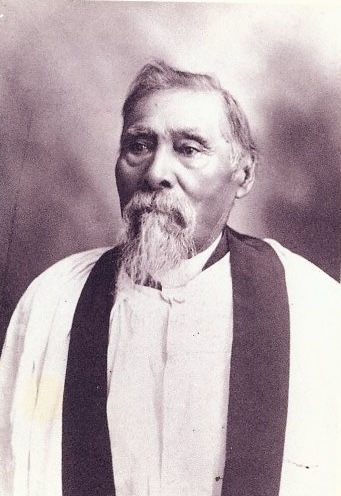







 Michael J. Fast